

Wolfgang Amadeus Mozart Popular Song Rankings [2026]

Wolfgang Amadeus Mozart is one of the most representative composers of classical music and produced numerous masterpieces in the past.
He is said to have had a tremendous impact on the history of music and to have built the foundations of musical art.
This time, we’re shining a spotlight on him.
We’ve compiled a ranked list of his most popular tracks based on play counts so far.
Whether you’re a longtime fan or new to his music, be sure to check it out.
- Mozart: An Introduction to His Signature and Popular Works
- Franz Joseph Haydn Popular Song Rankings [2026]
- [Masterpiece Classics] A special showcase of gem-like masterpieces so beautiful they’ll move you to tears
- Franz Schubert Popular Songs Ranking [2026]
- Ludwig van Beethoven Popular Songs Ranking [2026]
- Domenico Scarlatti Popular Songs Ranking [2026]
- J.S. Bach Popular Songs Ranking [2026]
- Johann Strauss II Popular Song Ranking [2026]
- Antonio Vivaldi Popular Song Ranking [2026]
- [Beginner-friendly] Easy Mozart piano pieces. Recommended Mozart works.
- Georg Philipp Telemann Popular Songs Ranking [2026]
- Anton Bruckner Popular Songs Ranking [2026]
- Antonín Dvořák Popular Songs Ranking [2026]
Wolfgang Amadeus Mozart Popular Songs Ranking [2026] (1–10)
Fantasia in D minor, K. 397Wolfgang Amadeus Mozart8rank/position

Composed in Vienna in 1782 by the genius composer Wolfgang Amadeus Mozart, the Fantasy in D Minor, K.
397 is a work distinguished by its free form.
It opens with arpeggios, unfolds into a beautiful aria-like melody, and concludes by modulating to a charming D major, leaving an impression of innocence.
Its unique structure and expressively rich musical character—where joy and sorrow intertwine—are hallmarks of Mozart’s artistry.
It’s also a highly recommended piece for piano recitals and concerts.
RequiemWolfgang Amadeus Mozart9rank/position
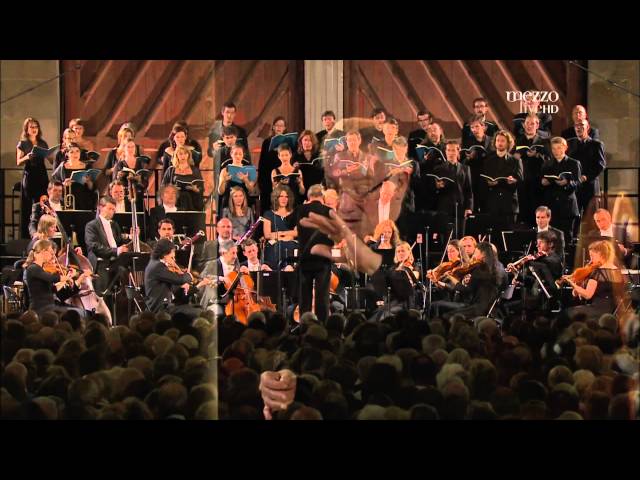
A requiem is a mass for the dead, and this piece together with those by Verdi and Fauré are known as the “Three Great Requiems.” Mozart wrote this Requiem just before his death, leaving it unfinished, and it was later completed by one of his pupils.
After his death, rumors spread that a messenger from the realm of the dead had commissioned the work and that Mozart had written it for himself, which became a hot topic at the time.
In truth, he did compose it with death close at hand, and keeping that in mind as you listen makes it all the more moving.

Minuet in F major, K. 2Wolfgang Amadeus Mozart10rank/position

Composed when Wolfgang Amadeus Mozart was six years old, this piece features a simple yet charming melody and a graceful triple-meter rhythm that leave a strong impression.
Although it has few chords and is structured almost like two voices, it employs key changes and deceptive cadences, making it ideal for studying tonality and harmonic progressions.
Frequently used in lessons as a piece well-suited to early stages of piano study, it’s highly recommended for those who want to build a solid foundation in piano or who are interested in classical music.
Why not experience a glimpse of Mozart’s musical genius through this work?
Wolfgang Amadeus Mozart Popular Songs Ranking [2026] (11–20)
MemoryWolfgang Amadeus Mozart11rank/position

This is a piano miniature in G major, notable for its gentle atmosphere and flowing melody.
Employing an accompaniment pattern known as the Alberti bass, the beautiful melody conveys the refined aesthetic of the Classical era despite its simplicity, soothing the listener’s heart.
The fluid accompaniment based on broken chords is a hallmark found in many of Wolfgang Amadeus Mozart’s piano works, and its charm is fully showcased here as well.
While the piece is structured to be approachable for performers, it also offers ample opportunities for expressive playing.
It is an ideal choice for those who have mastered basic piano techniques or for listeners wishing to become more familiar with classical music.
Minuet in G major, K. 1 (K6 1e), from the Nannerl NotebookWolfgang Amadeus Mozart12rank/position

An elegant minuet that the young Mozart wrote for his sister, Maria Anna Mozart.
In G major and triple meter, this piece is characterized by its straightforward melody.
Structured in an ABA ternary form with 8-bar repeats, it’s an approachable work free of stiffness.
Composed in Salzburg between December 1761 and January 1762, it displays a level of musical construction and expressiveness that seems remarkable for a five-year-old.
With its simple yet beautiful melody and clear structure, it’s recommended for beginners at the piano or those looking to try Mozart’s music.
Its unpretentious atmosphere and rhythmic charm make it an ideal piece for taking a first step into classical music.
Piano Sonata No. 11, K. 331, Movement III “Turkish March”Wolfgang Amadeus Mozart13rank/position

One of the masterpieces left by the genius composer Mozart.
It’s a three-movement piano sonata, whose third movement is affectionately known as the “Turkish March.” Composed around 1783, it was influenced by the Turkish military music that was fashionable in Vienna at the time.
Its rhythmical, vibrant melodies are striking, and the progression from A minor to A major is also compelling.
The piece reflects its historical context as well, marking a century since the victory over the Ottoman siege of Vienna, giving it a palpable sense of history.
It’s perfect for middle school students aiming for a dazzling performance at a piano recital—a work brimming with charm that captivates listeners.
Piano Sonata No. 16 in C major, K. 545, No. 2Wolfgang Amadeus Mozart14rank/position

This piece, notable for its graceful triple-meter melody, was composed in June 1788 and is intended for beginner-level learners.
The second movement in G major features a beautifully expressive, aria-like character and a simple, straightforward left-hand accompaniment.
While technically approachable, it demands a singing melodic line and delicate expressiveness.
Its calm tempo allows for unhurried playing, making it an excellent choice for those wishing to refine their expressivity or experience the charm of classical music.
The emotional contours created by the shifts in key are also captivating, offering ample joy in performance.