

Wolfgang Amadeus Mozart Popular Song Rankings [2026]

Wolfgang Amadeus Mozart is one of the most representative composers of classical music and produced numerous masterpieces in the past.
He is said to have had a tremendous impact on the history of music and to have built the foundations of musical art.
This time, we’re shining a spotlight on him.
We’ve compiled a ranked list of his most popular tracks based on play counts so far.
Whether you’re a longtime fan or new to his music, be sure to check it out.
- Mozart: An Introduction to His Signature and Popular Works
- Franz Joseph Haydn Popular Song Rankings [2026]
- [Masterpiece Classics] A special showcase of gem-like masterpieces so beautiful they’ll move you to tears
- Franz Schubert Popular Songs Ranking [2026]
- Ludwig van Beethoven Popular Songs Ranking [2026]
- Domenico Scarlatti Popular Songs Ranking [2026]
- J.S. Bach Popular Songs Ranking [2026]
- Johann Strauss II Popular Song Ranking [2026]
- Antonio Vivaldi Popular Song Ranking [2026]
- [Beginner-friendly] Easy Mozart piano pieces. Recommended Mozart works.
- Georg Philipp Telemann Popular Songs Ranking [2026]
- Anton Bruckner Popular Songs Ranking [2026]
- Antonín Dvořák Popular Songs Ranking [2026]
Wolfgang Amadeus Mozart Popular Songs Ranking [2026] (51–60)
Horn Concerto No. 1 in D major, K. 412/514Wolfgang Amadeus Mozart57rank/position
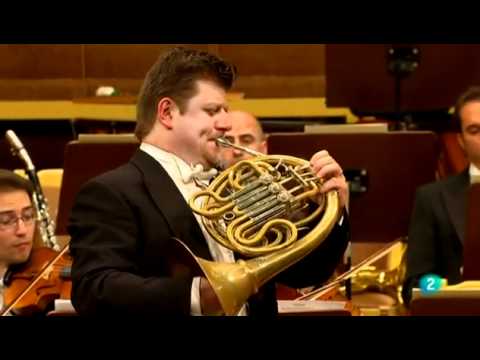
A master of Classical music who displayed extraordinary talent from childhood and composed over 800 works across a wide range of genres, Wolfgang Amadeus Mozart.
His Horn Concerto No.
1 in D major, K.412/514—written for his close friend and exceptional horn player Joseph Leutgeb—captivates with its technical difficulty and Mozart’s characteristically refined melodies.
In particular, the encouragements and jokes written in the score for the performer reveal the intimacy of their relationship.
It’s a highly recommended piece not only as an introduction to classical music but also for anyone who wants to savor a masterpiece.
Motet ‘Ave verum corpus’ K. 618Wolfgang Amadeus Mozart58rank/position

Mozart’s Ave verum corpus is captivating for its relaxed, unhurried character.
This time, I’d like to introduce the motet Ave verum corpus, K.
618 from among its versions.
While Ave verum corpus is often considered an intermediate-level piece, in the case of K.
618 it would be fair to call it beginner-friendly.
If you pay careful attention to pedaling and rhythm, even a novice can make it sound good.
There are no particularly difficult passages, so if you’ve completed basic training, I encourage you to give it a try.

Motet “Rejoice, be glad, O blessed souls,” HallelujahWolfgang Amadeus Mozart59rank/position

The third movement “Alleluia” from the motet Exsultate, jubilate (“Rejoice, be glad, O blessed soul”), composed by Mozart in 1773, is a celebrated vocal piece whose bright, pure character evokes angels dancing and playing in the clear blue sky.
Although originally written for a castrato, it is now performed as an important repertoire piece by female lyric sopranos capable of producing high tessitura.
Mozart’s LullabyWolfgang Amadeus Mozart60rank/position

Alongside works by Brahms and Schubert, Mozart’s “Lullaby” is counted among the world’s three greatest lullabies.
It’s a classic masterpiece that most people would recognize as soon as they hear a snippet of the melody and think, “I’ve heard this somewhere.” Although it was long believed to have been composed by Mozart, research has revealed that the piece is actually a lullaby composed by the Austrian composer Bernhard Flies.
Wolfgang Amadeus Mozart Popular Songs Ranking [2026] (61–70)
Requiem in D minor, K. 626Wolfgang Amadeus Mozart61rank/position
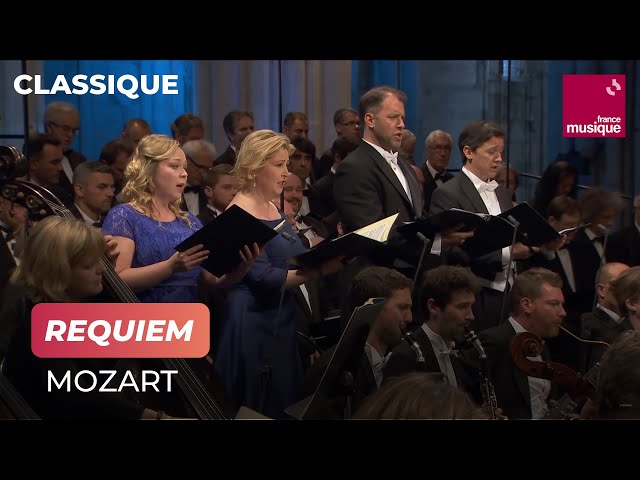
An unfinished masterpiece that Mozart worked on shortly before his death at age 35.
As a Mass for the dead, the work is steeped in a solemn atmosphere, expressing prayers to God and a wish for the repose of the souls of the departed.
It begins with the Introit and comprises a variety of movements, including the Dies Irae, which depicts the Day of Wrath, and the Lacrimosa, which sings of a Day of Tears.
The Dies Irae is especially famous and is frequently used in television and films; in this video, it begins at 8:13.
The Lacrimosa, whose first eight bars were written by Mozart himself, is particularly moving in its beauty; in this video, it starts at 22:49.
With its profound musicality and religious significance, this work feels as though it contains the essence of Mozart’s life.
Praise the LordWolfgang Amadeus Mozart62rank/position

Amid the silence, a beautiful melody flows, and the soothing vocal piece is “Laudate Dominum.” Composed by Mozart, it is the fifth movement of the Vespers “Vesperae solennes de confessore, K.
339” (Solemn Vespers for a Confessor).
Symphony No. 40 in G minor, K. 550Wolfgang Amadeus Mozart63rank/position

Symphony No.
40 in G minor, K.
550 is one of the most popular among Wolfgang Amadeus Mozart’s many symphonies.
Despite the financial instability and personal difficulties he faced at the time, Mozart’s music was, artistically speaking, entering a period of true maturity.
This work—striking for its poignant melody introduced by the violas and its firmly constructed sonata form—is profound yet refined.
Its richly expressive themes, as if interweaving life and death, light and darkness, speak powerfully to the listener’s heart.
It is an imperishable masterpiece that both newcomers to classical music and seasoned listeners should hear at least once.