

Trivia about cherry blossoms: a roundup of fun facts to make springtime hanami even more enjoyable


Cherry blossoms, which bloom with beautiful flowers in spring, are a familiar plant to the Japanese, aren’t they? Of course, we often enjoy hanami (flower viewing), and you probably also encounter cherry blossoms frequently in works themed around spring.
In this article, we’ve gathered facts and trivia about sakura, which have long been loved by the Japanese.
We’ll introduce bite-sized knowledge that will make you more of an expert on cherry blossoms—stories, history, and more—about these trees that bloom in shades of pink and white.
Deepening your knowledge of sakura, a quintessential symbol of spring, will help you enjoy the cherry blossom season even more.
Be sure to check it out!
- [Sakura Quiz] Trivia & Fun Facts Quiz about Cherry Blossoms for Kids
- [3-Choice Quiz] Cherry Blossom Trivia You'll Want to Share with Someone
- [For General Audience] Little-Known Trivia and Fun Facts About Hay Fever
- [For Seniors] Conversation Starters! A Collection of Trivia and Quizzes About Cherry Blossoms
- Recommended in March! A collection of surprising, little-known trivia that elementary school students will want to share
- Fireworks Trivia & Fun Facts Summary
- [Trivia] Challenge! Spring General Knowledge Quiz
- [For Elementary School Students] Trivia About April
- How many can you solve? Test your spring knowledge with a trivia quiz about March!
- Fun facts you’ll want to share! January trivia and tidbits special
- [2026] Cherry Blossom Songs to Hear in Spring: A roundup of classic J‑Pop hits about sakura
- So interesting you’ll want to tell someone! December Trivia & Fun Facts Special
- [Spring Quotes] Glamorous words perfect for adding color to a new beginning
Cherry blossom trivia: A collection of fun facts to make spring hanami even more enjoyable (21–30)
The order of the three-colored dango represents the sequence in which cherry blossoms bloom.
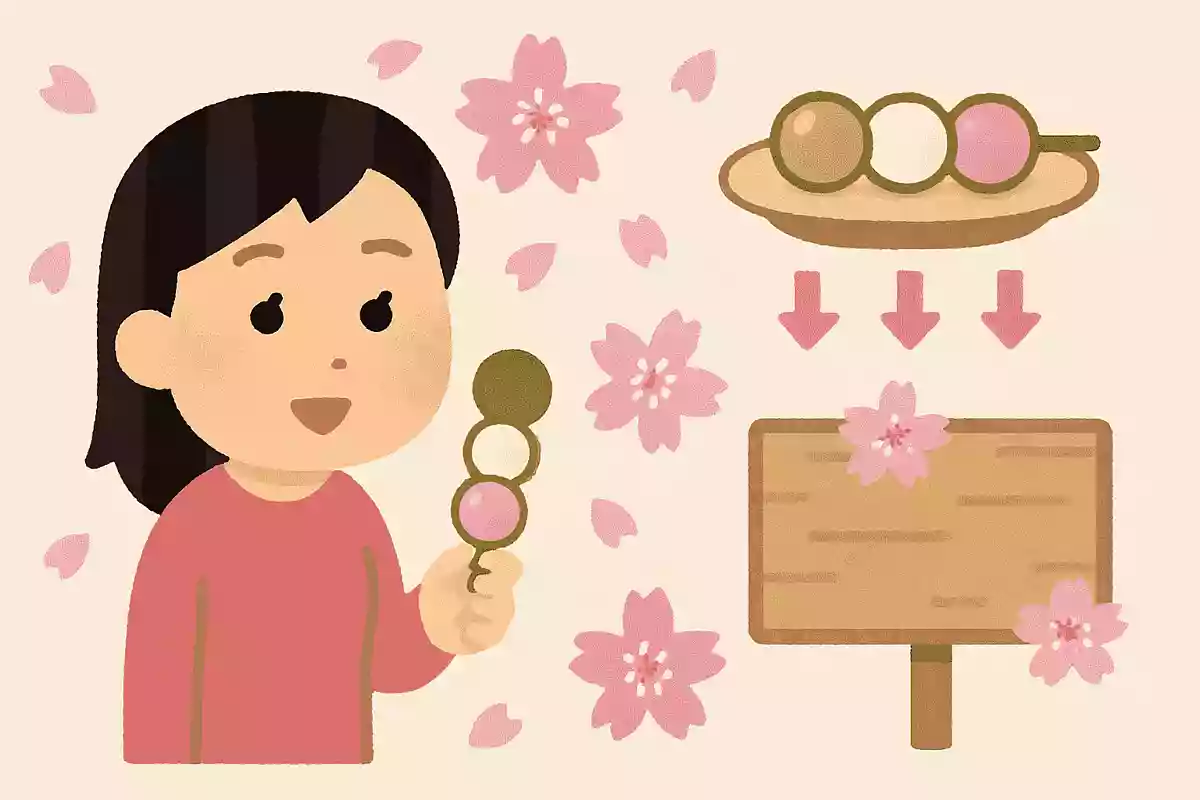
Sanshoku dango (three-colored dumplings) are composed of bright, spring-like hues—pink, white, and green.
They’re an essential treat for cherry-blossom viewing, and the order of the colors is said to represent the stages of cherry blossoms! Pink is the color of the buds, white is the color when the blossoms are in full bloom, and green is the color of leafed cherry trees.
It’s also said that pink represents spring, white represents winter, and green represents summer.
There’s no autumn because it implies you “won’t get tired of” eating dango—the phrase is a pun in Japanese.
Share this fun fact the next time you enjoy sanshoku dango.

It can actually become edible like Somei Yoshino, but it doesn’t taste good.
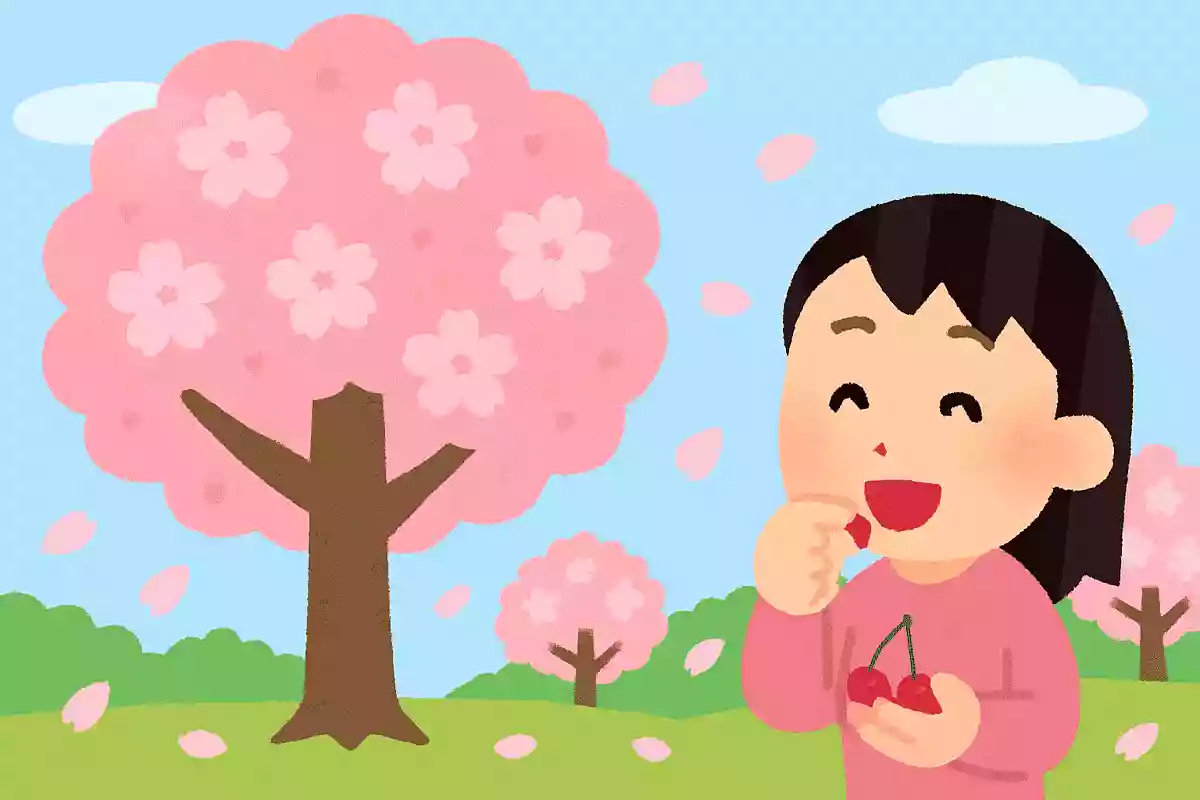
When people think of fruit from cherry trees, many imagine cherries.
However, the cherry trees commonly seen in Japan, Somei Yoshino, do not yield cherries.
The variety that produces edible cherries is the sweet cherry, known as Prunus avium.
Somei Yoshino generally does not bear fruit.
That said, it can occasionally produce fruit when pollinated by another tree.
However, this fruit is not tasty like cherries.
Even if you find fruit on a Somei Yoshino tree, never eat it—please buy cherries sold in stores instead.
Cherry blossoms past their peak fall within a few days.
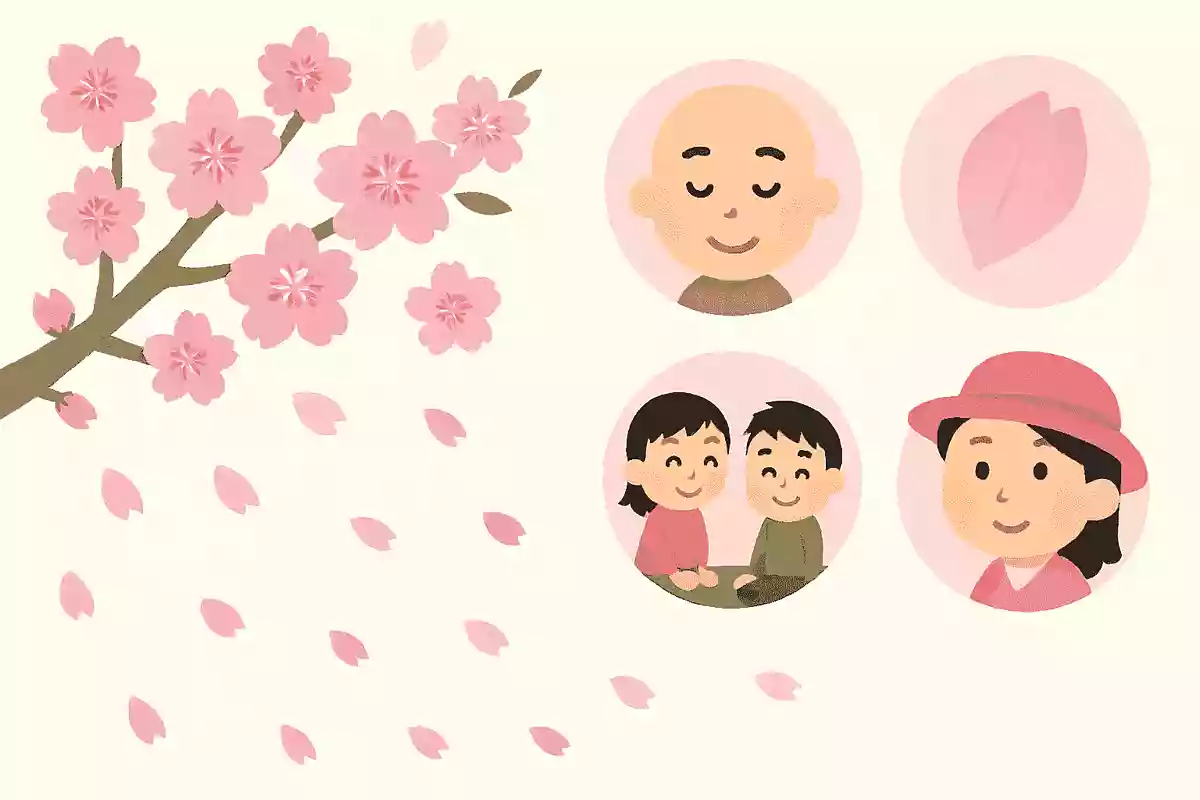
There’s a certain charm even in the way cherry blossoms fall after being in full bloom, isn’t there? Once they reach full bloom—about 80% of the flowers open—cherry blossoms typically fall within about 5 to 7 days, though this varies by region.
The timing also depends on temperature: if it gets chilly around the blooming period (known as hanabie), they can last around two weeks; if the days are warm, about one week.
In fact, cherry blossoms don’t fall primarily because of wind or rain.
After pollination, they form a layer of cells at the base of the petals called the abscission layer.
Enzymes in this layer break down the intercellular substances that hold the petals in place, causing the petals to fall.

White-eyes and brown-eared bulbuls sip the nectar of cherry blossoms.
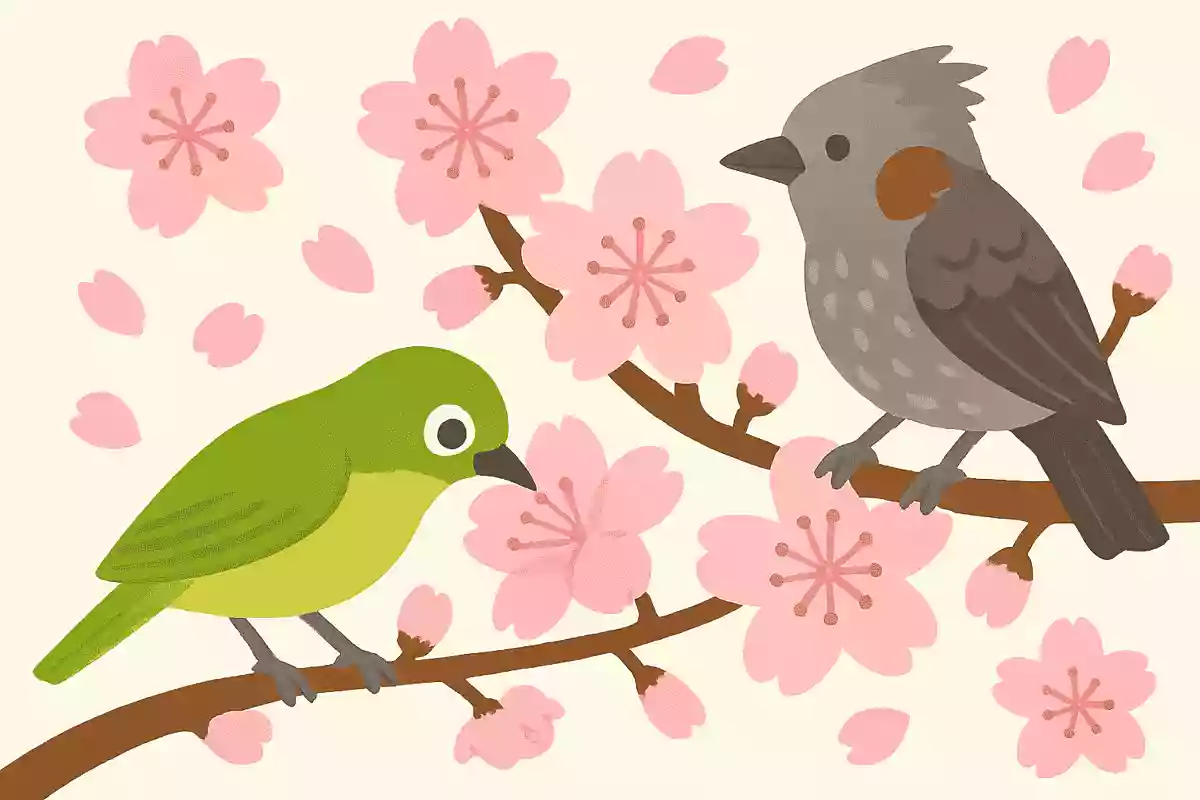
When we think of drinking flower nectar, insects like bees and butterflies come to mind, right? In fact, there are birds that sip cherry blossom nectar too! They’re Japanese white-eyes and brown-eared bulbuls, which are often seen during cherry blossom season.
White-eyes and bulbuls have long beaks and tongues, and their tongues are shaped like brushes that make it easy to lick up nectar.
Thanks to this, they can enjoy the nectar without greatly affecting the cherry blossoms.
Sparrows, however, also go after cherry blossom nectar but don’t have the same anatomy as the white-eyes.
They tear off the blossoms to access the nectar, then drink it and drop the flowers as they are.
When the center of a cherry blossom turns red, it’s a sign it will fall.
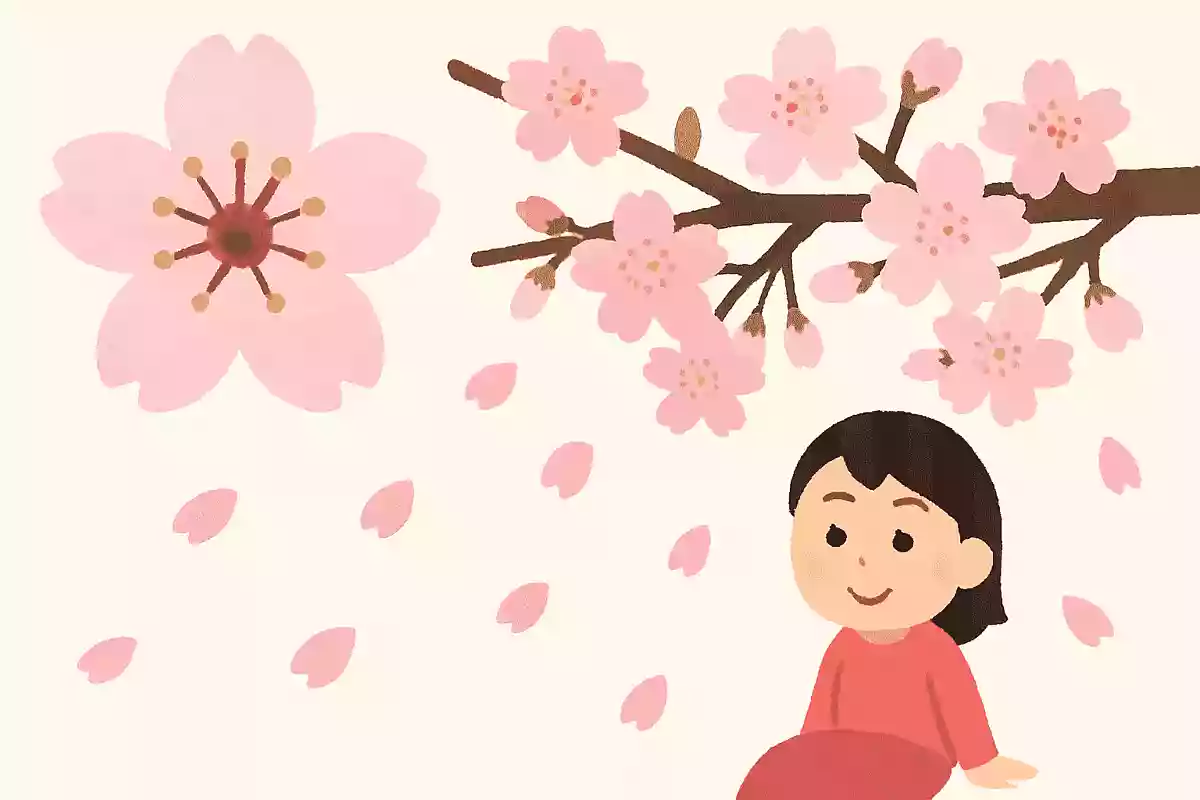
If you look at the center of a cherry blossom, you can tell when the petals are about to fall.
The Somei Yoshino variety, which is popular for hanami, has a habit of accumulating a pigment called anthocyanin in the center of the flower right before it sheds its petals.
Because of anthocyanin, cherry blossoms have a stronger reddish hue in the bud stage, and as they bloom the anthocyanin disperses, making the flowers a pale pink close to white.
Somei Yoshino trees usually shed their blossoms 5 to 7 days after reaching full bloom.
We often look forward to the full bloom of cherry blossoms, but it might be fun to look for the signs of when they’ll start to fall, too.
The origin of the Oshima cherry comes from Izu Ōshima.
The Oshima cherry (Prunus lannesiana var.
speciosa), whose leaves are used to wrap sakuramochi, gets its name from Izu Ōshima.
Izu Ōshima is one of the areas where the Oshima cherry is widely distributed.
Because it has a stronger fragrance than varieties like Somei Yoshino, it is used for sakuramochi.
In fact, the Somei Yoshino cherry, which is commonly seen throughout Japan, was created by crossing the Oshima cherry with the Edohigan cherry.
The large petal size of the Oshima cherry has been passed down to the Somei Yoshino as well.
Oshima cherries are distributed across the Izu Islands, including Izu Ōshima, as well as the Bōsō Peninsula, so be sure to look out for them.
In Cerezo Osaka, “Cerezo” means “cherry blossom” in Spanish.
Cerezo Osaka is a soccer team based in Osaka City and Sakai City.
The word “Cerezo” in the team’s name means “cherry tree” in Spanish.
The name was chosen to include the cherry blossom, Japan’s national flower and also the flower of Osaka City, reflecting the aspiration to make dreams bloom not only in Osaka but across Japan and the world.
Their home ground, Yodoko Sakura Stadium, also includes the word “Sakura” (cherry blossom) in its name.
The team’s emblem features cherry blossoms, and the uniforms incorporate cherry blossom colors, allowing the entire team to embody the “Sakura” in its name.