

Easy for elementary school students to remember! A four-character idiom that expresses the feeling of trying your best

Many elementary school students may be thinking, “I’m trying so hard, but I’m not seeing results…” Surely the adults around them, watching over their efforts, also want to offer the right words.
In these seven articles, we introduce four-character idioms that express children’s desire to “try hard” and their spirit of “persevering.” They’re easy for elementary schoolers to understand and useful in everyday life, so learn their origins too and let them motivate you in your studies and club activities!
- Four-character idioms that help elementary schoolers not give up: words that spark the power to keep trying
- Strive toward your goals! Four-character idiom ideas that resonate with elementary school students
- [For Elementary School Students] Four-character idioms you can use in sports! Words that are helpful for cheering and goal setting
- Learn the meanings too! Cool four-character idioms that elementary school students will want to remember
- Easy-to-remember, positive four-character idioms for elementary school kids! Words that brighten the heart
- For Elementary School Students: Four-Character Idioms You Can Use for New Year’s Resolutions — How to Set Cool Goals!
- Interesting four-character idioms for elementary schoolers! Words you'll want to use once you understand their meanings
- General: Four-character idioms that encourage determination—powerful, heart-stirring words
- [For Elementary School Students] Inspiring Four-Character Idioms for Shaping the Future at a Glance! Words that Spark Courage
- Popular even among elementary school students! Stylish and easy-to-remember four-character idioms
- Perfect for elementary school slogans! A collection of four-character idiom ideas you'll want to use
- Recommended for elementary school class goals! A collection of impactful ideas using four-character idioms
- [Elementary School Students] Perfect for Kakizome! A Collection of Four-Character Idiom Ideas
Easy for elementary school students to remember! Four-character idioms that express the feeling of trying hard (71–80)
single-mindedly; with undivided focus
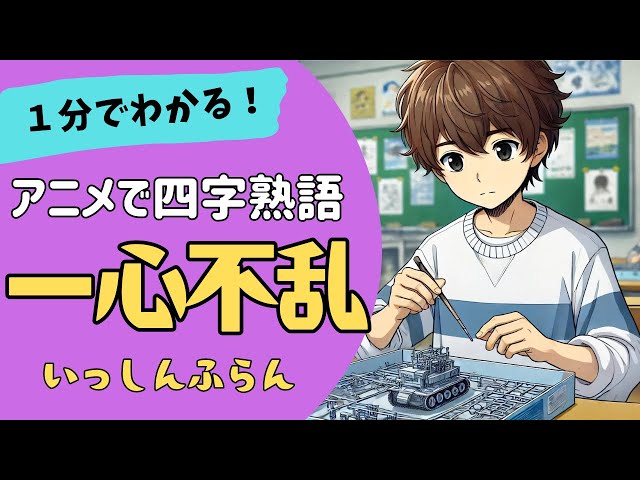
This four-character idiom is read as “isshin furan,” and it describes the state of focusing intently on a single task.
It is used when one charges ahead toward a purpose or goal, rather than turning one’s attention to various things.
For example, during a sports match, an exam, or while absorbed in a favorite game, you might find yourself unconsciously becoming isshin furan.
However, concentrating too much on just one thing can lead to accidents or injuries, so it’s best to be careful.
A sudden resolve; making a firm decision (to start afresh).

Try using this when you’re switching gears.
It’s one of the more common four-character idioms.
It’s read “ichinen hokki,” and it refers to making up your mind to accomplish something or reach a goal.
Everything has a beginning, and when you set a goal, you naturally get fired up.
You can use it for things like lessons, studying, or joining a new community.
In particular, when a child discovers a goal like “I want to grow!” or “I want to take on a challenge!” it’s good to say this as a way to cheer them on.
unity; standing together as one
This is a four-character idiom that means bringing everyone’s hearts and strength together as one.
It carries a strong message that by helping one another and joining forces, we can accomplish what a single person cannot.
When you picture a united team or group of friends, the power and reassurance of this word becomes clear.
It succinctly expresses the importance of cooperation and the joy of moving forward with companions, and simply hearing it can make you feel optimistic.
Even during long challenges or difficult moments, keeping the spirit of this idiom in mind can give you the courage to press on with strength.

in the same boat; share a common fate (lit. “live and die together as one lotus”)
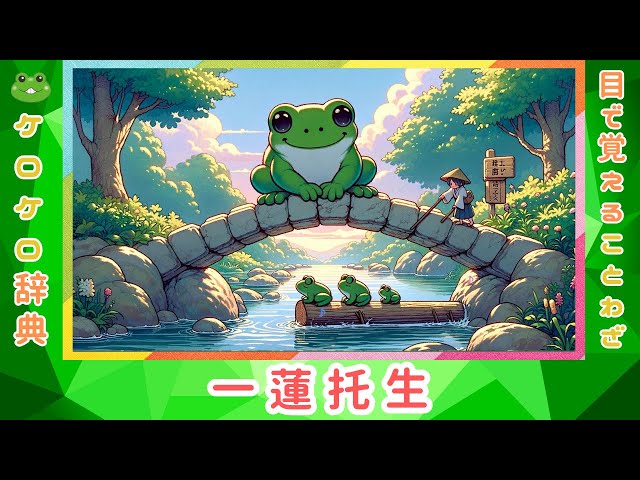
It is a phrase that means accepting fate and events together with your companions.
It expresses an attitude of sharing both joy and hardship, strongly conveying bonds and solidarity.
It emphasizes the importance of acting not alone but with your companions and of helping one another.
Within its short, powerful sound lies the value of mutual support and cooperation, giving a bracing impression just by hearing it.
It can be considered a four-character idiom that even elementary school students can easily understand as walking together with friends and peers, making them aware of strong bonds.
Actions speak louder than words.
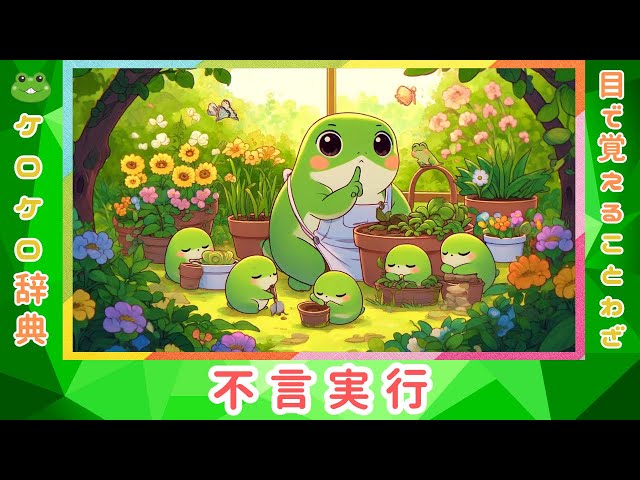
Many people have heard of “say and do” (yūgen jikkō), but there is also the four-character idiom “fugen jikkō,” read as fugen jikkō.
Literally, it refers to pressing forward toward a goal and doing what needs to be done without saying this and that.
“Fugen” means not putting things into words or not voicing complaints and grievances.
“Jikkō” means to carry something out.
There are times when you might want to voice complaints or dissatisfaction, but this expression is good to use when you want to praise children who hold back and keep striving toward their goals.