

Learn with Fun Horse Quizzes! Mysterious Facts about Horses Elementary School Kids Want to Know

There are many things about horses that we think we know but actually don’t.
The movements of their manes and ears, and even their whinnies, each have meaning.
When you learn about how horses feel and how their bodies work, you’ll grow to love them even more.
So here, we’ve gathered lots of fun quizzes that elementary school students can enjoy while learning—about things like what hooves really are, the order of the twelve zodiac animals, and why horses swish their tails.
Try them before you visit a zoo or a ranch, and your observations will become even more interesting.
Give it a try with everyone!
- A surprisingly little-known horse quiz! A fun problem set where you can learn everything from general knowledge to astonishing biology
- Surprising horse trivia you probably didn’t know: astounding behaviors and fun facts
- [For Elementary School Students] Animal Quiz to Learn Knowledge and Fun Facts
- [For Elementary School Students] 3-Choice Quiz to Deepen Knowledge of Living Things
- Recommended for lower grades! A fun, educational quiz for elementary school students
- Recommended for elementary school students! Trivia quiz you'll want to share once you know it
- [For Lower Elementary Students] Play Right Away! Learn with Fun True-or-False Quizzes
- [Common Sense & Trivia] True-or-False Quiz with Knowledge for Elementary School Students
- Fun Quiz Collection Guaranteed to Stump and Delight Elementary School Kids
- Fun quizzes for elementary school kids: a collection of questions everyone can enjoy together
- [Trivia] Do you know the answers? A roundup of animal quizzes
- A four-character idiom quiz that elementary schoolers will love! Questions become fun once you understand the meanings
- [For Elementary School Students] Me Quiz: A Collection of Quiz Questions About Yourself
Learn with fun through a horse quiz! Mysteries about horses that elementary school students want to know (1–10)
What can a horse’s hoof be compared to?
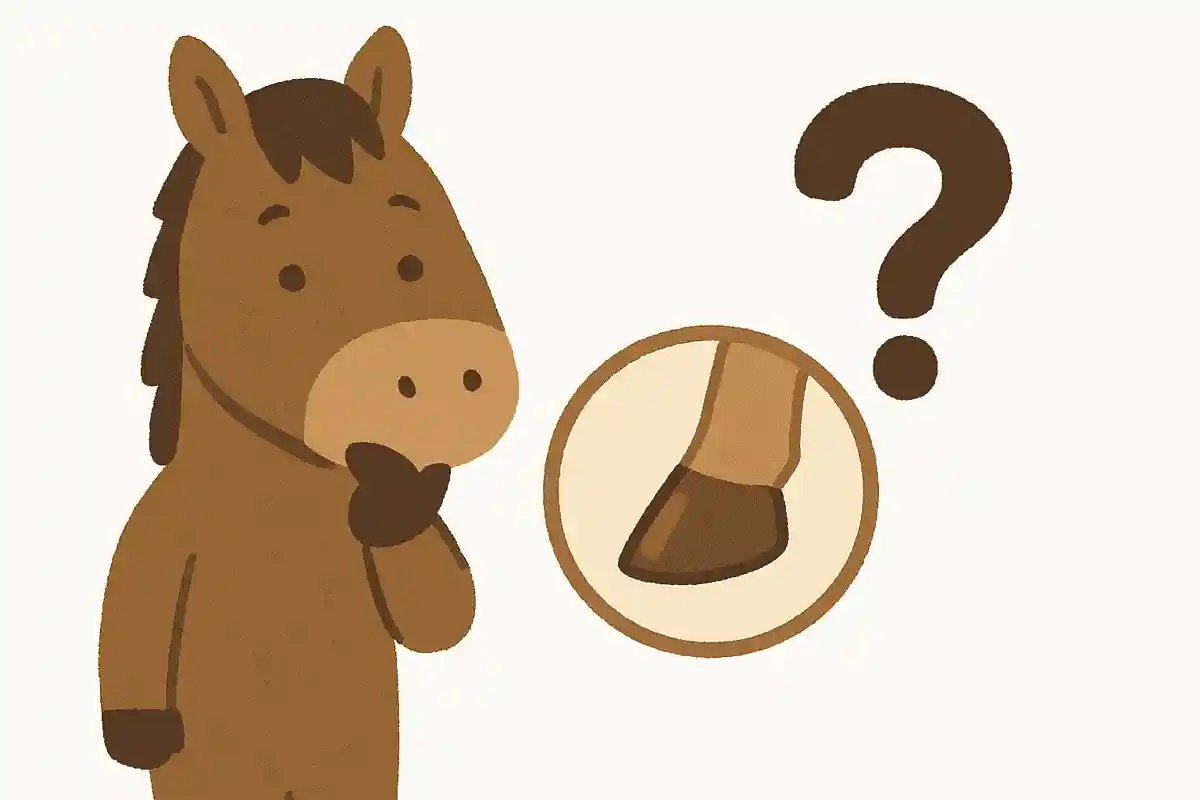
- fingernail
- heel
- knee
See the answer
fingernail
A horse’s hoof is actually an evolved form of a “finger nail.” Horses have legs suited for running, and the hoof at the end serves a role similar to a human fingernail. Because it protects the feet when they kick off the ground to run, caring for the hooves is very important for a horse’s health.

When a horse drinks water, what does it use to scoop it up?
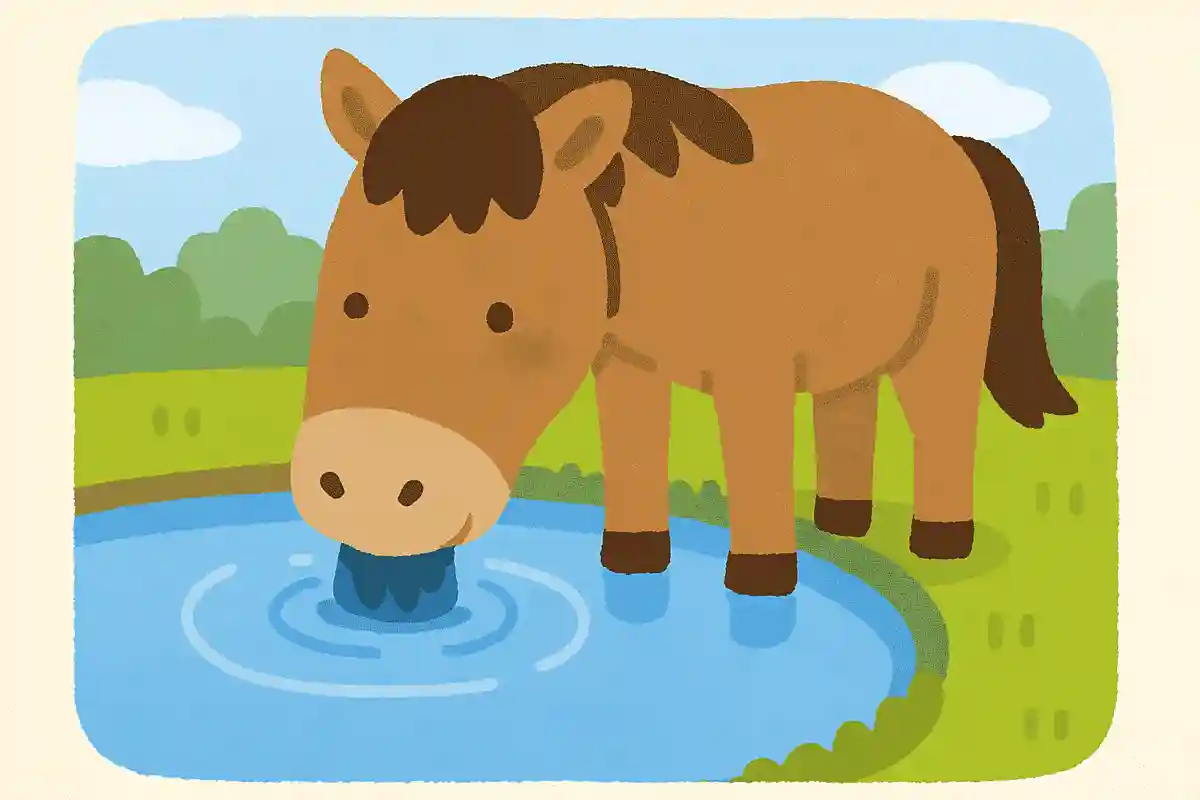
- hand
- tongue
- hoof
See the answer
tongue
When horses drink water, they use their tongues to scoop it up. They don’t use their hands or hooves. Rather than lapping with their long tongues, they drink by gulping it down. They can drink more than 20 liters in a day, and they get especially thirsty after exercise.
Why are horses’ noses so well developed?
- to make it look cool
- To smell a nice fragrance
- to take in a lot of air
See the answer
to take in a lot of air
Because horses need a lot of oxygen when they run, their noses are well developed and allow them to take in large amounts of air. When they snort, it’s also a gesture for sensing smells. They even communicate feelings with their herd through scent. Their nostrils are wide, so they can inhale plenty of air.
Learn with fun horse quizzes! Fascinating horse facts elementary school kids want to know (11–20)
Before you get on a horse’s back, what should you be careful about?
- Call the horse’s name out loud
- approach from behind
- Approach slowly from the front
See the answer
Approach slowly from the front
Horses can get startled if you approach them from behind. If you approach slowly from the front, they will feel more at ease. Make sure the horse is calm before you mount. Gently stroking them will help reassure them.
What does it mean when a horse’s ears twitch?
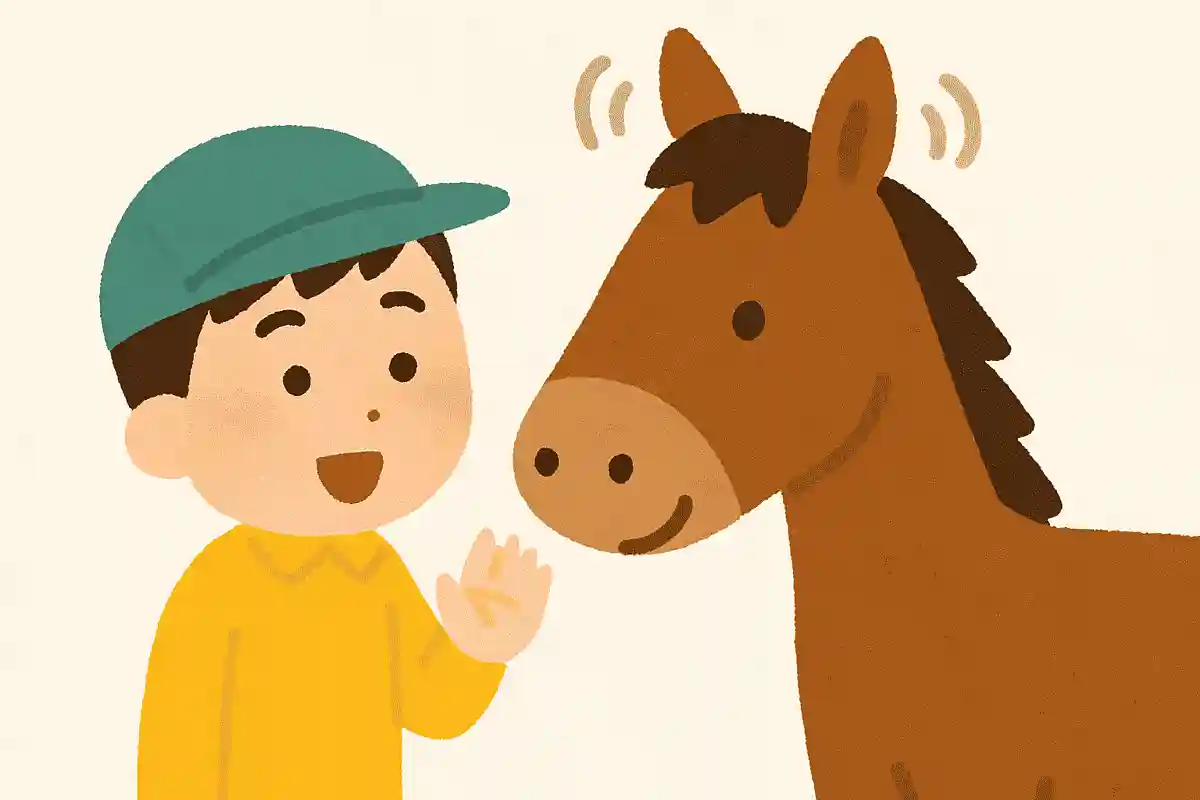
- I'm yawning because I'm sleepy.
- scared
- being attentive to surrounding sounds and presences
See the answer
being attentive to surrounding sounds and presences
Horses move their ears to understand what’s going on around them. When their ears twitch, it’s because they’re picking up various sounds and signs and staying alert. Ears are like a mirror of their feelings.
What kind of leg movement does a horse’s “gallop” involve?
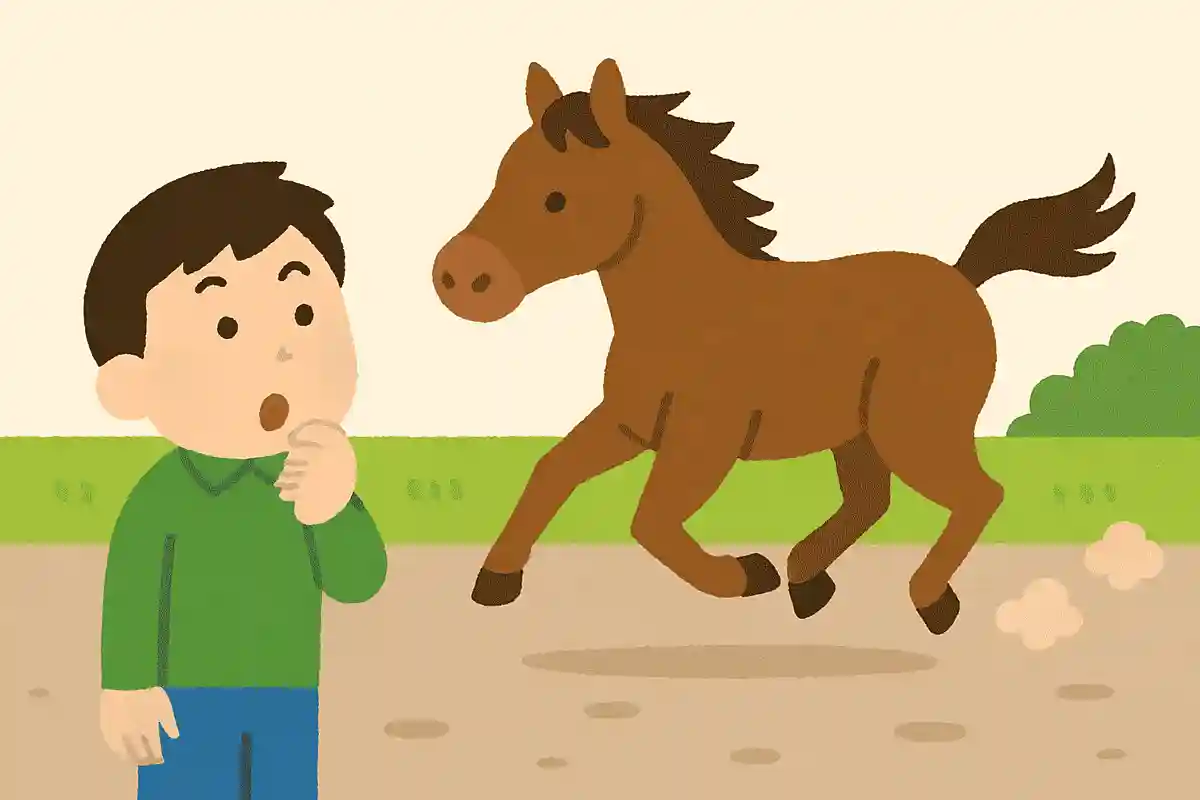
- Run by quickly moving the front and back legs alternately.
- Move while keeping all legs on the ground
- Run by rhythmically placing the legs on the ground in sequence, with moments during which all the legs are off the ground.
See the answer
Run by rhythmically placing the legs on the ground in sequence, with moments during which all the legs are off the ground.
A gallop is the way a horse runs when it moves very fast, placing its legs on the ground in sequence. One distinctive feature is that, for a brief moment, all four legs are off the ground at the same time.
Why does a horse look like it’s “spitting” saliva?
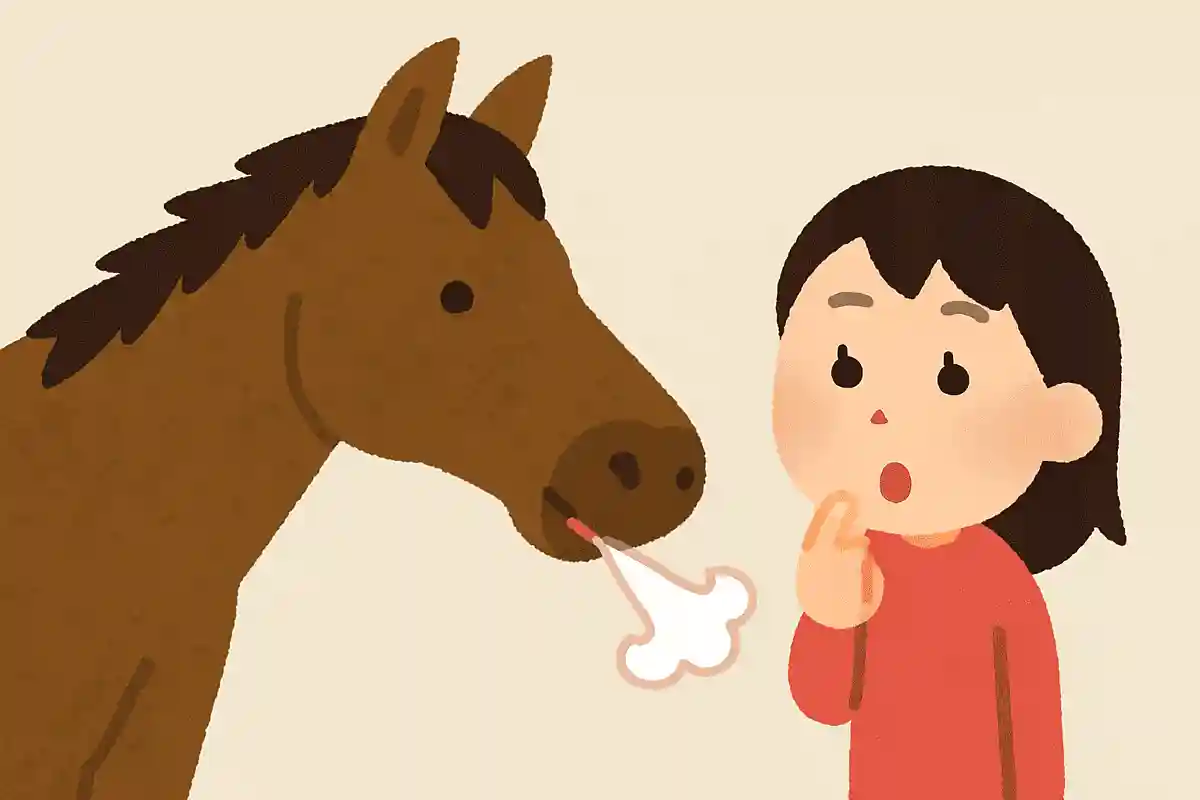
- Because I'm angry.
- To breathe
- Because foam is coming out of (my) mouth.
See the answer
Because foam is coming out of (my) mouth.
When horses run or exercise, they produce a lot of drool and foam. Because the saliva turns into foam and spills out of their mouths, it can look like they’re “spitting.” That’s why you may see them moving their mouths as if they’re working out sand.