

[For Elementary School Students] Turn Summer Memories into Haiku! A Collection of Fun Summer Haiku Ideas


How to write summer haiku—kids often struggle more than you’d expect, don’t they? We often hear, “Seasonal words are hard,” and “What should I write about?” But that’s okay! If children make the most of their natural, straightforward sensitivity, they can create delightful haiku.
For example, like this one: “At the summer festival, drinking ramune just for the glass marble.” It’s also great to put small everyday moments or feelings into words.
Here, we’ll share summer haiku ideas that even elementary school kids can enjoy.
From playful ways to get started to activities you can enjoy together with parents, you’re sure to discover something new.
- For summer vacation homework! Simple and amazing crafts for elementary school students that you’ll want to make after seeing them
- [5th Grade Elementary School] Independent Research Themes & Crafts | A Collection of Ideas That Lead to Learning
- [Summer Vacation Crafts for Lower Grades] Make It with Everyday Materials! Simple Yet Awesome Craft Ideas
- Recommended for elementary school students! Science fair topics & craft ideas
- Simple but awesome! Craft ideas for upper-grade girls
- [Summer Vacation Crafts] Stylish Ideas for Girls
- Elementary school kids will be hooked! A collection of fun craft ideas using disposable chopsticks
- DIY science projects that elementary school boys will love: ideas you can make with everyday materials
- Recommended for elementary school students! Ideas for composing summer haiku
- [Elementary School Senryu] A Collection of Hilarious Masterpieces about Summer Vacation, Friends, and School Life. Tips and Explanations Learned from Outstanding Works
- [For Elementary School Students] Spring Kigo for Haiku Writing! A Collection of Fun, Easy-to-Memorize Ideas
- For upper-grade boys! Simple yet awesome craft project [Don’t call it lazy]
- [Hand Sewing] Easy crafts recommended for elementary school students. Let's handmake something cute!
[For Elementary School Students] Turn Your Summer Memories into Haiku! A Collection of Fun Summer Haiku Ideas (11–20)
No days off this summer with Pokémon.
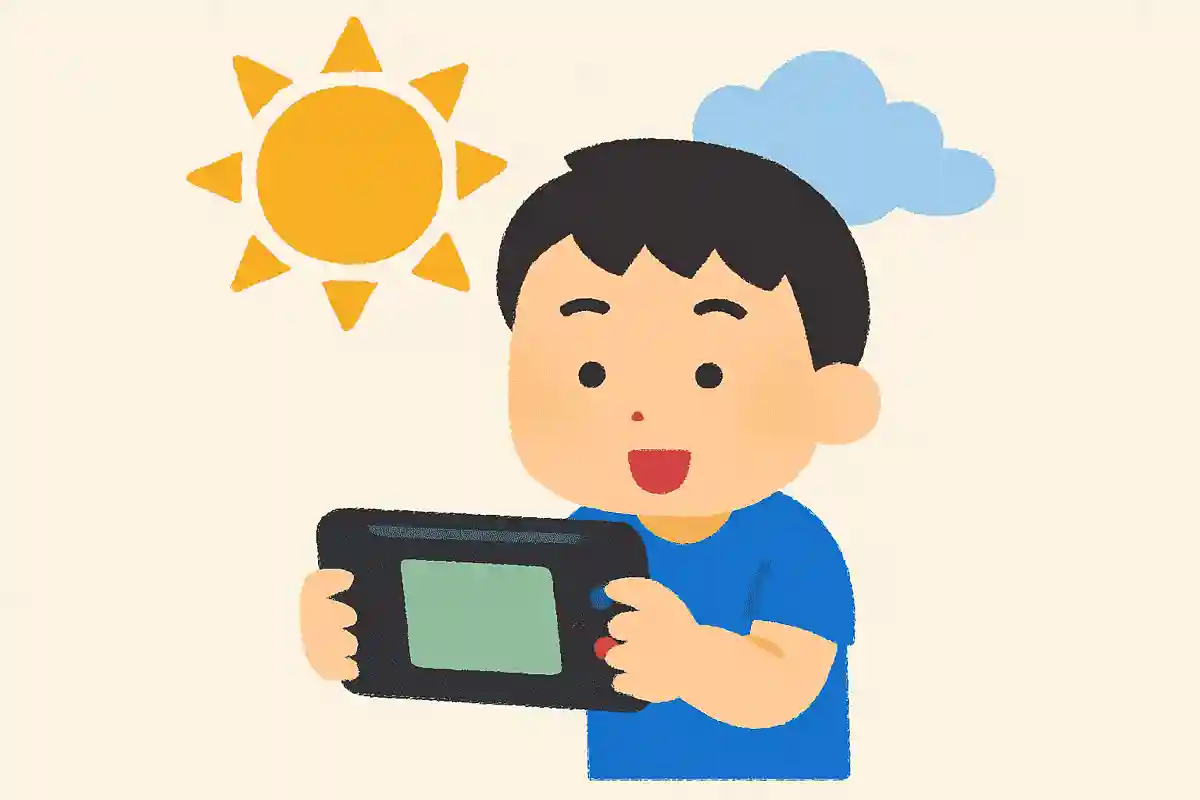
It’s common for new games to be released right as summer vacation begins, isn’t it? After spending your time off focusing intensely on them, you might even wonder whether you actually rested at all.
Here’s a haiku that captures that absorbed, heads-down engagement with a game—using time-consuming Pokémon as an example.
By depicting the speed at which summer slipped away, it clearly conveys just how deeply engrossed you were.
It also feels like it’s questioning whether that was really the right way to spend your summer.

Summer vacation, I wrote my homework through the night.
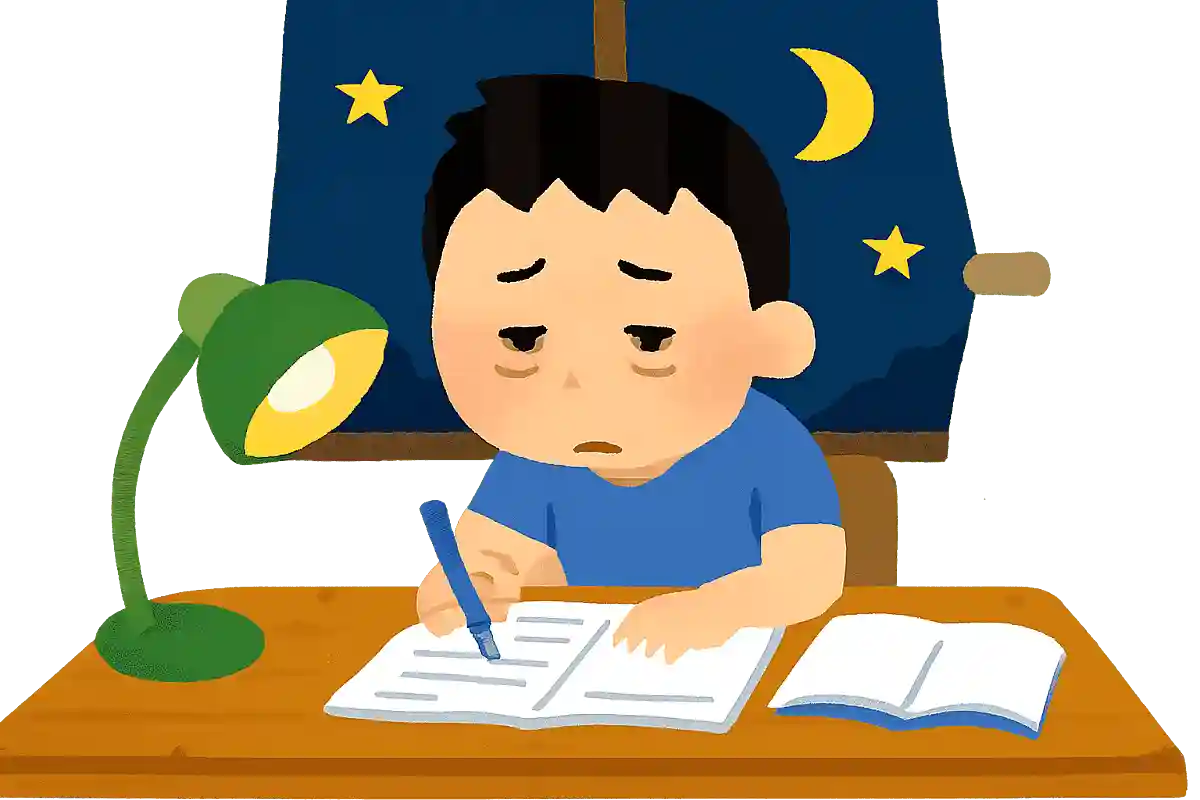
One big obstacle to enjoying summer vacation is homework, isn’t it? It’s a classic story to put it off for later and then realize summer vacation is already nearing its end.
This haiku depicts the frantic rush after noticing there’s still summer homework left.
The way the memory of being pushed around by homework ends up becoming a major part of the summer also conveys a sense of sadness.
The inclusion of the word “all-nighter” is another notable point, emphasizing both that the homework was put off until the very last day and the strong feeling of regret.
The background music for my homework is the sound of cicadas.
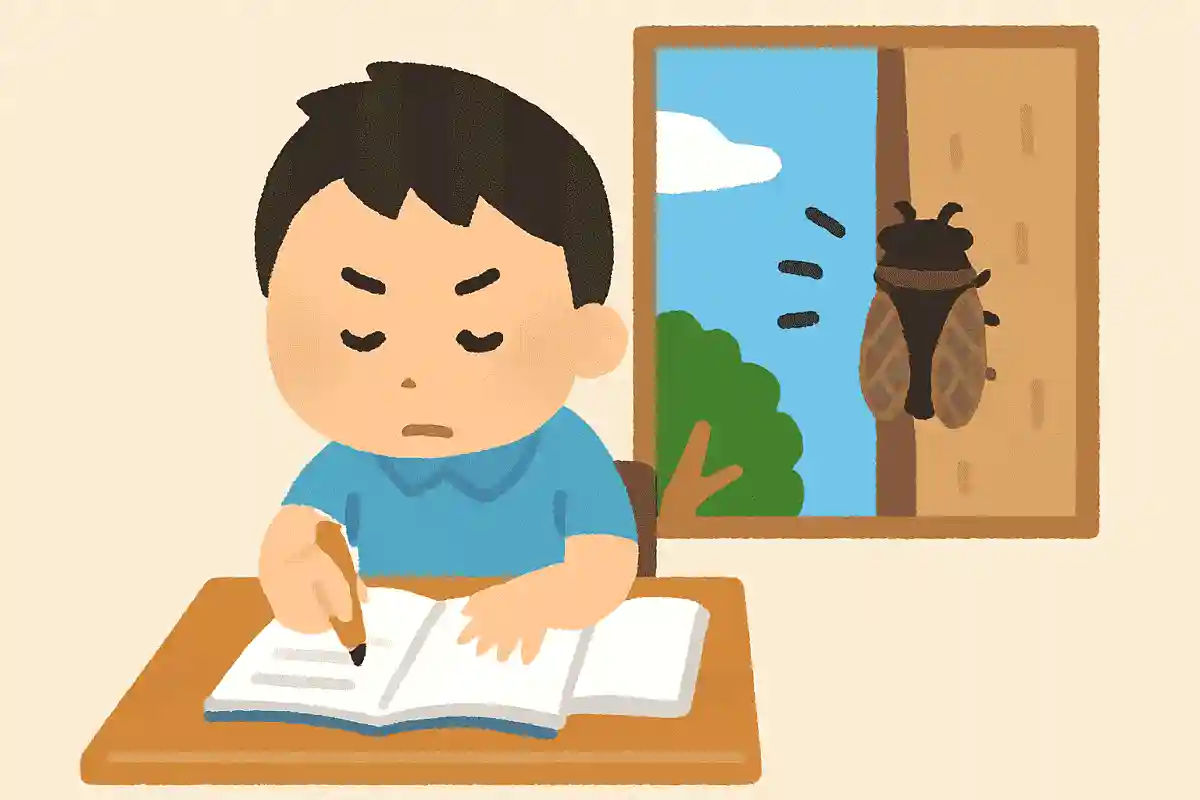
Speaking of summer, it’s the season when cicadas are buzzing vigorously no matter where you go.
Their loud calls, which reach your ears whatever you’re doing, make you feel that you’re truly spending summer.
Here’s a haiku that captures cicadas continuing to sing even while you’re working on your homework.
Early in the summer vacation, their noise tends to drown out your concentration, but as you gradually get used to it, by the end it blends in like background music—that’s the feeling it conveys.
It might also be interesting to focus on how the species of cicadas calling changes as time passes.
A reflection essay that’s a hassle and gets left for last
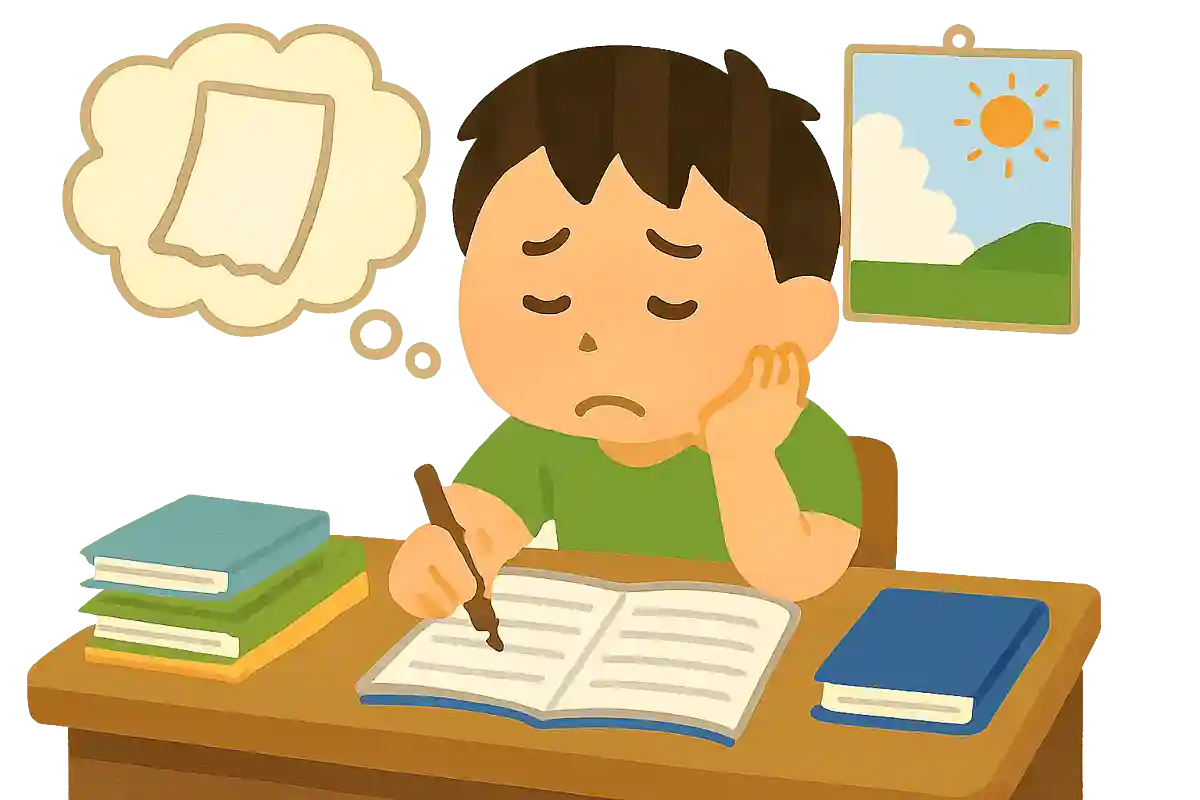
Precisely because there’s so much assigned, we often tackle summer homework by setting priorities.
It’s pretty standard to start with the easy tasks and leave the time-consuming or tedious ones for later.
This haiku portrays the agony of now having to face the abandoned, bothersome book report.
From the pain of doing the most troublesome task last, the importance of the order in which we work really comes through.
And since it captures that classic end-of-summer struggle, there’s also a touch of comedy to it, which is part of its charm.
Summer vacation, next fun, winter vacation
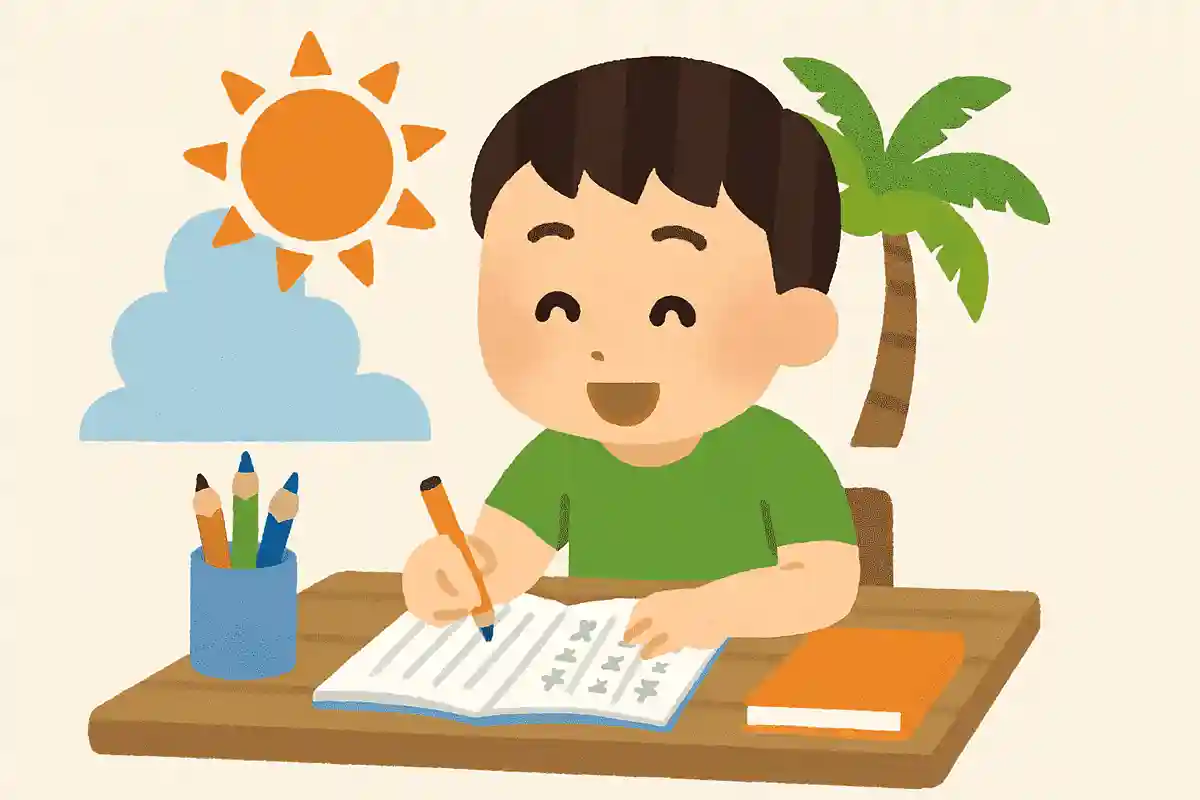
Big holidays often come with exciting events to look forward to, and it’s only natural to feel your spirits rise.
This haiku portrays someone who is always eagerly awaiting those long breaks—precious chances to stack up joyful memories.
It’s quite unique how, even though summer vacation has just ended, their thoughts are already drifting to winter break in a completely different season.
It almost makes you want to ask whether there’s nothing to enjoy on ordinary days.
The poem leaves the impression of someone whose personality shines through in their desire to make the most of a big holiday.
A summer vacation where the alarm clock gathered dust
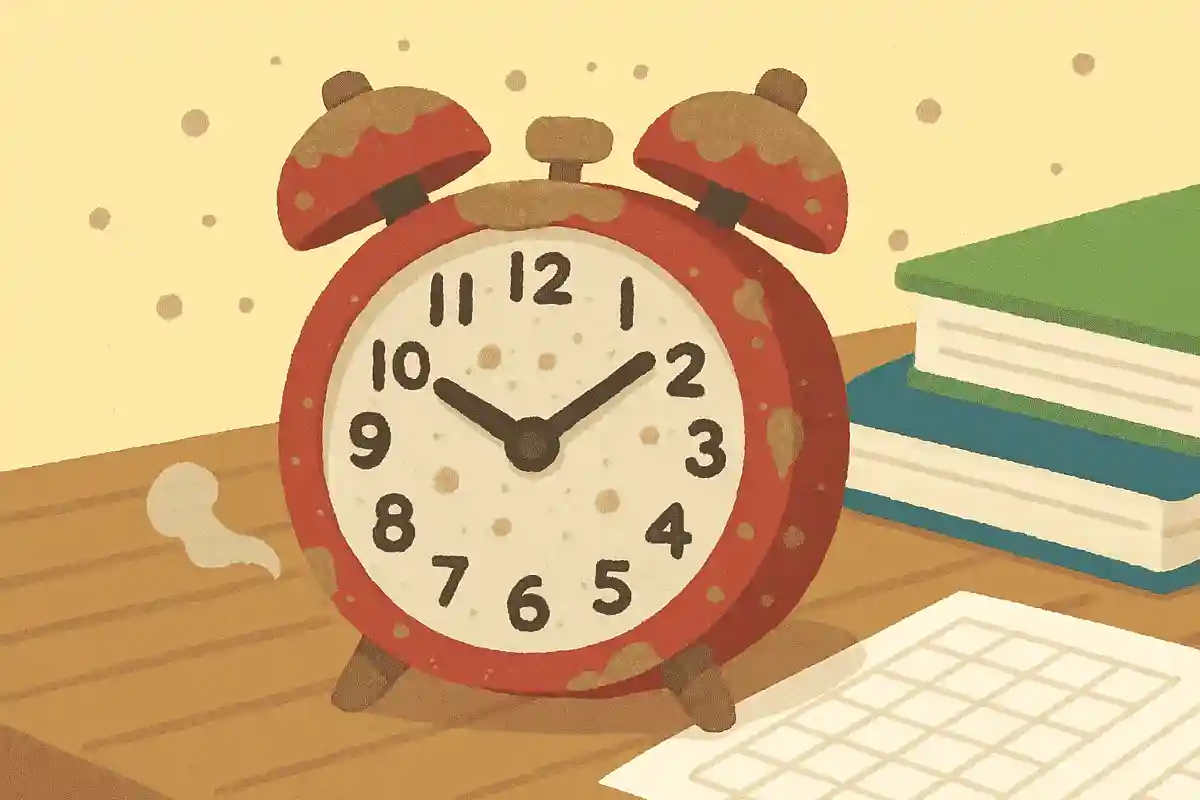
Many people use an alarm clock to wake up when school is in session, but during summer vacation, the alarm clock takes a break too.
This haiku depicts the state of the alarm clock after summer vacation—showing just how little it was used.
By portraying the alarm clock covered in dust, it clearly conveys that it wasn’t used, while also evoking a sense of wistfulness that summer has ended.
Through the unused alarm clock, it also tells us that the person slept well over the break and hints at what kind of life they were leading.
[For Elementary School Students] Summer Memories in Haiku! A Collection of Fun Summer Haiku Ideas (21–30)
Summer break: ice cream melts, homework won’t.
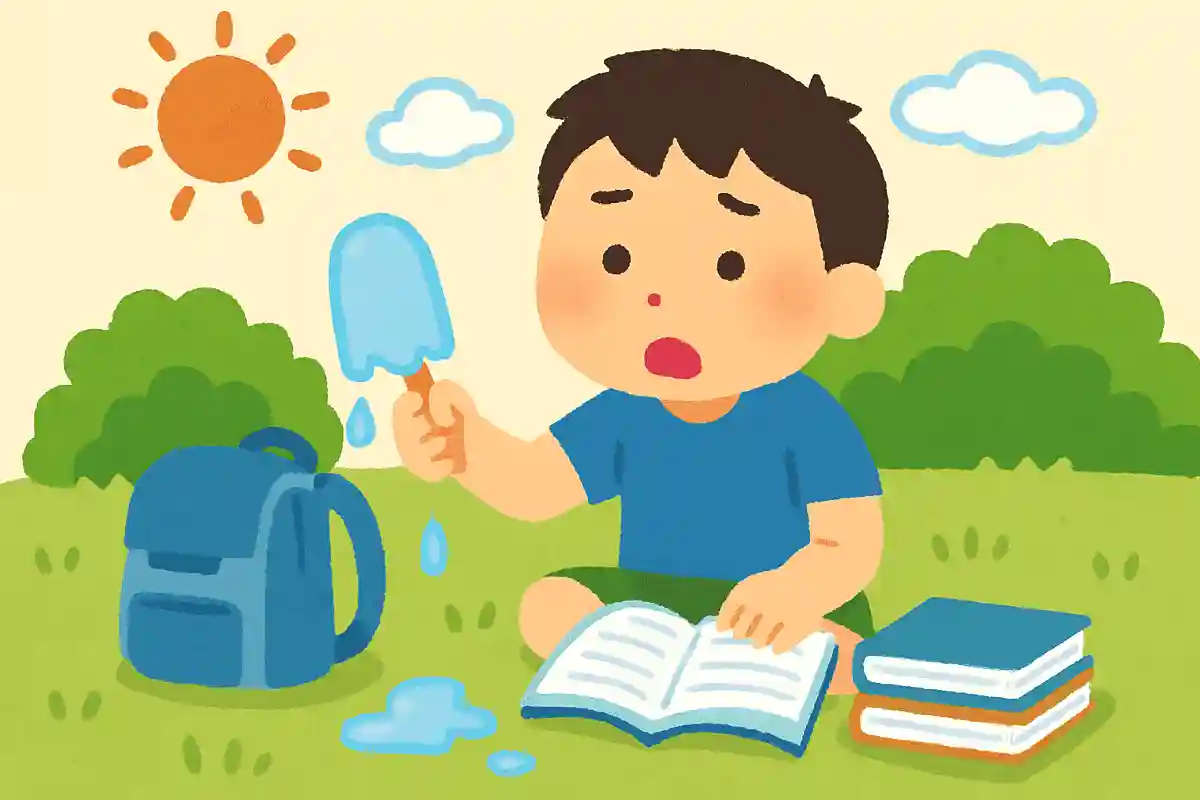
This senryu is interesting because it uses two words pronounced the same—“tokeru,” written as 溶ける and 解ける—but with different meanings.
It’s like the quintessential elementary school summer vacation homework, something many people tend to put off.
The key is that it says “doesn’t get solved” (解けぬ), not “gets solved” (解ける).
The homework problems are hard and won’t get solved easily, yet the ice cream melts right away… you can really feel that frustrating contrast.
It’s an excellent piece that vividly captures both the heat of summer and the exasperation of not being able to solve the homework.
