

Easy-to-sing songs recommended for men in their 70s: A collection of classic hits you’ll want to sing at karaoke

Among men in their seventies, quite a few probably still have opportunities to go to karaoke and sing, don’t they?
That said, if you’re going to sing, you want to sing well—and when it’s your turn, it can be hard to decide what song to choose.
So in this article, we’ll introduce songs that are easy to sing at karaoke.
We’ve gathered tracks with different “easy-to-sing” points—some featuring gentle, soothing melodies and others that are upbeat and lively—so try finding the ones that feel easiest for you to sing.
- Karaoke songs you’ll want to sing for men in their 70s: Enka and nostalgic Showa-era pop
- [For men in their 70s] A collection of easy-to-sing songs even for people who are tone-deaf
- Songs I want men in their 70s to sing: a roundup of tracks I'd like to hear at karaoke
- [Nostalgic Songs] A collection of tear-jerking Japanese tracks recommended for men in their 70s
- Energizing songs recommended for men in their 70s: A roundup of nostalgic power tracks
- [Recommended for people in their 70s] Songs that get everyone excited. Songs you’ll want to sing at karaoke.
- [For women in their 70s] A collection of songs that are easy to sing even for people who are tone-deaf
- Easy-to-sing songs recommended for women in their 70s: A collection of classic hits perfect for karaoke
- For seniors in their 80s: Stay healthy while having fun. Introducing dance songs that make you want to move!
- [For Seniors] Popular Karaoke Songs That Everyone Can Enjoy Together
- Easy-to-sing songs recommended for men in their 80s: Showa-era classics to perform at karaoke
- [Recommended for people in their 70s] Songs that really move you. Beloved classic Japanese hits of the past.
- [Karaoke] Songs That Get Men in Their 70s Fired Up! A Collection of Nostalgic Japanese Hits [2026]
Singable song recommendations for men in their 70s: A collection of classic karaoke favorites (1–10)
to youFuranku Nagai

This gem of a ballad, which highlights Frank Nagai’s captivating low bass voice, beautifully sings of deep gratitude and the bond with a loved one.
Its gentle melody and heartfelt lyrics warmly embrace the listener.
First released in 1972 and later re-recorded for a 1977 release, it has remained beloved by many over the years.
Performed three times on NHK’s Kōhaku Uta Gassen, it is widely known as one of Frank Nagai’s signature songs.
With a relaxed tempo that makes it easy to sing while feeling the connection with someone special, it’s perfect for karaoke—sing it with care, weaving the lyrics thoughtfully from the heart.
The Camellia Sasanqua InnŌkawa Eisaku

This is a true classic that epitomizes the very essence of enka, depicting the emotions of a man and woman consumed by a forbidden love.
Its unforgettable melody of tragic romance is beautifully rendered through Eisaku Okawa’s smooth, heartfelt vocals.
Upon its release in 1982, it became an instant smash hit and was performed on that year’s NHK Kohaku Uta Gassen, catapulting it to widespread fame.
Sing it at karaoke while savoring the ache of this bittersweet love, and it will surely resonate deeply with everyone who listens.
freezing rainKayama Akio

This song, Akio Kayama’s debut single, is a gem that tenderly sings of a wistful love.
Released in December 1977, it drew a huge response, selling close to 800,000 copies.
Kayama’s gentle vocals delicately capture the emotions of a woman grappling with heartbreak.
Many listeners must have related to the protagonist, whose heart is soaked by the cold winter rain.
With its relaxed tempo, it’s easy to sing and remains a popular karaoke choice.
The vocal range isn’t too wide, so try adjusting the key to a comfortable level before singing.
Easy-to-sing songs recommended for men in their 70s: A collection of classic karaoke hits (11–20)
A solitary journey to MichinokuYamamoto Jōji

Known as a classic of enka, this song beautifully depicts the scenery of the Tohoku region.
It expresses the feelings of a man traveling while still holding on to regrets about a former lover, conveyed through lyrical lyrics and melody.
Released in August 1980, the track significantly propelled Joji Yamamoto’s career.
More than a year after its release, it entered the Oricon Top 10 in the fall of 1981 and became a massive hit, selling over 900,000 copies.
With a gentle tempo, it features a structure in which the emotion builds toward the chorus.
Singing about the subtleties of life and bittersweet emotions, this piece is also recommended for karaoke.
Since it has a relaxed tempo, try singing it while checking your pitch and rhythm.
Gardenia blossomWatanabe Tetsuya

Known as one of Tetsuya Watari’s signature songs, this piece is imbued with deep emotion, centering on lost love and sorrow.
The gardenia flower is used symbolically to express a connection to a past love.
Released in August 1973, it had a broad impact—leading to his first appearance on the Kōhaku Uta Gassen the following year and being featured in a 1976 film of the same name.
With its gentle melody and simple vocal range, it’s easy to sing at karaoke.
It’s recommended to sing it with heartfelt feelings for someone special.
Oh, sake!Yoshi Ikuzo
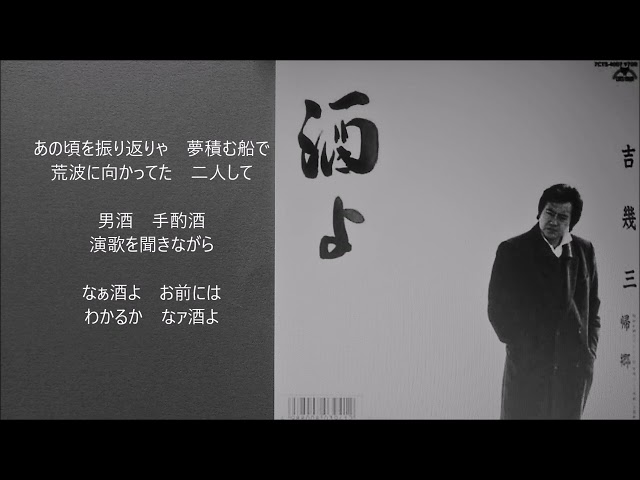
“Sake yo” is one of Ikuzo Yoshi’s signature songs, in which he sings about the many emotions of life through the motif of alcohol.
Looking back on past challenges and dreams, it’s a work rich in message that conveys life’s joys and sorrows, as well as hope for the future.
Yoshi’s husky, dialect-tinged voice gives it a deeply expressive charm.
Released in September 1988, it became a major hit and has since been included on numerous albums.
It’s guaranteed to liven up milestone moments in life or any gathering with friends over drinks! Savor Ikuzo Yoshi’s profound outlook on life and try singing it out loud.
Journey of the Heartchūrippu

This is the song that you can’t help but hum during the season of departures.
It’s a signature work by Tulip, a band formed in Fukuoka Prefecture, and a classic released in April 1973 as their third single.
Its melody, which evokes the poignant feelings for a lover far away and the scene of setting off by train, truly resonates.
In fact, just before release, the lead vocal was changed from Kazuo Zaitsū to Tatsuya Himeno, and the structure was altered to start with the chorus—changes that led to a major hit, reaching No.
1 on the Oricon charts.
Beloved as a TV drama theme and in commercials, this piece has been cherished across generations.
As you reminisce about youthful journeys together, raise your voices and sing “Kokoro no Tabi.”