

Easy-to-sing songs recommended for men in their 70s: A collection of classic hits you’ll want to sing at karaoke

Among men in their seventies, quite a few probably still have opportunities to go to karaoke and sing, don’t they?
That said, if you’re going to sing, you want to sing well—and when it’s your turn, it can be hard to decide what song to choose.
So in this article, we’ll introduce songs that are easy to sing at karaoke.
We’ve gathered tracks with different “easy-to-sing” points—some featuring gentle, soothing melodies and others that are upbeat and lively—so try finding the ones that feel easiest for you to sing.
- Karaoke songs you’ll want to sing for men in their 70s: Enka and nostalgic Showa-era pop
- [For men in their 70s] A collection of easy-to-sing songs even for people who are tone-deaf
- Songs I want men in their 70s to sing: a roundup of tracks I'd like to hear at karaoke
- [Nostalgic Songs] A collection of tear-jerking Japanese tracks recommended for men in their 70s
- Energizing songs recommended for men in their 70s: A roundup of nostalgic power tracks
- [Recommended for people in their 70s] Songs that get everyone excited. Songs you’ll want to sing at karaoke.
- [For women in their 70s] A collection of songs that are easy to sing even for people who are tone-deaf
- Easy-to-sing songs recommended for women in their 70s: A collection of classic hits perfect for karaoke
- For seniors in their 80s: Stay healthy while having fun. Introducing dance songs that make you want to move!
- [For Seniors] Popular Karaoke Songs That Everyone Can Enjoy Together
- Easy-to-sing songs recommended for men in their 80s: Showa-era classics to perform at karaoke
- [Recommended for people in their 70s] Songs that really move you. Beloved classic Japanese hits of the past.
- [Karaoke] Songs That Get Men in Their 70s Fired Up! A Collection of Nostalgic Japanese Hits [2026]
Easy-to-sing songs recommended for men in their 70s: A collection of classic karaoke favorites (41–50)
festivalKitajima Saburō

A song that powerfully sings of the spirit of Japan’s festival culture was released by Saburo Kitajima in November 1984.
It beautifully expresses gratitude to the mountain and sea deities, traditions passed from parent to child, and the passion of men.
The song was performed a total of six times on NHK’s Kōhaku Uta Gassen up to 2013, serving as the grand finale five of those times.
In 2014, it was also used in Suzuki’s New Year sales campaign commercial, making it beloved by a wide audience.
With its powerful vocals, moving melody, and the universally relatable fervor of festivals, this is a song that’s perfect for belting out at karaoke.
Let’s get married.yoshida takurou
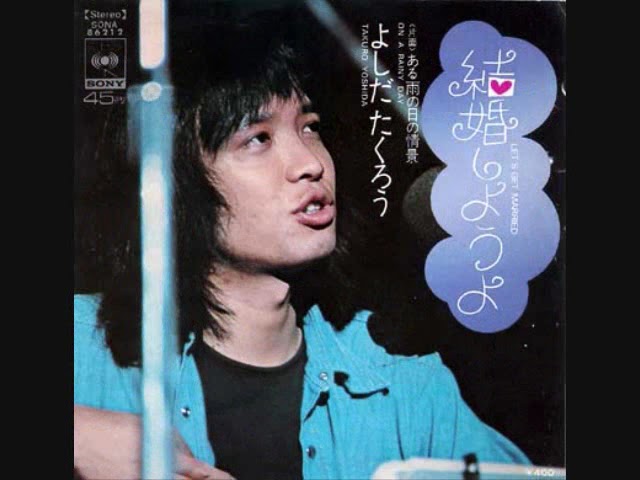
This work is memorable for its translucent, beautiful melody and sweet, poignant vocals.
Released in 1972, the song marked a major turning point in the history of folk music.
Centered on acoustic guitar, its warm sound creates an atmosphere that gently envelops feelings of love.
While poetically depicting springtime scenes, Takuro Yoshida expresses sincerity and pure affection.
Simple yet profound in its message, this classic reached a peak of No.
3 on the Oricon weekly chart.
Its heartwarming, gentle tone and tender vocal timbre enrich everyday moments.
It’s a song to savor slowly on a blossoming spring day, reminiscing with those of the same generation as memories come into full bloom.
If you’re happy and you know it, clap your handsSakamoto Kyu

Its charm lies in the way you can enjoy it by expressing a heartwarming classic through full-body movement.
It’s a song that lets you share the joy of connecting with others along with a simple, familiar melody.
Released by Kyu Sakamoto in 1964, it became one of his signature songs alongside “Ue o Muite Arukou” (“Sukiyaki”).
Based on an American folk song, Toshito Kimura wrote the Japanese lyrics with wishes for peace and friendship.
A heartwarming experience in the Philippines inspired the creation of this song, and it is said to have spread through activities at the YMCA.
It has been widely used in films and commercials and has long been cherished in educational settings.
Why not enjoy clapping and body movements together with seniors and let the conversation blossom with fond memories?
The Longed-For Hawaii RouteHaruo Oka

As a classic that lit a bright light in postwar Japan, one of Haruo Oka’s signature works is beloved by many.
With its lively melody and yearning for an unseen paradise, the song was released by King Records in 1948.
Its lyrics beautifully express a longing for unknown lands and the exhilaration of setting sail, resonating deeply with people of the time.
Owing to its popularity, it was adapted into a film by Shintoho in 1950, starring Haruo Oka himself, with Hibari Misora as co-star.
It’s a tune that lets you hum along with friends and bask in wonderful memories.
Perfect for music recreation at day-service centers, it’s a classic that everyone can enjoy together.
The Highland Train GoesOkamoto Atsurō

A song that gracefully celebrates the natural beauty of the highlands and the romance of train travel evokes heartwarming memories of family trips and brings to mind wonderful moments with loved ones.
Its sweeping scenery and romantic spirit are sure to soothe anyone’s heart.
Carried by Atsuro Okamoto’s comforting vocals, the pastoral landscapes gently resonate within.
Since its release in 1954, this work has continued to be beloved by many and was featured in the 2020 NHK morning drama series “Yell,” moving audiences across generations.
It’s perfect for a time of sharing old memories over tea with everyone.
Settle in, relax, and enjoy a peaceful moment.
Cape ErimoMori Shinichi

Shinichi Mori delivers this celebrated song, whose depiction of spring in the northern country resonates deeply, with his distinctive husky voice.
It begins with an image of warming past sorrows by the fireplace, and carefully portrays the process of putting one’s heart in order amid a gentle, everyday life.
It conveys the importance of stepping away from the bustle of the city and reexamining the happiness found in a simple life.
Released in 1974, this work was born from an unconventional collaboration with Takuro Yoshida and won the Japan Record Award.
If you listen to the song slowly under the mild spring sunlight, nostalgic memories will naturally come back to you.
It’s also nice to share old stories over coffee with someone dear.
It’s okayHikawa Kiyoshi

Life brings various hardships and joys, and Kiyoshi Hikawa delivers a warm, gentle song that embraces them all.
Released in 2019, this work expresses the sadness and feelings of love that everyone experiences through his beautiful vocals.
Like the moon setting and the sun rising, its hopeful message—that tomorrow will surely come—resonates in the heart.
Also included on the album “Shin Enka Meikyoku Collection 9,” this piece is perfect for singing along at recreational gatherings.
Its friendly, singable melody and uplifting lyrics are part of its charm.