

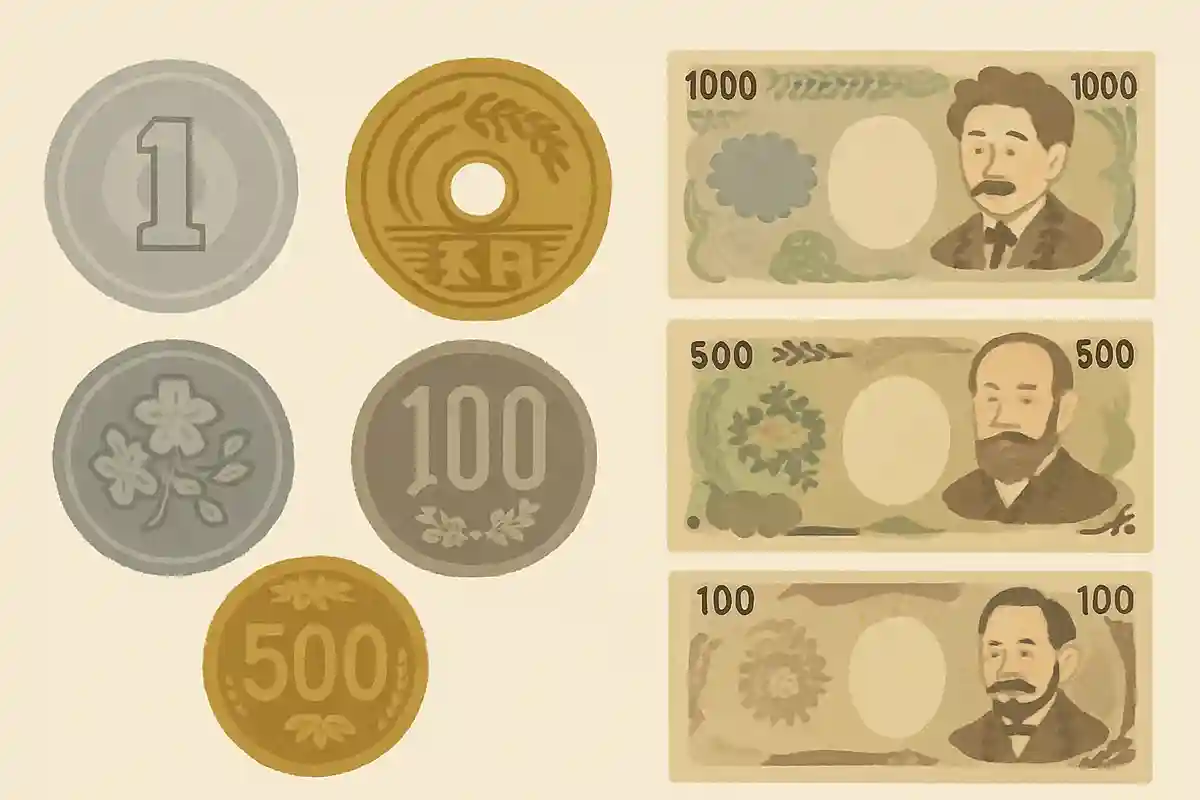

Showa-era money is packed with fascinating history, featuring denominations and portraits that differ from those used today.
As times changed, the types and values of currency evolved, serving as a mirror reflecting everyday life and the economy of the period.
In this article, we’ll clearly introduce the kinds of currency used in the Showa era and how they changed over time.
Some forms of money are now rarely seen, so this might bring back nostalgic memories.
Of course, those who didn’t live through that era or who are simply interested in history can enjoy it as well.
- [Nostalgic Showa Fashion] The changing trends that feel both nostalgic and fresh
- Nostalgic foods of the Showa era. Let’s trace the memorable flavors and the memories they evoke.
- [For Seniors] Nostalgic! Showa-Era Quizzes Recommended for Reminiscence Therapy
- A must-see for the Showa generation! Nostalgic popular snacks from the old days
- The nostalgic world of Showa-era films. Revisiting masterpieces that linger in the heart.
- A nostalgic feature on Showa-era magazines: looking back at the popular magazines of the time.
- [For Seniors] Nostalgic and Fun! Let’s Look Back on Showa-Era Entertainment
- [For Seniors] Irresistibly Grabbable! A Special Feature on Nostalgic Showa-Era Goods
- For Seniors: Get Hooked Again! Let’s Look Back at Nostalgic Showa-Era Games
- [For Seniors] Recommended for Brain Training! Nostalgic Showa-Era Quiz
- Nostalgic ice cream from the Showa era. From today’s classic staples to old-time favorites.
- [Nostalgic Memories] Popular Menu Items from Showa-Era School Lunches
- [For Seniors] Irresistibly Nostalgic! Let’s Look Back at Drinks from the Showa Era
Types of nostalgic Showa-era money: currencies you should know and how they changed (1–10)
Giza-edged 10-yen bronze coin

A happy find! Let me introduce the serrated-edge 10-yen bronze coin.
These 10-yen coins with ridges along the edge were minted from 1951 to 1958 and are commonly nicknamed “Giza-ju.” You still come across them now and then, and it’s exciting when you do, isn’t it? They’re no longer being issued, so some people collect them.
Next time you pay with cash, take a close look at your 10-yen coins.
You might still have a chance to spot one!
Hirobumi Ito 1,000-yen banknote

Here is an introduction to the Itō Hirobumi 1,000-yen note, classified as the “C 1,000-yen note.” The banknote featuring Itō Hirobumi began issuance on November 1, 1963 (Showa 38) and was used until payments were suspended on January 4, 1986 (Showa 61).
It is characterized by a portrait of Itō Hirobumi on the front and the Bank of Japan on the reverse.
Itō Hirobumi—pronounced “Itō Hirofumi”—was a great historical figure who, after establishing the cabinet system, became Prime Minister and created Japan’s first constitution.
Iwakura Tomomi 500-yen note

Let me introduce the 500-yen note featuring Tomomi Iwakura, commonly known as the “B 500-yen note.” While 500 yen is a coin today, it used to be a banknote.
It was issued on April 2, 1951 (Showa 26) and was withdrawn from payment on January 4, 1971 (Showa 46).
The front of the note depicts Tomomi Iwakura, and the back features Mount Fuji, a symbol of Japan’s pride.
Tomomi Iwakura—pronounced “Iwakura Tomomi”—was a distinguished figure who contributed to Japan’s modernization, including involvement in the establishment of the Nippon Railway.
Iwakura Tomomi 500-yen note

Let me introduce the 500-yen banknote featuring Tomomi Iwakura, known as the “C 500-yen note.” Tomomi Iwakura was depicted on the 500-yen note in 1951 (Showa 26), and he also appeared on the 500-yen note issued on November 1, 1969 (Showa 44).
Although payment was suspended as of April 1, 1994 (Heisei 6), many people likely still remember it.
As before, Iwakura is depicted on the obverse of the note and Mount Fuji on the reverse.
One notable feature is that the design is slightly different.
Taisuke Itagaki one-hundred-yen note

Let me introduce the so-called “B 100-yen note,” the 100-yen banknote featuring Taisuke Itagaki.
The reverse side of the 100-yen note bearing Itagaki’s portrait depicts the National Diet Building.
It was issued on December 1, 1953 (Showa 28) and appears to have been withdrawn from payment on August 1, 1974 (Showa 49).
Taisuke Itagaki—pronounced Itagaki Taisuke—is known for vigorously promoting the Freedom and People’s Rights Movement in his demand for the establishment of a national assembly.
He is also remembered for the famous phrase, “Itagaki may die, but liberty never dies.”
Rice 100-yen silver coin

Let me introduce the old 100-yen “Rice Ear” silver coin.
The obverse features a design of rice ears, while the reverse is characterized by the large face value “100.” It was issued from 1959 to 1966 (Showa 34 to Showa 41) and is no longer in circulation, making it a rare 100-yen silver coin.
Collectors and those with fond memories of it likely keep it safely at home or in a safe.
Although its design resembles the current 100-yen coin, it is said that vending machines do not recognize it.
If you’ve found one, consider yourself lucky.
Prince Shōtoku 10,000-yen note

Introducing the “C 10,000-yen note” featuring Prince Shōtoku.
While Prince Shōtoku has appeared on the 100-yen, 1,000-yen, and 5,000-yen notes, he was also depicted on the 10,000-yen note.
Issuance began on December 1, 1958 (Showa 33), and payments were suspended on January 4, 1986 (Showa 61).
Because he was featured on banknotes of various denominations, many people may associate Japanese currency with Prince Shōtoku.
Some may feel nostalgic or even have one stored at home.