

Recommended Japanese karaoke songs for men in their 60s

A karaoke selection for men in their 60s that brings back the youth of the Showa era.
Relive summer memories with Yosui Inoue’s “Shonen Jidai,” the ache of love with Chiharu Matsuyama’s “Koi,” and let Koji Tamaki’s vocals express mature allure to the fullest.
The timeless hits you hummed in your youth will shine anew at karaoke today.
From folk to J-pop, these are songs loved across generations.
Sing a nostalgic tune, and emotions you’d nearly forgotten will vividly return, filling your time with comfort.
Use this article as a guide for your song choices and enjoy wonderful moments with your friends.
- Karaoke songs that are sure to get a 60-something man fired up
- [For People in Their 60s] Ranking of Easy-to-Sing Karaoke Songs [2026]
- [2026 Edition] Songs Loved by People in Their 60s: Classic Hits from Their Youth
- Japanese karaoke songs that are easy for men in their 60s to sing
- Uplifting Japanese songs recommended for men in their 60s
- Popular Japanese songs among men in their 60s: recommended masterpieces and classic tracks
- Interesting Japanese songs recommended for men in their 60s
- A love song that makes a man in his sixties relive his youth. Timeless classics that rekindle the romances of those days.
- [Men in their 60s] Even if you're not good at singing, it's okay! Easy-to-sing songs for karaoke
- For Men in Their 50s: No Worries If You’re Tone-Deaf! A Curated Selection of Easy-to-Sing Karaoke Songs
- [For Men] These Songs Will Make You a Better Singer! Tracks That Are Effective for Karaoke Practice
- Must-see for men: Songs that look cool if you can sing them at karaoke—numbers that women can’t help but be captivated by.
- [60s] Karaoke Popularity Rankings by Generation [2026]
Recommended Japanese pop songs for karaoke for men in their 60s (21–30)
Boat SongYashiro Aki

There aren’t many songs that fit a nighttime bar as well as this one.
It’s a hit number powerfully delivered by Aki Yashiro’s natural vocal prowess.
Men should have this song in their repertoire, too.
Don’t force it—sing it gently while picturing yourself drinking at the bar counter.
loveMatsuyama Chiharu

A master of folk songs, Chiharu Matsuyama weaves a heartrending love story.
This track delicately portrays the emotions of a woman weary of love.
Many will likely empathize with the image of a woman who, despite being tired of waiting, continues to love.
Matsuyama’s warm vocals and the sound of the guitar further enhance the world of the lyrics.
Released in 2003, this work was also included on the albums “Kishōtenketsu II” and “Tabidachi,” and has long been cherished as one of Matsuyama’s signature songs.
It’s a piece I recommend not only to those troubled by love, but also to anyone standing at a crossroads in life.
Recommended Japanese pop songs for karaoke for men in their 60s (31–40)
Yagiri no Watashi (Yagiri Ferry)Hosokawa Takashi

This is the song by Takashi Hosokawa that won the Japan Record Award.
It’s a slow-tempo piece that can be difficult unless you hold the pitch firmly, but once you clear that, it becomes a very satisfying song to sing.
It’s best to build it up gradually and sing the chorus with a bit of a powerful, projected voice.
Ruby RingTerao Akira

You probably can’t bring out the charm of this song until you’ve reached a certain age.
This is the best song for pulling off a dapper look.
It may seem monotonous, but the chorus becomes melodic, giving it a quality that never bores the listener.
It’s the kind of track you want to nail while lightly swaying your shoulders.
Burn, you fine womantsuisuto

For men in their 60s, rock bands were likely an important part of the pages of their youth.
Among them, many probably felt their hearts race at the full-on masculinity of The TWIST’s sound.
That’s why I recommend “Moero Iiyo-na” (“Burn, Lovely Woman”).
Sera Masanori is known for his striking shouts, but he keeps them moderate on this track.
The range spans mid1 C# to hi A, which is on the slightly wider side for a male song, but not unmanageable—adjust the key and you should be able to sing it without trouble.
It’s a surefire crowd-pleaser, so consider adding it to your repertoire.

RunawayRATS&STAR
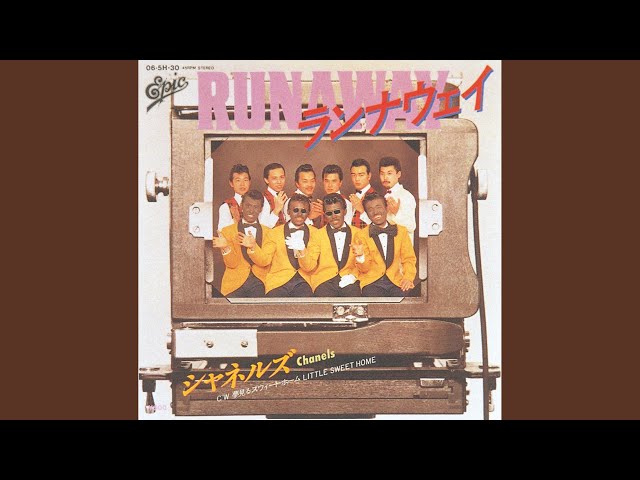
When it comes to the groups that laid the foundation for soul music and R&B in Japan, Rats & Star surely comes to mind.
As their black-coated appearance suggested, they had deep respect for Black music.
Their song “Runaway” is one of their signature tracks, blending elements of Black music with kayōkyoku and J-pop into a very singable style.
The vocal range is relatively narrow, from mid1 D# to mid2 G, so as long as you focus on the groove, you should be able to aim for a high score.
unconsciously / without realizing itUzaki Ryūdō
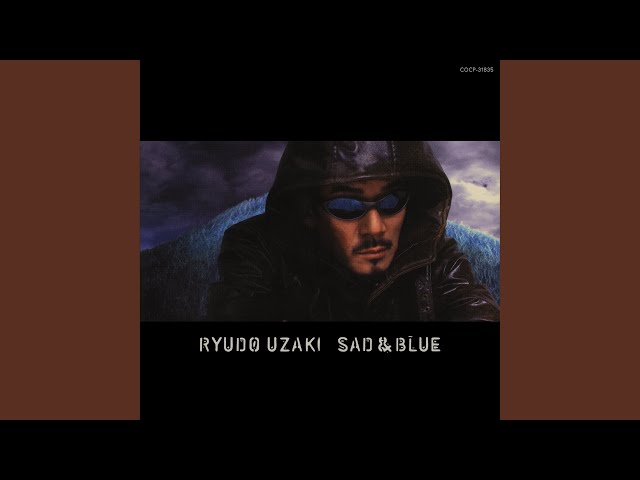
For men in their 60s, when it comes to no-nonsense male singer-songwriters, Ryudo Uzaki is likely the first name that comes to mind.
He has many classic songs, but the one I especially recommend for aiming for a high score is Shira zu Shira zu no Uchi ni.
This piece is set within a relatively narrow range of mid1 B to mid2 C#, and the vocal line maintains a gentle, even contour.
However, because it calls for expressive elements like shouts and breath control, if you want to show appeal beyond just scoring points, I recommend mastering overtones that are effective in the low to low-mid range.