


Sushi and senryu.Did you know that when these two seemingly unrelated things come together, they can create pieces that make you chuckle?Senryu that capture everyday moments related to sushi in 5-7-5—family skirmishes at conveyor-belt sushi, passionate feelings about favorite toppings, the tension at high-end sushi bars—are packed with empathy and humor.In this article, we’ll introduce a variety of senryu themed around sushi.You can enjoy reading them, or try composing your own.By all means, savor some sushi as you immerse yourself in the playful world of words!
- Funny senryu poems composed by junior high school students: introducing outstanding works that will make you burst out laughing
- Burst out laughing! A collection of outstandingly brilliant otaku senryu masterpieces
- Senryu about goldfish. A collection of works filled with love for goldfish.
- Parenting Senryu: Relatable Parenting Moments That Make You Say “So True!” Turn Everyday Struggles into Laughter with Senryu
- Funny senryu with the theme of toilets. Presenting a selection of masterpieces and gems all at once
- Challenge Pokémon senryu! From laugh-out-loud gags to outstanding works
- [Elementary School Senryu] A Collection of Hilarious Masterpieces about Summer Vacation, Friends, and School Life. Tips and Explanations Learned from Outstanding Works
- [Traffic Safety Senryu] Outstanding works shining with humor and lessons. A carefully selected line to always keep in mind.
- Irresistible reads! A collection of classic and outstanding humorous golf senryu
- Kenta Otani’s original tongue twisters: a collection that’ll have you tripping over words and bursting into laughter
- Funny palindromes. A masterpiece collection that makes you burst out laughing when you imagine them.
- [For Elementary School Students] Turn Summer Memories into Haiku! A Collection of Fun Summer Haiku Ideas
- Easy to remember and fun! A collection of number pun/mnemonic ideas
Chuckles guaranteed! A master collection of senryu composed with sushi themes (1–10)
Fish is healthy, so it’s okay.
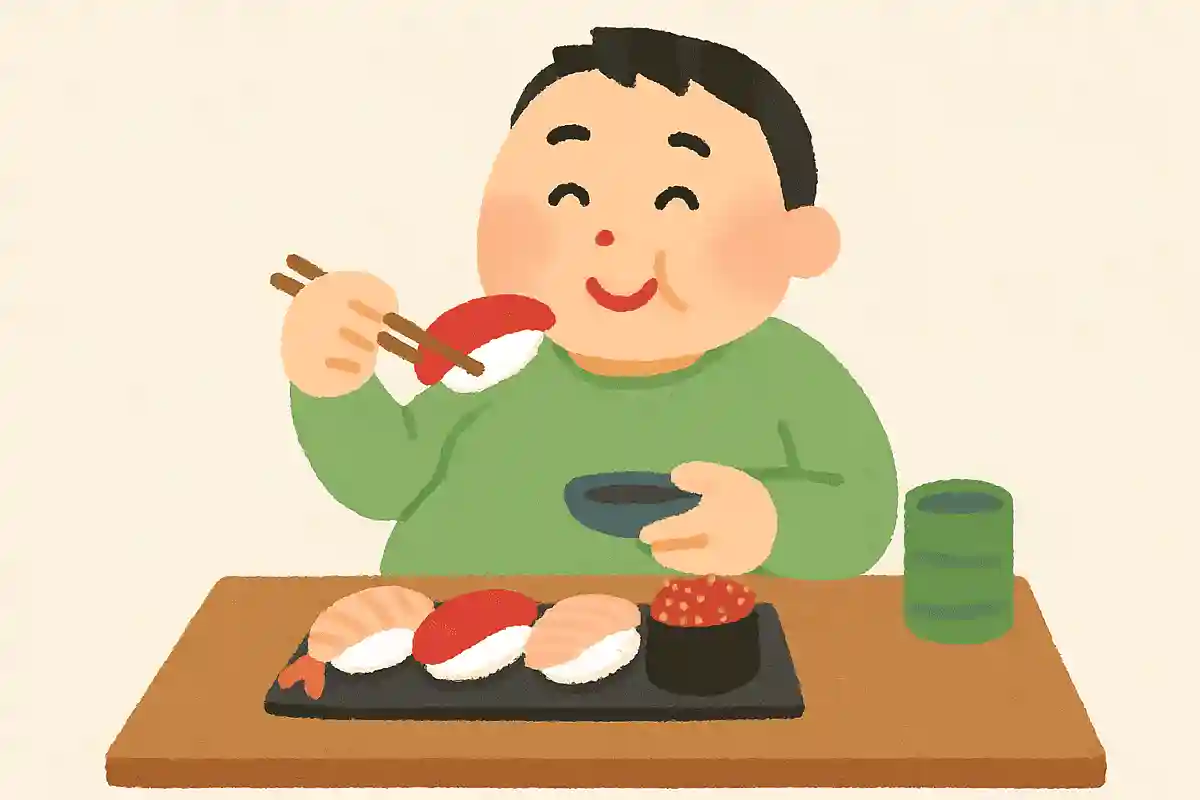
It’s a senryu that brings to mind the phrase “The diet starts tomorrow.” Fish may indeed be healthy, but sushi has vinegared rice underneath the fish.
Since sushi rice is made from rice, its main component is, of course, carbohydrates.
Carbohydrates provide energy in the right amounts, but it’s well known that overeating them increases the risk of weight gain.
So what I’m saying is: it’s not okay at all! That said, sushi is delicious, so I understand the urge to look the other way and dig in…

Here it comes! my taciturn father is shouting
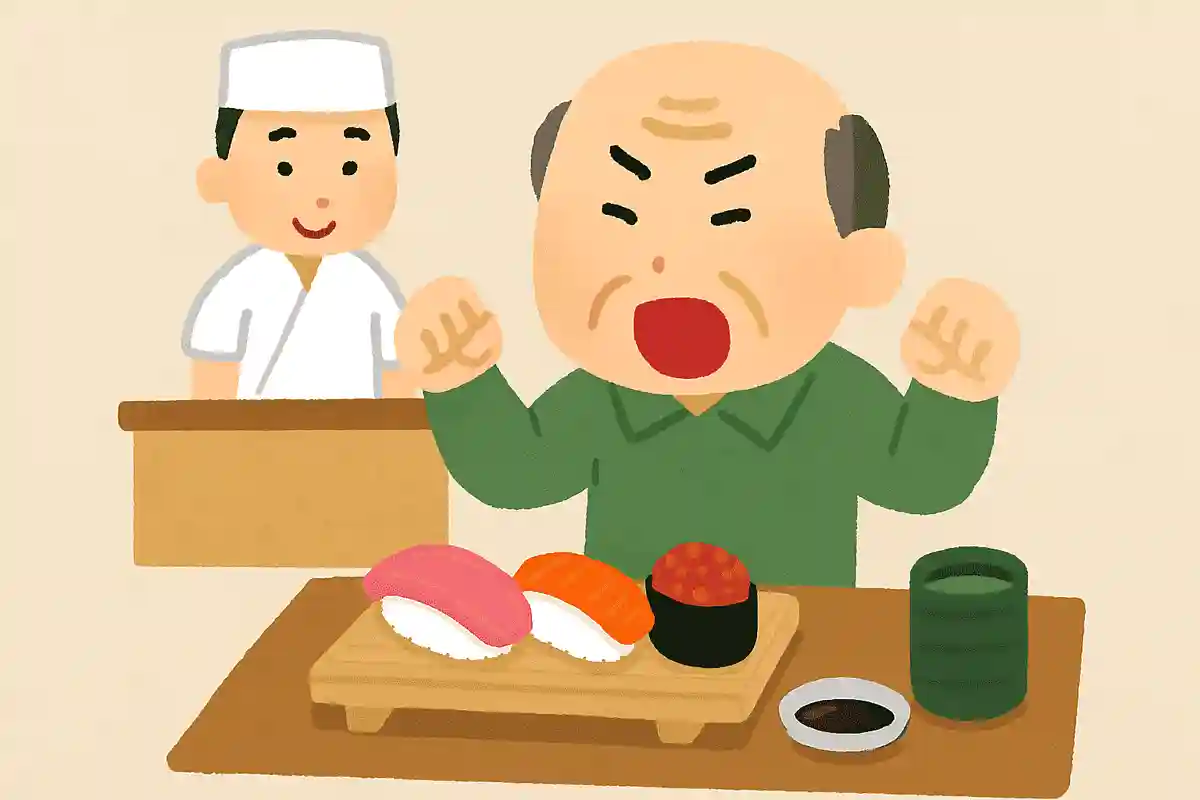
Is this an episode at a conveyor-belt sushi place? Sushi is the ultimate treat, so just the prospect of eating it gets you excited.
It seems even a usually taciturn father is no exception.
In his repeated, succinct phrase “kita, kita” (“here it comes, here it comes”), you can feel his strong anticipation and joy for the sushi.
His eyes must be shining with childlike wonder.
Someone quiet and composed transforms only when faced with sushi—that’s a funny image.
It makes you want to ask, just once, what feelings prompt him to shout like that.
Pressing the panel, calling “Wait!” to the child—golden plate
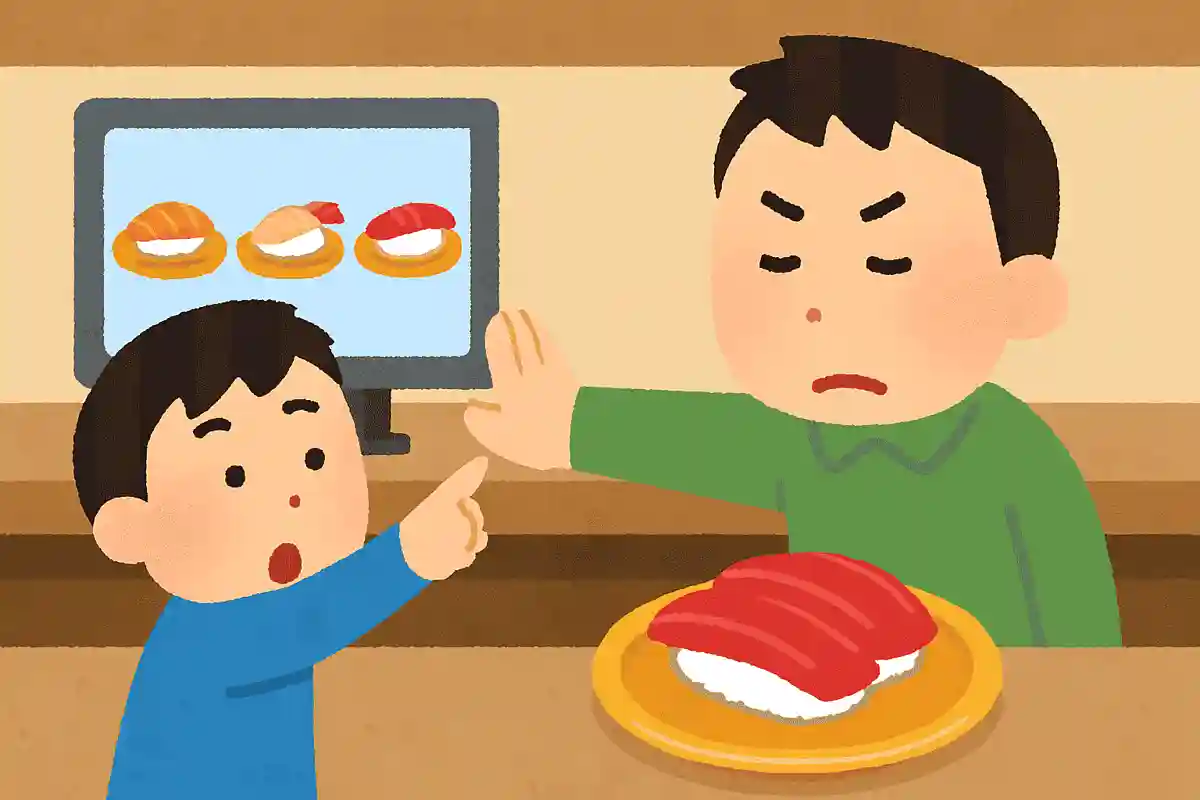
As a parent, you want to let your child eat as much of what they like as they want, but the gold plates are the one thing that makes you want to call a timeout.
At many sushi restaurants, the price varies by the color or pattern of the plate.
Among them, the gold plates are known to be especially expensive, so if your child casually orders only those, your wallet takes a huge hit! It’s easy to understand why you’d want to stop them.
This senryu vividly captures a common scene—an “it happens all the time” moment at a sushi restaurant.
I’m tuna; Mom is fatty tuna; Dad is egg.
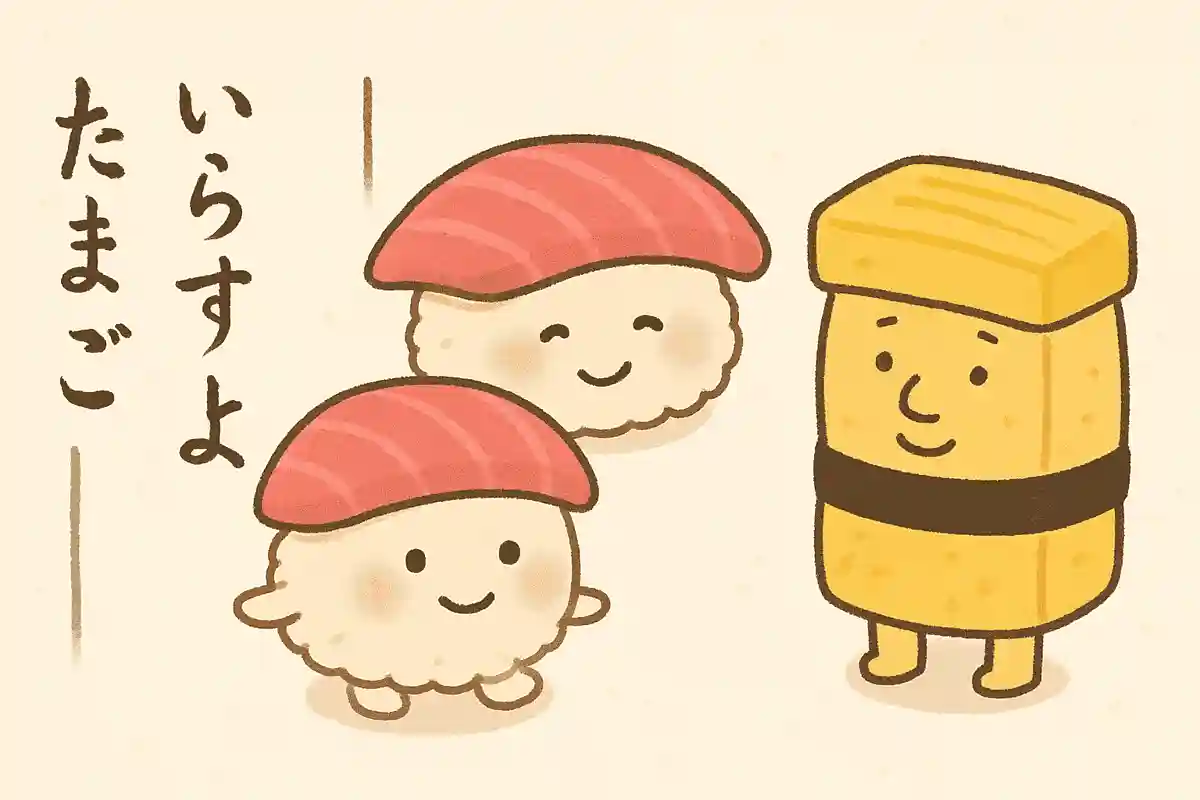
This is a senryu that conveys the household hierarchy through sushi toppings.
From the toppings for me and Mom, I wondered what Dad’s would be—maybe eel?—but it turned out to be egg… isn’t that the cheapest? It’s possible Dad likes egg more than fatty tuna, but seeing that both mine and Mom’s are fatty tuna, it does seem like Dad’s standing might be weak… I feel bad for laughing, but I can’t help picturing Dad going, “Huh? Only egg for me?” and it makes me chuckle.
I’m in my rebellious phase, but I’ll still go along to the sushi restaurant.
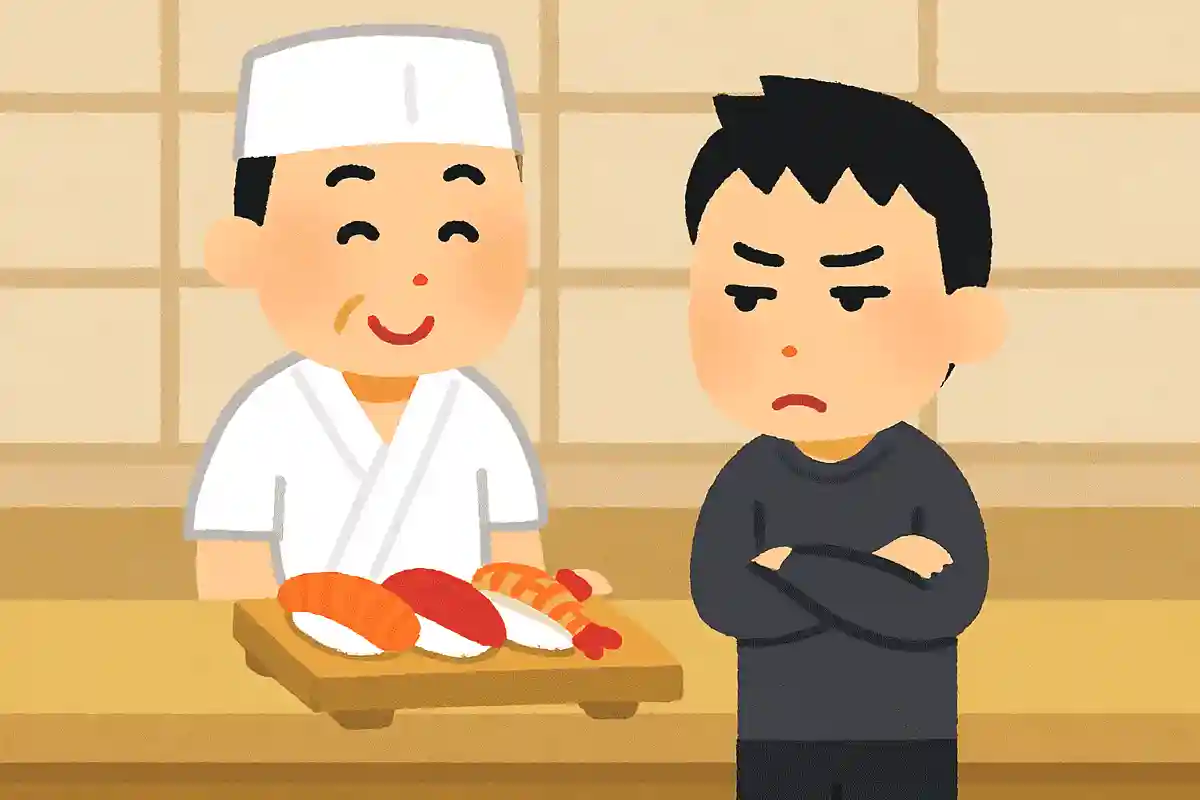
Many parents struggle with their child’s rebellious phase.
A child who had been obedient may suddenly ignore their parents or act standoffish, leaving you unsure how to interact.
That’s when we’d like you to read this senryu and have a laugh.
Even though the kid is usually defiant, if you invite them out for sushi, they’ll tag along—adorable, isn’t it? They may be in a rebellious stage, but sushi’s appeal is irresistible.
Your child might also have something so appealing that it lets them forget their rebellion for a little while!
Listen, child—no matter what, you’re eating too much.
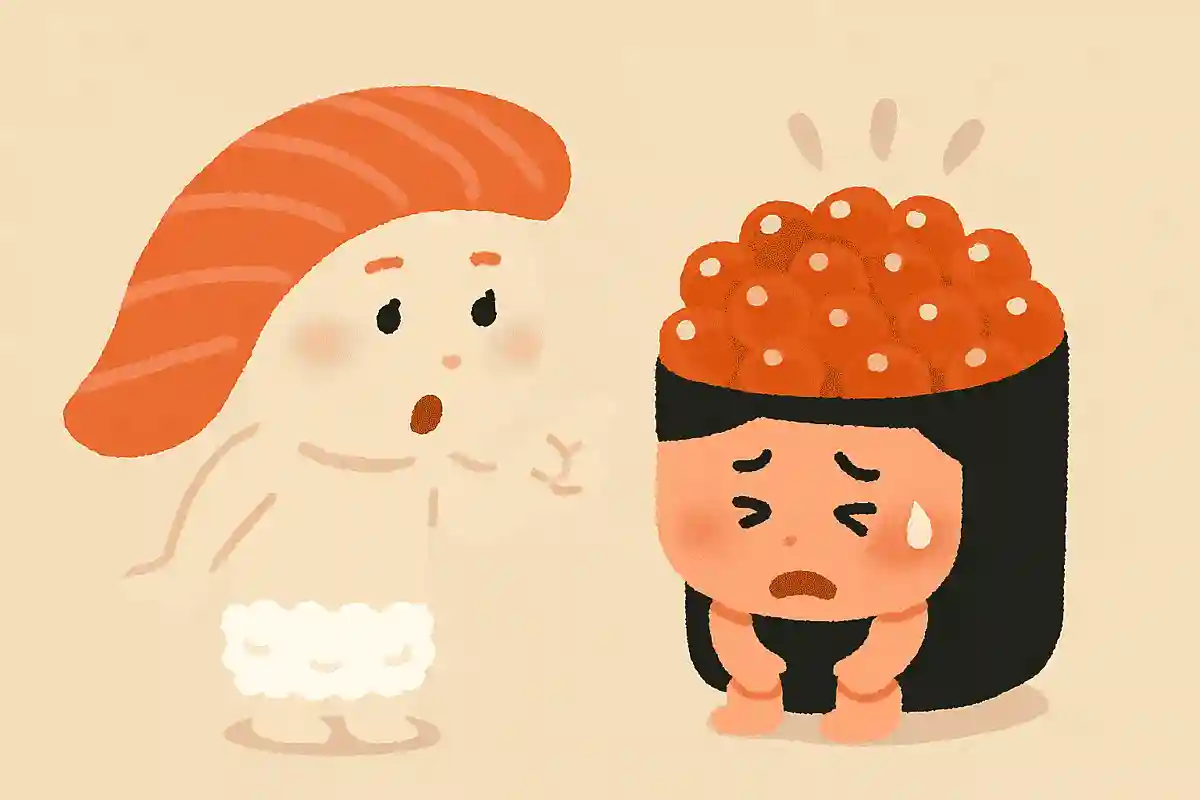
The author of this senryu might have a child who loves ikura (salmon roe).
Ikura has a distinctive flavor, but that fun popping sensation can be appealing, so many kids may want to eat it.
Still, before “fun,” there’s something to know: ikura is a luxury item.
This is a unique senryu that plays on the homophone between “ikura” meaning “how much/amount” and “ikura” the ingredient, but its content is quite serious.
That contrast is part of the humor, yet since ikura is high in salt, I hope people are careful not to eat too much.
The plates for my grandson keep piling up—I gasp.
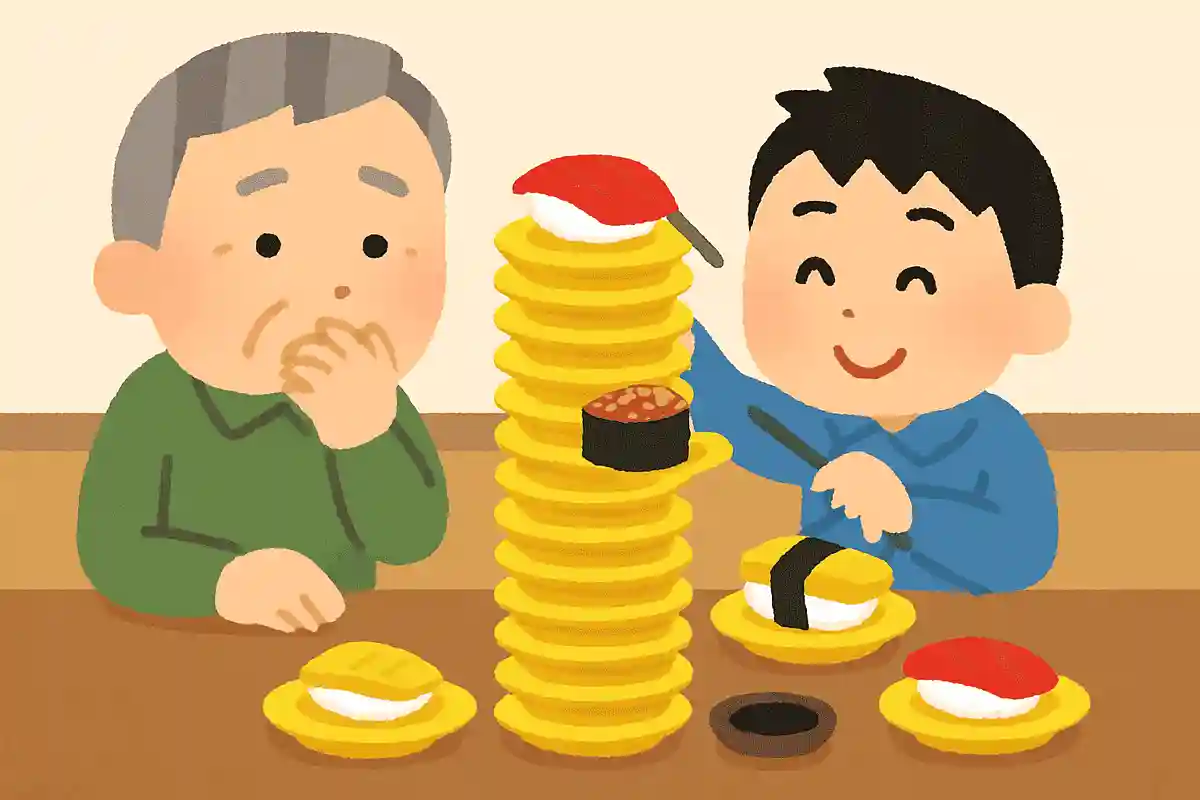
To grandparents, grandchildren are always adorable.
If such a grandchild says they want to eat sushi, you’ll naturally want to treat them.
However, as in this senryu, you might be shocked by an appetite that far exceeds your expectations.
Even if you’ve watched them grow, unless you live together, you rarely get to see how much they actually eat.
If you carelessly take them to a high-end, non-conveyor-belt sushi restaurant, your fun mealtime with your grandchild could turn into a chilling moment.