

A chuckle-worthy collection of masterful senryu poems themed around sushi toppings

Sushi and senryu.Did you know that when these two seemingly unrelated things come together, they can create pieces that make you chuckle?Senryu that capture everyday moments related to sushi in 5-7-5—family skirmishes at conveyor-belt sushi, passionate feelings about favorite toppings, the tension at high-end sushi bars—are packed with empathy and humor.In this article, we’ll introduce a variety of senryu themed around sushi.You can enjoy reading them, or try composing your own.By all means, savor some sushi as you immerse yourself in the playful world of words!
- Funny senryu poems composed by junior high school students: introducing outstanding works that will make you burst out laughing
- Burst out laughing! A collection of outstandingly brilliant otaku senryu masterpieces
- Senryu about goldfish. A collection of works filled with love for goldfish.
- Parenting Senryu: Relatable Parenting Moments That Make You Say “So True!” Turn Everyday Struggles into Laughter with Senryu
- Funny senryu with the theme of toilets. Presenting a selection of masterpieces and gems all at once
- Challenge Pokémon senryu! From laugh-out-loud gags to outstanding works
- [Elementary School Senryu] A Collection of Hilarious Masterpieces about Summer Vacation, Friends, and School Life. Tips and Explanations Learned from Outstanding Works
- [Traffic Safety Senryu] Outstanding works shining with humor and lessons. A carefully selected line to always keep in mind.
- Irresistible reads! A collection of classic and outstanding humorous golf senryu
- Kenta Otani’s original tongue twisters: a collection that’ll have you tripping over words and bursting into laughter
- Funny palindromes. A masterpiece collection that makes you burst out laughing when you imagine them.
- [For Elementary School Students] Turn Summer Memories into Haiku! A Collection of Fun Summer Haiku Ideas
- Easy to remember and fun! A collection of number pun/mnemonic ideas
Chuckles guaranteed! A master collection of senryu composed with sushi themes (1–10)
Eighty percent full—the remaining twenty percent is ginger and tea.
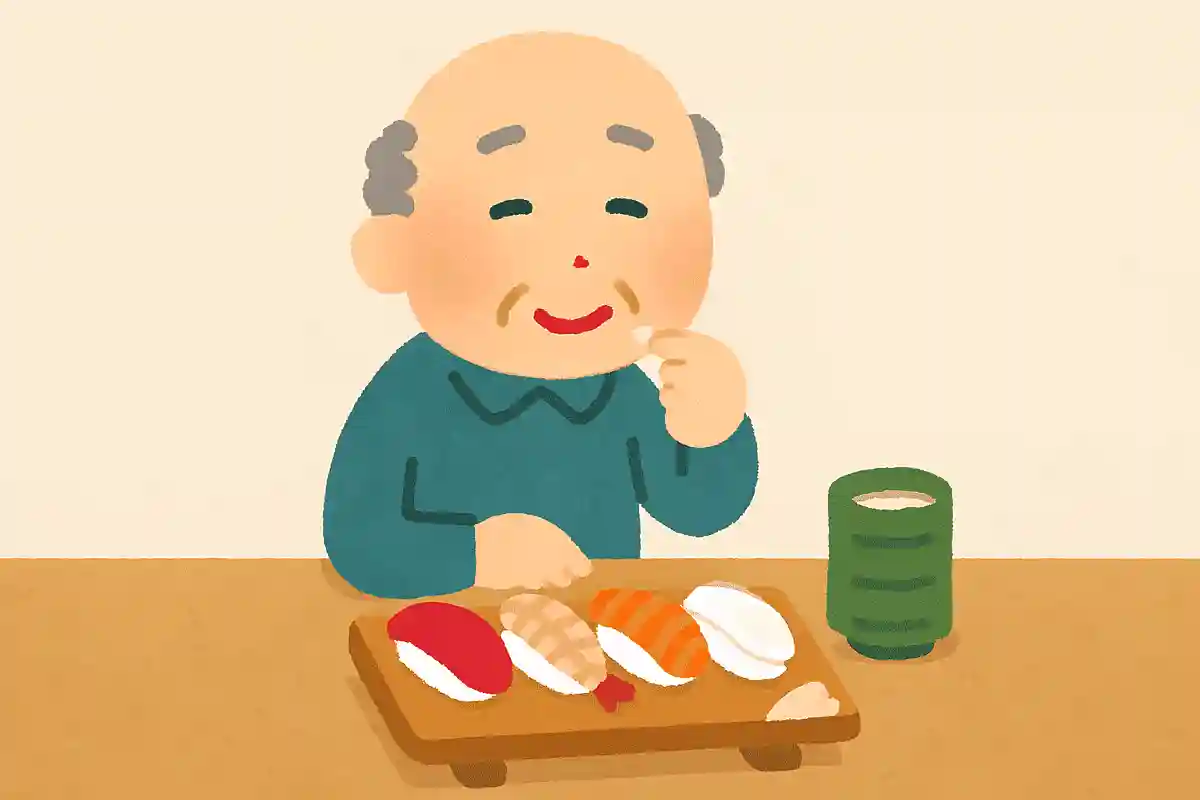
Hara-hachibu means stopping eating before you’re full—using about 80% fullness as a guide—so you don’t overeat.
Making this a habit is considered good for your health because it helps prevent obesity and improve lifestyle-related diseases.
In this senryu, it seems the person enjoyed sushi up to hara-hachibu and then ate gari (pickled ginger), which serves as a palate cleanser and can help prevent food poisoning.
It’s a verse that shows they’re enjoying sushi while being mindful of their health.
It’s also kind of amusing if you think of the remaining “two-tenths” both as the leftover capacity and as a playful nod to sushi often being served as two pieces (nigiri in pairs).

The sushi toppings with market price labels that I can’t bring myself to order
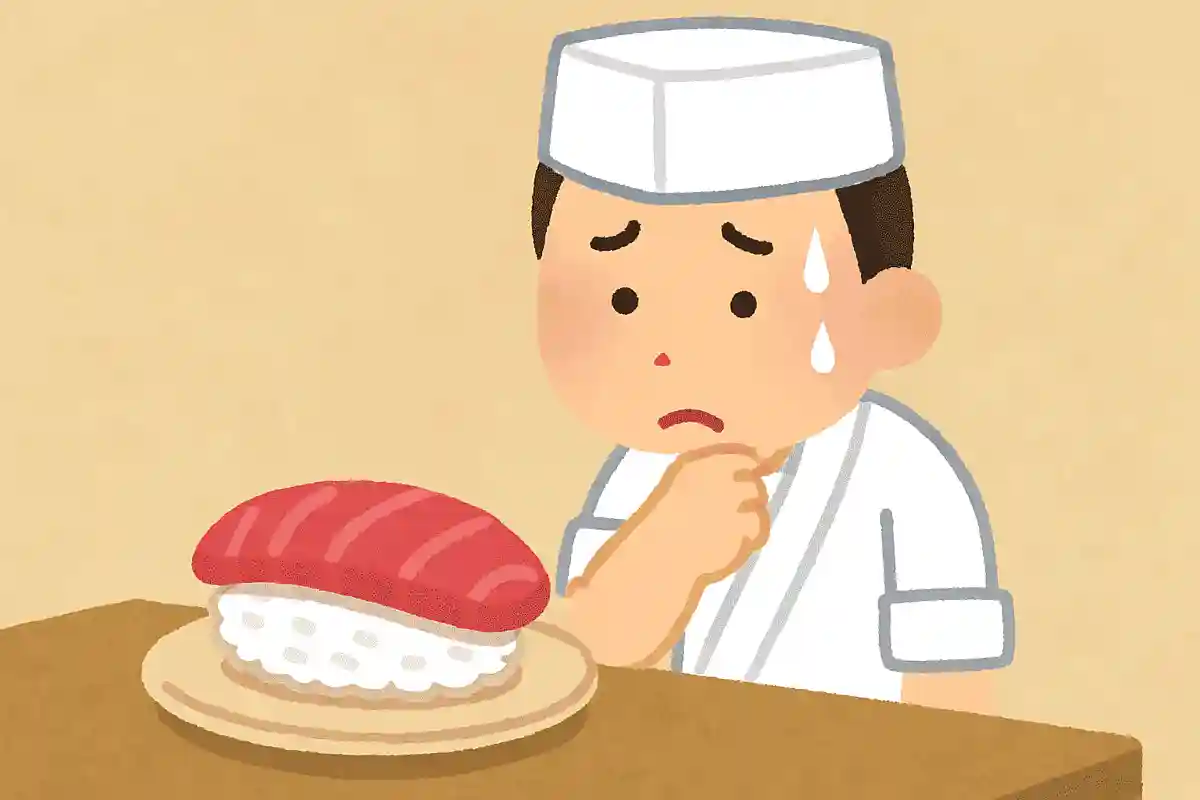
One thing you often see at high-end sushi restaurants without conveyor belts is the term “market price.” Since it means the price changes depending on the moment, you can’t help but worry, “Could it be really expensive…?” The author of this senryu probably felt the same way.
The value of wild seafood fluctuates greatly with the catch, making it difficult to display fixed prices; that’s why it’s listed as market price.
You want to enjoy delicious sushi, but that “market price” label stands in your way… It may be a dilemma born from being used to conveyor-belt sushi.
I ate too much—now my belly is two stories tall.
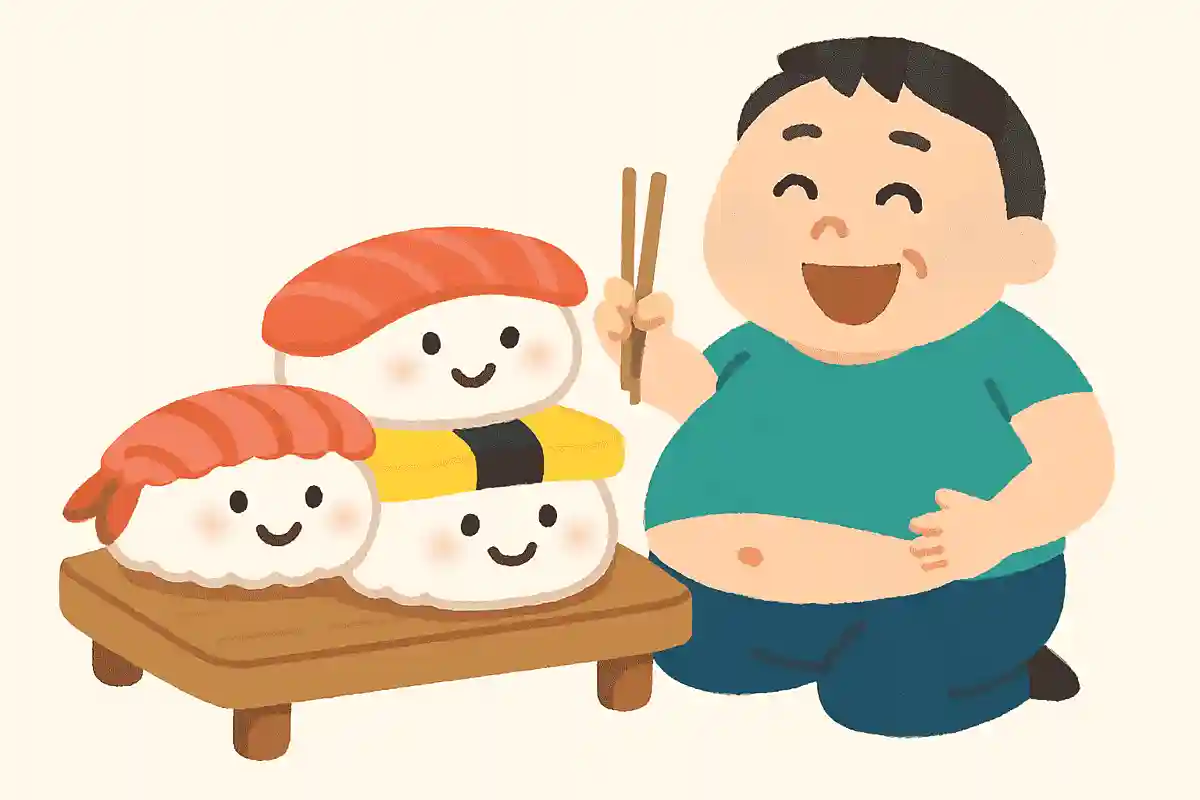
By “two-story,” you must mean sushi with two layers of topping.
It’s a delightful menu item because you can simply enjoy twice the topping.
But if eating too much made your belly “two-story,” doesn’t that mean you put on some flab and ended up with a two-tiered tummy? It doesn’t sound like particularly good news, but since they’re poking fun at themselves by punning on their own belly and sushi toppings, it doesn’t feel tragic.
If anything, it even conveys a sense of pride—no regrets! I went all in! Thinking of it that way makes it amusing; it’s the kind of senryu that makes you want to applaud.
Chuckle-Worthy! A Masterpiece Collection of Senryu Inspired by Sushi (11–20)
If someone else is paying, my hand reaches for the nigiri sushi
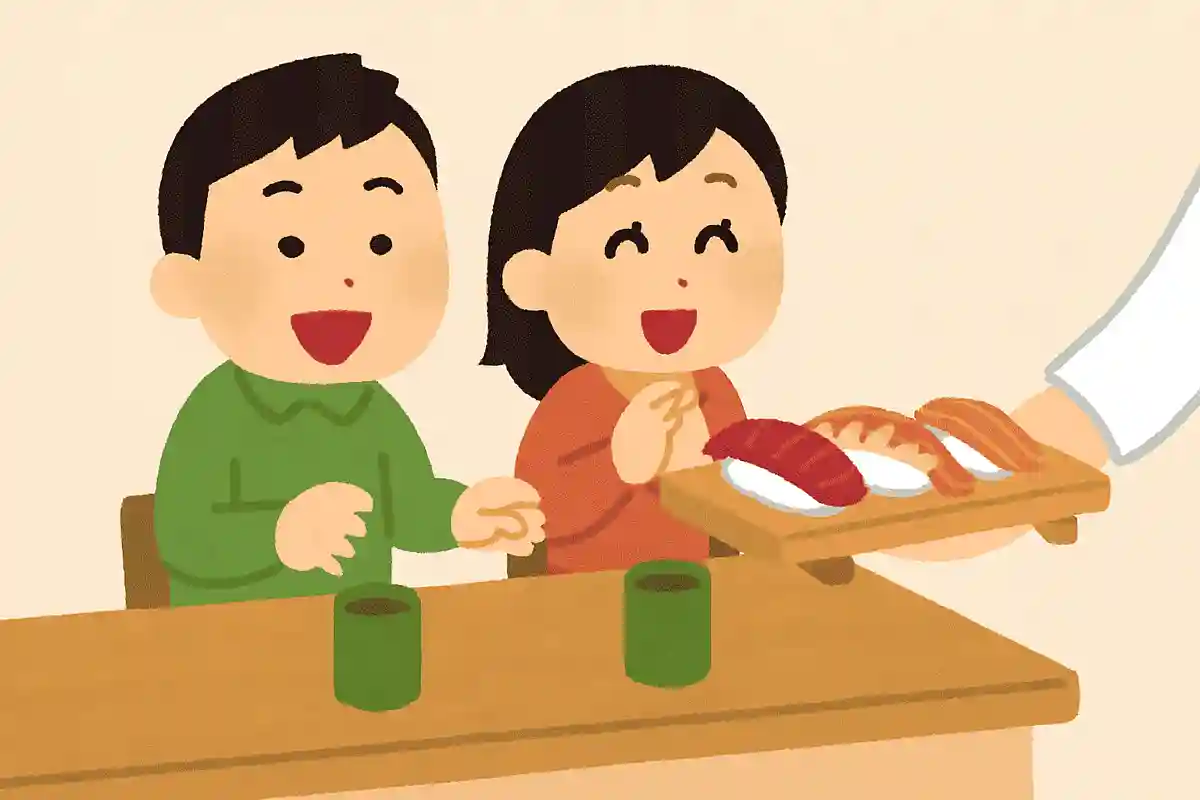
I don’t usually eat expensive things like nigiri sushi, but if someone else is paying, my hand reaches for it without a second thought…
I think this senryu neatly captures human calculations of profit and loss, and I can relate.
The joy of getting to eat dishes you rarely can, and if it’s sushi, all the more special.
It’s only natural that the delight outweighs any guilt about being treated, and you end up forgetting to hold back.
You can almost picture the wry smile of the person footing the bill, can’t you?
Confirming the colors of the wallet and the plate
Many sushi restaurants distinguish prices by the color of the plates.
It depends on the shop, but don’t you get the impression that white or yellow plates are cheaper, while red, black, or gold ones are expensive? If you eat freely without checking the plate colors, the bill can end up higher than you expected, so it’s best to confirm when you arrive.
Unfortunately, in this senryu, it might already be after the fact.
You can picture someone desperately calculating whether they have enough money, comparing the plates with the contents of their wallet.
Here you go! With outstretched hand, to the neighbor next to you.
You sometimes hear this call when your order is ready and brought out, don’t you? If you know it, you might instinctively reach out your hand.
But in this senryu, the sushi they thought was theirs actually turned out to be the order for the person next to them.
That’s a bit embarrassing, isn’t it? Nowadays, conveyor-belt sushi is mainstream and orders arrive on rails, so you don’t see this kind of mix-up very often, but it might have been common in the past.
Imagining someone wordlessly and quietly pulling their hand back—sorry to say, but it makes me chuckle.
It’s a family rule: only one plate of fatty tuna per person.
Family precepts are an interesting idea.
It clearly shows that yours is a household that provides a solid education.
Otoro is very delicious… but precisely because it’s delicious, it’s expensive.
So along with the joy of eating it, it’s necessary to teach what happens to the household budget if you eat otoro as you please.
I do think it’s wonderful to have times when you can enjoy a meal without worrying about the price, but by conveying this reality, one may eat otoro with deeper gratitude, and it might even change the way one looks at meals.