

Games you can play with just conversation. Classic and popular activities you can enjoy without any props!


I’m going to introduce games that can be played using only conversation, without any props.
There are times—like during school breaks or in the car—when you want to play but don’t have any tools or can’t move around freely, right?
In those moments, wouldn’t it be nice to have games you can play just by talking?
In this article, we’ve gathered popular conversation-based games you can enjoy simply by talking, singing, or answering prompts!
Use them when you want to have fun with friends, teammates, or your partner, or when you need to kill time while waiting—whenever you’re in a pinch.
- Fun two-player games recommended that you can play using conversation only
- Games and activities everyone can enjoy together. A collection of fun play ideas.
- Perfect for killing time! A roundup of games for three people to enjoy
- Recommended games and activities for five people
- Games you can play in the car! Fun activities to liven up drives and traffic jams
- Challenge together! A roundup of word games for adults
- [For 2 Players] Easy Pen-and-Paper Time-Killing Game
- Get the Fun Going! Easy Classroom Games You Can Play at School: Recreational Activities for the Whole Class
- Perfect for killing time! Fun games you can easily play on LINE
- Fun games recommended for making friends with people you’ve just met
- Recommended games for two people that you can enjoy without any equipment
- [Rec] Interesting! A roundup of wordplay games
- Brain-teasing game roundup
All-time Favorites and Most Popular! Party Games That Get Everyone Excited with Just Conversation (41–50)
Abbreviation guessing game
@oideyo_gafter Abbreviation guessing game! / Hello! This is Aoki from G-After 😊 The three of us played an abbreviation guessing game! Look forward to seeing who makes a mistake 🌈Tried itI tried itInteresting projectBoss and subordinatePlayFunFun job#A company with a good corporate culture#BestBuddiesHRtranslation
♬ Original Song – The Daily Life of the Goofy Recruitment Section | G-After Inc. – G-After Inc. Human Resources Department
To keep everyday conversations flowing smoothly, we often have chances to use abbreviations.
This simple game turns those abbreviations into quiz prompts, asking players to guess the original terms.
The key is to play to a rhythm, using the pressure of needing instant answers to ramp up the difficulty.
Some abbreviations are even more common than their full forms, so incorporating those well could spark deeper interest and knowledge about language.

20 indoor activities you can enjoy even on rainy days

Let me introduce a brain-teasing rule game.
The key point for the kids is to tell them, “Watch carefully.” Then the teacher shows numbers with their fingers, saying, “This is 1, this is 2,” and so on, which naturally makes the children focus on the finger movements.
But here’s the twist! They should also pay close attention to what the teacher says.
The level of excitement changes depending on the themes or rules the teacher sets.
Be sure to have fun playing it together with the kids! It’s also great because you can play it anywhere, like at camp or on a field trip.

Rhythm Shiritori Game
@ig.andyspinelli There was a genius in the rhythm shiritori game.
♬ original sound – Hannaries – Hannaries
Shiritori is a popular, well-known game, but this version develops it further and makes it more difficult.
On top of playing shiritori, you increase the word length by one character each turn, and you also have to answer to a rhythm, so there isn’t much time to think.
Anyone who misspeaks is out and leaves the answering team, and only those who answered correctly continue.
It’s plenty of fun with just four people, so give it a try.
It seems like a game that can sharpen your reflexes and serve as brain training, too.

Improv Acting Showdown
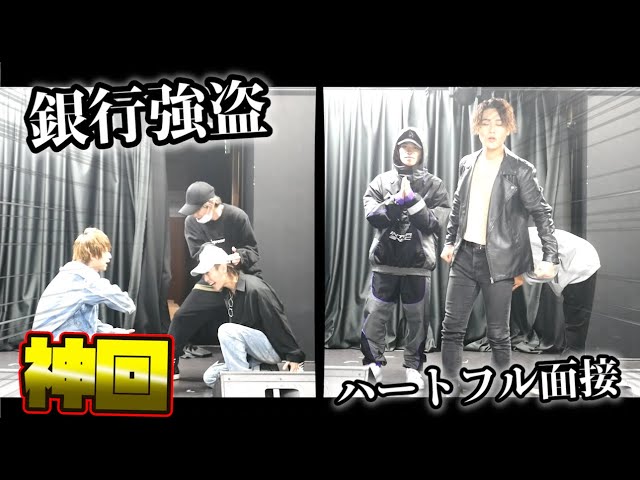
Decide on three elements—the setup, the punchline, and the constraint rules—tell the performers, and start the game! Since it’s all improvised, you can’t practice beforehand or agree on the flow with the group.
In other words, it’s a pretty challenging game where you have to reach the punchline while sticking to the setup and constraints, all without knowing how the others will play it.
Even the person who came up with the setup and punchline doesn’t know how things will unfold, so it’s a thrilling, exciting experience! Who knows—an unexpected masterpiece might be born!

Number-Taking Corps

Let’s play “Kazutori-dan,” a game where you mustn’t mess up numbers and units.
Players sit facing each other in a circle and, going clockwise, call out numbers and units to the rhythm of “Boom-boom! ◯◯.” For example, if the first player declares the theme by saying “Boom-boom! apple,” the second player responds, “Boom-boom! 1 piece,” and then declares the next theme.
The theme can stay as apple or be changed.
If the theme changes to banana, the third player should say, “Boom-boom! 2 bunches.” Repeat this, and anyone who gets the unit or number wrong loses.
The “Don’t say ‘Why?’” game
@goqsystempr59 Why?translationTranslationPublic RelationsDon't say it.
♪ Original song – Probably Friendly PR Club – Probably Friendly PR Club
Even when you know you shouldn’t say it, there are moments when you can’t help yourself.
In this “Don’t say ‘Why?’” game, you must not answer the questioner’s prompts with “Why?”.
Let the questioner come up with questions that make you want to blurt it out.
The key is to keep both the questioner’s rhythm and the respondent’s rhythm as steady as possible.
Keeping a good rhythm will definitely make the game more exciting! Give it a try.
Shiritori Association Game
https://www.tiktok.com/@nanka_omo/video/7311276823864806663A brain-teasing, everyone-can-enjoy shiritori association game where you play as a cat and slip in “being cutesy/affectionate” and “association” between turns, imagining and saying words as you go.
When it’s your turn, think quickly and say a word with good tempo to keep the chain going.
If you fall behind the rhythm or say something that doesn’t fit the association, you’re out.
The more players, the livelier it gets.
Keep a gentle expression as you aim to clear the game!