

Surprisingly unknown? Trivia Quiz [Multiple Choice: 3 Options]


Fun facts make you want to share them with others, don’t they? In this article, we’ll introduce little-known facts about health and daily life in a quiz format—things that many people surprisingly don’t know.
You’ll find plenty of everyday topics with reasons that will make you say, “Oh, so that’s why!” Learn while having fun with the quiz, and the knowledge you gain might come in handy in different situations later on! It’s a multiple-choice quiz with three options, so kids can enjoy it too.
How many of these unusual and little-known fun facts do you already know?
- [Killing Time] A Collection of Fun Trivia Quizzes You'll Want to Share with Someone
- How many can you get right? A tricky 3-choice trivia quiz you'll want to tell someone about
- Aim for a perfect score! A three-choice common knowledge quiz that deepens your understanding
- Let's take on a four-choice quiz that everyone can enjoy together!
- Surprisingly unknown? A fun health trivia quiz that will make you want to try it
- Stimulate your intellectual curiosity! Fascinating trivia quizzes that you’ll want to share with others
- Trivia quiz with useful tips to know: fun facts that come in handy at school or at home [for kids]
- Didn't want to know?! Fascinating and scary trivia & fun facts
- Trivia quiz about dogs: three-choice questions to learn fun facts
- Become a trivia master with a multiple-choice quiz for elementary schoolers! A fun problem collection that captivates both kids and adults
- [For Seniors] Liven Things Up! 3-Choice Ranking Quiz
- [Challenge] Stimulate your intellectual curiosity with a general knowledge quiz you might not know!
- Trivia you think you know but surprisingly don’t? August trivia and fun facts quiz!
Japanese Culture & History Trivia Quiz (11–20)
How much is the base price of Doraemon?

- one million yen
- 200,000 yen
- 100 million yen
See the answer
200,000 yen
Doraemon is a cat-shaped robot character loved by a wide range of generations, from children to adults. He can pull out anything from his four-dimensional pocket, so he seems incredibly valuable, but his actual price is surprisingly just 200,000 yen! Incidentally, his younger sister Dorami is said to cost 1,000,000 yen.

What is the relationship between the founders of Puma and Adidas?

- brothers; siblings
- friend
- former colleague
See the answer
brothers; siblings
Rudolf Dassler, the founder of Puma, and Adolf Dassler, the founder of Adidas, are real-life brothers. They originally ran a shoe company together, but after a falling-out, they went their separate ways.
What kind of hospitals are more numerous than convenience stores in Japan?

- dentist
- Otorhinolaryngology (Ear, Nose, and Throat; ENT)
- ophthalmology
See the answer
dentist
In Japan, there are more dental clinics than convenience stores—about 10,000 more, it seems. However, if you exclude medical institutions, there are actually more hair salons and real estate agencies than convenience stores or dental clinics. How is it in your neighborhood?
As of October 2023, the most common surname is Sato, followed by Suzuki in second place and Takahashi in third. Which surname ranks fourth?

- Mr./Ms. Ito
- Mr./Ms. Nakamura
- Mr./Ms. Tanaka
See the answer
Mr./Ms. Tanaka (National Surname (Family Name) Rankings | Myoji-Yurai.net)
Along with the top three surnames, Tanaka is also commonly cited as a classic. Comparing Ito in fifth place with Tanaka, there’s a difference of just under 300,000 people, so you could say that from Sato in first place through Tanaka in fourth are the quintessential high-population surnames.

What is the reason that skewered dumplings are often in odd numbers?
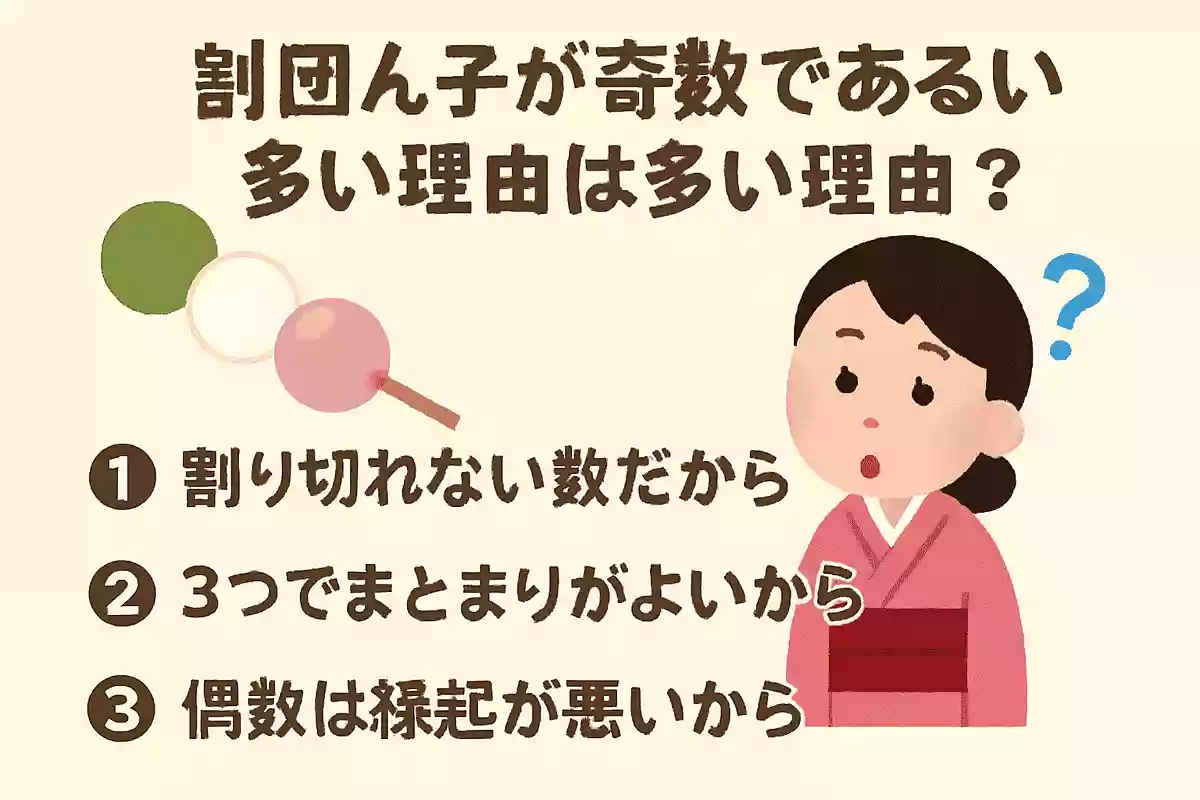
- Because it cooks quickly.
- Because it makes the skewer harder to pull out.
- Because it's lucky
See the answer
Because it's lucky
Dango on a skewer often come in odd numbers like three or five. This is considered lucky because odd numbers cannot be evenly divided. Incidentally, this custom is mainly seen in the Kansai region, while in the Kanto region skewered dango typically have four pieces.
For what original purpose was the summer tradition, the wind chime (furin), used?
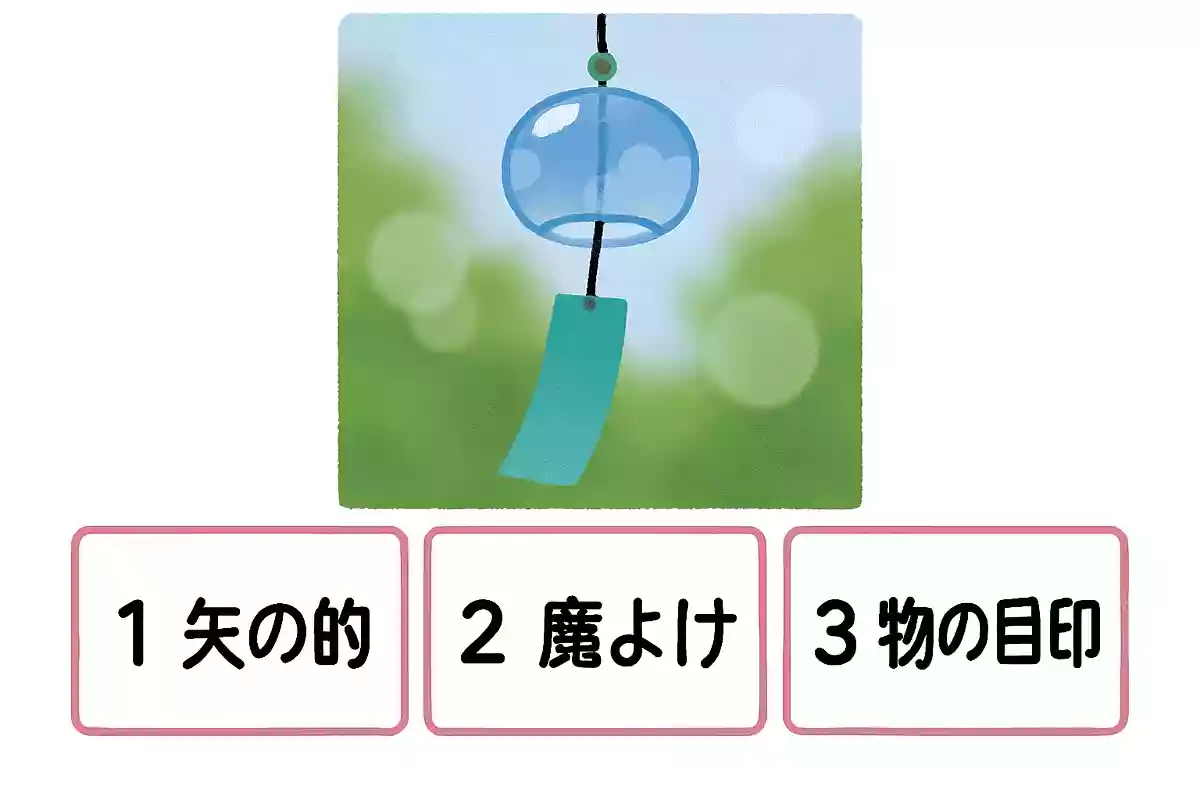
- fortune-telling
- amulet against evil
- Food storage
See the answer
fortune-telling
On hot summer days, wind chimes ring with a gentle “chirin-chirin,” bringing a sense of coolness. Did you know they were originally used for divination? China’s “fūtaku” (wind bells) are considered the original form of wind chimes, and the divination performed with them was called “senfūtaku.” In bamboo groves, the fūtaku would be rung, and the way they sounded was used for fortune-telling.
What is the bow angle that means a “most respectful bow”?
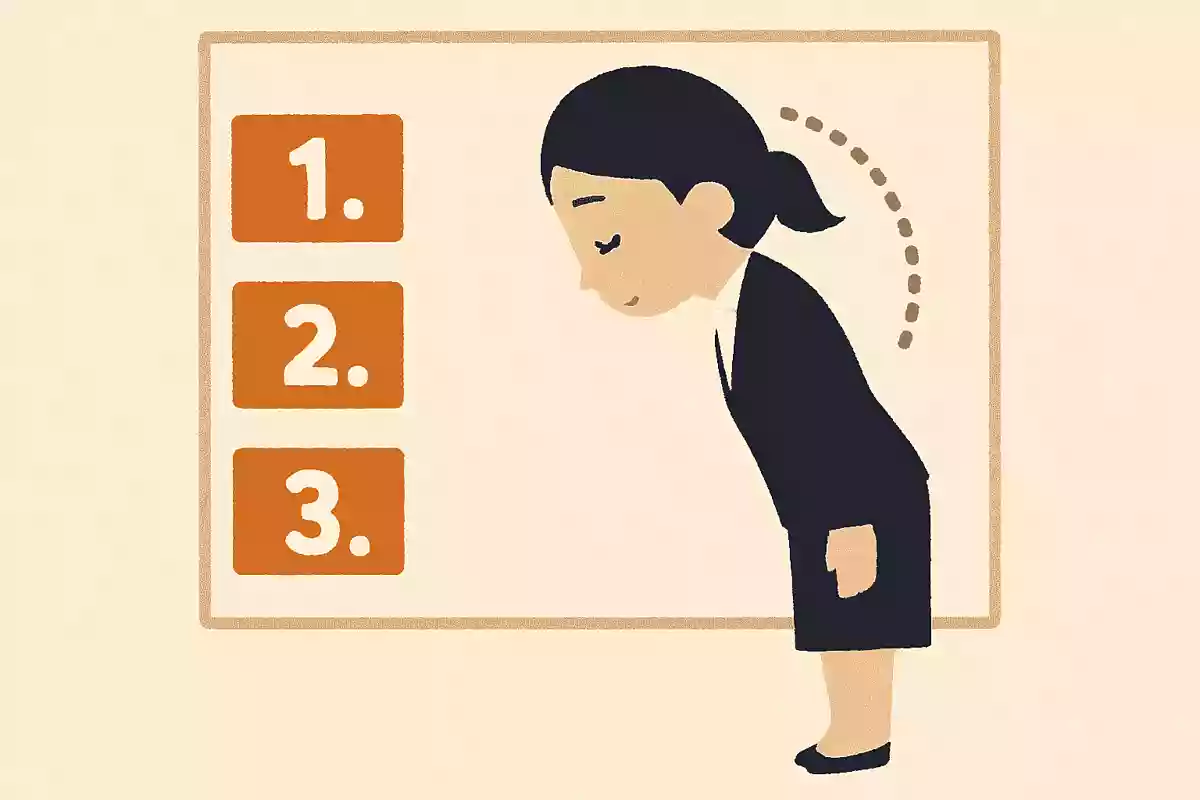
- 15 degrees
- 30 degrees
- 45 degrees
See the answer
45 degrees
The angle for the most respectful bow is 45 degrees. Compared to other bows, it is slightly deeper, and after lowering your head, you should look at the tips of your own toes. This bow is used when apologizing and when greeting or seeing off important guests.