

Vegetable edition! Who am I? Quiz. Try to see how many you can solve!

“Who Am I?” quizzes are a classic game that can liven up a quick break or a chat with friends.
In this article, we’ll present a “Who Am I?” quiz with a vegetable theme! Using hints about the vegetables’ colors, shapes, nutrients, and cooking methods, try to guess which vegetable is being described.
You can think it through on your own, or team up with family or friends—both are great options.
Even kids who dislike vegetables might get curious and want to try them after playing the quiz!
- Get Healthy with Vegetables: Trivia Quiz About Vegetables
- [Food Edition] Who Am I? Quiz Collection
- Who am I? A quiz where you figure out the answer from the given hints.
- How Much Do You Know? Food Quiz for Elementary School Students
- [Fun with Kids] Food Silhouette Quiz
- Who am I? A fun quiz collection: Animal edition
- Cucumber trivia quiz. A collection of fun facts about cucumbers.
- Who am I? A collection of quizzes featuring crowd-pleasing characters
- Who am I? Quiz. Ideas for questions where you guess the celebrity.
- Get kids excited at the autumn food party! Trivia quiz and fun facts
- Quizzes and riddles for toddlers and kids—perfect for early learning too!
- So nostalgic! A lively school lunch quiz. Let’s look back on those memories from back then.
- Simple! A quiz for kids. Let’s develop their thinking skills!
Vegetable edition! Who am I? Quiz. Try to see how many you can solve! (1–10)
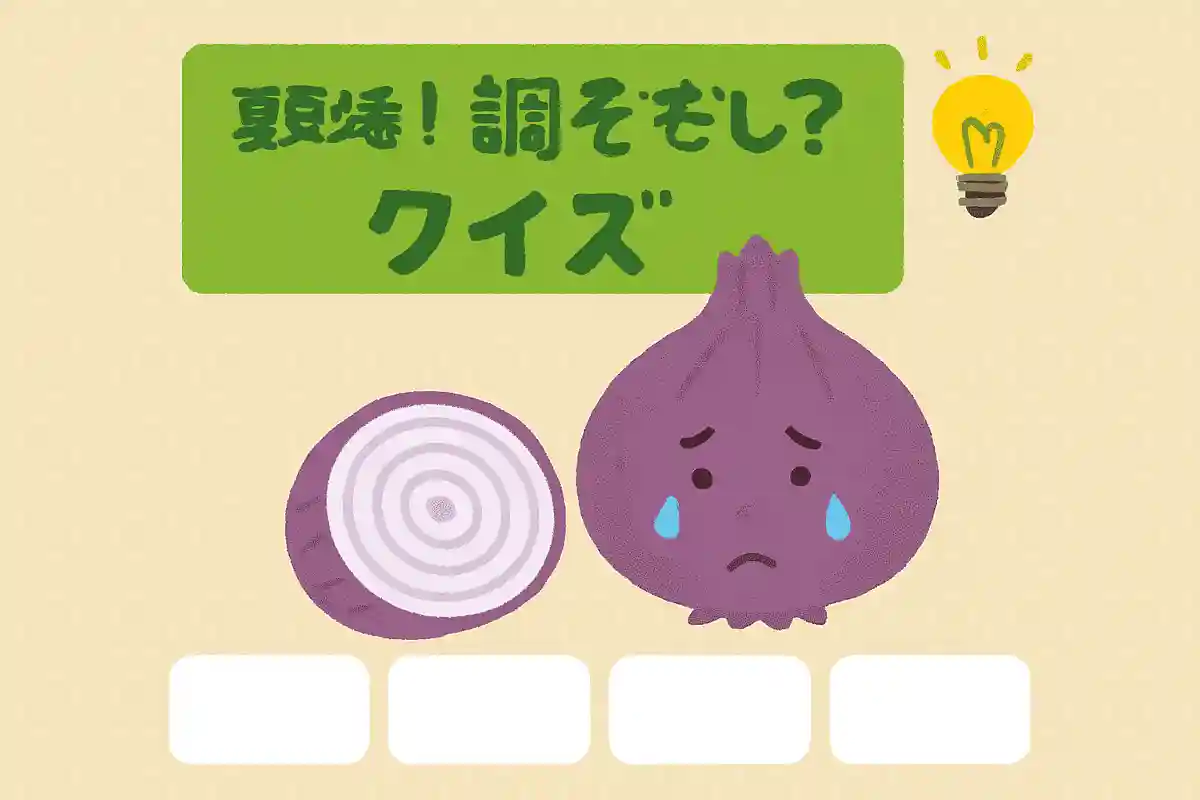
I’m spicy when raw. There are also purple ones. Cutting me makes you cry.
See the answer
onion
Onions that are spicy when eaten raw commonly have brown skins, but there are actually purple ones as well. And the tears you struggle with when cutting onions are said to occur because a compound called allyl sulfide irritates the nose and eyes.

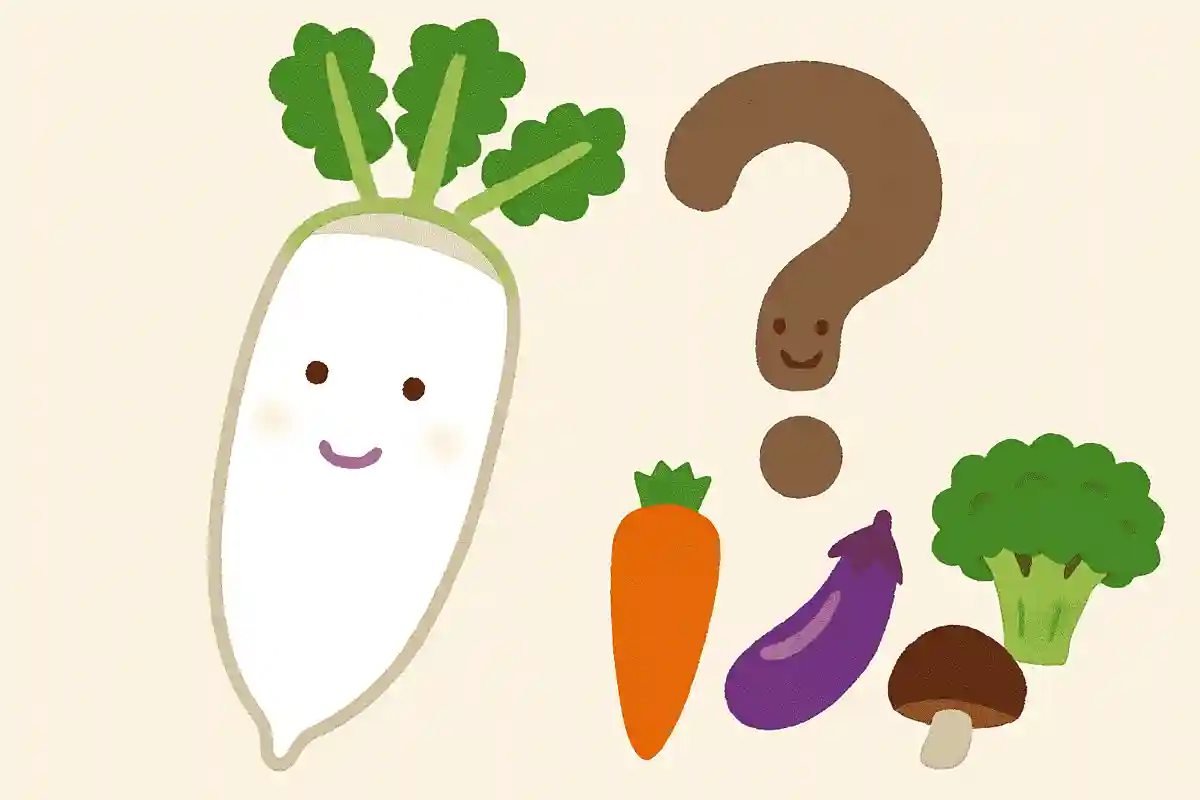
I’m white. I’m a classic in oden. The flavor changes depending on where you eat it.
See the answer
daikon radish
Daikon radish that has soaked up all the flavors in oden is so delicious, isn’t it? The taste actually changes depending on which part you eat. The lower part is spicy, while the upper part near the leaves is sweeter. The middle gives you a nicely balanced flavor of both. It’s a good idea to use different parts depending on the dish you’re making!
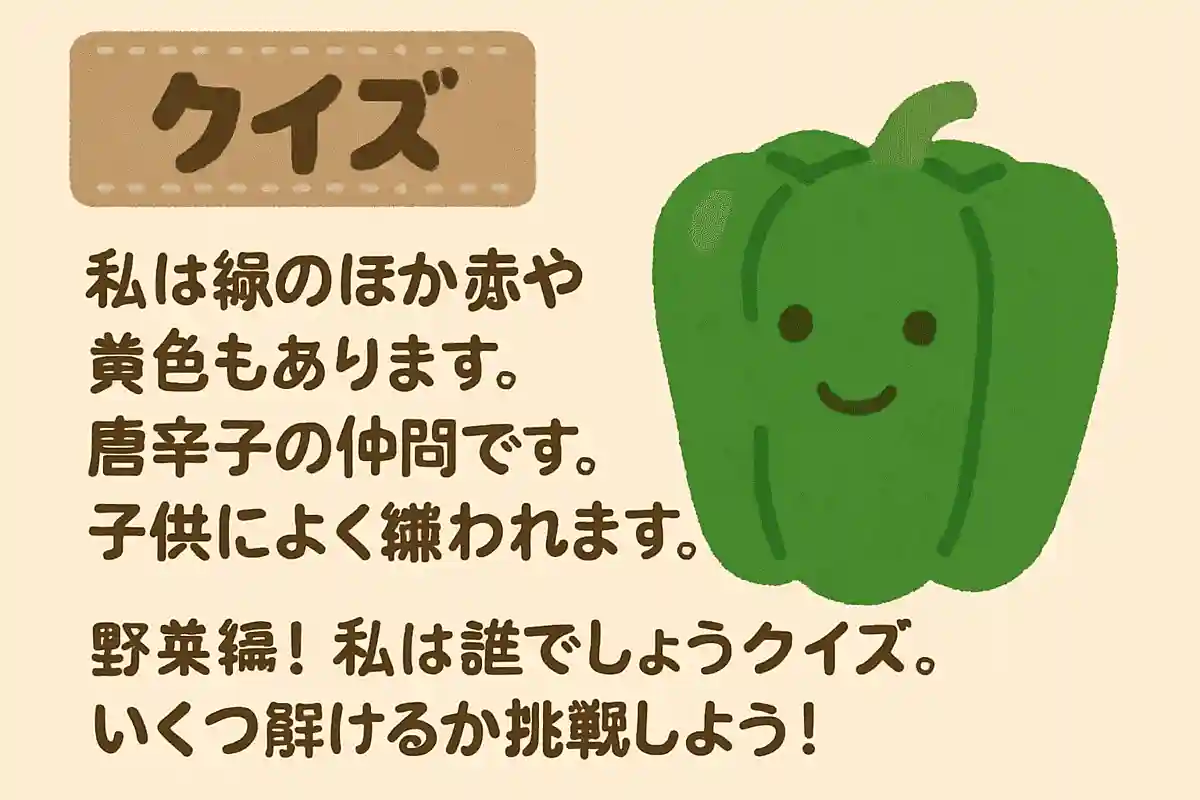
I come in green as well as red and yellow. I’m a member of the chili pepper family. Children often dislike me.
See the answer
green pepper
When it comes to bell peppers, they’re the classic vegetable that kids dislike. As adults, we often find that very bitterness delicious, but kids are happier with something sweet, right? In fact, red bell peppers are said to have a higher sugar content than green ones because they’re fully ripe. And doesn’t it make sense that they’re related to chili peppers? If you place a bell pepper next to a green chili, you can see they share many similarities.

Vegetable edition! Who am I? Quiz. Try to see how many you can solve! (11–20)
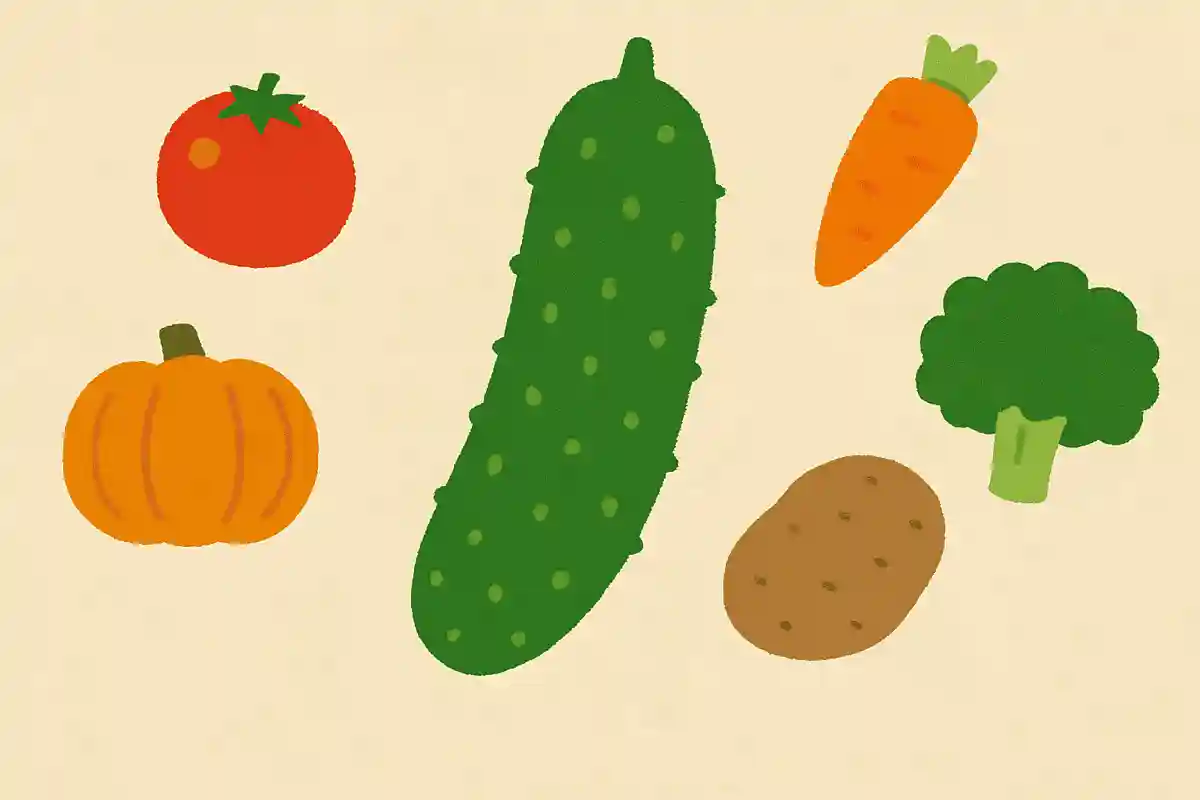
I have many bumps on my surface. I’m green. I’m about 95% water.
See the answer
cucumber
When you think of something green with lots of bumps on the surface, it’s a cucumber, right? Cucumbers are about 95% water and often thought of as not very nutritious. However, because they’re rich in potassium, they have a diuretic effect and help remove excess salt from the body.
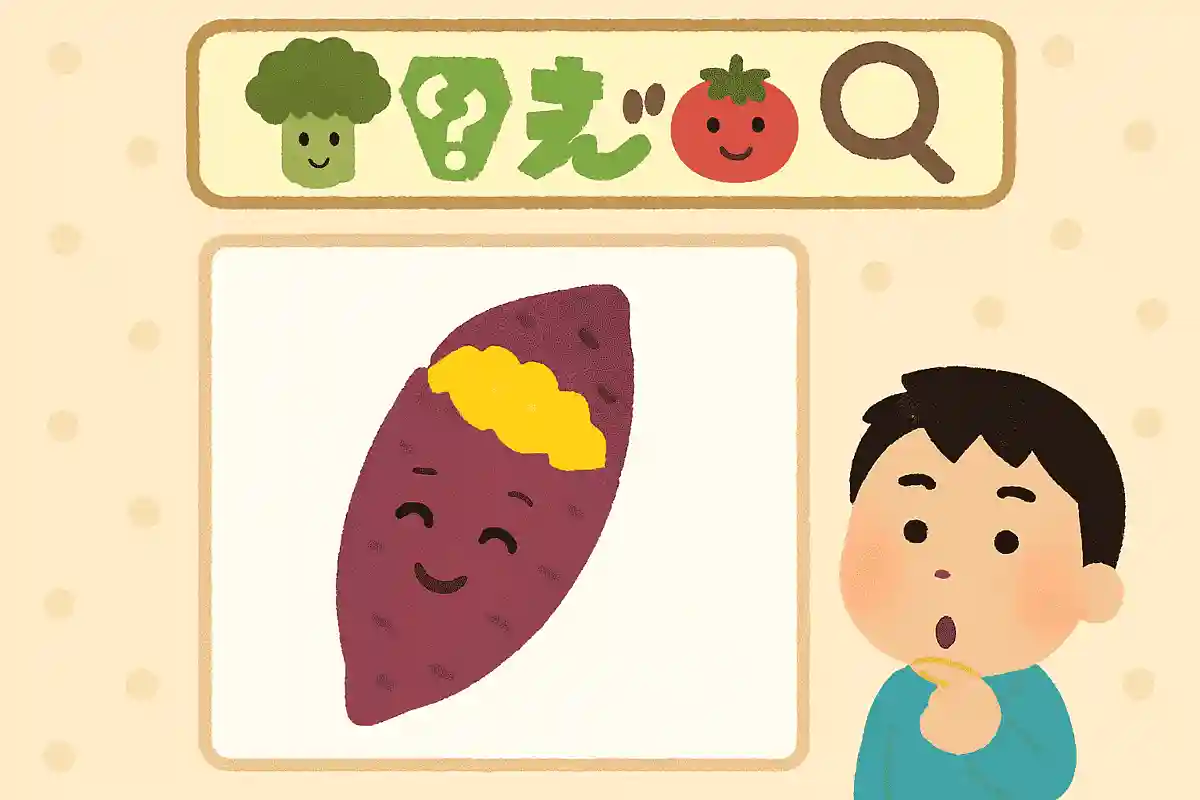
When I’m baked, I become fluffy and warm. I crave it in the cold season. It’s sweet.
See the answer
sweet potato
Yaki-imo is the very symbol of winter! When you’re walking outside in winter, you’re often lured by the aroma of stone-roasted sweet potatoes, aren’t you? So the answer is sweet potato. In fact, they’re an autumn-season vegetable, but the ones that are cured after harvest and sold in winter are sweeter and tastier.
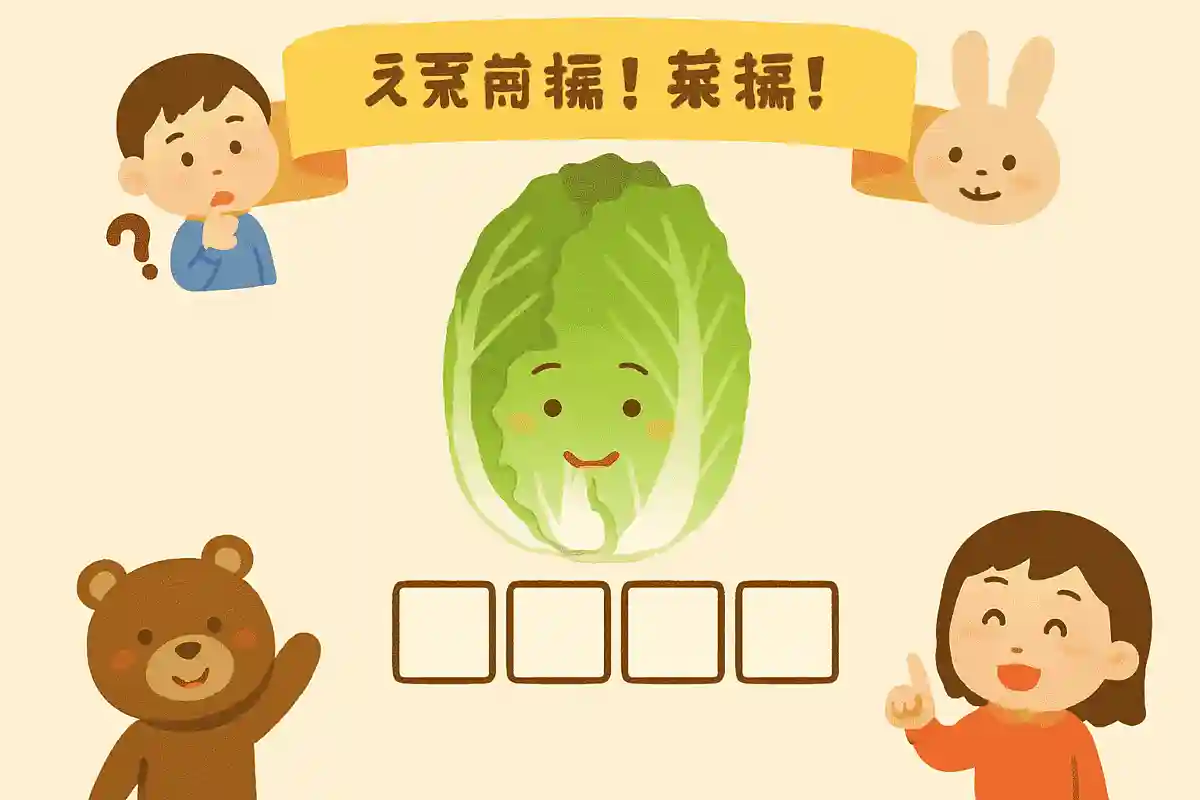
I am often used in hot pots. I am made up of many leaves. Winter is my season.
See the answer
Chinese cabbage
When it comes to leafy greens for hot pots, some of you might think of mizuna or garland chrysanthemum, but the true classic is napa cabbage! Napa cabbage is in season during the cold months from November to February and contains nutrients such as vitamin C, vitamin K, and folate. It’s low in calories and pairs well with a wide variety of ingredients.
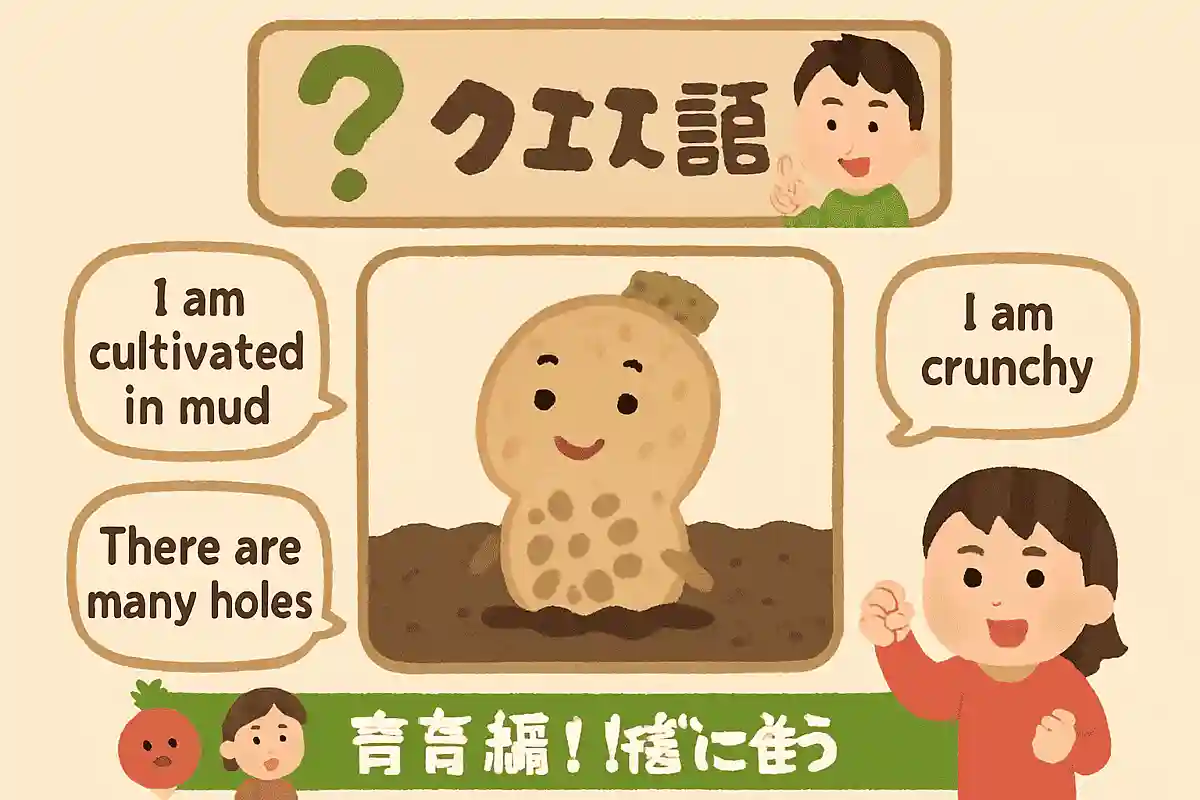
I am grown in mud. I’m crisp. I have lots of holes.
See the answer
lotus root
In the mud… As soon as you heard that, many of you probably guessed “lotus root,” right? Its cultivation method is that interesting and memorable. Its appearance, full of holes, is distinctive, and when added to dishes, its crisp, crunchy texture adds variety. It’s a vegetable rich in vitamin C and a staple in traditional New Year’s Osechi cuisine.