

J.S. Bach | Introducing Famous and Representative Works

The songs that are popular today—across not only classical music but also pop and jazz—are deeply influenced by past composers.
Among them, classical music is often called the foundation of music, and it’s no exaggeration to say that Johann Sebastian Bach, known as the “Father of Music,” was one of the figures who laid that very groundwork.
Bach’s music, while carrying a religious hue, is characterized by philosophical depth and intricately refined structure down to the finest details, with melodies of exceptional beauty.
Please take a look into the world of Johann Sebastian Bach, one of the greatest composers in history.
- J.S. Bach | Introducing Famous and Representative Works
- J.S. Bach Popular Songs Ranking [2026]
- [Masterpiece Classics] A special showcase of gem-like masterpieces so beautiful they’ll move you to tears
- Handel’s Masterpieces | A Comprehensive Introduction to His Popular Works
- [Baroque Music] A Curated Selection of Timeless Masterpieces and Famous Works
- Vivaldi’s masterpiece. Popular classical music.
- Today's Classics: Recommended classical music and great performances to listen to today
- Mozart: An Introduction to His Signature and Popular Works
- Popular classical piano pieces. A collection of masterful performances by Japanese pianists.
- Cool classical masterpieces. Recommended classical music.
- [Quartet] Masterpieces and Popular Pieces for String Quartet
- François Couperin Popular Songs Ranking [2026]
- Masterpieces of Ballet Music: Introducing Classic Favorites
J.S. Bach | Introducing Masterpieces and Signature Works (141–150)
Prelude and Fugue in E minor, BWV 548J.S.Bach
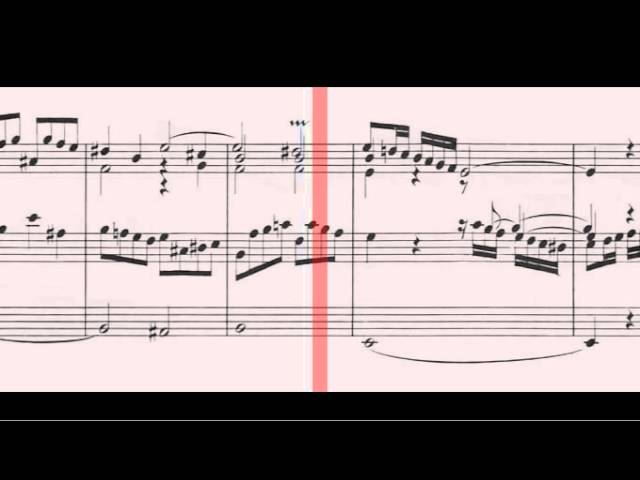
This piece is said to have been written by Bach between 1727 and 1731, and an autograph manuscript is held at the Berlin State Library.
The prelude adheres to traditional compositional practice and has a brilliant character.
The fugue is in three parts: Parts I and III are four-voice fugues, while Part II is constructed like a toccata that showcases virtuosic expression.
Because the subject of the four-voice fugue gradually opens out in interval, the piece is affectionately known as “The Wedge.”

Prelude and Fugue in E-flat major, BWV 552J.S.Bach

A majestic masterpiece left by Johann Sebastian Bach.
Known by the epithet “St.
Anne” Fugue, symbolizing the Holy Trinity, this work is a superb fusion of his faith and musical genius.
Following the grandeur of the Prelude, the fugue woven from three subjects seems to express the harmony of the Father, the Son, and the Holy Spirit.
Included in the Clavier-Übung III, published in 1739, it has since influenced many musicians.
Highly recommended for those who wish to savor the rich timbre and structural beauty of the pipe organ.
When heard in a church or concert hall, its sacred atmosphere envelops you and cleanses the soul.
Chromatic Fantasia and Fugue in D minor, BWV 903J.S.Bach

A masterpiece by Johann Sebastian Bach, a representative composer of the Baroque era.
It is characterized by chromatic motion and is known for its innovative harmonic structure and bold expressiveness.
Composed between 1717 and 1723, this work consists of two parts—a fantasia and a fugue—brilliantly fusing free improvisatory elements with strict formal beauty.
Although it requires advanced technique and is intended for skilled performers, its musical depth is sure to resonate strongly with listeners.
Highly regarded even during Bach’s lifetime, this is a piece well worth the challenge.
J.S. Bach | Introducing Famous and Representative Works (151–160)
The Well-Tempered Clavier, Book I, No. 1: PreludeJ.S.Bach

Bach, the German composer and organist often described as the “Father of Music.” The Well-Tempered Clavier ascends by semitone through 24 keys starting from C major, with each key consisting of two pieces: a Prelude and a Fugue.
This piece is characterized by a repeating figure while the harmony changes measure by measure.
Because the mood and flow of the piece are determined by the progression of the harmonies, it’s best performed with an awareness of harmonic function.
It is also known that Gounod used this piece as an accompaniment, adding a melody on top to create the famous Ave Maria.

The Well-Tempered Clavier, Book I, BWV 846 – PreludeJ.S.Bach

The Well-Tempered Clavier, a two-volume set composed for keyboard instruments by Johann Sebastian Bach—revered as the father of music—includes the Prelude No.
1 from Book I.
This gentle, beautiful piece is also known for later serving as the accompaniment to Charles Gounod’s song Ave Maria.
Its simple structure transitions naturally through arpeggios, without ornamentation or dramatic shifts.
Yet as you listen, you will likely feel your mind grow calm, experiencing the piano’s timbre permeating deep into your heart.

The Well-Tempered Clavier, Book I, No. 1, BWV 846, PreludeJ.S.Bach

The Well-Tempered Clavier is a collection of works for keyboard, with one book and a second book each containing pieces in all 24 keys.
The Prelude from Book I, No.
1 is also famous as the accompaniment to Charles Gounod’s signature piece Ave Maria, and can be said to be the most familiar piece in the collection.
With naturally beautiful harmonic progressions and a very gentle character, it is relatively approachable even among the many pieces in The Well-Tempered Clavier that feature intricately interwoven melodies.
Play it at a relaxed tempo, keeping a keen awareness of the horizontal (linear) flow.
The Well-Tempered Clavier, Book I, No. 6, BWV 851: Prelude and FugueJ.S.Bach

The Well-Tempered Clavier, Book I, No.
6 in D minor, BWV 851: Prelude and Fugue is one of the pieces many piano students tackle when studying Baroque music from The Well-Tempered Clavier.
In this collection, the fugues are given such prominence that the feasibility of performance is often judged based on the fugue’s difficulty.
Conversely, the preludes are generally considered less demanding than the fugues.
It’s recommended to do some fundamental exercises and stretching before practicing, so that the trills appearing in each voice don’t produce a harsh tone.
