

Recommended for rock fans too! — A classic album of modern blues

The birth of the blues, often called the root of rock ’n’ roll and jazz, dates back to the late 19th century.
Its forms are diverse and can’t be summed up in a single phrase: from Delta blues and country blues—often referred to as prewar blues—to Chicago blues and modern blues, which developed after the war in Chicago and incorporated electric instruments.
In this article, we introduce classic blues albums whose style and spirit continue to be carried on by many musicians even in the 2020s.
The lineup focuses mainly on modern blues that’s easy for beginners to enjoy, so even those who usually listen to rock will find it accessible.
- [2026] Masterpieces of Blues Rock: Recommended Albums You Should Listen to at Least Once
- [Western Music] Classic Blues Rock Songs: A Summary of Recommended Popular Tracks
- A roundup of classic Western jazz-funk albums—from staples to the latest releases
- Roundup of Famous Overseas Blues Guitarists
- [For Beginners] A Collection of Famous and Popular Delta Blues Songs
- A roundup of popular Western blues bands—also recommended for rock fans!
- Ranking of popular blues songs
- [Foreign Music] A Guide to Post-Rock: Essential Classics and a Recommended Pick
- The Appeal of Japanese Blues Rock: A Collection of Classic Japanese Blues Rock Albums
- The 1970s were the golden age of Western rock! Recommended classics and hit songs
- A classic of Japanese blues. Japanese blues that lets you get drunk on the sound and vocals.
- [A Must-See for Rock Beginners] KiYoshiro Imawano's Easy-to-Sing Songs
- The depth of guitar sound. A collection of songs with cool guitar.
Recommended for rock fans too! — Classic Albums of Modern Blues (’71–’80)
Blue GuitarEARL HOOKER

Earl Hooker, born in 1939 in Clarksdale, Mississippi, was a blues musician renowned as a master of slide guitar and one of the earliest bluesmen to use the wah-wah pedal.
He is recognized as a key figure during the heyday of Chicago blues.
He moved to Chicago, Illinois, at the age of one, began playing guitar at fifteen, and made his first recording in 1952.
Known both for guest appearances with major artists like Muddy Waters and for his work as a studio musician, he ranged beyond blues into country and jazz.
His favored guitar was a double-neck Gibson SG, and his cousin was John Lee Hooker.
His instrumental track Blues Guitar, released by Age in 1962, became a hit.
You Don’t Have To GoJimmy Reed

Jimmy Reed, born in 1925 in Leland, Mississippi, was an American blues singer, guitarist, and harmonica player.
With relaxed boogie beats, walking bass lines, and laid-back drumming as the foundation, Reed’s loose guitar, high-pitched harmonica, vocals, and straightforward blues sound became one of the most influential styles in blues.
“You Don’t Have to Go,” released in 1955 during his time with the Vee-Jay label, reached No.
5 on the R&B chart, and he went on to achieve an unprecedented feat for a bluesman by placing 14 songs on the charts by 1959.
Members onlyBobby Bland
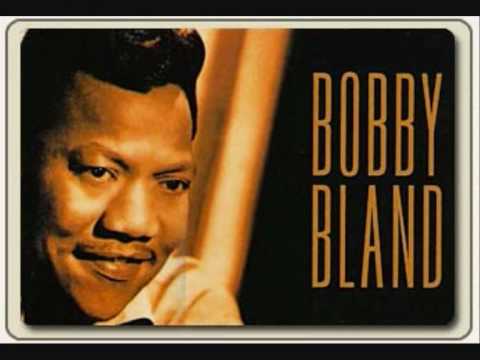
This is Bobby Bland, a blues singer who gained popularity with his deeply soulful vocals heavily influenced by gospel.
A consummate professional who built a long career on pure singing without playing instruments.
This track is included on the 1985 album Members Only.
Recommended for rock fans too! — Classic Albums of Modern Blues (’81–’90)
Spider in my stewBuster Benton

Speaking of Buster Benton, this is the song.
It’s included on his debut album, produced by the great Willie Dixon.
A gritty, slow blues that’s perfect for a rundown bar, it’s a classic where you can fully take in his hallmark gospel-honed, powerful raspy voice and his sticky, lingering guitar.
Sweet Love and Evil WomenJohnny Winter

If Eric Clapton is the leading figure of British white blues, then Johnny Winter is the representative of white blues in his home country, the United States.
This is a song in which he—masterfully playing both slide guitar and Dobro—performed together with Muddy Waters’s band.
Everything be alrightBig Mama Thornton

A signature song by Big Mama Thornton, a leading female blues singer.
Her husky, soulful vocals befit her title as the “Godmother of the Blues,” radiating commanding presence.
It’s said that even Robert Plant was a fan of hers.
Blues PowerEric Clapton

It’s a track included on the 1970 album Eric Clapton Solo.
This album was Eric Clapton’s first solo album, produced by Delaney Bramlett—the duo singer he was devoted to at the time.