

Recommended for rock fans too! — A classic album of modern blues

The birth of the blues, often called the root of rock ’n’ roll and jazz, dates back to the late 19th century.
Its forms are diverse and can’t be summed up in a single phrase: from Delta blues and country blues—often referred to as prewar blues—to Chicago blues and modern blues, which developed after the war in Chicago and incorporated electric instruments.
In this article, we introduce classic blues albums whose style and spirit continue to be carried on by many musicians even in the 2020s.
The lineup focuses mainly on modern blues that’s easy for beginners to enjoy, so even those who usually listen to rock will find it accessible.
- [2026] Masterpieces of Blues Rock: Recommended Albums You Should Listen to at Least Once
- [Western Music] Classic Blues Rock Songs: A Summary of Recommended Popular Tracks
- A roundup of classic Western jazz-funk albums—from staples to the latest releases
- Roundup of Famous Overseas Blues Guitarists
- [For Beginners] A Collection of Famous and Popular Delta Blues Songs
- A roundup of popular Western blues bands—also recommended for rock fans!
- Ranking of popular blues songs
- [Foreign Music] A Guide to Post-Rock: Essential Classics and a Recommended Pick
- The Appeal of Japanese Blues Rock: A Collection of Classic Japanese Blues Rock Albums
- The 1970s were the golden age of Western rock! Recommended classics and hit songs
- A classic of Japanese blues. Japanese blues that lets you get drunk on the sound and vocals.
- [A Must-See for Rock Beginners] KiYoshiro Imawano's Easy-to-Sing Songs
- The depth of guitar sound. A collection of songs with cool guitar.
Recommended for Rock Fans Too! — Modern Blues Masterpieces (41–50)
Burn in HellJunior Kimbrough

Junior Kimbrough is a key figure in the blues world from Mississippi.
In the early 1990s, he drew attention after performances in a documentary film, and his albums on Fat Possum Records achieved great success.
On March 25, 1997, his final studio album, Most Things Haven’t Worked Out, was released.
The album is characterized by Kimbrough’s uniquely hypnotic rhythms and intricate textures.
It received high critical praise and was hailed as his best album by The Penguin Guide to Blues Recordings.
Highly recommended for those who want to feel the soul of the blues or are seeking a new musical experience.
Recommended for rock fans too! — Masterpieces of Modern Blues (51–60)
Tomorrow NihgtLonnie Johnson

Lonnie Johnson, born in 1894 in New Orleans, Louisiana, was an American blues musician who mastered a variety of instruments—including vocals, guitar, kazoo, piano, and violin—and also had a profound influence on the development of jazz.
He pioneered a guitar style featuring bending (string choking) and vibrato, and as a studio musician he took part in recordings with Louis Armstrong and Duke Ellington.
In the 1940s, he scored hits with songs such as “Tomorrow Night” and “Pleasing You.”
The Bottom of The TopPhillip Walker

Phillip Walker is a blues guitarist and singer who has been based in Los Angeles since 1959.
His style is rooted in Texas blues, and he performed gritty blues infused with a strong sense of swing.
This track was released in 1973.
Pony BluesCharlie Patton

Charley Patton was a guitarist and singer born in 1891 in Edwards, Mississippi, USA.
He is said to have shaped Delta blues, was known as the “Voice of the Delta,” and despite being small and slender, his unamplified voice could reportedly carry as far as 500 yards, making him a pioneering figure in bringing the music to a wide audience.
Around 1897, while working jobs such as picking cotton, he frequented parties and juke joints, performed with the Mississippi Sheiks, and, while learning guitar from guitarist Henry Sloan, honed his skills and played with various musicians.
In 1929, he made his first recordings at the Gennett Records studio in Richmond, Indiana, cutting 14 tracks; Paramount released Pony Blues coupled with Banty Rooster Blues.
Death Letter BluesSon House
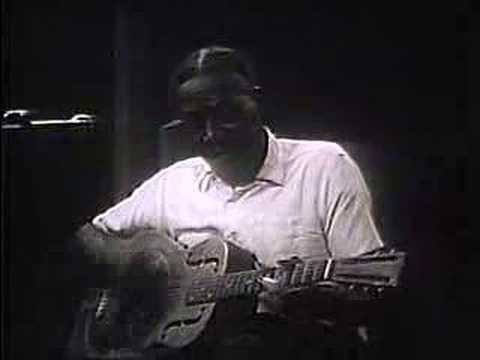
Son House, born in 1902 and hailing from Riverton on the outskirts of Clarksdale, Mississippi, was a Delta blues singer known as the “Father of Delta Blues.” Self-taught on guitar, he was captivated by Willie Wilson’s bottleneck technique around age 25 and perfected his slide guitar style.
In 1930, he traveled to Grafton, Wisconsin with Willie Brown and others to make his first recordings for Paramount, and he was one of the figures who influenced the young Robert Johnson.
LucilleB.B. King

B.B.
King, born in 1925 in Itta Bena, in the northwestern part of Mississippi, USA, was a blues singer and guitarist.
Active from the 1950s until his later years, he is known as the most successful bluesman and the person who developed one of the world’s most famous guitar styles.
Characterized by expressive string-bending (choking) technique, he forged a lean, distinctive style that fused sharp vibrato with passionate vocals.
He received the Presidential Medal of Freedom as well as numerous honorary doctorates.
His nickname “B.B.” comes from “Blues Boy,” and the Japanese pop group B.B.
Queens took their name as a play on B.B.
King’s.
He named his guitar “Lucille,” and Gibson released a B.B.
King signature model under that name; there is also an album and a song titled “Lucille,” released in 1968.
king of boogieSavoy Brown

Led by Kim Simmonds, Savoy Brown is a long-running blues band active since the 1960s, but their individuality is somewhat weak, leaving them in a perpetual B-tier status.
Their style shifted toward hard rock in certain eras, and that direction actually has a bit more flash and appeal.