

Recommended for rock fans too! — A classic album of modern blues

The birth of the blues, often called the root of rock ’n’ roll and jazz, dates back to the late 19th century.
Its forms are diverse and can’t be summed up in a single phrase: from Delta blues and country blues—often referred to as prewar blues—to Chicago blues and modern blues, which developed after the war in Chicago and incorporated electric instruments.
In this article, we introduce classic blues albums whose style and spirit continue to be carried on by many musicians even in the 2020s.
The lineup focuses mainly on modern blues that’s easy for beginners to enjoy, so even those who usually listen to rock will find it accessible.
- [2026] Masterpieces of Blues Rock: Recommended Albums You Should Listen to at Least Once
- [Western Music] Classic Blues Rock Songs: A Summary of Recommended Popular Tracks
- A roundup of classic Western jazz-funk albums—from staples to the latest releases
- Roundup of Famous Overseas Blues Guitarists
- [For Beginners] A Collection of Famous and Popular Delta Blues Songs
- A roundup of popular Western blues bands—also recommended for rock fans!
- Ranking of popular blues songs
- [Foreign Music] A Guide to Post-Rock: Essential Classics and a Recommended Pick
- The Appeal of Japanese Blues Rock: A Collection of Classic Japanese Blues Rock Albums
- The 1970s were the golden age of Western rock! Recommended classics and hit songs
- A classic of Japanese blues. Japanese blues that lets you get drunk on the sound and vocals.
- [A Must-See for Rock Beginners] KiYoshiro Imawano's Easy-to-Sing Songs
- The depth of guitar sound. A collection of songs with cool guitar.
Recommended for rock fans too! — Classic Albums of Modern Blues (’81–’90)
The Sky Is CryingSonny Boy Williamson II

Although it’s not used much in other genres, the harmonica is frequently featured in the blues.
Among the harmonicas used in blues, the non-chromatic type is sometimes called a blues harp, and one of its masters is Sonny Boy Williamson II.
unlucky boyChicken Shack

Chicken Shack, led by Stan Webb and active since the 1960s, is a band that’s always mentioned when discussing British blues.
This track, with its effective use of saxophone, is rooted in the blues yet approaches the sound from a decidedly rock-leaning angle, and can be considered one of their signature works.
Death Valley BluesBlack Cat Bones

An essential band that cannot be omitted when discussing the history of British blues.
Rooted in the blues, their dragging, heavy riffs and entwining guitar tones give a distinctly “heavy blues” impression.
There’s also an underground vibe, and you can strongly sense the era’s atmosphere—something that could only emerge in the 1970s.
Christo RedemptorCharley Musselwhite

While carrying on the blues tradition, Charley Musselwhite continues to explore new music.
His debut album, Stand Back! Here Comes Charley Musselwhite’s Southside Band, released in 1967, is a pivotal record that laid the foundation for his musical career.
Showcasing a range of blues styles—including Chicago blues and electric blues—it captivates with Musselwhite’s smooth harmonica work and husky vocals.
Hailed as one of the finest achievements by a white blues band, it served as a bridge between blues and rock ’n’ roll.
A must-listen not only for blues fans but also for rock enthusiasts.
Fixing To Die BluesBuck White

Bukka White, born in 1909, was a Delta blues guitarist and singer from roughly halfway between Aberdeen and Houston, Mississippi, in the United States.
He was commonly known as “Bukka.” He was a cousin of B.B.
King’s mother, favored a steel guitar made by the National String Instrument Corporation, and also occasionally played piano.
He made his first recordings for Victor Records in 1930, and the songs “Shake ’Em on Down” and “Po’ Boy,” recorded around 1939, are considered his best known.
In 1962, Bob Dylan covered White’s 1940 release “Fixin’ to Die Blues,” and in 1963 guitarist John Fahey and Ed Denson “rediscovered” White.
The song was later covered by Robert Plant and G.
Love, and “Fixin’ to Die Blues” was added to the Grammy Hall of Fame list in 2012.
At lastEtta James

Etta James, born in 1938 in Los Angeles, California, was an R&B singer known for her powerful blues voice.
A gospel prodigy, she sang on the radio at just five years old as part of a church choir in L.A.
At 15, she auditioned for a female trio called the Peaches, caught the attention of Johnny Otis, and in 1954 he took her to Modern Records in L.A.
to record.
Their song The Wallflower reached No.
1 on the R&B chart in 1955.
She is known for hits such as At Last, Tell Mama, and I’d Rather Go Blind.
She was inducted into the Rock and Roll Hall of Fame in 1993, and in 1994 she released Mystery Lady, a tribute to Billie Holiday, which won a Grammy Award.
In 2008, Beyoncé portrayed James in the film Cadillac Records, which depicts Chess Records and blues musicians.
Recommended for rock fans too! — Masterpieces of Modern Blues (91–100)
Crazy BluesMamie Smith
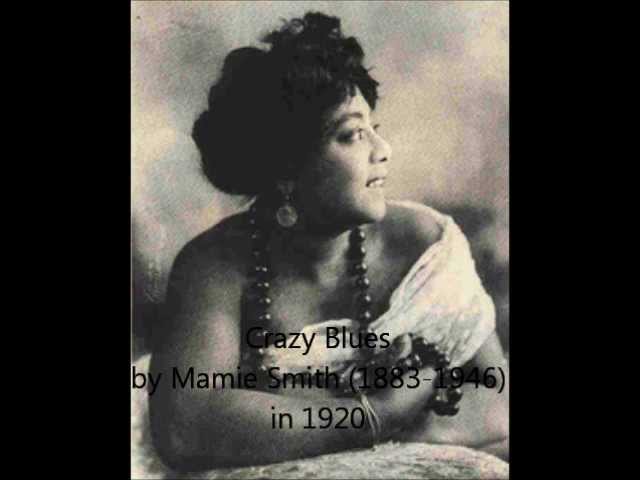
Mamie Smith, born in 1883 in Cincinnati, Ohio, was a vaudeville-trained female singer who toured and recorded with jazz bands featuring horns.
Crazy Blues, first recorded in 1920 for Okeh Records, became a sensational hit for its time and marked her as the first Black woman to record the blues.
As a work of historic and cultural significance, it earned her the title “Queen of the Blues” in the Grammy Hall of Fame, and the recording is preserved by the Library of Congress.
In an era steeped in racial discrimination, Mamie’s achievements won strong support from women and people of color, and her success helped usher in the golden age of blues featuring Black female singers.