

Recommended for rock fans too! — A classic album of modern blues

The birth of the blues, often called the root of rock ’n’ roll and jazz, dates back to the late 19th century.
Its forms are diverse and can’t be summed up in a single phrase: from Delta blues and country blues—often referred to as prewar blues—to Chicago blues and modern blues, which developed after the war in Chicago and incorporated electric instruments.
In this article, we introduce classic blues albums whose style and spirit continue to be carried on by many musicians even in the 2020s.
The lineup focuses mainly on modern blues that’s easy for beginners to enjoy, so even those who usually listen to rock will find it accessible.
- [2026] Masterpieces of Blues Rock: Recommended Albums You Should Listen to at Least Once
- [Western Music] Classic Blues Rock Songs: A Summary of Recommended Popular Tracks
- A roundup of classic Western jazz-funk albums—from staples to the latest releases
- Roundup of Famous Overseas Blues Guitarists
- [For Beginners] A Collection of Famous and Popular Delta Blues Songs
- A roundup of popular Western blues bands—also recommended for rock fans!
- Ranking of popular blues songs
- [Foreign Music] A Guide to Post-Rock: Essential Classics and a Recommended Pick
- The Appeal of Japanese Blues Rock: A Collection of Classic Japanese Blues Rock Albums
- The 1970s were the golden age of Western rock! Recommended classics and hit songs
- A classic of Japanese blues. Japanese blues that lets you get drunk on the sound and vocals.
- [A Must-See for Rock Beginners] KiYoshiro Imawano's Easy-to-Sing Songs
- The depth of guitar sound. A collection of songs with cool guitar.
Recommended for rock fans too! — Masterpieces of Modern Blues (51–60)
How blue can you getThe Louisiana Gator Boys
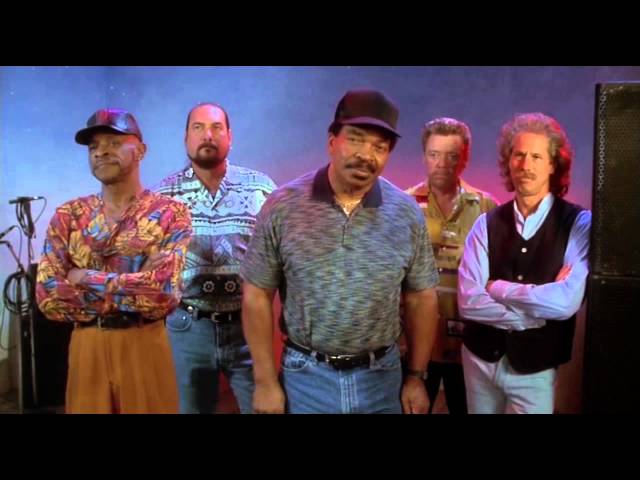
A fictional blues band that appears in the film Blues Brothers 2000.
It’s a track you can’t help but listen to just for the sheer star power of its blues all-star lineup, including B.B.
King, Koko Taylor, Dr.
John, Steve Winwood, and Eric Clapton.
Born in the ChicagoThe Paul Butterfield Blues Band

A masterpiece that can be said to be the most standard among songs written by a white bluesman.
Born in Chicago and raised with Chicago blues as lullabies, Paul Butterfield was uniquely able to create such a work.
He also died at 44 and became a saint of the blues.
Spoonful BluesCharley Patton

The birthplace of acoustic pre-war blues was the Mississippi River Delta.
These blues are sometimes called “Delta blues.” Charley Patton is one of the most famous bluesmen of the Delta blues.
Fishing BluesHenry Thomas

Henry Thomas, born in 1874 in Big Sandy, Texas, was an American singer, guitarist, and quills player.
Among recorded artists, he is one of the earliest Black singers and exemplifies the prototype of the blues.
Between 1927 and 1929, he recorded 24 sides for Vocalion.
He performed at railroad stations and used trains to travel back and forth between Dallas and Houston.
While playing guitar, he also blew the quills—sometimes called “panpipes,” made from carrizo cane—producing flute-like sounds reminiscent of Mississippi fife music, and he sang using hooping, an African-derived vocal style similar to yodeling.
Fishing Blues was recorded in 1928.
Honey, Won’t You Allow Me One More Chance? was covered by Bob Dylan.
Recommended for rock fans too! — Masterpieces of Modern Blues (’61–’70)
How Long, How Long BluesLeroy Carr

Leroy Carr, born in 1905 in Nashville, Tennessee, was a blues singer and pianist who became the first great master of urban blues, developing the style of city piano blues.
Between 1928 and 1935, he recorded over 160 songs.
His universally appealing, accessible blues influenced artists such as Cecil Gant, Charles Brown, and Ray Charles.
How Long, How Long Blues was a major hit.
Songs like Blues Before Sunrise, When the Sun Goes Down, I Believe I’ll Make a Change, and Sloppy Drunk Blues have been covered by numerous singers.
Rollin’ StoneMuddy Waters

Muddy Waters, born in 1913 in Issaquena County, Mississippi, was an American blues singer and guitarist.
Known as the Father of Chicago Blues, he pioneered a band-oriented electric guitar sound in Chicago, leaving a major mark on the development of the Chicago blues.
He was inducted into the Rock and Roll Hall of Fame posthumously in 1987.
He spent his childhood on a plantation, where he loved playing in the mud; from this he was nicknamed “Muddy Waters,” which became his stage name.
He started on harmonica at age seven, later switched to guitar, moved to Chicago, Illinois in 1943, and recorded for Columbia in 1946.
A young guitarist who came to audition for his band was Chuck Berry, whom he introduced to Chess Records.
“Rolling Stone” is one of his hit songs and the source of the Rolling Stones’ band name.
All Your Lovin’ (I Miss Loving)Otis Rush

Otis Rush, born in 1934 in Philadelphia, Mississippi, was an American blues singer and guitarist.
Although ranked among the very best both as a vocalist and as a guitarist, he recorded relatively little.
The works he left on Cobra Records have become classics—about sixteen tracks that heralded a new era of Chicago blues.
Because he was left-handed, he played a right-handed guitar turned upside down, creating a distinctive sound.
He stood at the forefront of the West Side style sound, helped spark the vogue for minor-key slow blues, and his band is said to have been the first blues band to begin using an electric bass.