



Here are some recommended works from the many masterpieces left by the German composer Johannes Brahms.
If you get to know Brahms—hailed as one of the “Three Bs” of German music alongside Bach and Beethoven—you’ll be well on your way to becoming a classical music connoisseur.
His Symphony No.
1, composed with deep respect for Beethoven, was so strongly influenced by him that the conductor of its premiere, Hans von Bülow, famously called it “Beethoven’s Tenth Symphony.”
Please enjoy the world of Brahms, which continues to be cherished by classical music fans today.
- [Masterpiece Classics] A special showcase of gem-like masterpieces so beautiful they’ll move you to tears
- Johannes Brahms Popular Songs Ranking [2026]
- [Violin] A curated selection of beloved classic masterpieces and popular pieces that continue to be cherished across eras
- Robert Schumann | Introduction to his famous and representative works
- Cello Masterpieces: A comprehensive introduction to exquisite classical works that let you savor its profound timbre
- Masterpieces for Harp: A curated selection of distinguished works featuring noble and delicate tones
- Masterpieces of classical piano that are too beautiful for words. A gathering of delicate tones that cleanse the soul.
- Mozart: An Introduction to His Signature and Popular Works
- Gabriel Fauré | Introduction to His Famous and Representative Works
- [Quartet] Masterpieces and Popular Pieces for String Quartet
- Timelessly beautiful classical masterpieces. Recommended classical music.
- Mendelssohn’s Masterpieces | Popular Classical Music
- Today's Classics: Recommended classical music and great performances to listen to today
Brahms’s masterpieces: Popular classical music (1–10)
Piano Sonata No. 3 in F minor, Op. 5, I. MovementNEW!Johannes Brahms

Johannes Brahms’s early large-scale masterpiece, Piano Sonata No.
3 in F minor, Op.
5: First Movement.
Published in February 1854, this work captivates with a symphonic scale that evokes the weighty resonance of an orchestra using a single piano.
Because it demands a robust bass, densely woven inner voices, and dramatic emotional contrasts, it tests not only performance technique but also the ability to grasp the overall architecture of the piece.
Along the way, introspective and beautifully fantastical episodes appear, making it ideal for those wishing to cultivate richly nuanced expression.
Featuring chords that exploit a wide register and abrupt dynamic shifts, it is recommended for players with secure technique—a celebrated work that can inspire profound emotion in a recital.
Symphony No. 1, Op. 68Johannes Brahms
This is the first symphony, completed in 1863 when Brahms was 43 years old.
He began composing it after hearing Schumann’s Manfred Overture at the age of 22, but it is said to have taken him 21 years to complete because he so deeply respected and was conscious of Beethoven.
Accordingly, it has been highly acclaimed; the German conductor Hans von Bülow even called it “Beethoven’s Symphony No.
10.” Among Brahms’s four symphonies, it is particularly popular.
Symphony No. 4Johannes Brahms

Johannes Brahms was both a composer and a pianist.
One of the masterpieces he left behind is this work, completed during his Vienna period in 1885.
Inspired by a Bach cantata, Brahms built the piece on classical forms while creating new music through his own distinctive imagination.
Beginning with a tragic theme, moving through beautiful melodies in the horns and woodwinds and a rhythmic, valiant development, and culminating in a powerful, passionate finale, its structure profoundly moves listeners.
It is a highly recommended piece for those who want to experience the fusion of tradition and innovation in classical music.
Variations and Fugue on a Theme by HandelJohannes Brahms

A masterpiece that showcases the full extent of Johannes Brahms’s talent as one of Germany’s foremost composers.
Written in 1861 when he was 28, this work unfolds 25 variations and a fugue based on a theme by Handel.
It fuses Brahms’s distinctive classical beauty with innovative virtuosity, resulting in a work that demands advanced piano technique.
While paying homage to Baroque music, it also weaves in Romantic expressiveness, making it highly recommended for those who wish to savor the profound allure of classical music.
Experience this landmark set of variations that has secured its place in music history.
Clarinet Quintet in B minor, Op. 115Johannes Brahms
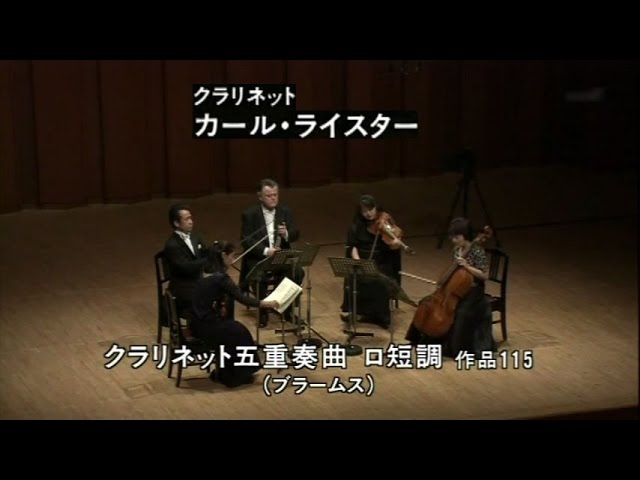
Brahms, a leading musician of the late 19th century, is known as a representative German composer, often mentioned alongside fellow Germans Bach and Beethoven.
The chamber work for clarinet and string quartet that he composed in his later years is a gem in which mature craftsmanship and deep emotion are beautifully fused.
Inspired by his encounter with a clarinetist, the piece embodies Brahms’s gentleness and a sense of resignation.
It’s a highly recommended work for those interested in classical music who aren’t sure where to begin.
Hungarian Dance No. 5Johannes Brahms

Published in 1869, this is a collection of 21 dances arranged by Brahms based on the music of the Hungarian Roma (Gypsies).
It was originally written for piano four hands (duet), but later reworked into versions for solo piano and orchestra, among others, and became explosively popular.
In particular, No.
5 is frequently performed on its own in orchestral concerts and is often used as background music in films and commercials.
Piano Quintet, Op. 34Johannes Brahms

It is a work composed in 1864 and published in 1865.
Brahms initially conceived the piece as a string quintet, but it did not go well, so he rewrote it as a sonata for two pianos.
Later, following advice from those around him, he revised it again into a piano quintet—a well-known episode associated with this work.
Incidentally, the sonata for two pianos was published in 1871 as Op.
34b.