

Brahms's masterpieces. Popular classical music.

Here are some recommended works from the many masterpieces left by the German composer Johannes Brahms.
If you get to know Brahms—hailed as one of the “Three Bs” of German music alongside Bach and Beethoven—you’ll be well on your way to becoming a classical music connoisseur.
His Symphony No.
1, composed with deep respect for Beethoven, was so strongly influenced by him that the conductor of its premiere, Hans von Bülow, famously called it “Beethoven’s Tenth Symphony.”
Please enjoy the world of Brahms, which continues to be cherished by classical music fans today.
- [Masterpiece Classics] A special showcase of gem-like masterpieces so beautiful they’ll move you to tears
- Johannes Brahms Popular Songs Ranking [2026]
- [Violin] A curated selection of beloved classic masterpieces and popular pieces that continue to be cherished across eras
- Robert Schumann | Introduction to his famous and representative works
- Mozart: An Introduction to His Signature and Popular Works
- Cello Masterpieces: A comprehensive introduction to exquisite classical works that let you savor its profound timbre
- Masterpieces for Harp: A curated selection of distinguished works featuring noble and delicate tones
- Masterpieces of classical piano that are too beautiful for words. A gathering of delicate tones that cleanse the soul.
- Gabriel Fauré | Introduction to His Famous and Representative Works
- [Quartet] Masterpieces and Popular Pieces for String Quartet
- J.S. Bach | Introducing Famous and Representative Works
- Timelessly beautiful classical masterpieces. Recommended classical music.
- Mendelssohn’s Masterpieces | Popular Classical Music
Brahms’s Masterpieces: Popular Classical Music (91–100)
Symphony No. 1, Movement IIJohannes Brahms

Brahms’s Symphony No.
1, which he is said to have spent 20 years composing, is a masterpiece especially beloved among classical music fans.
Among its movements, the second is distinguished by the beauty of its theme played by the oboe and violin, extolling a serene and tranquil beauty.
Symphony No. 4, Movement IIJohannes Brahms

After the weighty motif of woodwinds and horns, the flow of the music leading up to the entrance of the strings feels like a beam of heavenly light breaking through the clouds.
The way each instrument’s melodies interweave with intricate complexity is truly a work of art.
The more you listen, the more you come to love it—an exquisite masterpiece with remarkable depth.
Brahms’s masterpieces. Popular classical music (101–110)
Holy LullabyJohannes Brahms

This is the second of the Two Songs composed by Johannes Brahms to celebrate the birth of Joseph Joachim’s son, setting music to a text by Emanuel Geibel, which is a reworking of a poem by Lope de Vega.
It is scored for alto (a female voice type), viola (a lower-voiced member of the violin family), and piano.
LullabyJohannes Brahms
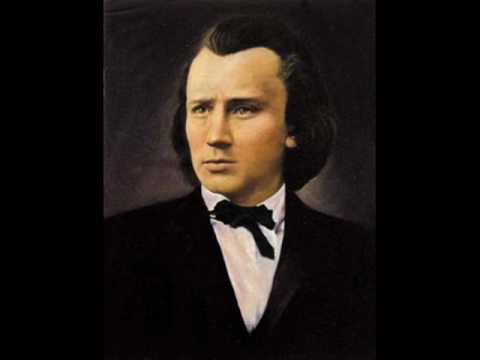
Brahms’s classic lullaby.
Many people may have heard not only the original but also arranged versions.
It seems there are versions with Japanese lyrics that are sung, but using classical music as background music and letting it play as a lullaby might also feel elegant and nice.
A fragment from Goethe’s ‘Harz Journey in Winter’Johannes Brahms
Composed in 1896, this work sets Goethe’s poem “Harzreise im Winter” to music.
Scored for alto solo, male chorus, and orchestra, it is commonly known as the Alto Rhapsody.
It is a work with a unique charm.
F.A.E. Sonata, Movement IIIJohannes Brahms

Composed in 1853.
The F.A.E.
Sonata is a violin sonata collaboratively written by Brahms, Robert Schumann, and Albert Dietrich.
It was dedicated to their mutual friend, the violinist Joseph Joachim.
The title “F.A.E.” comes from Joachim’s motto, Frei aber einsam (“Free but lonely”).
Brahms composed the third movement.
Cello Sonata No. 1, Op. 38Johannes Brahms

Composed between 1862 and 1865, around the time Brahms was 32 years old, this work is a cello sonata published in 1865.
Aside from a few pieces he destroyed himself, Brahms left only two cello sonatas in his lifetime.
It resounds with the characteristically Brahmsian, wistful melodies.