

Brahms's masterpieces. Popular classical music.

Here are some recommended works from the many masterpieces left by the German composer Johannes Brahms.
If you get to know Brahms—hailed as one of the “Three Bs” of German music alongside Bach and Beethoven—you’ll be well on your way to becoming a classical music connoisseur.
His Symphony No.
1, composed with deep respect for Beethoven, was so strongly influenced by him that the conductor of its premiere, Hans von Bülow, famously called it “Beethoven’s Tenth Symphony.”
Please enjoy the world of Brahms, which continues to be cherished by classical music fans today.
- [Masterpiece Classics] A special showcase of gem-like masterpieces so beautiful they’ll move you to tears
- Johannes Brahms Popular Songs Ranking [2026]
- [Violin] A curated selection of beloved classic masterpieces and popular pieces that continue to be cherished across eras
- Robert Schumann | Introduction to his famous and representative works
- Cello Masterpieces: A comprehensive introduction to exquisite classical works that let you savor its profound timbre
- Masterpieces for Harp: A curated selection of distinguished works featuring noble and delicate tones
- Masterpieces of classical piano that are too beautiful for words. A gathering of delicate tones that cleanse the soul.
- Mozart: An Introduction to His Signature and Popular Works
- Gabriel Fauré | Introduction to His Famous and Representative Works
- [Quartet] Masterpieces and Popular Pieces for String Quartet
- Timelessly beautiful classical masterpieces. Recommended classical music.
- Mendelssohn’s Masterpieces | Popular Classical Music
- Today's Classics: Recommended classical music and great performances to listen to today
Masterpieces by Brahms: Popular Classical Music (11–20)
Violin Concerto in D major, Op. 77Johannes Brahms

Johannes Brahms, a master of German Romantic music.
One of his signature works is the Violin Concerto, dedicated to his close friend Joseph Joachim.
Composed in 1878 when he was 45, this piece brilliantly fuses symphonic weight with the dazzling virtuosity of the solo violin.
Over roughly 40 minutes, the vast orchestral forces and solo violin weave a musical world that profoundly moves listeners.
Ranked alongside the concertos of Beethoven and Mendelssohn, this work is recommended not only for classical music enthusiasts but for anyone seeking a deeply affecting musical experience.
LullabyJohannes Brahms

We present a masterpiece by Johannes Brahms, one of Germany’s “Three Bs.” Composed in 1868, this work was gifted to celebrate the birth of a close friend’s child.
With its gently rocking melody and soothing lines, it has lulled babies to sleep around the world.
It’s said that a hidden counter-melody contains an expression of love for a former sweetheart.
More than 150 years on, this piece continues to be cherished by many.
It’s recommended not only for classical music fans but also for those raising children.
May it bring you a moment of peace.
Like a melodyJohannes Brahms
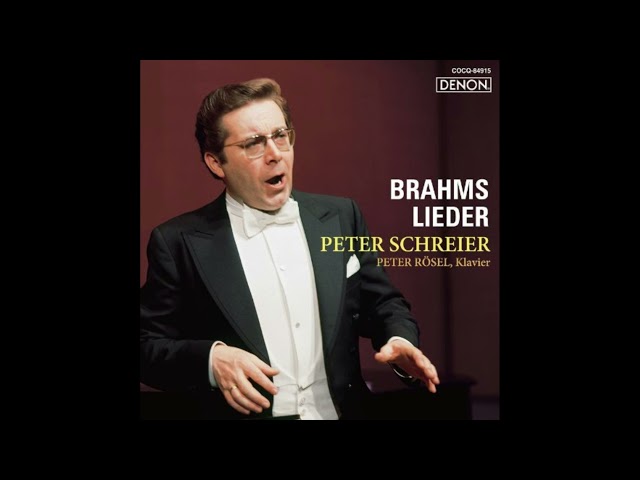
The song composed in 1888 is one of the works that represents his mature period.
Known as one of the three great Bs of German music alongside Bach and Beethoven, Brahms inherited the classical tradition while pursuing his own Romantic expression.
This piece sets words by the poet Klaus Groth and depicts a melody that flows quietly through the heart.
Although it is a short piece of about two minutes in A major, it features a structure in which the piano accompaniment and the voice converse, highlighting Brahms’s introspective emotional expression.
It is also a highly recommended piece for those just beginning to take an interest in classical music.
Variations on a Theme by Paganini in A minorJohannes Brahms

Composed between 1862 and 1863, this work consists of 28 variations on the theme of Niccolò Paganini’s Caprice No.
24 in A minor, written by the Italian violinist.
Although Brahms devoted himself primarily to composition and rarely performed the piano, he is said to have been highly skilled as an active pianist, having earned his living as one from the age of 13 in restaurants and taverns.
As indicated by Brahms’s own description of the piece as “studies for pianists with refined technique,” it is also renowned for the exceptionally high level of technical proficiency required for performance.
Academic Festival OvertureJohannes Brahms

The overture for orchestra he composed in 1880 is a work that showcases both his musical talent and playful spirit.
Written in gratitude for being awarded an honorary doctorate from the University of Breslau, the piece musically evokes fond memories of his student days.
Skillfully weaving together four student songs, it blends Brahms’s classical techniques with Romantic expression into a brilliant, roughly ten-minute musical tableau.
It’s a recommended piece for those looking to become familiar with classical music or anyone nostalgic for their youthful student years.
Intermezzo in B minor, Op. 119 No. 1 (Four Pieces, No. 1)Johannes Brahms

Among the masterpieces left by the German composer Johannes Brahms, the short pieces he wrote late in life have a special poignancy.
Composed in 1893, this work strongly reflects Brahms’s inner turmoil and sense of loneliness.
Beginning with slow, dark chords, its world of sound—woven from complex harmonies and delicate expression—awakens deep emotion in the listener.
In a letter to Clara Schumann, Brahms described the piece as “melancholy, with swirling dissonances,” and one can feel the composer’s quiet resolve as he contemplates the end of life.
It is a highly recommended piece for those who are drawn to introspective music.
Brahms’s Masterpieces: Popular Classical Music (21–30)
Waltz No. 15 in A-flat major, Op. 39 No. 15Johannes Brahms

We present a gem among the works left by the 19th-century German composer Johannes Brahms.
This is one of the most popular pieces from his set of waltzes for piano four hands, published in 1865.
It is characterized by an elegant and accessible melody and is affectionately known as the “Waltz of Love.” While cherishing the formal beauty of Classicism, Brahms built a unique musical world interwoven with the sensibilities of Romanticism.
This work distills his delicate sensitivity and artistry.
It is a recommended piece for those just getting into classical music or anyone seeking soothing, heartwarming sounds.