

Brain-teasing game roundup


Simple games are fun, but sometimes you want something that really makes you think! For you, we’re introducing recommended brain-training game apps.
We’ve gathered a wide range of classics like board games, card games, puzzles, and popular remixed games.
These apps include not only trending titles but also games perfect for filling short breaks.
As we get older, thinking things through can start to feel like a chore.
But with brain games, you can train your mind while having fun!
- Games you can play with just conversation. Classic and popular activities you can enjoy without any props!
- Single-player games: a roundup of time-killing games
- Challenge together! A roundup of word games for adults
- Perfect for killing time! Games you can play with two people.
- Perfect for killing time! A roundup of games for three people to enjoy
- [For 2 Players] Easy Pen-and-Paper Time-Killing Game
- Games you can play in the car! Fun activities to liven up drives and traffic jams
- Kill time while waiting or stuck in traffic! A roundup of games four people can play
- A simple and fun co-op game that enhances teamwork
- [Simple Games] Recommended Indoor Recreational Activities for Adults
- Games and activities everyone can enjoy together. A collection of fun play ideas.
- [Get Friendly with Games] Math Games, Apps, and Activities
- Fun games recommended for making friends with people you’ve just met
Game (1–10)
XENO

XENO is a card game devised by Atsuhiko Nakata of the comedy duo Oriental Radio.
Because its gameplay is similar to a trading card game, it has the drawback of requiring you to learn complex rules; however, since there are only 18 cards in total, you won’t have much trouble memorizing the card types.
It’s a game that hones not only logical thinking but also the insight to read your opponent’s psychology.
It can be played by 2 to 4 people at the same time, making it enjoyable for families as well.

Word Wolf

This is a simplified version of the Werewolf game called Word Wolf.
You prepare two similar but different words or things as prompts and deal them out on cards.
For example, if four people are playing, three cards might say “sea,” and one card might say “river.” In this case, the person who draws “river” is the Wolf.
No one knows what card the others drew, but everyone discusses the topic.
If the Wolf thinks, “Huh, maybe I’m the odd one out,” they should try to mislead others and align their comments with the group as much as possible.
After a group discussion, if everyone correctly identifies the Wolf, the commoners win; if they accuse a commoner instead, the Wolf wins.

Insider Game

Are you familiar with the game Insider, which includes elements like finding the culprit or werewolf? You deal out cards to determine the roles: Master, Insider, and the rest are Commoners.
The Master identifies themselves and draws a topic card.
Then everyone closes their eyes, during which the Insider also checks the topic—the only ones who know the answer are the Master and the Insider.
From there, players ask the Master yes-or-no questions to get hints toward the answer, while the Insider asks guiding, assistive questions to steer everyone toward it.
The goal is to reach the correct answer within a five-minute time limit.
After that, there’s another phase: figuring out who the Insider is.
Players discuss whether the person who gave the correct answer is the Insider.
If that person is indeed the Insider, the answerer and the Master win; if they’re wrong, the Insider wins.
Games (11–20)
Nonogram
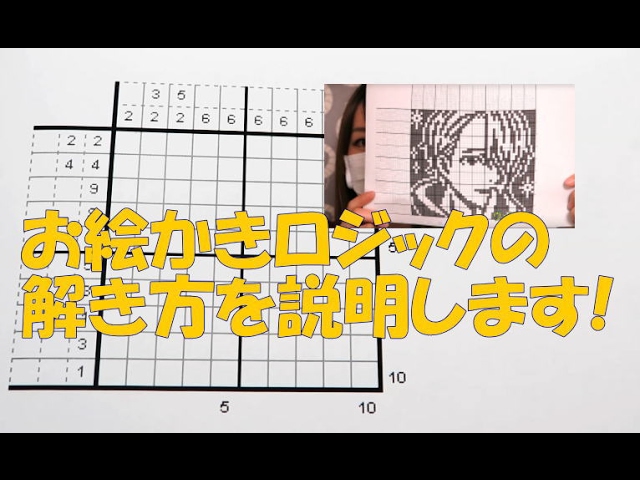
Nonogram is a type of puzzle game.
The rules are: “Fill consecutive squares equal to the numbers for each row and column,” “If there are two or more numbers in a row or column, fill them in that order,” and “Leave at least one square blank between groups of numbers.” If you fill in the grid following these rules, a picture will appear.
Spotting large numbers makes it easier to solve!

Texas Hold’em

When it comes to card games, many people think of poker! It’s a game where you make a hand with five cards and compete on strength.
Texas Hold’em is also a form of poker, but it’s played a bit differently: you use five community cards and two hole cards to make your hand.
There are four betting rounds, and since the community cards are revealed gradually, you have to decide at first whether to play based only on your hole cards.
The interesting part of this game is that you don’t reveal your hole cards until all the community cards are out, so even if you can only make a weak hand, you can pretend to be strong and rattle your opponents.
Use psychological tactics to outmaneuver others and rack up chips!
Werewolf game

The “Werewolf Game” is a game in which players are divided into the Villagers’ side and the Werewolves’ side, and each team fights to achieve its own victory.
At the start, roles are assigned to the players, and only you can see your own role.
Through discussion, you decide whom to trust and whom to suspect as the game progresses.
It’s a game that requires a lot of thinking, but it’s very popular—so give it a try at least once!
Reverse shiritori

A classic game for kids: shiritori! This time, we’re introducing “reverse shiritori.” Unlike regular shiritori, you take the first letter of a word and make it the last letter of the next word.
For example, in regular shiritori you might go “ringo → gorira,” but in reverse shiritori it would be “ringo → kyūri.” It sounds simple, but even adults find it tricky—so get your brain in high gear to answer quickly!