

Brain-teasing game roundup


Simple games are fun, but sometimes you want something that really makes you think! For you, we’re introducing recommended brain-training game apps.
We’ve gathered a wide range of classics like board games, card games, puzzles, and popular remixed games.
These apps include not only trending titles but also games perfect for filling short breaks.
As we get older, thinking things through can start to feel like a chore.
But with brain games, you can train your mind while having fun!
- Games you can play with just conversation. Classic and popular activities you can enjoy without any props!
- Single-player games: a roundup of time-killing games
- Challenge together! A roundup of word games for adults
- Perfect for killing time! Games you can play with two people.
- Perfect for killing time! A roundup of games for three people to enjoy
- [For 2 Players] Easy Pen-and-Paper Time-Killing Game
- Games you can play in the car! Fun activities to liven up drives and traffic jams
- Kill time while waiting or stuck in traffic! A roundup of games four people can play
- A simple and fun co-op game that enhances teamwork
- [Simple Games] Recommended Indoor Recreational Activities for Adults
- Games and activities everyone can enjoy together. A collection of fun play ideas.
- [Get Friendly with Games] Math Games, Apps, and Activities
- Fun games recommended for making friends with people you’ve just met
Games (31–40)
after-the-fact rock-paper-scissors

In rock-paper-scissors, playing after your opponent is taboo.
But “after-the-fact rock-paper-scissors” is a game that deliberately does just that.
Try playing after your opponent and either win on purpose—or lose on purpose.
Since we usually play to win, intentionally losing might be harder.
This also helps stimulate the brain and is great for all ages.
Once you get used to it, try picking up the pace and challenge yourself.

Puzzle solving

“Nazotoki” is, quite literally, solving puzzles.
You discover patterns and rules in the problems and derive the answers.
Many puzzle problems are uploaded to video-sharing sites and the like, so try searching for them and give them a shot.
Thinking about things you don’t usually consider is great exercise for your brain.
Depending on the problem, children—whose minds are still flexible—might arrive at the correct answer faster.
Word association game

The “word association game” can be arranged in many ways.
Here’s a simple version.
First, one participant says a word—for example, “apple.” The next person connects it with an associated idea, like “When you think of apples, you think red.” If someone can’t keep the rhythm or says a word that isn’t clearly associated, they lose.
It’s a simple game, so even young children can enjoy it.
Go (the board game)

Go is a board game for two players.
They take turns placing stones on the board and compete over the size of the territories enclosed by their own stones.
Once a stone is placed, it cannot be removed or moved unless it is completely surrounded by the opponent’s stones, so please keep that in mind.
It may be hard to learn at first, but once you get the hang of it, you’ll surely be hooked on the profound depth of Go!
Shogi
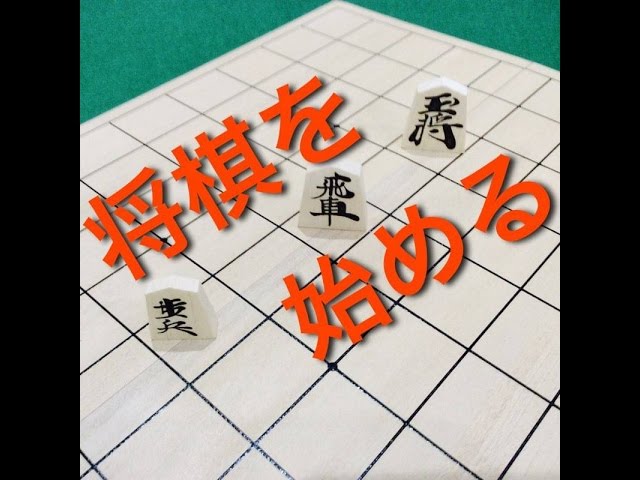
Shogi is a board game played by two people.
In addition to “standard shogi,” there are variants such as “ancient shogi” and “variant shogi,” and, like chess, it is thought to have originated from the ancient Indian game chaturanga.
Generally, the squares up to the third rank from your side of the board are called your camp, and the squares up to the third rank from your opponent’s side are called the enemy camp, and the outcome is decided by capturing the king.
You do need to learn the characteristics of the pieces in shogi, but once you do, it’s a game that even children can enjoy.
Games (41–50)
Palindrome Quiz

A “palindrome” is a phrase that reads the same forward and backward.
For example, “gake de kega” (“injured on a cliff”) in Japanese.
A palindrome quiz is a game where you look at an illustration and come up with a palindrome related to it.
It sounds simple, but it’s surprisingly challenging! Still, the feeling when you nail one is amazing, so try playing with friends or as a parent-child activity.
You might even discover a brand-new correct answer.
Brain Training App (1–10)
Matchstick Puzzle

The classic “matchstick puzzle” that everyone’s tried at least once is now available as a smartphone app, so you can play anytime, anywhere.
It used to be featured on TV shows quite often, too.
It’s a game where you move a set number of matchsticks to transform them into a specified shape—but unless you think flexibly, it can be hard to find the correct answer.
Give it a try with friends while you’re waiting around!