

[Recommended] Carefully selected masterpieces by Bruckner, the great master of symphonies and sacred music

Anton Bruckner, the Australian composer and organist renowned as a master of symphonies and sacred music.
In this article, we present some of his most widely celebrated works—pieces known for their weighty character and a pronounced religious tone that reflects his devout Catholic faith.
Please enjoy, along with videos and commentary, a selection of quintessentially Brucknerian works, rich in depth and evoking elegant, monumental vistas reminiscent of Austria’s abundant natural landscapes and the majestic Baroque churches.
- [Masterpiece Classics] A special showcase of gem-like masterpieces so beautiful they’ll move you to tears
- Masterpieces of the Romantic Era: A sweeping introduction to soul-stirring, celebrated gems!
- Masterpieces for Harp: A curated selection of distinguished works featuring noble and delicate tones
- Masterpieces by Gustav Mahler. Popular classical music.
- Timelessly beautiful classical masterpieces. Recommended classical music.
- Mendelssohn’s Masterpieces | Popular Classical Music
- Mozart: An Introduction to His Signature and Popular Works
- Brahms's masterpieces. Popular classical music.
- [Haydn] Pick up famous and representative pieces!
- Pick up Beethoven’s famous and representative works!
- [Orchestra] Introducing famous and popular pieces
- Dvořák’s masterpiece. Popular classical music.
- Classical Masterpieces: Recommended Works You Should Hear at Least Once
[Recommended] Carefully selected masterpieces by Bruckner, the master of symphonies and sacred music (21–30)
Piano Piece in E-flat major, WAB 119Anton Bruckner

Piano Piece in E-flat major, WAB 119 is a work composed in 1856 by the great Austrian composer Anton Bruckner.
With a performance time of about one minute and thirty seconds, it is very short and stands apart from Bruckner’s other large-scale works.
From this miniature, one can sense his inner sensitivity and delicacy.
As a piece in the public domain, it is one of the more approachable works among Bruckner’s piano compositions and seems well-suited for those who would like to try playing his piano music.
Symphony No. 7, Second MovementAnton Bruckner

Symphony No.
7 is regarded as the first of Bruckner’s symphonies to have a successful premiere and, alongside the Fourth, is one of his most popular works.
While composing the second movement, his beloved Wagner became critically ill; Bruckner continued writing with a premonition of Wagner’s death, and when Wagner passed away, he added a coda as a “funeral music” in his honor.
[Recommended] Carefully Selected Masterpieces by Bruckner, the Great Master of Symphonies and Sacred Music (31–40)
Symphony No. 9Anton Bruckner

It is the last symphony Bruckner worked on and was left unfinished when the composer passed away.
Even today, attempts to complete the fourth movement continue.
Overall, it is filled with richly bright timbres; the opening proceeds at a slightly brisk tempo, and from the middle it paints a beautiful, flowing, dance-like scene.
Toward the end, there is a quietly dreamy comfort, and it concludes in a rather understated manner.
The absence of unnecessary accelerations or decelerations is appealing.
Symphony No. 9, Movement IIIAnton Bruckner

Work on the piece began in August 1887, following the completion of the Eighth Symphony, but was interrupted by revisions to earlier works, and only in 1891 was he finally able to concentrate on it.
Pushing on through repeated illnesses and striving to complete it until just before his death, he left the symphony in three movements, lacking the fourth movement.
Cavalry Lancers’ Quadrille WAB 120 No. 1Anton Bruckner

Composed around 1850, Lancer-Quadrille, WAB 120 is a work for piano four hands consisting of six sections, incorporating lively dance elements based on the 19th-century social dance, the quadrille.
It offers a glimpse of a more casual and approachable side of Bruckner, distinct from the weighty impression of his symphonies, making it a valuable piece.
It’s also recommended for classical music beginners as a work that showcases Bruckner’s diverse talents.
Symphony No. 7Anton Bruckner
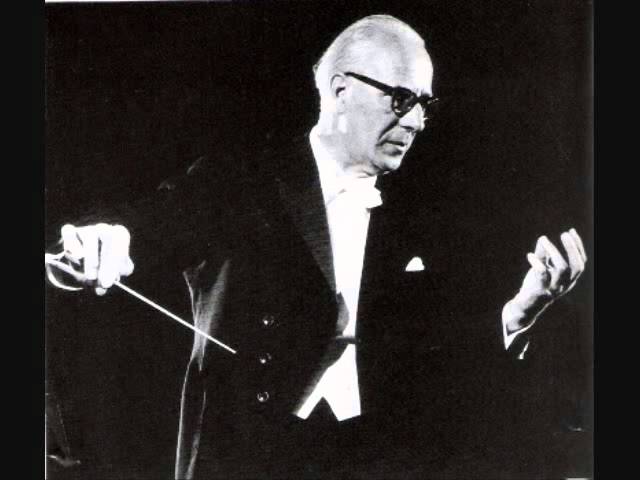
When it comes to Bruckner’s symphonies, the image of a “grand scale” and a “majestic finale” is firmly established.
This piece is no exception; performing all four movements takes over an hour.
A distinctive feature of this work is the use of Wagner tubas, and in the second and fourth movements one is enveloped by their unique harmonies.
Mass No. 1 in D minorAnton Bruckner
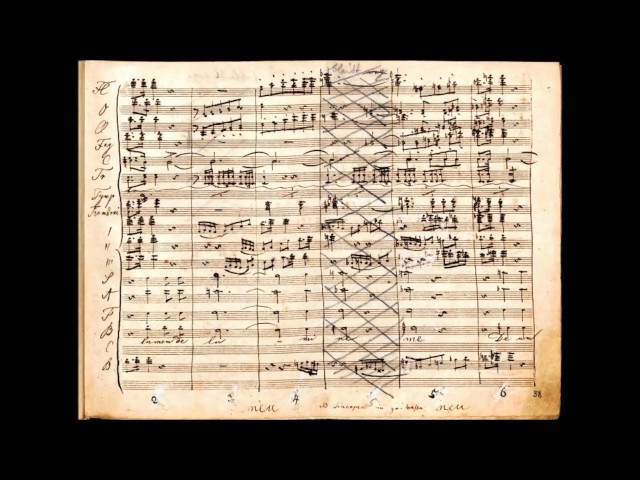
Anton Bruckner was a devout Catholic and left behind a wealth of sacred music.
His Mass No.
1 is one such work, scored for mixed SATB choir and orchestra.
With its weighty yet warm character, it evokes the image of a stone-built church and a solemn mass.