

For Seniors: Effective Recreation for Preventing Care Needs—Have Fun While Staying Healthy

For the physical and mental well-being of older adults, rehabilitation that involves moving the arms and legs is ideal.
However, simply following a set rehabilitation routine doesn’t always lead to motivation.
In this article, we introduce enjoyable recreational activities that contribute to arm and leg rehabilitation for older adults.
From group activities that everyone can get excited about to options you can focus on individually, you’ll surely find fun ways to work on functional improvement.
Choose according to each person’s physical and mental condition.
We hope you find this helpful.
- [For Seniors] Enjoy safely even during the COVID-19 pandemic: Seated activities
- [For Seniors] Refresh Your Mood! Lively, Get-Moving Games
- [For Seniors] Recreational activities and games that let you have fun while strengthening your legs
- [For Seniors] Simple Recreational Activities You Can Enjoy While Seated
- For Seniors: Fun and Lively Exercise Recreation
- [For Seniors] Guaranteed to Liven Things Up! A Collection of Brain Training Activities That Will Spark Laughter
- [For Seniors] Fun Recreational Activities Without Equipment
- [For Seniors] Core Training: Recommended Simple Rehabilitation
- [For Seniors] Easy and fun seated activities you can do in your room
- [For Seniors] Introducing Recreational Activities Anyone Can Enjoy at Geriatric Health Facilities!
- [For Seniors] Leg and lower-back training: Fall prevention
- For seniors: Leg-strengthening exercises you can do without overexertion.
- Recreation Activities Effective for Long-Term Care Prevention for Seniors
[For Seniors] Effective for Preventing the Need for Care! Fun Recreational Activities (31–40)
ground golfNEW!
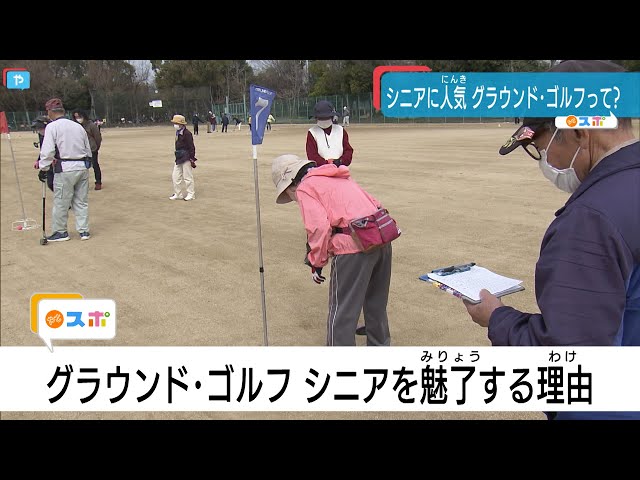
Ground golf is an easy-to-play activity in parks and plazas that doesn’t require a dedicated course; with just a club, a ball, and a post, anyone can enjoy it.
The rules are simple: you compete on the number of strokes it takes to get the ball into the post.
Since you don’t loft the ball into the air like in golf, it seems safe for seniors to enjoy as well.
It’s similar to gateball, but ground golf is an individual game rather than a team sport.
It also appears to be popular because its rules are simpler than those of gateball.

danceNEW!

Dancing to music, moving your body in time, is a perfect sport for socializing and maintaining health.
Movements like following the music and learning choreography also serve as brain training.
If you’re worried because of pain in your legs or lower back, it might be good to start by sitting and focusing on hand and arm movements.
When you dance, prepare non-slip shoes and start at a comfortable pace, taking breaks as needed.
Enjoying dance while communicating with friends may naturally lift your spirits and make you feel more positive.

table tennisNEW!

Playing table tennis in a limited space is easy on the body and makes it easier to control the ball.
If you’re just starting out, it’s best to first learn how to hold the racket and begin with rallies.
As you get better at maintaining longer rallies with a steady rhythm, it may even have a positive effect on your cardiovascular function.
Another great thing about table tennis is that you can enjoy it for a long time while communicating with friends.
Be sure to have fun with others at a nearby table tennis venue or sports community center.
10-Minute Health Exercises for Older AdultsNEW!

This health exercise engages your whole body while also training your brain.
It starts with alternating between lifting your toes and heels.
Next, you’ll combine two movements at once, such as swinging your arms and marching in place.
For the brain-training part, you move your body while counting numbers and clap on specific numbers.
Even doing the entire routine only takes about 10 minutes.
Since it can be done while seated, older adults can move their bodies without overexertion.
However, be sure to take proper breaks when you feel tired.
Chewing Chewing 100-Year-Old GymnasticsNEW!

These are exercises to help you chew well with your own teeth and enjoy meals up to age 100.
Start with deep breathing, then tilt your head forward, back, left, and right.
After that, gently lean your shoulders to each side to stretch.
From here, begin moving your mouth.
First, say “A” and “N,” moving your mouth clearly as you voice the sounds.
Then add “I” and “E.” Next, with your mouth closed, trace the inside of your mouth with your tongue.
Massage in front of your ears and under your jaw to stimulate the salivary glands.
After pronouncing “pa-ta-ka-ra” in sequence, swallow your saliva to train your swallowing ability, and you’re done.

For Seniors: Effective for Preventing Care Needs! Fun Recreational Activities (41–50)
Throat muscle training with a ballNEW!
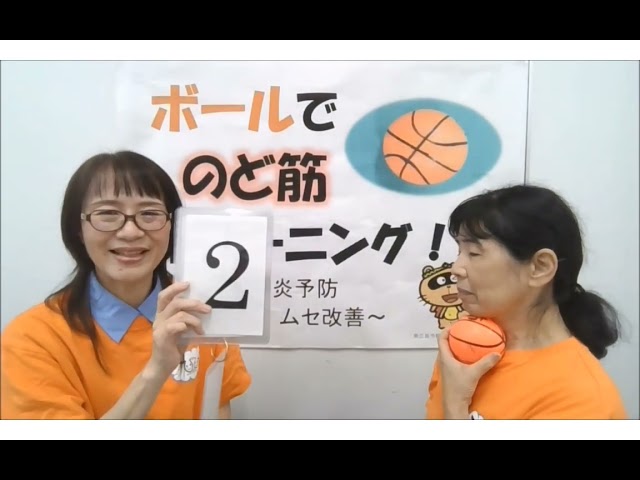
Prepare a soft, elastic ball.
First, place the ball between your chin and around your collarbone, and pull your chin in firmly for about 5 seconds as if to hold the ball securely in place.
Do not hold your breath during this.
Take a good breath in before pulling your chin in, then exhale during the 5 seconds while holding the chin tuck.
Do this for about 10 sets.
If you have heart disease, high blood pressure, or pain around your neck, please consult a doctor before trying this.
Brain-training recreation with a ball

It’s a game where everyone sits on chairs to form a circle and passes balls to the next person.
The balls differ in color and shape, and only the specified ball is passed along.
The tricky parts are judging whether you’re holding the specified ball and being able to stop the previously specified ball.
The speed at which the balls are passed is also important—when it increases, people feel rushed, and the brain-training element of identifying the balls becomes even stronger.
