

[For Seniors] Handmade Game Ideas You Can Enjoy


Games and recreational activities are essential in senior facilities like day-care centers.
In this article, we introduce handmade games you can enjoy.
Some are made using recycled materials like milk cartons and newspapers, while others use items you can get at 100-yen shops, such as paper cups and disposable chopsticks.
All of them involve thinking, competing, and playing, so they serve as brain training—and best of all, they foster communication.
In team competitions, everyone might get fired up, focus on the game, and end up in a frenzy!
- [For Seniors] Let’s Have Fun While Training the Brain! Handmade Card Game Ideas
- [For Seniors] From Games to Crafts: A Complete Guide to Paper Cup Recreational Activities
- [For Seniors] Enjoy safely even during the COVID-19 pandemic: Seated activities
- [For Seniors] Recommended Handmade Activities! Simple Ideas
- [For Seniors] Simple Tabletop Games: Fun and Engaging Recreational Activities
- [For Seniors] Simple Recreational Activities You Can Enjoy While Seated
- [For Seniors] Easy and fun seated activities you can do in your room
- Fun Recreational Activities for Seniors Using Newspapers!
- [For Seniors] Handmade Sugoroku Ideas: Enjoy Exercise and Brain Training While Playing!
- Hand games that liven things up for seniors—also great brain training
- [For Seniors] Enjoyable Indoor Activities! Recreations and Games That Engage the Mind and Body
- [For Seniors] Recreational activities and games that let you have fun while strengthening your legs
- [For Seniors] Recreational Activities Enjoyable in Large Groups
[For Seniors] DIY Game Ideas You Can Enjoy (61–70)
Get Excited! Beanbag Toss Bingo Game

It’s a cooperative game where everyone aims for bingo, incorporating the action of tossing beanbags.
Nine baskets are placed in the center of a seated circle, and players throw beanbags to land them on top of each basket.
If you place five or more beanbags, you clear that basket, and you work toward bingo using the baskets you’ve cleared.
In addition to adjusting the strength of each throw, be sure to focus on cooperating so your beanbags don’t collide with your teammates’.
It’s a game that lets everyone enjoy striving for a common goal while getting plenty of physical activity.

A game where you create prefecture names using 16 katakana characters

Let me introduce a fun thinking game where you create Japanese prefecture names using 16 katakana characters.
Write one katakana character per square on a sheet, preparing a paper with 16 characters.
Then, combine the katakana to see how many prefecture names you can form and compete for the highest count.
It’s likely to get lively if you split into teams, set a time limit at each table, and take on the challenge.
It’s also a fun game that can help prevent cognitive decline and stimulate communication, so give it a try.
You might discover something new!

Balance game

Using your fingertips while also using your head for balance—here’s a balance game to try.
All you need is a helmet, a tray, and beanbags.
You can substitute the helmet with something else.
Place the tray on top of the helmet, then put the beanbags on the tray.
The key is to keep an eye on the overall balance so it doesn’t tip to one side.
Decide whether to place each beanbag slowly or quickly and where exactly to put it.
This engages the upper limbs from fingertips to shoulders, and the brain’s decision-making processes, making it a promising brain-training activity to help prevent cognitive decline.
It’s simple, yet the setup changes every time, so you can enjoy it without getting bored.

yo-yo
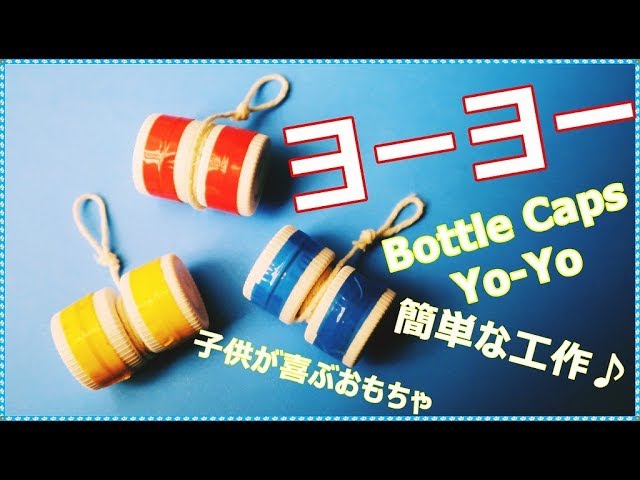
Making a yo-yo with plastic bottle caps is a craft that older adults can easily enjoy.
Use an awl to make holes in the centers of two caps, then insert a screw and fasten them together.
Thread a string through the center and tie it securely, and pack clay into the empty space inside the caps to add weight.
Finish by wrapping the whole thing with colored tape for reinforcement, and it’s done.
Activities that use the fingertips help improve concentration and stimulate brain function.
Another appeal is that you can customize the look to create your own unique piece.
Since you can actually play with it after it’s finished, it’s an idea that remains fun even after the making is complete.

Association card game

It’s a game that tests your imagination and creativity by thinking of things associated with keywords written on cards.
You prepare three types of cards that represent “color,” “characteristic,” and “thing,” and place one card from each category on the table.
Then you think of something that fits all the conditions shown on the cards and share your answer.
Even a prompt like “a white, soft creature” could lead to multiple answers such as “rabbit” or “sheep,” so it could also be fun to compete on how many ideas you can come up with.
balance bar

Have you ever played by balancing a broom on your palm when you were a student? You probably tried to keep it from falling by maintaining its balance.
In fact, balancing something on your palm is said to be effective brain training.
It helps develop your ability to predict the movement of the object and respond appropriately by moving to maintain balance.
Here’s a safer and easier method using a toilet paper roll and a uchiwa (hand fan).
The steps are simple: stand the toilet paper roll upright on the fan and carry it to a target location without letting it fall.
It can be turned into a tabletop game, and since the rules aren’t complicated, many older adults might be willing to give it a try.

Golf game

Here’s an introduction to a simple and fun paper-cup “golf” game.
Lay paper cups labeled with point values on their sides on the floor, and roll ping-pong balls to try to get them into the cups.
The winner is decided by how many ping-pong balls land in the cups.
Calculating the points for the ping-pong balls also provides a brain workout.
Since this golf game can be played while seated, it’s suitable for older adults who have difficulty standing.
Adjusting the force to roll the balls also helps with arm rehabilitation.
Some older adults may have enjoyed golf in the past, and this paper-cup golf can evoke those memories, too.