

Chinese tongue twisters: A collection of rao kou ling helpful for learning Chinese

Chinese sounds like tongue twisters, and my learning just doesn’t progress…
Some of you who are studying Chinese might be struggling with that feeling.
しかし、実際に中国語の学習を前進させるには、绕口令(早口言葉)が非常に効果的です。
By practicing tongue twisters, you’ll learn to clearly distinguish and pronounce similar sounds.
So in this article, we’ll introduce a whole bunch of tongue twisters—from classic ones to complex ones that are challenging even for native Chinese speakers.
In addition to providing pinyin, you can also check the pronunciation by following the included Google Translate URLs, so be sure to make good use of them in your Chinese studies.
- [Recreation] Challenge! A roundup of tongue twisters recommended for elementary school students
- Challenging tongue twisters: Introducing high-difficulty phrases and sentences!
- [Diction Training] A Collection of Tongue Twisters to Improve Articulation
- “Chau chau, anta” — a Kansai-dialect tongue twister. A phrase only Kansai folks can say.
- Bursting into laughter! A roundup of Hakata dialect tongue twisters
- Nagoya dialect tongue twisters are exquisite! A fun collection where your tongue gets tied in knots with regional dialects
- The world’s toughest! A collection of insanely hard-to-read kanji
- [Interesting] Summary of Kanji Reading Quiz Questions
- Challenge together! A roundup of word games for adults
- A collection of long tongue twisters. Also recommended for practicing announcements and narration.
- Tongue twisters that will make you laugh out loud! Super funny
- [Lyrics Prank] Confused by LINE that's not the usual!? A roundup of recommended songs
- For exam-takers! A collection of quotes that become profound and interesting once you understand their meaning
Chinese tongue twisters: A collection of useful rǎokǒulìng for learning Chinese (1–10)
Shiraishi Tower, Shiraishi Tower. Shiraishi Tower White Pagoda, White Pagoda Shiraishi Tower.

This is a tongue twister meaning “stacking white stones to build a white tower,” characterized by its complex tones.
The reading of the word for ‘tower’ is the key point here, as its pronunciation changes in various ways depending on the surrounding characters and how it’s used.
The sequences of second tone followed by first tone, and second tone followed by third tone, are also important, and you should pay attention to how the sounds flow together as you read it aloud.
It may be easiest to first master the tonal differences carefully, then gradually increase your speed while focusing on the connections between sounds.

On the high, high mountain grows a single wisteria vine; on the tip of the vine hangs a bronze bell. When the wind blows, the vine moves and the bell moves; when the wind stops, the vine stops and the bell stops.

This tongue twister, which depicts “a breeze blowing on a vine with bronze bells so the bells sway,” is best tackled with attention to vowel differences.
It intricately strings together sounds with nasal vowels such as “en,” “eng,” “ing,” and “ong,” so it’s important to be mindful of how each one differs.
To firmly master the differences—tongue position and airflow included—it’s recommended to read the words clearly and carefully.
Since it’s a complex sentence that uses not only different vowels but also various tones, start by reading it slowly and then gradually increase your speed.
Mom rides a horse. The horse is slow, so Mom scolds the horse.

This is a famous Chinese tongue twister that’s often used as an entry point when learning Chinese.
It means something like “A mother on a horse scolds a slow horse.” The key point to focus on here is the sounds for “mother” and “horse.” Although they’re both pronounced “ma,” they differ in tone.
Be careful to aim for precise pronunciation, since even with the same syllable, a different tone can drastically change the meaning.
If you gradually increase your reading speed, you’ll likely internalize the complex tonal movements.
Chinese tongue twisters: A collection of useful rao-kou-ling for learning Chinese (11–20)
Tiles beat the horse, the horse tramples the tiles, tiles break the horse, the horse tramples the tiles to pieces.

This is a tongue twister that focuses on the third tone, a pronunciation that learners often struggle with early on when starting Chinese.
While the translation ends up as a rather puzzling sentence describing a horse and tiles striking each other, read it aloud with careful attention to each character’s pronunciation.
Most of the characters in the sentence are pronounced with the third tone and the vowel “a,” making it especially recommended for those who find this sound difficult.
Gradually get used to the pronunciation, and aim to keep the tones stable even as you increase your speed.
Beibei covers herself with a white quilt, and (her) little sister pats Beibei to sleep.

It’s a tongue twister built around repeating the same syllables in Chinese and focusing on the fourth tone in particular.
For example, “贝贝” (bèibei) and “妹妹” (mèimei) share the vowel ‘ei’ and the fourth tone, and the structure highlights differences such as their consonants.
Even when consonants sound similar, subtle factors like how you use your breath differ; mastering these leads to smoother pronunciation.
These small consonant differences become harder as you increase speed, so practice repeatedly.
There are pears on the tree and mud on the ground. The wind blows the pears, the pears fall to the ground, the pears roll in the mud, and the mud sticks to the pears.
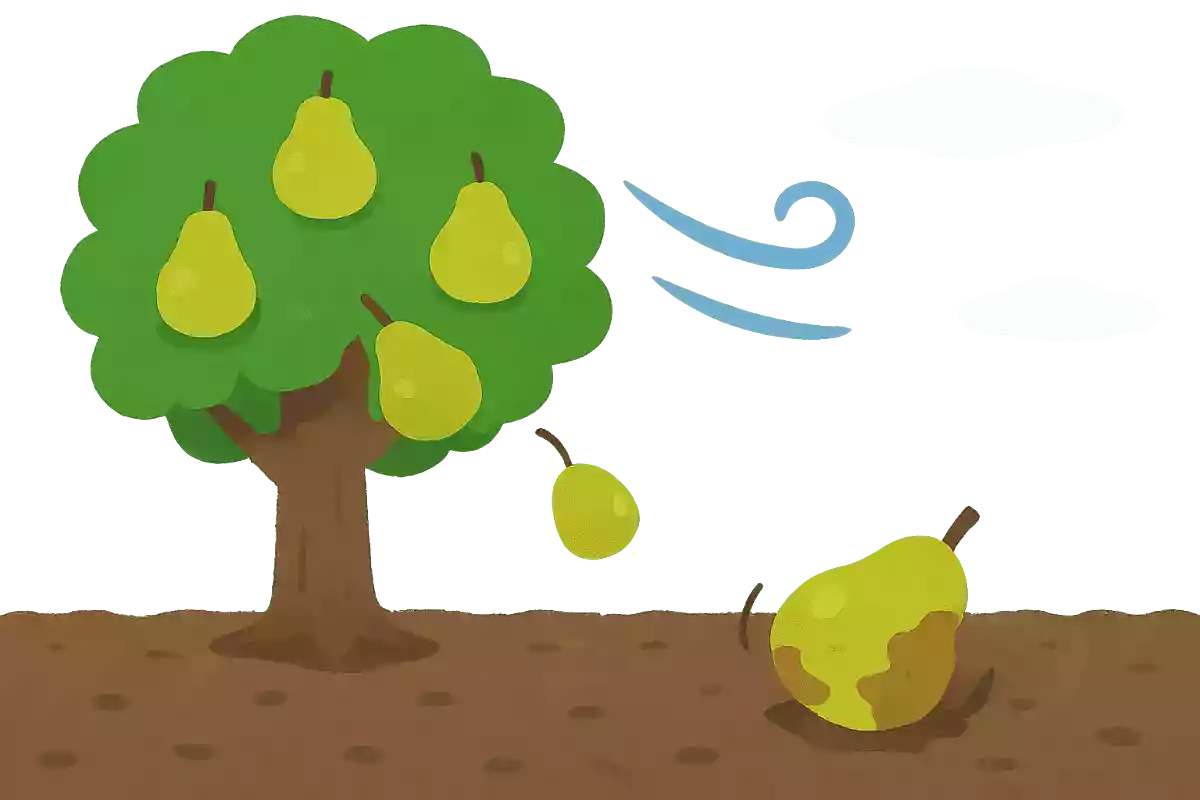
This is a tongue twister that strings together similar-sounding words to depict the relationship between pears bearing fruit in the tree and mud spreading across the ground.
The key point is the pronunciation difference between “li” in nashi (pear) and “ni” in doro (mud), and it’s important to focus on which sound you’re producing.
Mouth shape and tongue movement are crucial for distinguishing the words.
Exaggerating your mouth movements and articulating clearly will likely make it easier.
As the sentence progresses, the structure makes the two sounds draw closer together, which conveys the intention of making you more aware of their differences.
Eat grapes without spitting out the skins. Don’t eat grapes yet end up spitting out grape skins.
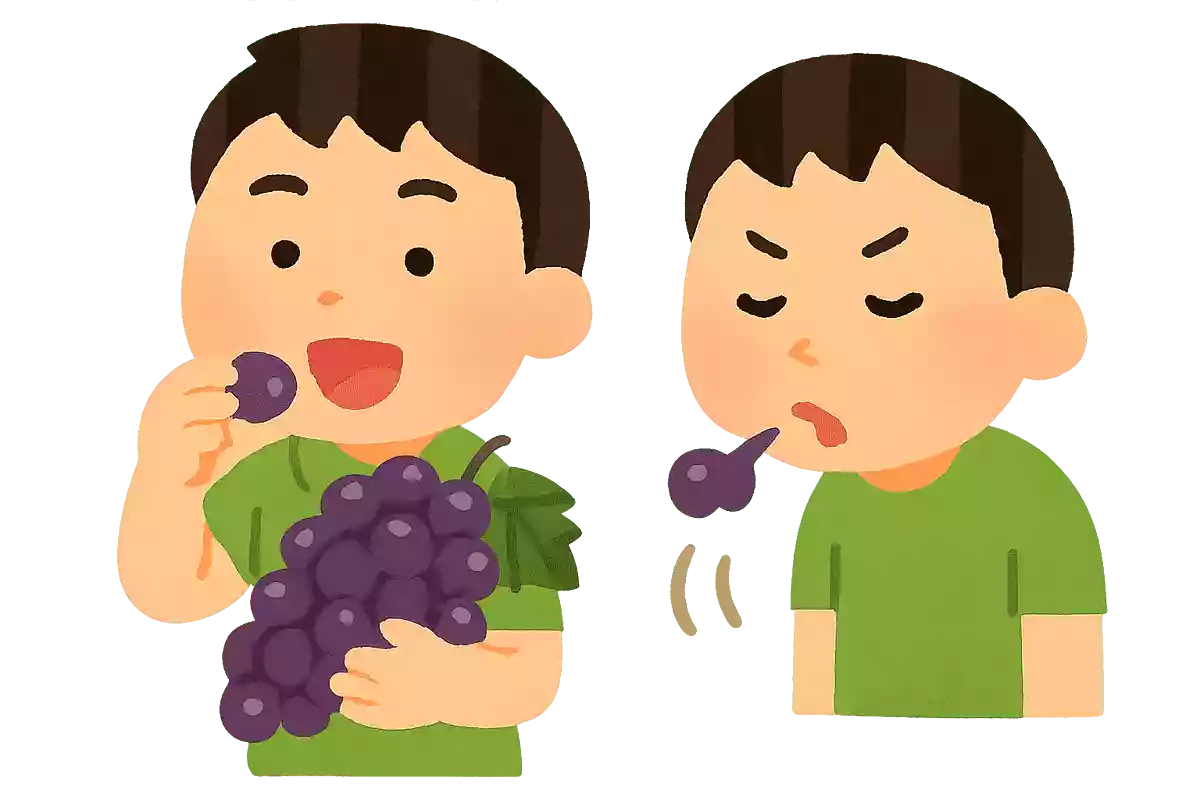
This is a tongue twister with a hard-to-understand meaning: “Even if you eat grapes, don’t spit out the grape skins; don’t eat grapes until you spit out the grape skins.” The tricky parts are words like “budō” (grapes) and “futo” (not spitting), which become harder to pronounce when different sounds are added before and after them.
Pay attention to how similar sounds use the breath differently.
The overall intonation changes also raise the difficulty, so it’s recommended to break it down into consonants, vowels, and sound changes.