

Chopin’s masterpieces. Popular classical music.

Are you looking for famous piano pieces and beautiful melodies?
Here are some masterpieces and recommended works by Frédéric Chopin, a pianist and composer who represents the early Romantic era in Poland.
Chopin composed as many as 21 nocturnes, and he also left a wealth of piano works in many other styles—such as mazurkas, waltzes, and polonaises—which is why he is known as the Poet of the Piano.
Let yourself be captivated for a while by the beautiful melodies woven by Chopin.
- [Masterpiece Classics] A special showcase of gem-like masterpieces so beautiful they’ll move you to tears
- Classical piano masterpieces: legendary performances from around the world you should hear at least once
- Rachmaninoff’s masterpieces. Recommended pieces by Rachmaninoff.
- [Tchaikovsky] Pick up famous and representative pieces!
- Frederic Chopin Popular Songs Ranking [2026]
- François Couperin Popular Songs Ranking [2026]
- [Advanced] A Comprehensive Introduction to the Difficult Piano Pieces of Chopin, the Poet of the Piano!
- Pick up Beethoven’s famous and representative works!
- Popular classical piano pieces. A collection of masterful performances by Japanese pianists.
- Timelessly beautiful classical masterpieces. Recommended classical music.
- Classical masterpieces. Recommended classical music.
- Cool classical masterpieces. Recommended classical music.
- Elgar’s masterpiece. Popular classical music.
Chopin’s masterpieces. Popular classical music (191–200)
Etude Op. 25 No. 11 “Winter Wind”Frederic Chopin

Affectionately known as the “Winter Wind” Etude, it is one of Chopin’s most popular works and a masterpiece of the highest artistry among his etudes.
The word “etude” means “study,” and this piece demands especially advanced technique even among Chopin’s 27 etudes.
In both technique and musicality, it can be considered one of the pinnacles of his etudes.
Its rapidly flowing right-hand broken chords are striking, while the melody is carried by the left hand.
True to the name “Winter Wind,” the piece evokes a strong, icy wind that lifts fallen leaves and a mood tinged with melancholy.

Étude Op. 10, No. 3 “Farewell”Frederic Chopin
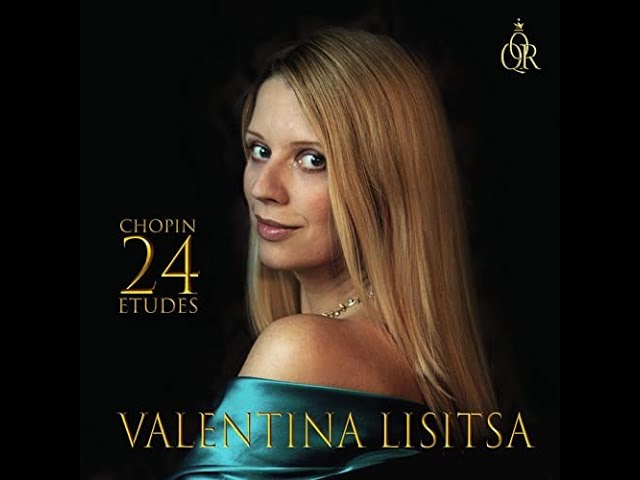
The opening melody is especially famous, and surely everyone has heard it at least once.
Because this piece was used in the 1934 German film about Chopin’s life, Farewell to Spring (released in Japan as “Wakare no Kyoku,” or “Farewell Song”), it has become widely known in Japan by that title.
Around the time he composed this work, Chopin left his homeland of Poland and moved his base to Paris.
Suffused with both yearning and passion, the piece overlays the feelings of “dreaming of success in Paris” with “nostalgia for the countryside,” conveying the complex state of mind Chopin likely experienced.
Barcarolle in F-sharp major, Op. 60Frederic Chopin

A “barcarolle” is a piece modeled after the songs sung on Venetian gondolas; for example, Mendelssohn’s “Songs Without Words” includes the well-known “Venetian Boat Song.” Many prominent classical composers wrote their own barcarolles, and Frédéric Chopin’s Barcarolle is also very famous—a solo piano work composed late in his life.
While the defining characteristic of a barcarolle is often a gently rocking 6/8 meter, Chopin’s Barcarolle is in a quadruple-based 12/8, cast in ternary form, and is an expansive work running over nine minutes.
It shares a kindred atmosphere with the Nocturne No.
5, written in the same key of F-sharp major.
Its distinctive left-hand accompaniment seems to capture the irregular motion of a gondola, while the right-hand melody—at times delicate, at times passionate—is truly beautiful.
At the same time, the piece’s dramatic quality irresistibly invites us to imagine what thoughts the late Chopin might have had as he composed it.

Chopin’s masterpieces. Popular classical music.
Heroic PolonaiseFrederic Chopin

Chopin’s masterpieces. Popular classical music (191–200)
Heroic Polonaise in A-flat major, Op. 53Frederic Chopin

Among Frédéric Chopin’s most famous works is the Polonaise in A-flat major, Op.
53 (“Heroic”).
This piano masterpiece combines an impressive, dazzling melody and a bright, liberating atmosphere—like a vista suddenly opening before you—with intricate, refined musicality.
Because it features many repeated chords and octaves, it’s important to keep the melodic line in mind and avoid letting the performance rely on sheer force alone.
Be careful not to develop a heavy, hammering touch from above; instead, build your tone by practicing slowly and carefully, layer by layer.
