

Chopin’s masterpieces. Popular classical music.

Are you looking for famous piano pieces and beautiful melodies?
Here are some masterpieces and recommended works by Frédéric Chopin, a pianist and composer who represents the early Romantic era in Poland.
Chopin composed as many as 21 nocturnes, and he also left a wealth of piano works in many other styles—such as mazurkas, waltzes, and polonaises—which is why he is known as the Poet of the Piano.
Let yourself be captivated for a while by the beautiful melodies woven by Chopin.
- [Masterpiece Classics] A special showcase of gem-like masterpieces so beautiful they’ll move you to tears
- Classical piano masterpieces: legendary performances from around the world you should hear at least once
- Rachmaninoff’s masterpieces. Recommended pieces by Rachmaninoff.
- [Tchaikovsky] Pick up famous and representative pieces!
- Frederic Chopin Popular Songs Ranking [2026]
- François Couperin Popular Songs Ranking [2026]
- [Advanced] A Comprehensive Introduction to the Difficult Piano Pieces of Chopin, the Poet of the Piano!
- Pick up Beethoven’s famous and representative works!
- Popular classical piano pieces. A collection of masterful performances by Japanese pianists.
- Timelessly beautiful classical masterpieces. Recommended classical music.
- Classical masterpieces. Recommended classical music.
- Cool classical masterpieces. Recommended classical music.
- Elgar’s masterpiece. Popular classical music.
Chopin’s masterpieces. Popular classical music (211–220)
Etude Op. 10 No. 1 in C majorFrederic Chopin
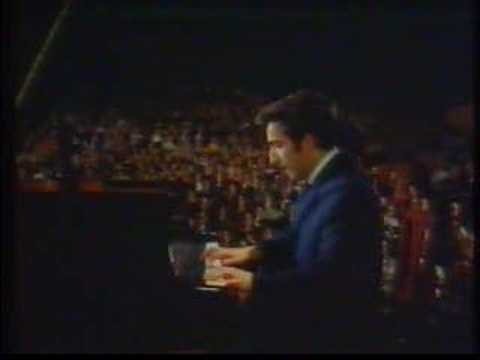
An etude completed in 1830 by Chopin, the poet of the piano.
It is said to be one of the most difficult pieces to perform among Chopin’s études, and it places tremendous pressure on the pianist.
The Ashkenazy performance introduced here is by a pianist renowned for his virtuosity.
It has an incredible sense of speed, and the dramatic contrasts in tone are overwhelming.
Étude Op. 10, No. 3 “Tristesse” (Farewell Song)Frederic Chopin

The opening melody is particularly famous—surely everyone has heard it at least once.
In Japan it is known as the “Farewell Song,” a name that took hold because the piece was used in the 1934 German film about Chopin’s life, Farewell Waltz.
Around the time this piece was composed, Chopin left his homeland of Poland and relocated to Paris.
His feelings then—overlapping dreams of success in Paris and nostalgia for the countryside—are vividly conveyed in the melody, which is warm yet at times intense.

Etude Op. 10 No. 4 in C-sharp minorFrederic Chopin

Starting at a sudden, incredible speed, Chopin’s Etude Op.
10 No.
4 in C-sharp minor exemplifies how his etudes are all far more demanding than the term “study piece” suggests.
This work’s blend of ferocity and velocity is masterful, overwhelming the listener.
Though it’s a short etude that ends in a flash, it is dense and superb in substance.
Often performed in competitions, it is highly challenging and captivates audiences.

24 Preludes, Op. 28: No. 15 in D-flat major “Raindrop”Frederic Chopin


Frédéric Chopin’s 24 Preludes, Op.
28, is a collection of very short pieces.
Among them, the fifteenth—widely known as the “Raindrop” Prelude—is especially popular, often heard as incidental music in television and film and beloved by piano learners.
Its calm yet slightly melancholy atmosphere, suggestive of a long, continuous rainfall, cannot be conveyed by playing it simply and evenly.
As you perform, be mindful of the subtle nuances that can be read from the score—such as harmonic changes and the rise and fall of the melodic line—while picturing a gentle, persistent rain.

Waltz No. 6 in D-flat major, Op. 64 No. 1 “Minute Waltz”Frederic Chopin


Frederic Chopin, known as the “Poet of the Piano,” composed Waltz No.
6, commonly known as the “Minute Waltz,” a famous piece that even those not well-versed in classical music have likely heard at least once.
Its lively, bustling rhythm and subtly humorous yet impeccably beautiful melody vividly embody the image of a puppy spinning in circles as it chases its own tail—quintessential Chopin.
Although both hands dart vigorously across the keyboard in this piece, playing it on a mini piano gives it a different flavor that, in a sense, accentuates its “puppy-like” charm and makes it utterly adorable.
Since your fingers are prone to getting tangled when actually playing it, it’s best to get accustomed to the size of a mini piano before taking on the challenge.
