

[Recreation for Seniors] Introducing Quizzes to Enjoy at Day Service Centers!

Among older adults, cognitive functions such as memory and concentration tend to decline progressively with age.
If you’re a caregiver or staff member working closely with seniors, you may wonder whether there are any recreational activities that can help prevent dementia.
Quizzes present questions across a variety of fields, making them useful for acquiring a broad range of knowledge.
They also stimulate the mind, which can contribute to improving cognitive function.
By all means, consider using quizzes as a recreational activity in day services and long-term care facilities.
- [For Seniors] Lively two-choice trivia quiz. Handy to know and tidbits you'll want to share with others
- [Brain Training] Lively Word Quiz for Seniors
- [For Seniors] Brain Training! Recall Quiz Collection!
- [For Seniors] Fun and Informative! Health Trivia Quiz
- [For Seniors] Fun Brain Training! A Collection of Tricky Quizzes You’ll Definitely Get Stumped By
- [For Seniors] Recommended for Brain Training! Nostalgic Showa-Era Quiz
- [For Seniors] Today’s recommended quiz. Daily brain-training quiz!
- [For Seniors] Fun Riddles That Stimulate the Brain
- [For Seniors] Brain Training with a Whiteboard! Fill-in-the-Blank Exercises & Quizzes
- [For Seniors] Perfect Brain Training! Fun Trivia
- [For Seniors] Fun Brain Training! Lively Mind Exercises
- [For Seniors] Recommended Trivia Quizzes & Fun Facts for November
- [For Seniors] Fun and Lively! Recommended Quiz Questions
[Recreation for Seniors] Introducing Fun Quizzes for Day Service! (31–40)
What is the reason melons develop their net-like patterns?
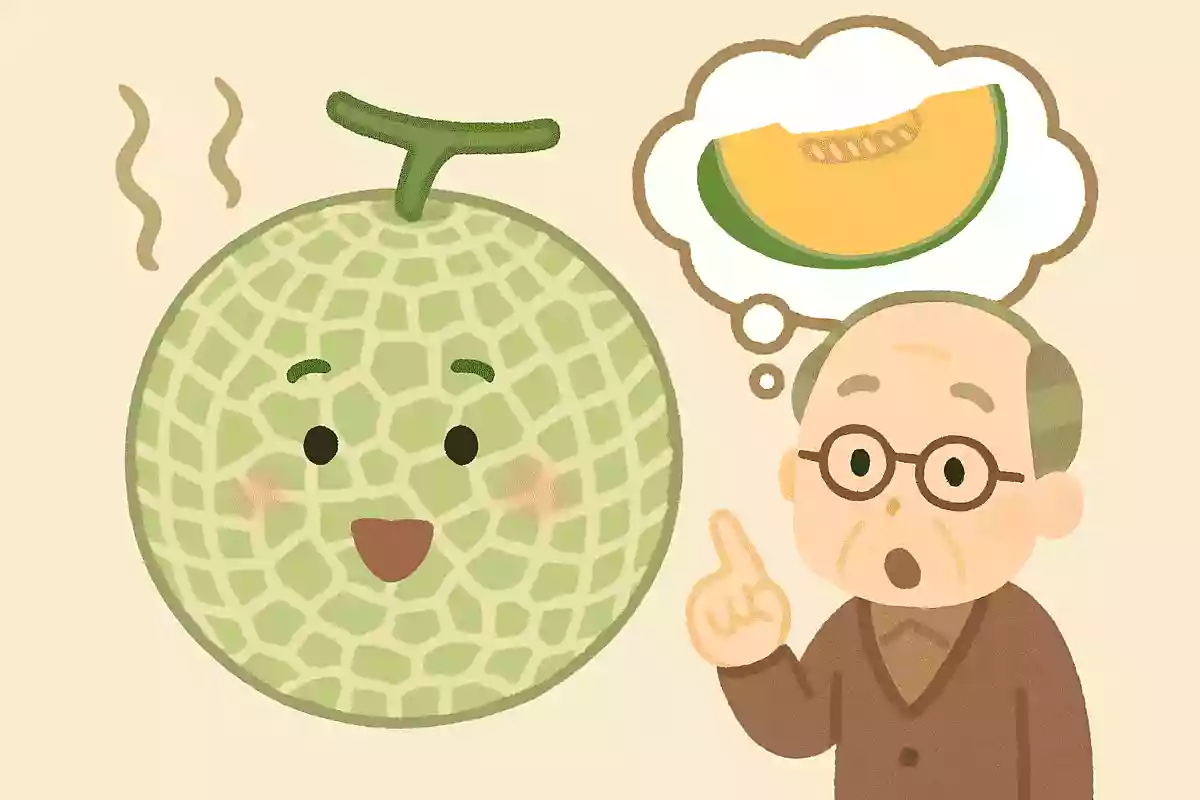
It’s said that the net-like pattern on melons forms to prevent the skin from cracking.
After pollination, melon fruits grow extremely rapidly from the early to middle stages.
As the flesh expands quickly, cracks appear in the skin, which cannot stretch enough.
This is the beginning of the net pattern.
The cracks do not form all at once; as the fruit continues to enlarge, new cracks appear one after another, and the repeated process of these cracks healing creates the intricate net-like pattern.

A game where you associate kanji with pictures

Let’s look at a picture and use our imagination! Here’s an idea for a game where you associate kanji with a picture.
It’s said to be popular as a way to help prevent dementia.
For example, prepare an illustration showing three trees in a row and think about which kanji it represents.
The answer is “森” (mori, meaning “forest”).
In this way, it’s a simple and fun game where you look at an illustration and answer with the kanji that fits.
Since it makes you think, you’ll likely feel refreshed when you figure out the answer! Give it a try!
Association Quiz ~Food Edition~

Let me introduce a game called “Association Quiz,” where you guess the food in question using three hints.
As the hints are revealed, the identity of the food gradually becomes clearer, but those with sharp intuition might reach the answer before the final hint.
You can write the questions on a whiteboard or read them aloud so anyone can join, and it works well for both small and large groups.
It’s also great fun to play while chatting with the person next to you—saying things like, “What could it be?”—so I highly recommend it.

Single-Overlaid Kanji Association Quiz

Let me introduce the “Overlapping Kanji Single-Character Association Quiz,” which features a two-step challenge: writing multiple kanji stacked in one spot, then guessing what the combined kanji makes you think of.
First, you have to decipher the kanji gathered in one place—but it won’t be straightforward.
Don’t rush; tackle them one by one.
Once you figure out the overlapping kanji, derive an answer such as something associated with that character—an object, a person’s name, or a place name.
Since it’s quite difficult, it’s a good idea to start with problems that overlap just two kanji.
Be sure to savor the sense of accomplishment when you get it right!
What do people collect during the popular shellfish gathering in May?
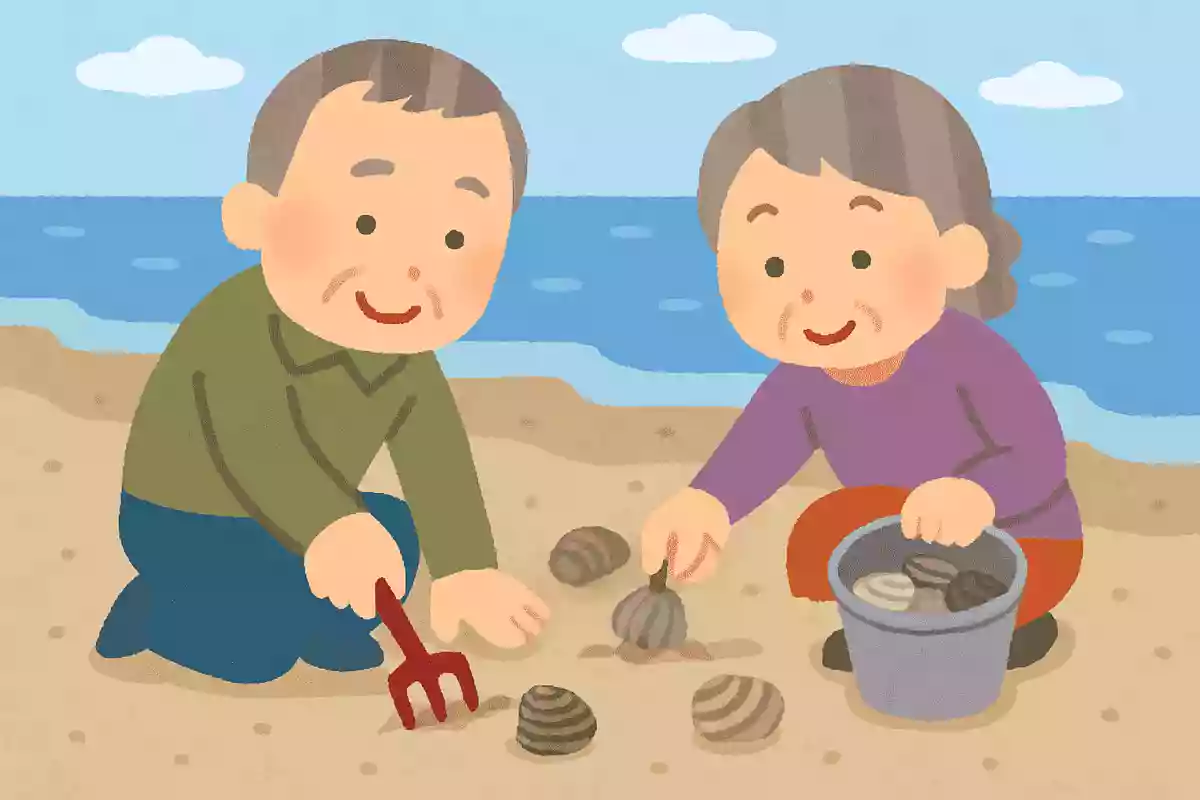
May is the time of year when temperatures climb toward summer and all kinds of leisure activities get going, right? One such activity enjoyed in May is shiohigari—but what exactly do you collect during it? The hint lies in the kanji: if you think about places related to “tide” (潮) and “ebb/dry” (干), you can figure out the location, and from there, what’s gathered there.
The answer is shellfish: it’s a pastime where you dig up shellfish buried in the sand at low tide.
It feels a bit like a treasure hunt and can be enjoyed by people of all ages.

[Activities for Seniors] Introducing Quizzes to Enjoy at Day Service (41–50)
There’s an unusual surname that’s written with the characters for April 1st but read as “Watanuki.”
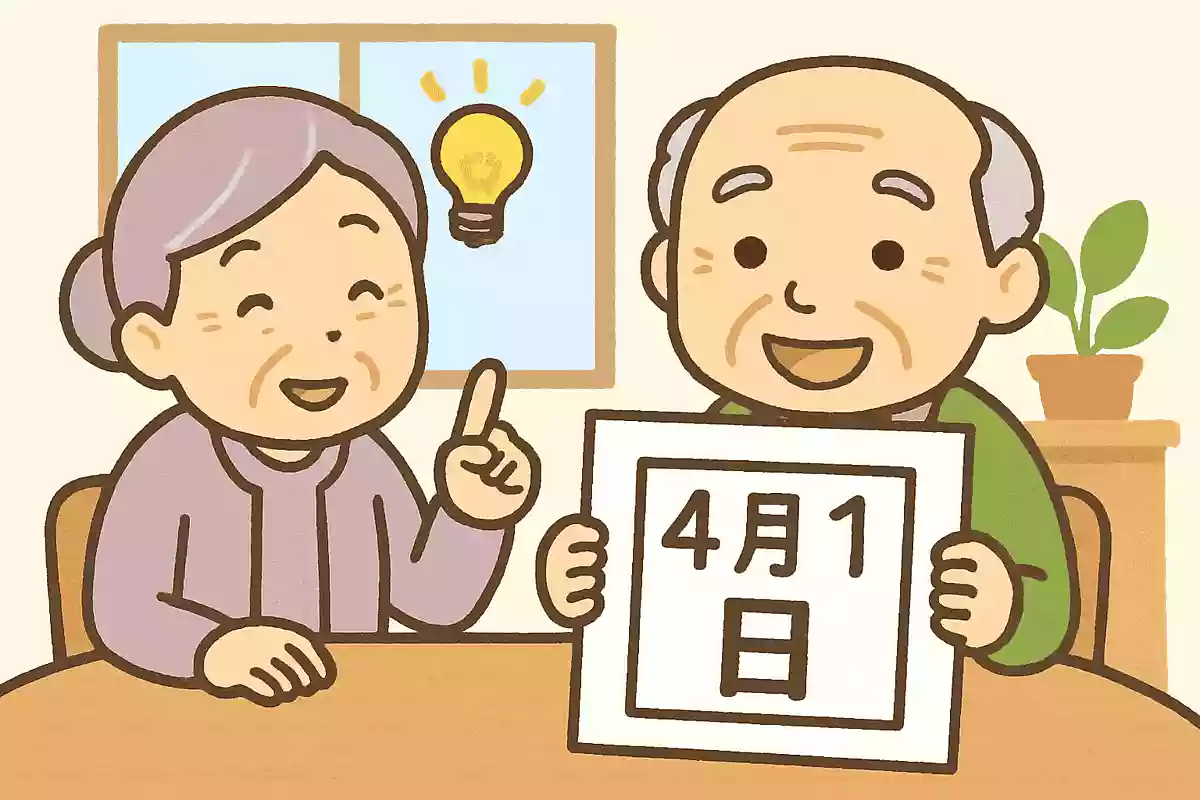
When April comes, we often get a spell of pleasantly warm weather, don’t we? So here are some fun facts related to the springtime mood.
There are people whose surname is written with the characters for “April 1” (四月一日) and read as Watanuki.
It’s an unusual surname, but it has an origin that’s very fitting for April.
As it gets warmer in April, people used to switch from winter kimono padded with cotton to ones with the cotton removed.
Because the cotton (wata) was taken out (nuku) on April 1, the name became Watanuki.
Japan has many other rare surnames as well.
It might be fun to look for them together with older people.

A wordplay lettering using “ka,” “n,” and “mai”

Let’s try a riddle that feels satisfying once you get the answer.
Here’s a wordplay puzzle using “ka,” “n,” and “mai.” The letters “mai” are arranged vertically three times between “ka” and “n.” The hints are that it’s a type of greeting card and that there are three “mai” inside “ka” and “n.” The answer is “kanchū mimai” (a midwinter greeting card).
The key is reading the three “mai” as “mimai.” Once you reach the answer, the confusion clears up nicely!