

[For seniors] April haiku. Exciting

April is the season when cherry blossoms reach full bloom, evoking a sense of new beginnings.
As this time of year makes you want to step outside, why not express its beauty through haiku? Haiku is a traditional Japanese art that captures the changing seasons and puts personal feelings into words in a 5-7-5 syllable form.
For older adults in particular, it can be an enjoyable activity that sparks new discoveries and conversations while reminiscing about fond spring memories.
Let’s enjoy a lively haiku time together, feeling the seasonal charms of April.
- [For Seniors] Haiku for March: Enjoying a Spring Moment with Famous Verses
- [For Seniors] Spring Haiku. Spring Activity
- [For Seniors] Classic spring songs to sing in April: A heartwarming moment with nostalgic children’s songs and kayōkyoku (Japanese popular songs)
- [For Seniors] Enjoy the Arrival of Spring Indoors! Recommended April Origami
- [For Seniors] Summer Haiku: Ideas to Feel the Season
- April events and observances that seniors can enjoy
- [For Seniors] Embraced by Spring: Wall Decoration Ideas to Enjoy in April
- [For Seniors] Interesting spring haiku: introducing verses with striking kigo and unique expressions
- [For seniors] Classic spring kigo: beautiful words that evoke the season
- [For Seniors] Enjoy a Warm Spring! April Health Topics Roundup
- [For Seniors] Haiku Introductions for May: A Fun Recreation Activity
- For Seniors: Games and Recreational Activities to Enjoy in April
- [For seniors] Enjoy spring: April craft ideas
[For Seniors] Haiku for April. Exciting (1–10)
Again this year, the flowers fall—April 12.
Masaoka Shiki was a haiku poet active in the Meiji period and a man of letters who worked across a wide range of genres, including novels and essays.
This haiku conveys that the cherry blossoms have already fallen again this year, and before one knows it the calendar reads April 12, expressing how fleeting cherry blossoms are.
Cherry blossoms are a symbol of spring, but because they scatter in an instant, the poem also suggests a message to cherish each day so we don’t miss them.
Rather than noticing the blossoms only once they bloom, observing them from the bud stage lets you savor the anticipation leading up to full bloom, which I highly recommend.

Halfway here, getting wet in the rain—cherry-blossom viewing.
When you go cherry-blossom viewing, are you the type who strolls leisurely under the blossoms to cool off as you move, or the party type who spreads a plastic sheet beneath the trees and enjoys a festive gathering? Either way, it’s delightful—but it seems this hanami custom is unique to Japan.
The haiku in question describes how, while enjoying a walk during flower viewing, rain begins to fall partway through.
Since it’s spring rain, it’s a fine, mist-like drizzle.
The kind of rain that hardly bothers you even if you get a little wet likely elevated the outing into something even more elegant.
This poem, too, is a work by Tantan Sumi (Sumitani).
At dusk, the water runs syrupy—spring wind.
A famous haiku by Awa Usuda, who was active from the Taisho through the Showa era.
Usuda studied tanka under Tekkan Yosano and haiku under Kyoshi Takahama, making him a literary two-way player—like Shohei Ohtani in baseball.
The brilliance of this haiku lies in calling water, which is ordinarily a smooth, flowing liquid, “thick and syrupy.” It captures the very moment when the lukewarm spring breeze gently ripples the water—a poem with vast expanses of suggestive silence.
A masterpiece you can’t help but recite again and again.
[For Seniors] Haiku for April. Exciting (11–20)
Turning around — behind me, the moon on a spring evening.
Takahashi Awajijo was a haiku poet active from the Taisho to the Showa era.
Here is one of her haiku: “Turning back— behind me the moon— a spring evening.” It is a poem about the moon that looked beautiful on a spring day.
“Spring evening” refers to the time shortly after sunset in spring.
Unlike a winter night, a spring night carries a sense of warmth, and you can almost imagine the fragrant scent of flowers in full bloom.
You can also feel the beauty of the moon in a sky veiled with faint, hazy clouds.
Perhaps the moon at that moment was an oborozuki, a hazy spring moon.

Cherry-blossom hunting—how rare in everyday life—five or six leagues.
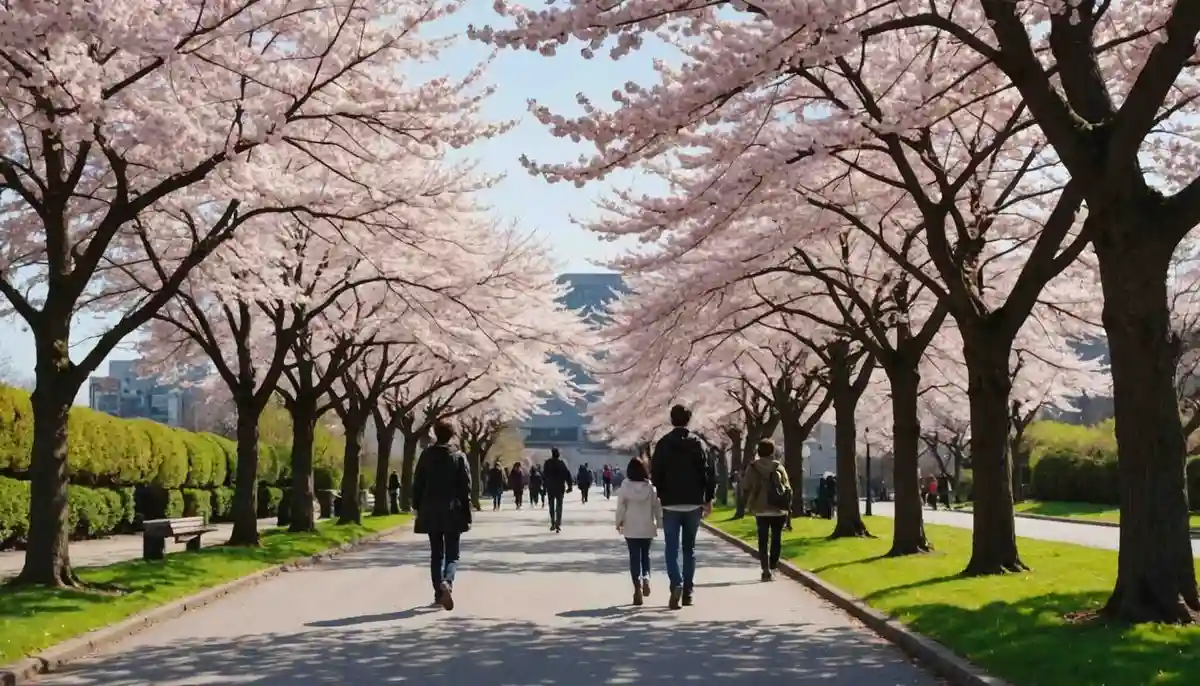
“Cherry-blossom hunting—how odd! Day after day, five or six ri.” This haiku depicts being absorbed in what you love.
It’s good to be passionate, but it’s troublesome if you become so engrossed that you lose sight of your surroundings.
That kind of self-mocking restraint is embedded in Matsuo Bashō’s “Cherry-blossom hunting—how odd! Day after day, five or six ri.” You can sense a wry smile as he reflects on himself, enchanted by the blossoms and trudging five or six ri.
Incidentally, “five or six ri” is a phrase from the haiku meaning to walk about diligently and at length.
Even from the great Matsuo Bashō’s haiku, we can feel something very human.
A drifting cluster of petal-blizzard in the sky
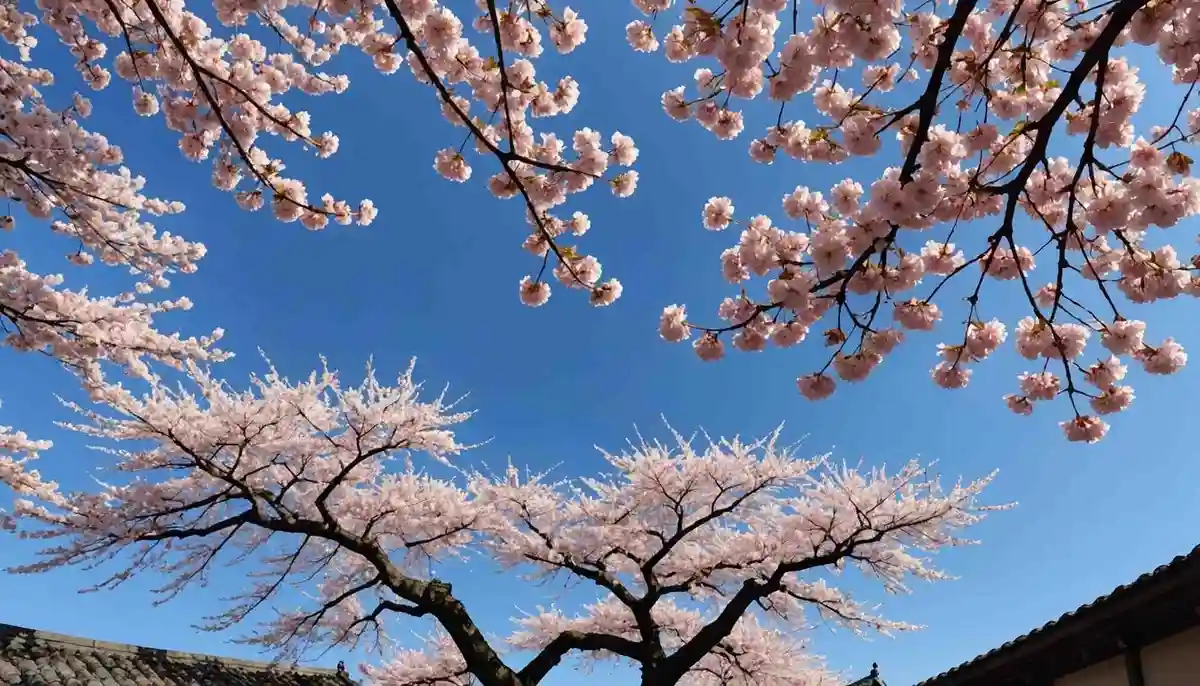
Soju Takano was a haiku poet from Ibaraki Prefecture who studied under Kyoshi Takahama and was active in the haiku magazine Hototogisu.
He also conducted research as a physician.
Rendered in modern language, this poem says: a blizzard of blossoms, lifted by the wind, gathered into a single mass and drifted up into the sky.
In cherry-blossom season, it’s as if the blossoms themselves had a will and were heading toward the sky.
It evokes the moment when the sakura fall and the breath of the wind.
It may also convey the feeling that even after the petals have fallen, it isn’t the end; even the instant they vanish into the sky is beautiful.
During cherry-blossom season, why not also pay attention to where the wind-blown petals are headed?

Clouds of blossoms—does the bell toll from Ueno or from Asakusa?
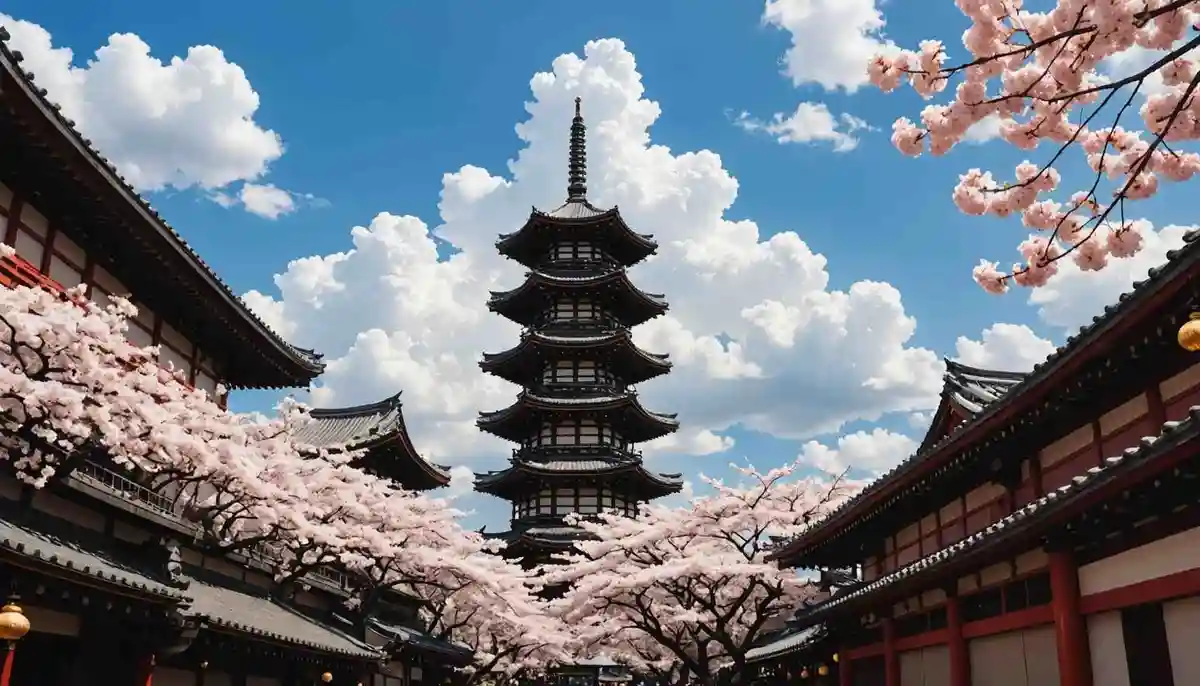
I would like to introduce the haiku by Matsuo Basho: “A cloud of blossoms— is the bell from Ueno, or from Asakusa?” Are you familiar with the opening phrase, “a cloud of blossoms”? Though it mentions a cloud, it doesn’t mean an actual cloud; it describes the appearance of flowers.
Here, the flowers are cherry blossoms.
It likens the sight of cherry blossoms in full bloom, spreading everywhere, to a cloud.
It seems that people in the past often expressed things by likening them to something else.
The poem also evokes the speaker wondering whether the bell they hear during cherry blossom season is coming from Kaneiji Temple in Ueno or from Sensoji Temple in Asakusa.
Nowadays, we might not hear bell sounds carrying from distant places.
The haiku conveys a sense of the gentle everyday life of a spring day.