

![[For seniors] April haiku. Exciting](https://media.ragnet.co.jp/img/1200__png__https://www.studiorag.com/files/2026/02/3385fab176eb1e3e2eaa93b7decec5ad.webp)

April is the season when cherry blossoms reach full bloom, evoking a sense of new beginnings.
As this time of year makes you want to step outside, why not express its beauty through haiku? Haiku is a traditional Japanese art that captures the changing seasons and puts personal feelings into words in a 5-7-5 syllable form.
For older adults in particular, it can be an enjoyable activity that sparks new discoveries and conversations while reminiscing about fond spring memories.
Let’s enjoy a lively haiku time together, feeling the seasonal charms of April.
- [For Seniors] Haiku for March: Enjoying a Spring Moment with Famous Verses
- [For Seniors] Spring Haiku. Spring Activity
- [For Seniors] Classic spring songs to sing in April: A heartwarming moment with nostalgic children’s songs and kayōkyoku (Japanese popular songs)
- [For Seniors] Enjoy the Arrival of Spring Indoors! Recommended April Origami
- [For Seniors] Summer Haiku: Ideas to Feel the Season
- April events and observances that seniors can enjoy
- [For Seniors] Embraced by Spring: Wall Decoration Ideas to Enjoy in April
- [For Seniors] Interesting spring haiku: introducing verses with striking kigo and unique expressions
- [For seniors] Classic spring kigo: beautiful words that evoke the season
- [For Seniors] Enjoy a Warm Spring! April Health Topics Roundup
- [For Seniors] Haiku Introductions for May: A Fun Recreation Activity
- For Seniors: Games and Recreational Activities to Enjoy in April
- [For seniors] Enjoy spring: April craft ideas
[For Seniors] Haiku for April. Exciting (1–10)
Sparrow chicks, out of the way, out of the way—His Lordship’s horse is passingKobayashi Issa
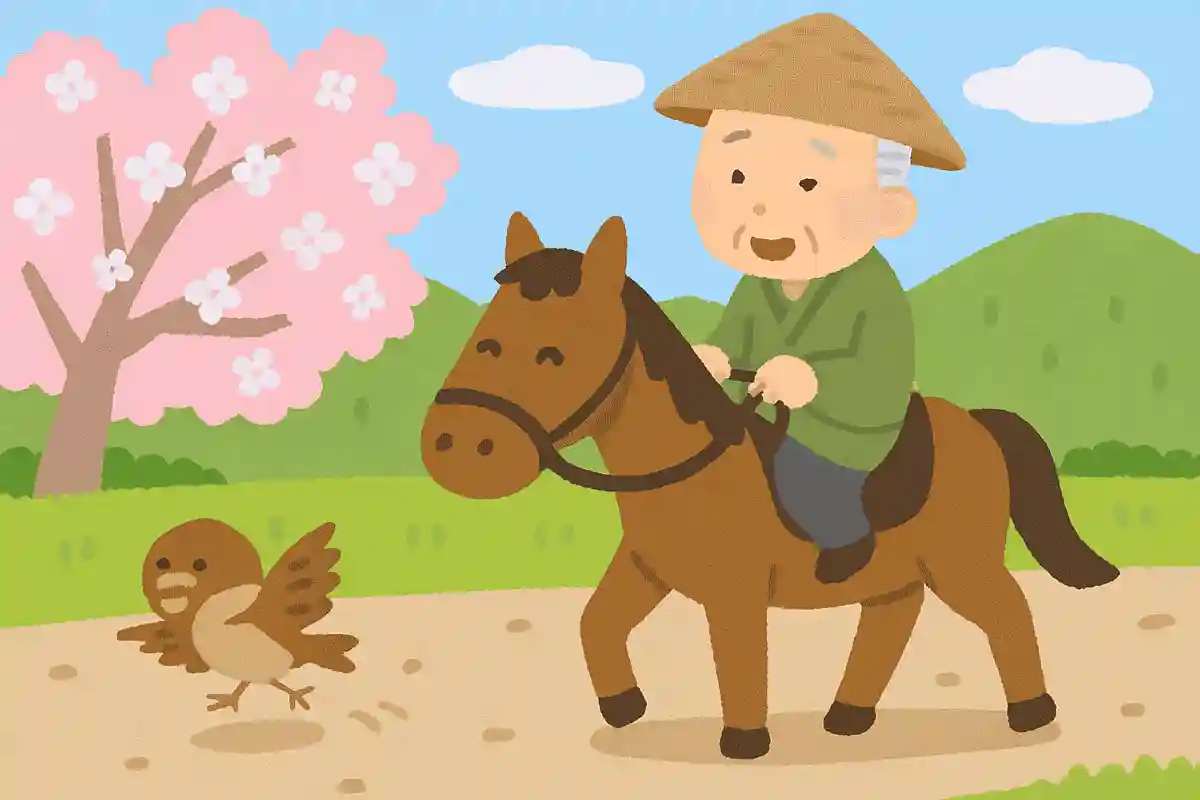
The seasonal word “sparrow’s chick” is a term that signifies spring.
Also, this verse is in a broken meter, meaning it departs from haiku’s standard 5-7-5 pattern.
By doing so, it creates impact and a rhythm that’s easy to hum.
In this poem, the speaker tells the sparrows, “Move away quickly, or the horse will trample you.” It conveys the gentle character of someone who wishes to protect the tiny sparrows’ lives.
This haiku is included in Ora ga Haru (My Spring), a collection of verses Kobayashi Issa composed while he was in Shinano.

In the calmness, I have forgotten how swiftly the days and months pass.
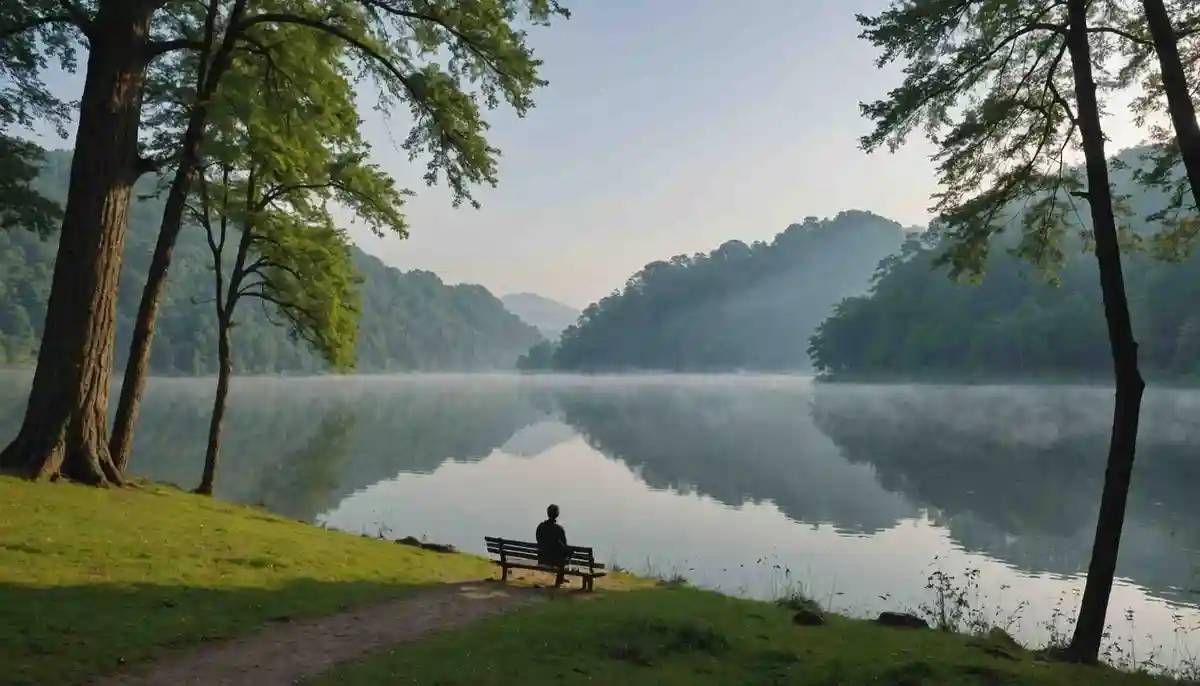
It’s written as 長閑 and read as “nodoka,” meaning tranquil.
After a winter of unrelenting cold, when the buds of grass and flowers slowly begin to swell, spending those warm hours in a tranquil way feels like a sensation unique to spring.
Each day, chased by work or study, feels long, and yet life passes in the blink of an eye.
In the swift passage of time, it seems as if a haiku whispers that it’s alright to have at least one day to savor spring.
The author, Sumi Taigi, was a haiku poet of the mid-Edo period and is said to have been acquainted with the famed Buson.
Spring departs— birds cry, and in the fish’s eyes are tears.
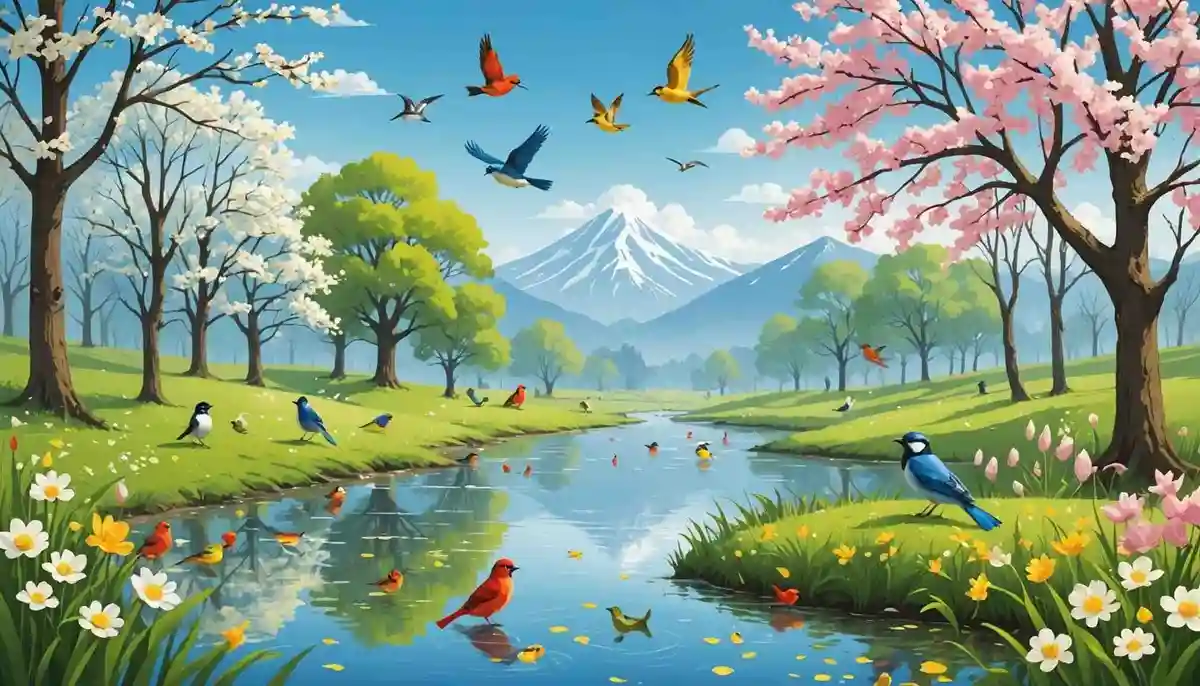
“Spring is departing—birds cry, and fish have tears in their eyes.” This is a haiku included in Matsuo Bashō’s The Narrow Road to the Deep North.
Spring is a season of beginnings, full of new encounters, but it is also a time of many farewells.
In this haiku, Bashō sets out on a journey through Tōhoku and Hokuriku that would take 150 days—later known as the famous Narrow Road to the Deep North.
When he departed, many of his disciples and friends gathered to bid him farewell.
With birds’ calls sounding sorrowful and even the fish seeming to fill their eyes with tears, we sense that not only Bashō but everyone present felt deep sadness at parting with him.

A lone cherry tree in leaf—how lonely—before the temple hall.
Santō Kigi was a haiku poet of the mid-Edo period.
In the Shimabara pleasure quarter of Kyoto, he established the Fuyā-an (Sleepless Hermitage), where he taught courtesans haikai and calligraphy, contributing to the revitalization of the entertainment district.
He later joined his close friend Yosa Buson in forming the Sankasha.
The hazakura described in this verse is a summer seasonal word, expressing a sense of regret that the cherry blossoms in front of the hall have fallen and the trees have become “leaf-cherry.” Yet even if the scene seems lonely after the delicate petals have dropped, there is also an aspect in which the fresh, vigorous green leaves convey a sense of clarity and strength.
Perhaps the Japanese feeling for cherry blossoms is indeed something special.

So balmy—the sparrows and skylarks mingling their songs
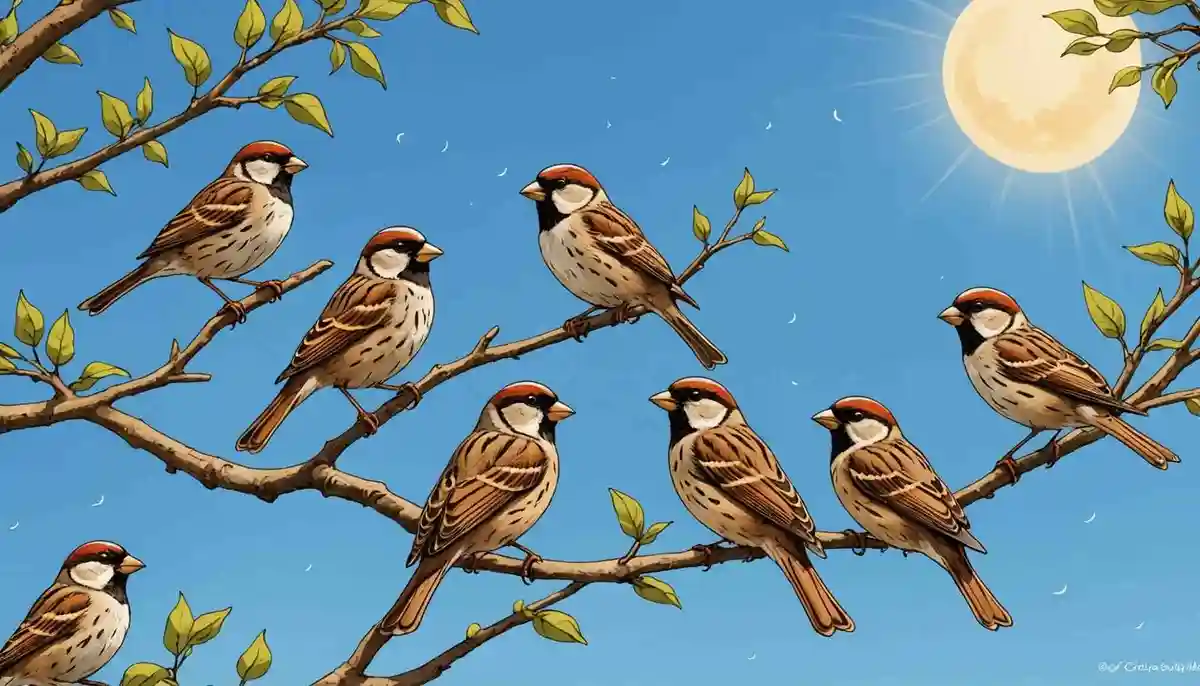
Let me introduce a haiku by Hino Sōjō, who was active from the Taisho to the Showa era.
In the haiku “Uraraka ya / suzume hibari ni / naki majiri” (Bright and balmy—sparrows’ chirps mingling with the skylark’s song), the skylark is known as a bird that heralds spring.
You can sense how the familiar chirping of sparrows seems to blend with the skylark’s trilling, evoking the feeling of spring.
The sky must be clear, and the sunlight gentle as well.
Depending on the region, it may be harder nowadays to notice birdsong.
In earlier times in Japan, people could sense the changing seasons through the shifts in nature.
Do the kerria blossoms scatter in gentle flakes? The sound of the waterfall.
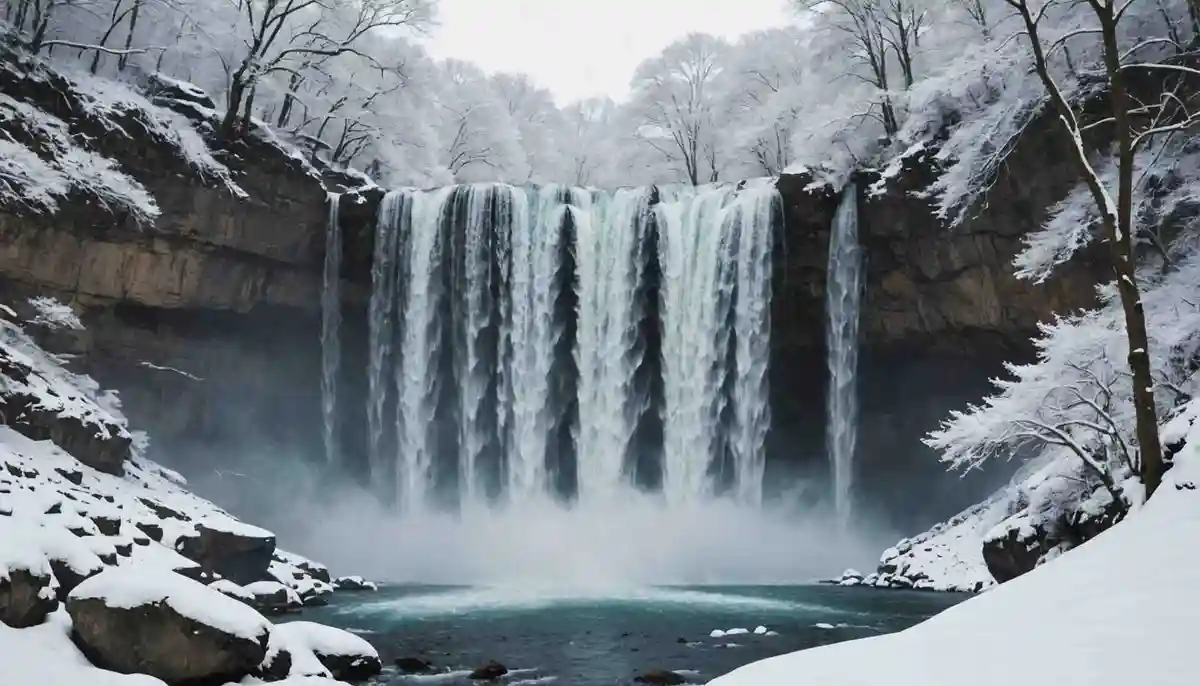
It’s a haiku by the well-known Matsuo Bashō.
When we were students, we studied The Narrow Road to the Deep North and were made to memorize some of his haiku, right? Learning Japanese language and classical literature at school feels like it was just yesterday.
Yamabuki (Japanese kerria) is a flower seen in spring and is associated with the color yellow.
Since the poem speaks of those flowers scattering, it calls to mind the time when spring ends and summer approaches.
It even makes you think, “I’m glad I was born in Japan, where you can feel the changing seasons.” The contrast between the waterfall’s sense of eternity and the falling blossoms is another key point in appreciating this haiku.
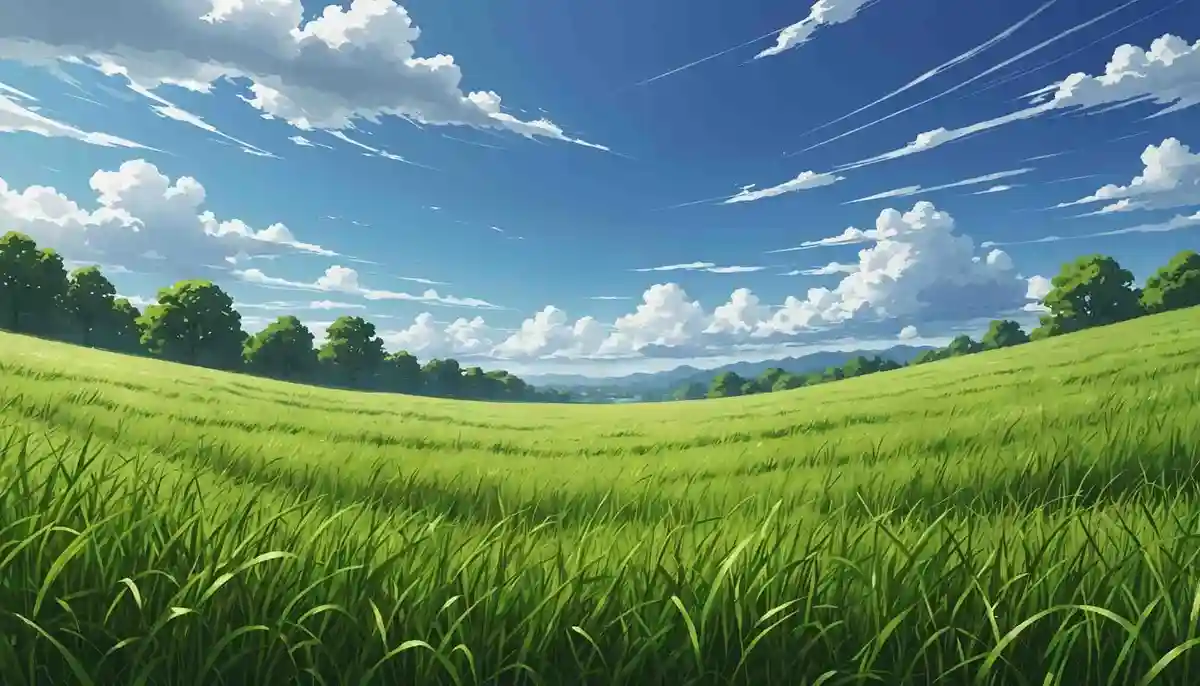
From a sky so clear, the cherry blossoms hang, weeping.
Tomiyasu Fusei was a haiku poet from Aichi Prefecture.
He started writing haiku relatively late—at the age of 34—when he was appointed head of the Fukuoka Savings Bureau and received guidance from Yoshioka Zendjidō.
He is known for his gentle style.
This poem describes looking up from the middle of a weeping cherry tree, where the blossoms seem to be cascading down from the sky.
Behind them stretches a blue sky that further highlights the beauty of the cherry blossoms.
Among the hiragana, the single use of the kanji “空” (sky) adds emphasis, making the image stand out even more.
It’s a verse that makes you want to step beneath a weeping cherry in blossom season and gaze up at the sky.