

[For Seniors] Let’s Have Fun with an Autumn Flower Kanji Quiz! A Collection of Kanji That Look Readable but Aren’t

How about slowly gazing at and deciphering the beautiful kanji for flowers that evoke the atmosphere of autumn? It would also be lovely to enjoy a kanji quiz while humming a nostalgic song in a garden scented with fragrant olive (kinmokusei).
A large quiz tournament with a show-of-hands format would likely be a hit as well.
Spending time with seniors, you can naturally spark conversation by exploring the origins and meanings of kanji for flowers that color Japan’s seasons—like bellflower (kikyo), pink (nadeshiko), and cosmos (akizakura).
Savor a delightful moment that stimulates the mind while feeling the changing of the seasons.
- [For Seniors] Kanji Quiz on Flowers: From Easy Questions to Tough Challenges, All in One Go
- [For Seniors] Let’s Get Excited with a Winter Flower Kanji Quiz! Introducing Some Challenging Questions
- [For Seniors] Difficult-to-Read Kanji for Everyday Items: Take on a quiz full of surprises and discoveries
- [For Seniors] Let's have fun with an autumn-themed quiz!
- [For seniors] Classic autumn kigo: beautiful words that depict evocative scenesNEW!
- [For Seniors] How many can you read? A kanji quiz of familiar things that look readable but aren’t
- [For Seniors] Challenging but Exciting! Kanji Quiz
- [For Seniors] Fun and Exciting! Difficult Kanji Quiz
- [For Seniors] Fun Trivia Quiz with Autumn Foods! A Collection of Little-Known Facts
- [For Seniors] Quiz on Kanji with Many Strokes
- [For Seniors] How many can you read? A comprehensive showcase of difficult food kanji
- [For Seniors] Prevent Dementia with a Look-Alike Kanji Quiz! Introducing Commonly Confused Characters in a Multiple-Choice Format
- [For Seniors] Perfect for Dementia Prevention! Jumbled Kanji Quiz
[For Seniors] Let’s Have Fun with an Autumn Flower Kanji Quiz! A Collection of Tricky-to-Read Kanji (1–10)
Hagi
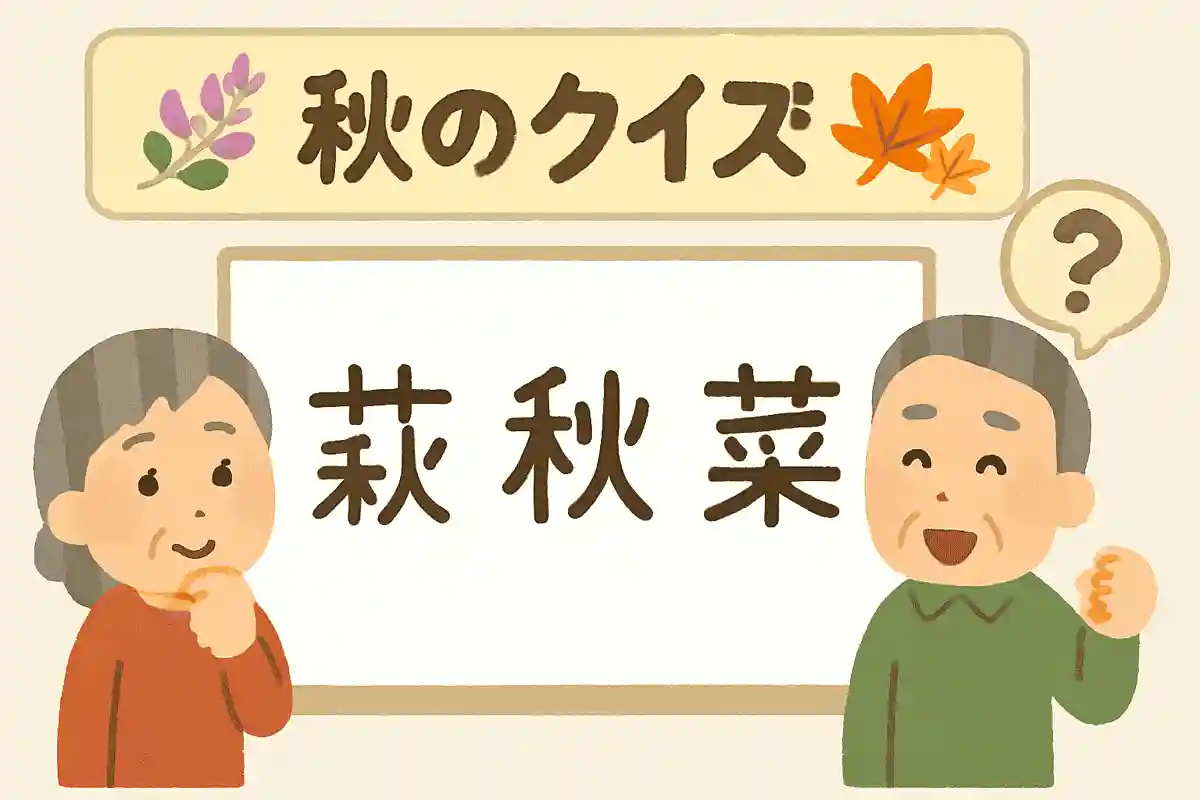
See the answer
bush clover
“Hagi” (bush clover) is a flower that represents autumn in Japan and is one of the Seven Flowers of Autumn. It is characterized by its small reddish-purple and white blossoms and has long been celebrated in traditional waka and haiku poetry. The kanji for hagi (萩) is easy to remember because it combines the grass radical with the character for “autumn” (秋). As a plant with an autumnal charm, it is a familiar flower to many older people.

thin
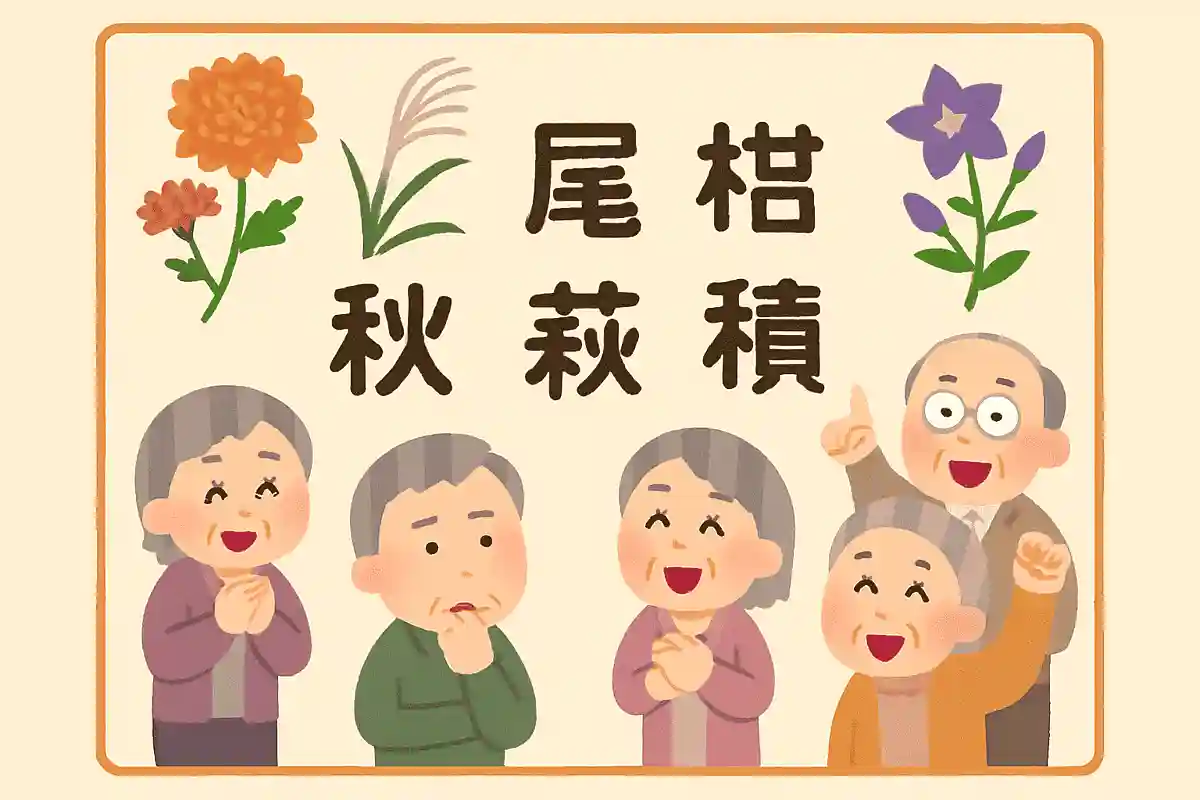
See the answer
silver grass
Susuki (Japanese pampas grass) is a plant cherished as one of the Seven Flowers of Autumn. It is characterized by its long, narrow leaves and fluffy plumes, and is emblematic of autumn scenery. Found throughout Japan, it creates beautiful scenes in autumn with its silvery, shimmering seed heads. Susuki often appears in harvest moon-viewing (Jugoya) and in classical waka poetry, and has long been loved as a seasonal symbol. The kanji for susuki, 薄, combines the “grass” radical on top with the character 溥, and has traditionally been used as a character representing grasses and flowers. For older adults, it can also evoke nostalgic memories of autumn landscapes.
osmanthus (fragrant orange osmanthus; sweet olive)
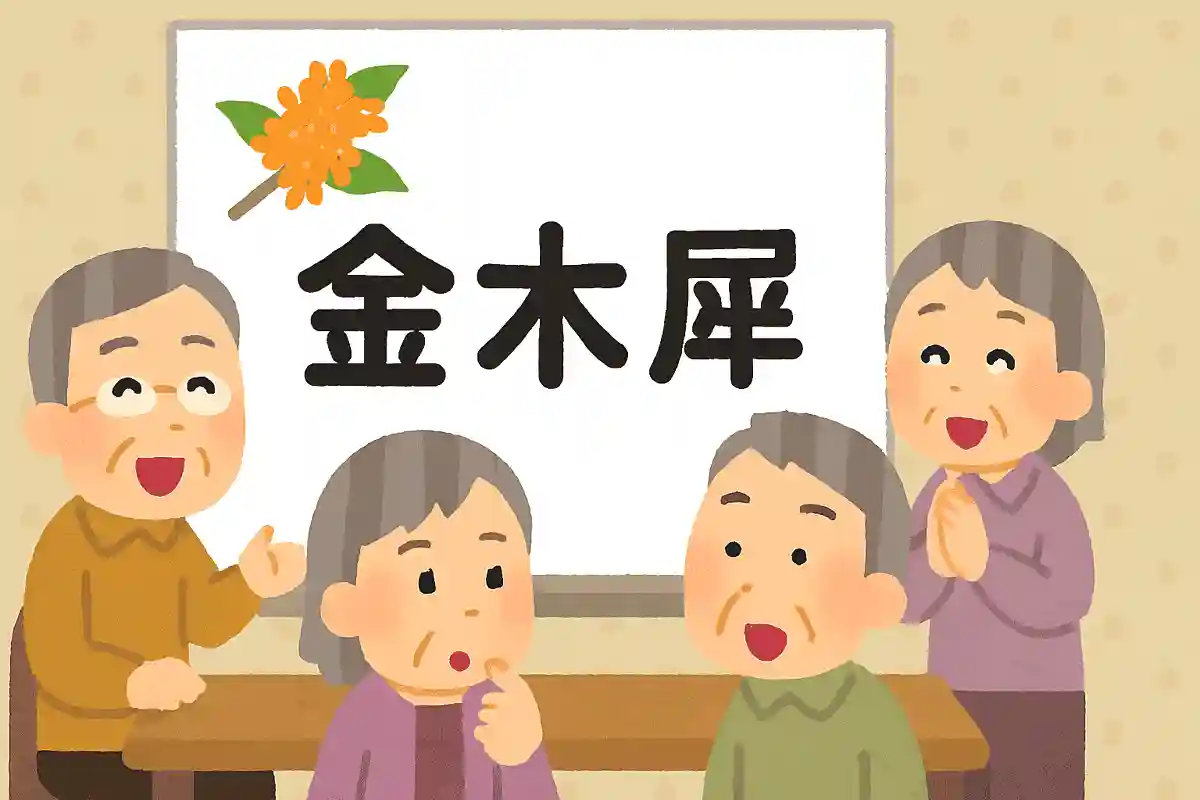
See the answer
fragrant olive
Osmanthus fragrans var. aurantiacus (kinmokusei) is an evergreen small tree in the Oleaceae family. In autumn it produces many small orange flowers that give off a strong, sweet fragrance. This scent is considered one of the quintessential symbols of autumn in Japan. “Kin” refers to yellow or orange, and “mokusei” denotes the Oleaceae family. Often planted in gardens and parks, it has long been cherished as a representative flowering tree of autumn.
[For Seniors] Liven Up with an Autumn Flower Kanji Quiz! A Collection of Kanji That Look Readable but Aren’t (11–20)
chicken head
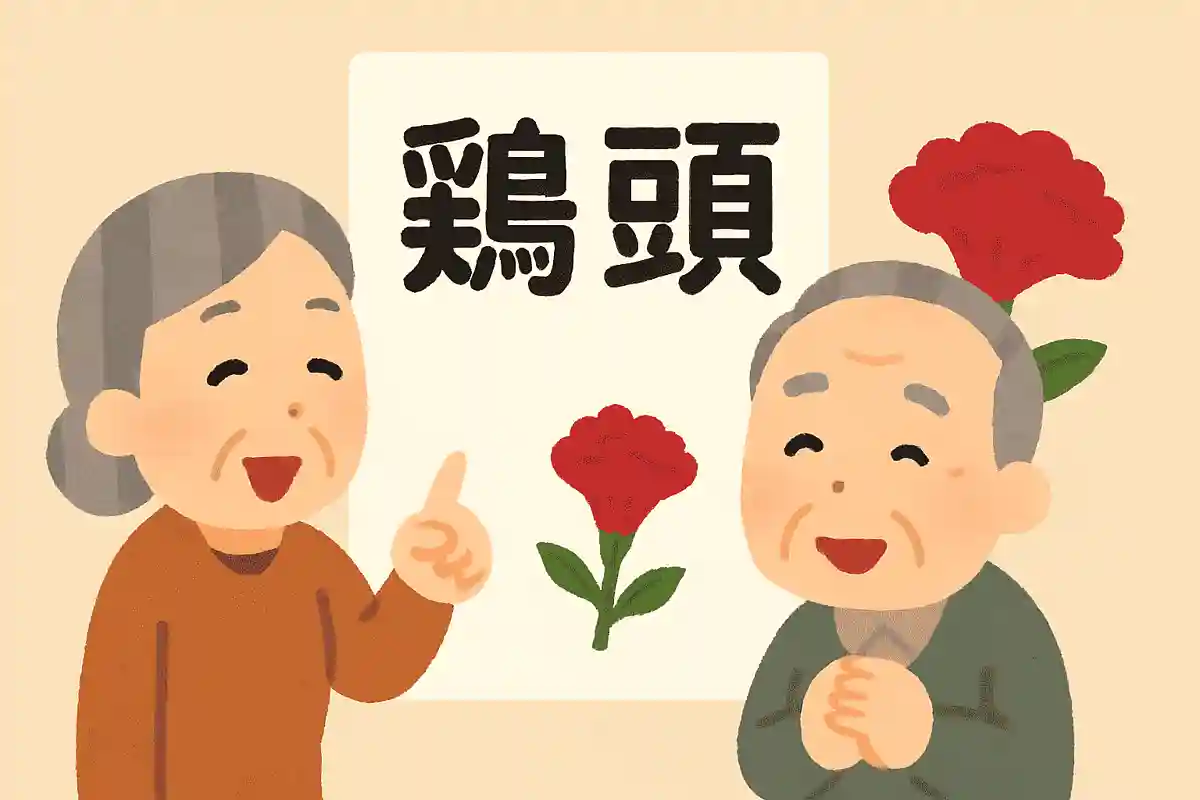
See the answer
cock's comb (celosia)
Cockscomb (keitō) is a flower that blooms in autumn in vivid colors such as red, pink, and yellow. As its name suggests, the flower’s shape resembles a rooster’s comb (the crest on its head). It has long been appreciated as an ornamental plant, used in traditional Chinese medicine, and even eaten. It is one of the autumn flowers familiar to many older adults and can be called a seasonal hallmark of fall. Because the kanji for “鶏頭” are difficult to read, it makes a perfect subject for quizzes.
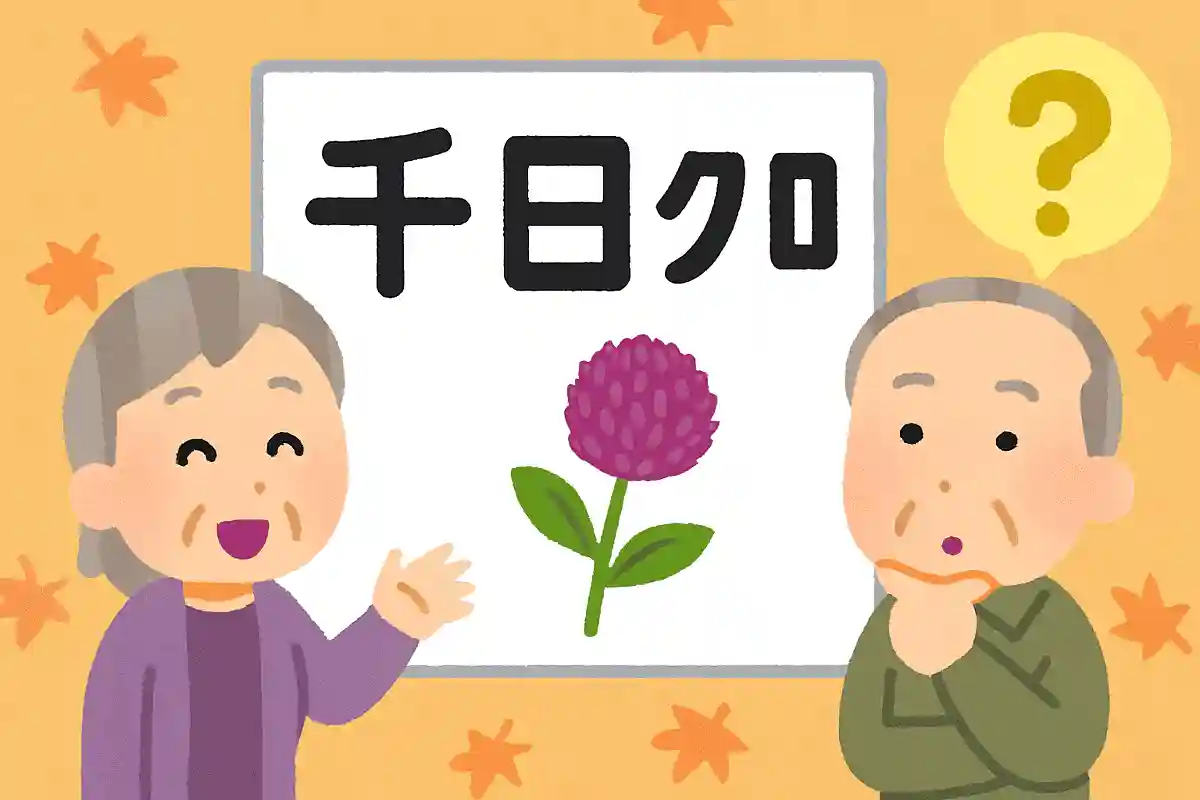
globe amaranth
See the answer
Sen-nichikō
Sennichikō is pronounced “sen-nichi-kō.” Because its flowers are vividly colored and bloom for a long time, the name carries the meaning “red for a thousand days.” In English it’s also called “globe amaranth,” and its flower meanings include “immortality” and “unchanging love.” It’s well suited for dried flowers, so it has long been cherished as an autumn flower. The kanji in its name are also eye-catching, making it perfect for kanji quizzes.
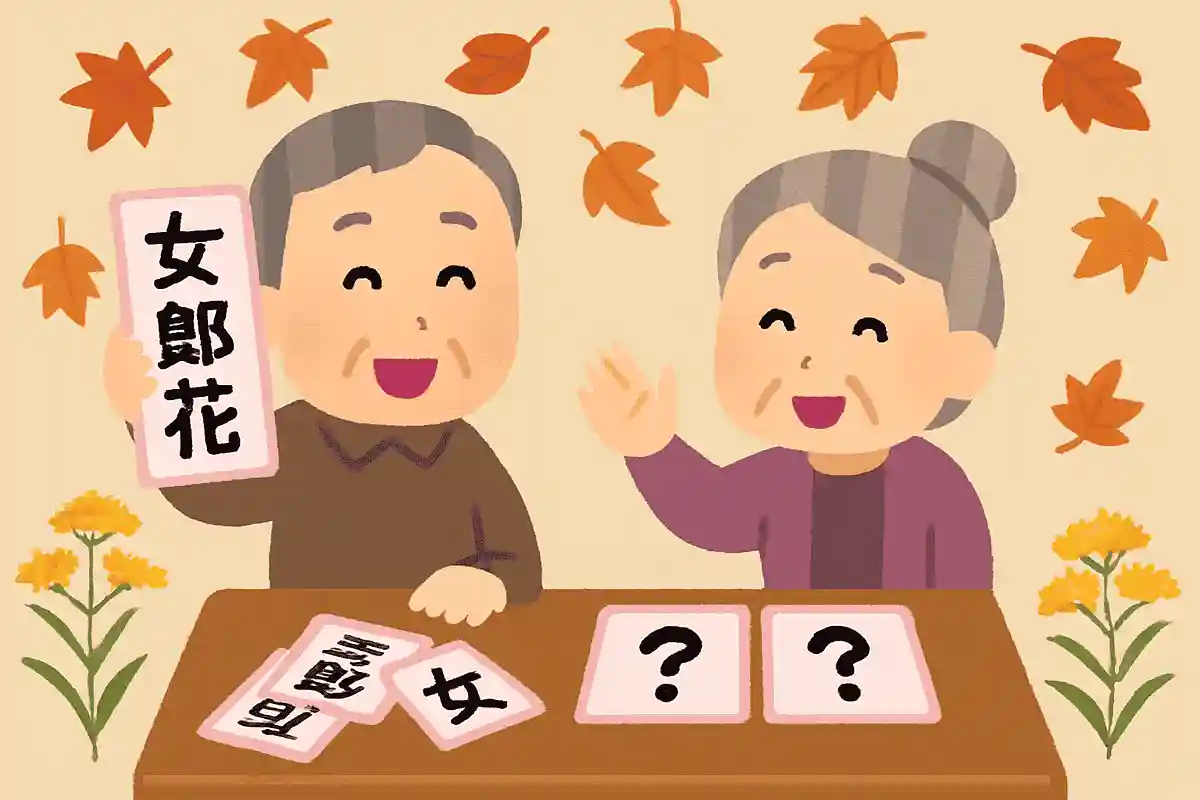
patrinia (Japanese valerian)
See the answer
patrinia (golden lace)
“女郎花” is read as “ominaeshi.” Ominaeshi is one of the Seven Flowers of Autumn and has long been cherished as a representative flower of the Japanese autumn. Its small yellow blossoms cluster at the tips of the stems, giving it the appearance of a bouquet. The kanji 女郎 (omina) means “woman,” and there is a theory that the name ominaeshi derives from “pressing down the (beauty of) flowers” (hana o hesi). It grows wild in grasslands and mountains and appears in classical literature such as the Manyoshu. It is also enjoyed as an ornamental plant in gardens and parks.
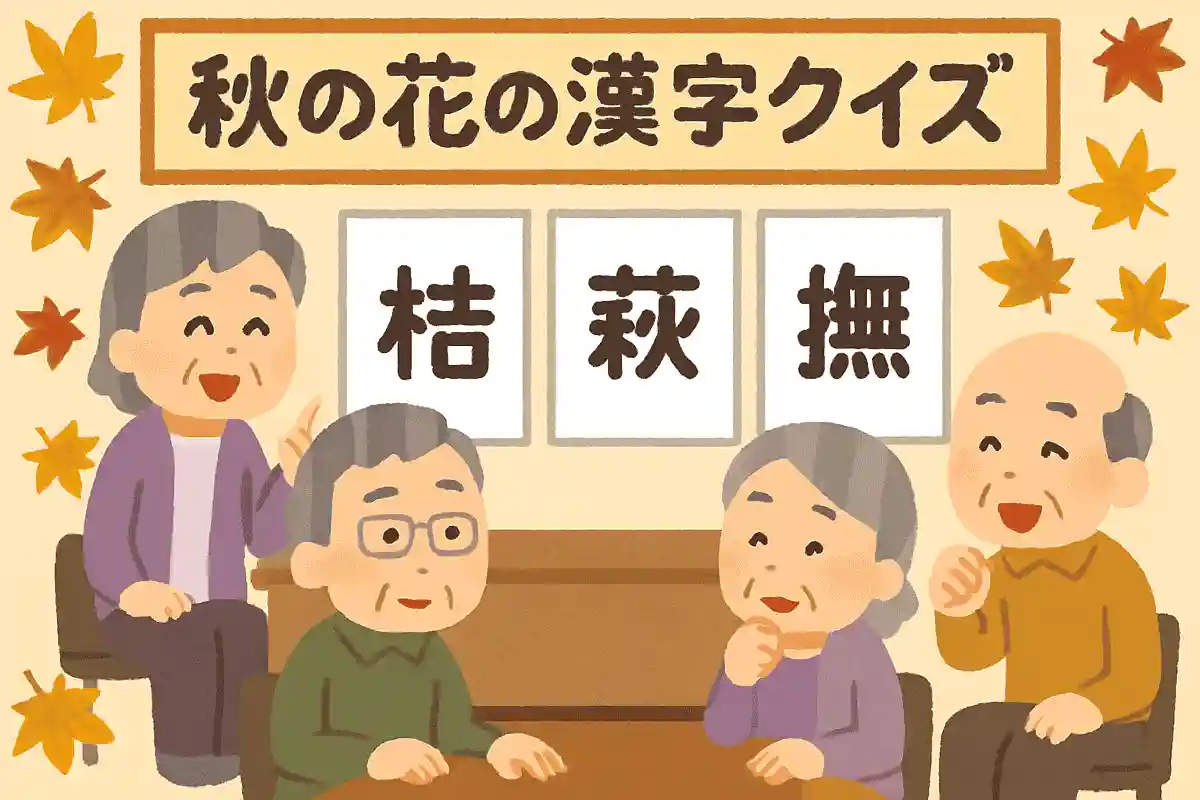
Nadeshiko
See the answer
fringed pink (nadeshiko); also refers to traditional Japanese feminine ideal
"Nadeshiko" is one of the representative flowers of autumn and is also well known from the term "Yamato Nadeshiko." The character "撫" means "to stroke or caress," and "子" refers to something small and adorable. It is said that the name conveys the idea of a flower so charming you want to gently caress it. In autumn, it often blooms with delicate pink or white flowers in gardens and fields, making it a familiar flower to the Japanese. It has also appeared in waka poetry and literature since ancient times and has long been beloved.