

![[For Seniors] Let’s Have Fun with an Autumn Flower Kanji Quiz! A Collection of Kanji That Look Readable but Aren’t](https://media.ragnet.co.jp/img/1200__png__https://www.ragnet.co.jp/files/2025/10/fc2645cc140b4d3e9495fa467d0bb688.webp)

How about slowly gazing at and deciphering the beautiful kanji for flowers that evoke the atmosphere of autumn? It would also be lovely to enjoy a kanji quiz while humming a nostalgic song in a garden scented with fragrant olive (kinmokusei).
A large quiz tournament with a show-of-hands format would likely be a hit as well.
Spending time with seniors, you can naturally spark conversation by exploring the origins and meanings of kanji for flowers that color Japan’s seasons—like bellflower (kikyo), pink (nadeshiko), and cosmos (akizakura).
Savor a delightful moment that stimulates the mind while feeling the changing of the seasons.
- [For Seniors] Kanji Quiz on Flowers: From Easy Questions to Tough Challenges, All in One Go
- [For Seniors] Let’s Get Excited with a Winter Flower Kanji Quiz! Introducing Some Challenging Questions
- [For Seniors] Difficult-to-Read Kanji for Everyday Items: Take on a quiz full of surprises and discoveries
- [For Seniors] Let's have fun with an autumn-themed quiz!
- [For seniors] Classic autumn kigo: beautiful words that depict evocative scenesNEW!
- [For Seniors] How many can you read? A kanji quiz of familiar things that look readable but aren’t
- [For Seniors] Challenging but Exciting! Kanji Quiz
- [For Seniors] Fun and Exciting! Difficult Kanji Quiz
- [For Seniors] Fun Trivia Quiz with Autumn Foods! A Collection of Little-Known Facts
- [For Seniors] Quiz on Kanji with Many Strokes
- [For Seniors] How many can you read? A comprehensive showcase of difficult food kanji
- [For Seniors] Prevent Dementia with a Look-Alike Kanji Quiz! Introducing Commonly Confused Characters in a Multiple-Choice Format
- [For Seniors] Perfect for Dementia Prevention! Jumbled Kanji Quiz
[For Seniors] Let’s Have Fun with an Autumn Flower Kanji Quiz! A Collection of Tricky-to-Read Kanji (1–10)
crape myrtle
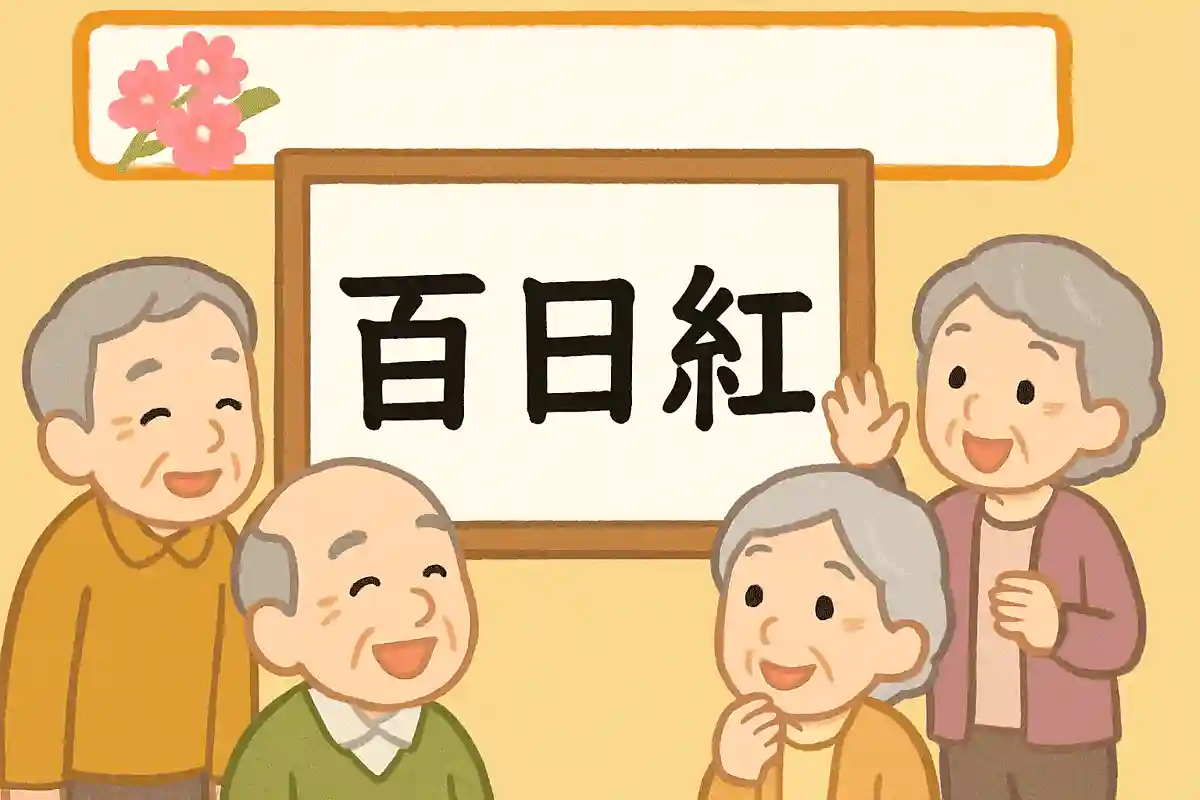
See the answer
crape myrtle
Crape myrtle (sarusuberi) is a tree that blooms over a long period from summer to autumn. The kanji 百日 (“one hundred days”) refers to the flowers continuing to bloom for about 100 days, and 紅 (“crimson”) indicates the red-colored blossoms. The name sarusuberi, meaning “monkey slip,” comes from its very smooth trunk, which is said to be so slick that even monkeys would slip. Commonly seen in gardens and parks, it is one of the representative flowers of the summer-to-autumn season.

cosmos (flower)
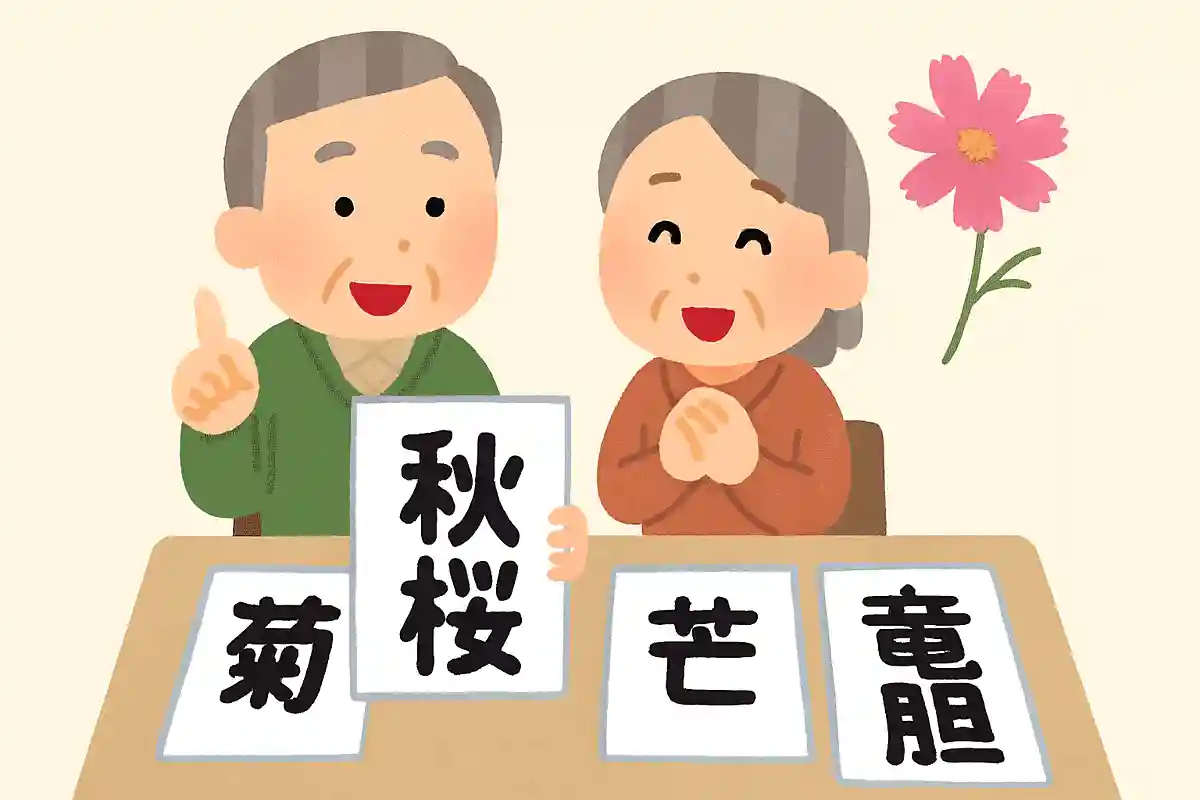
See the answer
cosmos
“秋桜” is read as “kosumosu” (cosmos). Although the cosmos flower is native to Mexico, it is widely loved in Japan and is considered a representative flower of autumn. Because of its cute appearance and petals that resemble cherry blossoms, these kanji came to be used with the meaning “cherry blossoms that bloom in autumn.” It’s also a flower familiar to many older people.
Chinese bellflower
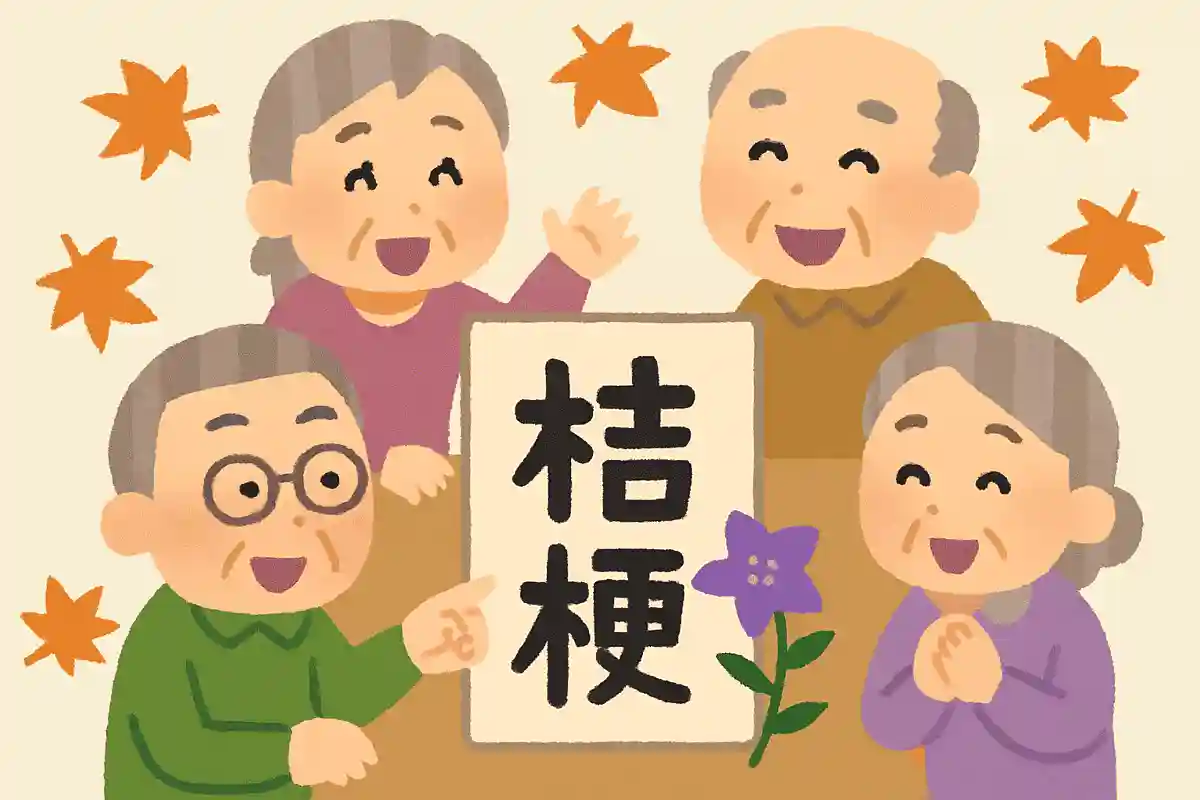
See the answer
bellflower
"桔梗" is read as "kikyō." In Japan, it is one of the representative flowers of autumn and has long been depicted in waka poetry and paintings. Kikyō is also counted among the Seven Flowers of Autumn and blooms with star-shaped flowers in a blue-purple hue. In addition, the root of kikyō is sometimes used as a medicinal herb.
Sanguisorba officinalis (Great burnet)
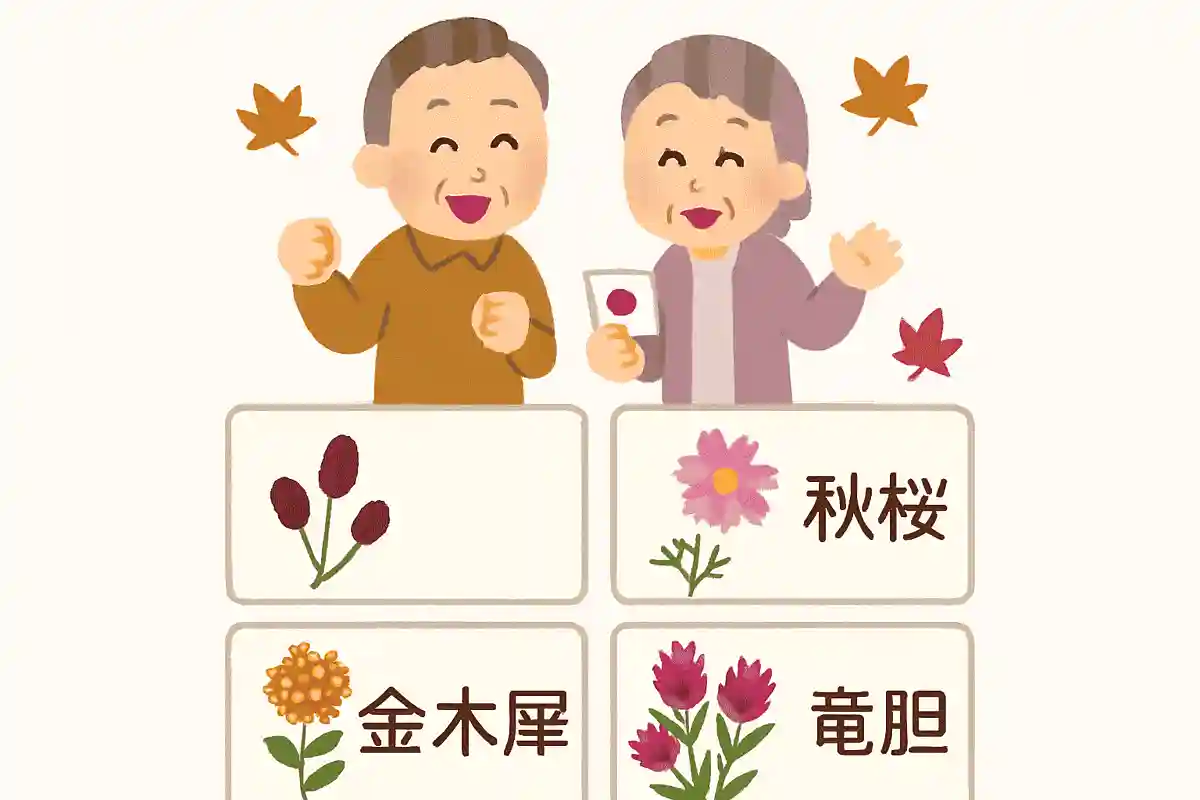
See the answer
Japanese burnet (Sanguisorba officinalis)
Warabi-kō (Sanguisorba officinalis), known in English as great burnet, is a perennial of the rose family that grows wild across Japan and other parts of Asia. Its distinctive feature is clusters of small, reddish-brown flowers that bloom in rounded heads. The name “Ware mo kō” literally means “I, too, am crimson,” evoking a modest, reflective autumn mood of turning red like those around it. It is a familiar autumn flower often celebrated in haiku and waka poetry.
sasanqua (Camellia sasanqua)
See the answer
sasanqua
Sasanqua (Camellia sasanqua) is an evergreen shrub in the camellia family that blooms white or pink flowers from autumn to winter. It closely resembles the camellia (tsubaki), but is distinguished by its petals falling one by one. It’s popular as a garden tree and hedge plant. Many older people are familiar with the name from the children’s song “Takibi” (The Bonfire). As a flower that represents the feeling of the season from autumn to winter, it is also used as a seasonal word (kigo) in poetry.
gentian
See the answer
gentian
Gentian (rindō) is considered one of the most beautiful autumn wildflowers and grows naturally in mountains and fields throughout Japan. It is characterized by its blue-purple blossoms and is also popular as an ornamental plant. Its root has long been used in traditional Chinese medicine, where its bitterness is believed to be the source of its efficacy. For older adults, it may evoke a sense of the autumn season and recall knowledge of traditional medicinal herbs.
scarlet sage
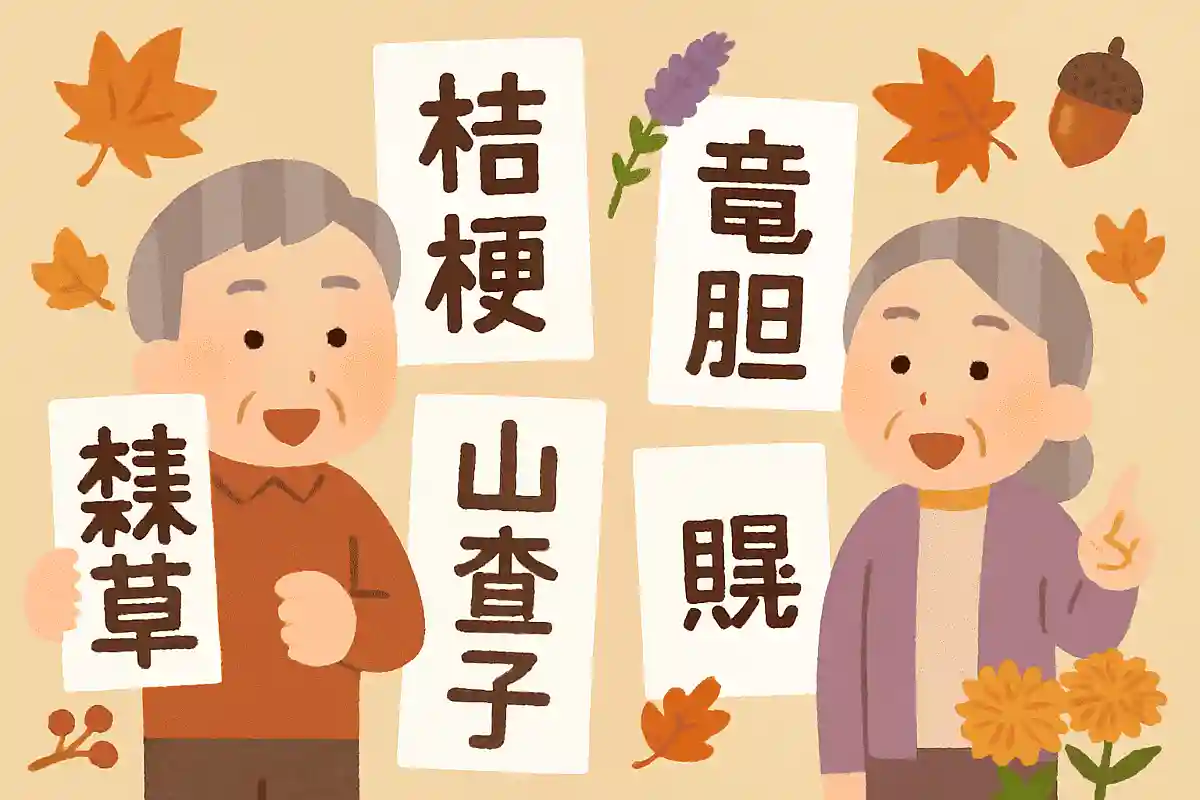
See the answer
Salvia
Scarlet sage (salvia) is one of the representative flowers that bloom in autumn. “Hi” means vivid red, “koromo” means clothing, and “kusa” refers to grasses or flowers. These characters are used because salvia is known for its red blossoms that look as if they are clad in scarlet garments. It is a familiar flower to many older people as it is often planted in flowerbeds at schools and in parks.