

[For Seniors] Haiku Selections for July: Ideas to Feel the Summer

July is the season when the strong sunshine and the sound of cicadas make us truly feel that summer has arrived.
Composing haiku that capture the scenery and atmosphere unique to this time of year offers a rich moment to attune our hearts to the changing of nature.
Because haiku can express a sense of season and emotion in just a few words, they are a cultural form that many older adults also find approachable.
In this article, we have carefully selected haiku you can enjoy while savoring the seasonal feeling of July.
By all means, experience the charm of summer up close through haiku.
- [For Seniors] Summer Haiku: Ideas to Feel the Season
- [For Seniors] June Haiku Showcase: Ideas to Feel Summer
- [For Seniors] Summer kigo: A list of famous seasonal words to enjoy while savoring their elegance
- [Elderly] Haiku with the theme of August: Introducing famous verses
- [For Seniors] Enjoy and Beat the Summer Heat! July Craft Ideas
- [For Seniors] Famous Haiku for December: Masterpieces Depicting Winter Scenes and Year-End Moments, Plus Tips on How to Compose Them
- [For Seniors] Early-summer-themed wall decorations: Recommended ideas for July
- [For Seniors] July Events: Recommended Recreation Ideas for Senior Facilities
- [For Seniors] July-Themed Origami: A Collection of Fun Ideas
- [For Seniors] July health topics: a wide range of ideas including exercises, crafts, and quizzes
- Activities perfect for July for seniors: Introducing games and recreational options
- [For Seniors] Making a July Calendar: A Collection of Summer-Themed Motif Ideas
- [For Seniors] July Trivia Quiz & Fun Facts. Easy and Engaging
[For Seniors] Haiku Selections for July: Ideas to Feel the Summer (1–10)
On a scorching day, the Mogami River pours into the sea.

When it comes to haiku, Matsuo Basho’s name is the first that comes to mind.
“Summer grasses— all that remains of warriors’ dreams,” and “Such stillness— the cicadas’ cries sink into the rocks” are, as everyone knows, celebrated lines.
This poem, too, is as famous as “Gathering the early-summer rains, the Mogami River runs swift.” It portrays river water, heavy with the fierce sunlight of summer, roaring down toward the sea.
I think the brilliance of the verse lies in saying “to let the sun flow into the sea” without using a direct simile like “as if ~.” How did you appreciate it?
Morning glory— far beyond the deep indigo, days of sun and moon.

Ishida Hakyō is one of the haiku poets who represent the Shōwa era and is known as a member of the Human Exploration school.
In this poem, “the beyond of indigo” does not mean the far side of the morning glory’s color; rather, it conveys the feeling that, as you gaze at the flower’s deep blue, the sky spreading out behind it and the time that has passed come to mind.
The phrase “tsukihi kana” expresses a meditation on the flow of time, capturing the moment when, while looking at a morning glory, one feels, “I too am living within time like this.” Under the influence of the war in those days, Hakyō may have been inspired by the morning glory’s indigo, layering memories of the past with hopes for the future.
Considering the period gives the poem another dimension of appreciation.

Coolness passes through my belly—autumn draws near.

Masaoka Shiki was an important figure active in the Meiji era who introduced innovations so significant that he is called the father of modern haiku and modern tanka.
The meaning of this verse is: “The coolness seeps not only into the surface of my skin but all the way into my belly.
Ah, autumn must be near.” With its expression of feeling the change in the air through the body, its sensitivity to the subtle threshold between seasons, and its candid rendering of what is seen and felt just as it is, the poem skillfully links bodily sensation to seasonal change, clearly reflecting Shiki’s realistic style.
[For Seniors] Haiku Showcase for July: Ideas to Feel Summer (11–20)
Cutting drops of white jade, I have set them on the tray.
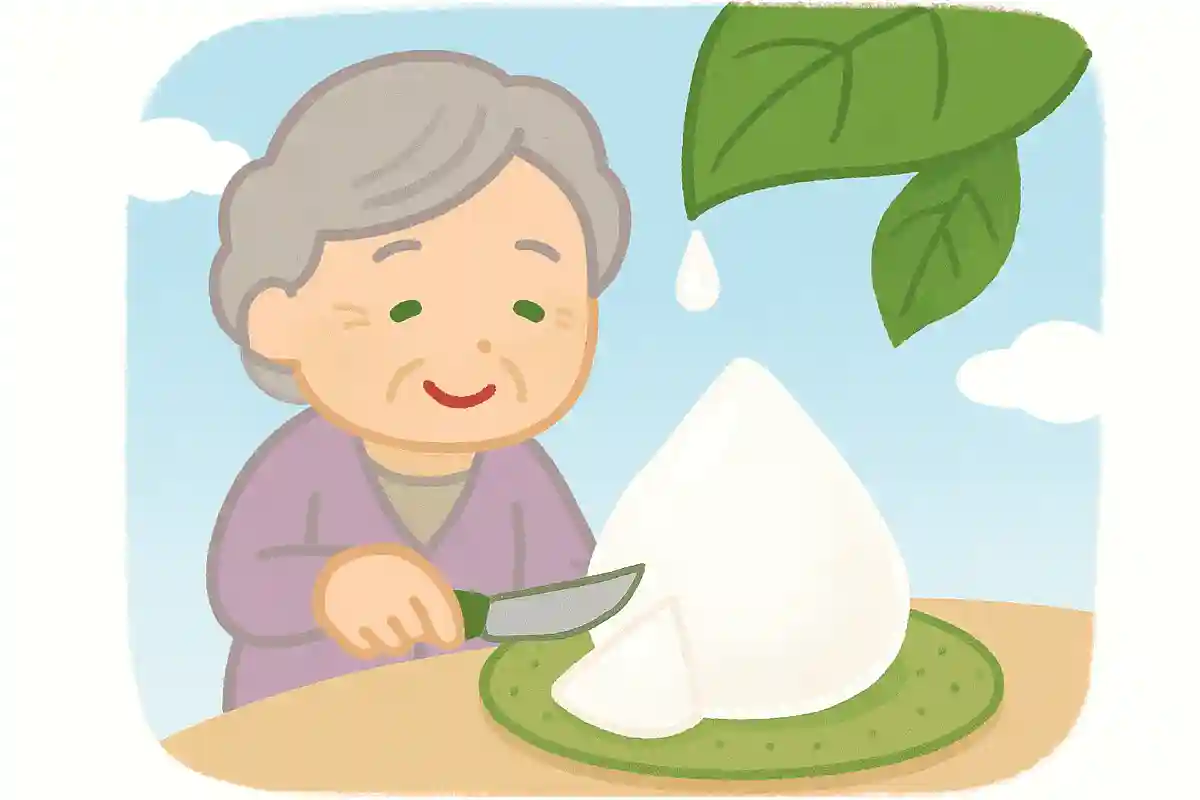
This phrase describes a simple action: draining the rinsing water from shiratama dumplings and arranging them on a plate.
“Shiratama no shizuku” refers to the droplets that remain after the boiled dumplings are cooled in cold water.
The word “drain” conveys the motion of letting the excess moisture fall away to create a beautiful presentation, highlighting the dumplings’ smooth texture and the fresh, glistening droplets.
From the brief words of the haiku, you can almost feel the cool touch of the shiratama, see the beauty of the light-reflecting drops, and sense the refreshing atmosphere of summer created by serving them in a dish.
Crimsoned, the black late-summer day sets.

Seishi Yamaguchi is a haiku poet who represents the Showa era, known for an urbane, intellectual viewpoint and a knack for capturing fleeting moments in nature.
Unbound by conventional haiku frameworks, he pursued innovative expression, even experimenting with haiku sequences informed by film theory.
This poem depicts the sun sinking, glowing red as it gradually dissolves into deepening darkness.
“Late summer” is a seasonal word indicating the end of summer, imbued with a feeling of lingering attachment to the season.
It is not merely about the beauty of a sunset, but a verse that keenly apprehends the flow of time and the turning of the seasons.
How beautiful—the Bon Festival people within the moon.

Gyotai Kato was a haiku poet of the mid-Edo period.
Born into the household of a samurai in the Owari Domain, he entered domain service at a young age but resigned at twenty-eight to pursue haikai.
Seeking to revive Matsuo Bashō’s haiku style, known as Shōfū, he set out on a journey tracing the Narrow Road to the Deep North and worked to reappraise that tradition.
This poem depicts a fantastical scene on an Obon night.
Obon is an important observance for welcoming and honoring ancestral spirits, and in that setting Gyotai may have found beauty in the sight of people bathed in moonlight.
It is a dreamlike verse that conveys the quiet and mystery of an Obon night.
The rough sea— across to Sado Island stretches the Milky Way.

This haiku is said to have been composed by Matsuo Bashō in Izumozaki, Niigata, during his journey recorded in The Narrow Road to the Deep North.
It depicts the rugged waves of the Sea of Japan and the majestic sight of the Milky Way stretching over Sado Island.
Sado Island was once a place of exile, where many historical figures were banished.
Looking upon the island, Bashō may have reflected on history and the people who were sent there.
The haiku beautifully captures a scene where the beauty and ferocity of nature encountered on his travels intersect with human history.