

[For Seniors] Introducing trivia related to May!


May is when the new routines have settled in, and the weather becomes comfortable, isn’t it? There are plenty of events too, like Children’s Day (Tango no Sekku) and Mother’s Day.
This time, we’ll introduce some trivia related to May.
You can also enjoy trivia as a quiz.
Gaining new knowledge helps stimulate brain activity.
In addition, knowing trivia topics can enliven conversation and facilitate smoother communication.
It can also help deepen bonds in conversations among older adults.
Please use this article as a reference!
- Surprisingly, there’s a lot we don’t know? A quiz to learn trivia about May!
- [For Seniors] May Calendar Craft: Motifs that color May, such as Children's Day (Tango no Sekku), Mother's Day, and seasonal flowers
- [For Seniors] Prevent Dementia with Brain Training! A May-Themed Quiz Collection
- [For Seniors] Never Run Out of Conversation Starters! A Collection of Fun Facts About April and Spring
- [For Seniors] Trivia Quiz & Fun Facts for Everyday Life
- [May Health Topic] Introducing recreational activities for seniors!
- [For Seniors] February Trivia: Useful Knowledge
- For Seniors: Lively! Trivia and Fun Facts Quiz for August
- [Koinobori] Trivia Quiz & Fun Facts! For Seniors
- [For Seniors] Recommended Events for May: A Roundup of Ideas That Get Everyone Engaged
- [For Seniors] Enjoy May! Recommended Recreational Activities and Games
- [For Seniors] Enjoy May: A Collection of Seasonal Craft and Wall Decoration Ideas
- [For Seniors] Introducing May-themed Origami!
[For Seniors] Introducing Trivia Related to May! (11–20)
Tea picked in early May is called “shincha” (new tea).

May is also the season when delicious shincha (new tea) appears on the market.
By the way, do you know which harvest period is called “shincha”? Tea picking begins on Hachijūhachiya, the 88th day after the first day of spring (Risshun), which is around the beginning of May.
It even appears in the lyrics of the children’s song “Chatsumi” (Tea Picking).
The tea leaves first picked during this time are called ichiban-cha, or shincha.
It has long been said that drinking shincha brings good health and longevity, so if you are an older adult who enjoys tea, why not give it a try?

Koinobori carry the wish for a child’s growth and success in life.

On May 5th, during the Boys’ Festival (Tango no Sekku), it’s customary to display carp streamers, known as koinobori.
Watching them flutter in the wind is delightful, but do you know why they’re displayed? Koinobori carry wishes for children’s healthy growth and future success.
Carp are strong fish that can survive in many environments.
As for success, the origin is said to come from the Chinese legend of the “Dragon Gate.” Also known as “the carp climbing the waterfall,” the story tells that a carp that climbs the Dragon Gate becomes a dragon, making it a beloved symbol of good fortune for career advancement.
Chlorophyll contained in mugwort has an effect in preventing anemia.
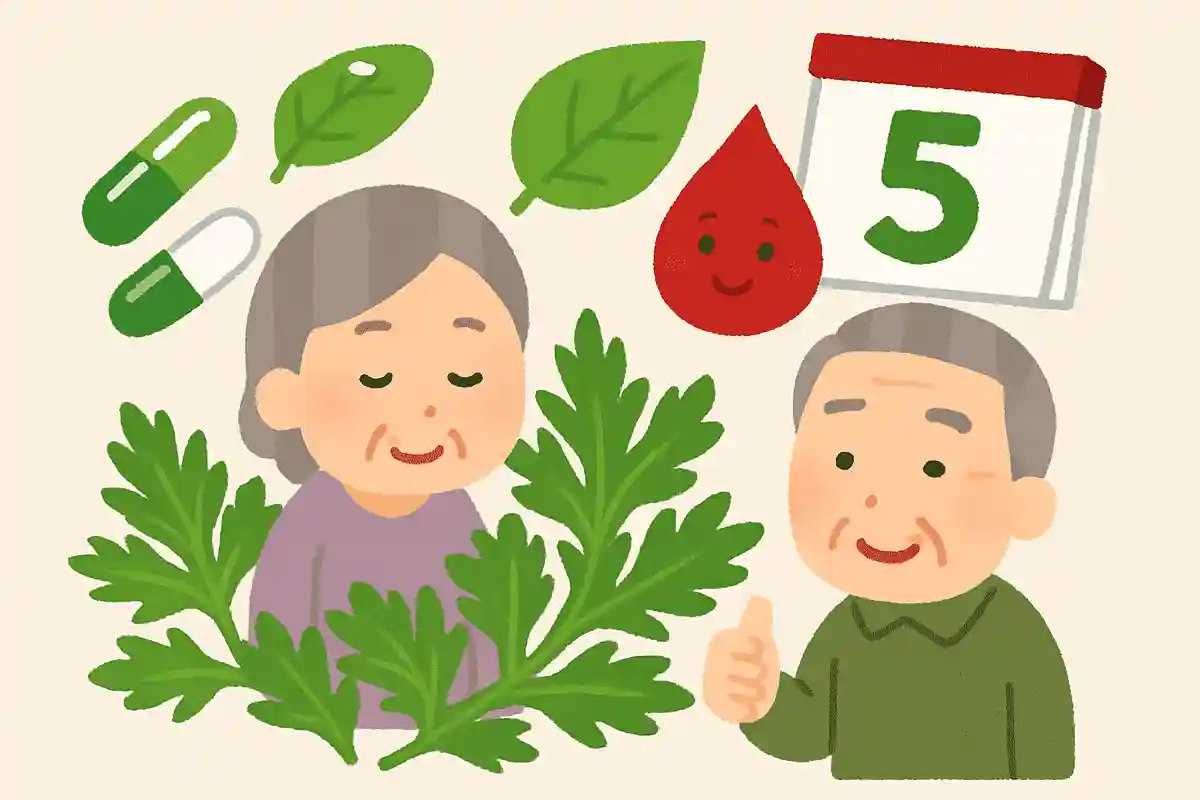
Here’s some trivia about yomogi (Japanese mugwort), which is in season in spring.
Yomogi grows pretty much everywhere, so you often see it in parks and vacant lots.
Its main component is chlorophyll, which helps prevent anemia.
While chlorophyll is found in other plants too, yomogi contains a relatively high amount.
It’s also said to have detoxifying effects and anti-cancer properties, so why not try eating it when it’s in season? Yomogi mochi is a classic, but it’s also delicious as tempura or in a simple blanched dish (ohitashi).
Because Emperor Showa loved nature, May 4th was named Greenery Day.
Emperor Showa was a biologist known for discovering new species of deep-sea creatures, and in fact he also possessed deep knowledge of plants.
He cherished nature and actively engaged in greening initiatives.
Greenery Day was established with the image of Emperor Showa in mind, as someone who loved nature and worked on many environmental issues.
Greenery Day is defined as “a day to become familiar with nature, to be grateful for its blessings, and to nurture a rich spirit.” On this day, we hope to remember Emperor Showa and give thanks for the nature that we often take for granted.
Mother’s Day originated in the United States.
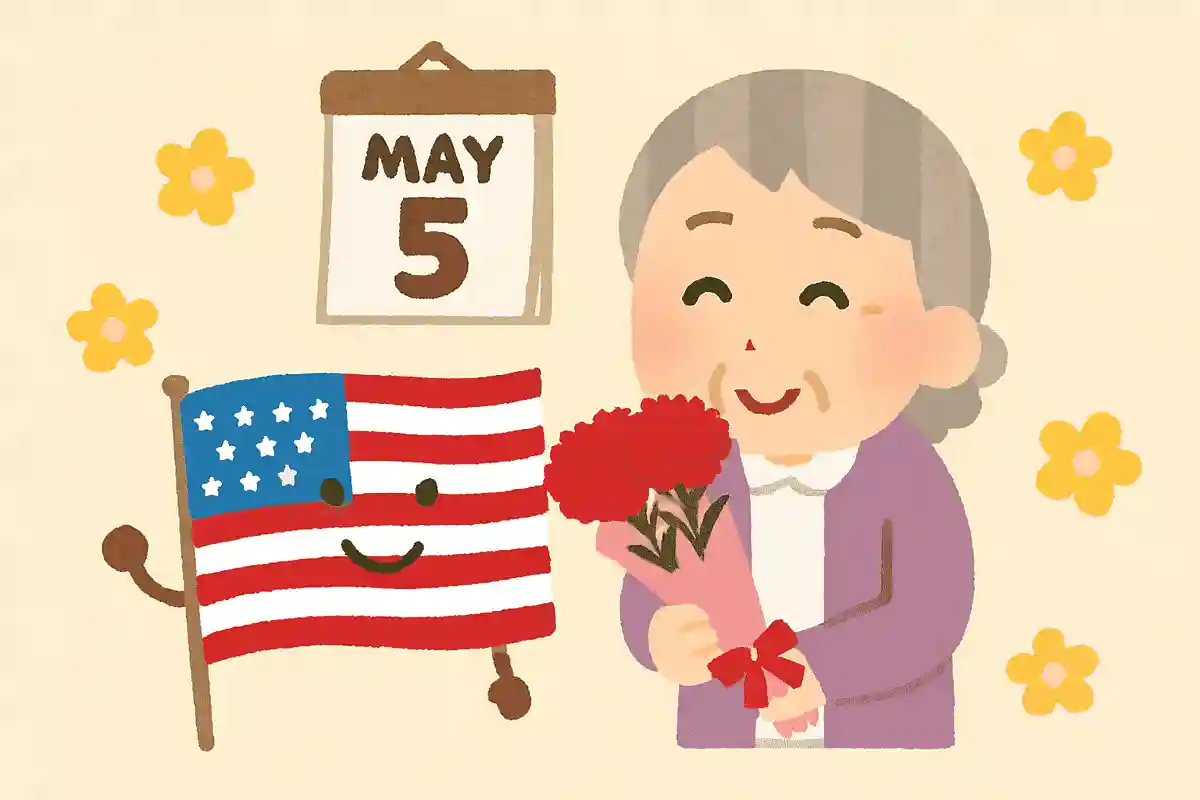
In May we have Mother’s Day, and many of you probably remember giving your mother carnations at least once.
It’s now a common custom in Japan, but in fact Mother’s Day originally began in the United States.
Mrs.
Jarvis, who was active as a social activist, passed away on May 9, and her daughter, Anna Jarvis, handed out white carnations—her mother’s favorite—at a church service in her memory.
That practice gradually spread and took the form we know today.
There are various theories about the origins of Mother’s Day, but this account is widely accepted as the standard one.
Kintaro, which can also be used as a decoration for the Boys’ Festival (Tango no Sekku), is modeled after Sakata Kintoki.
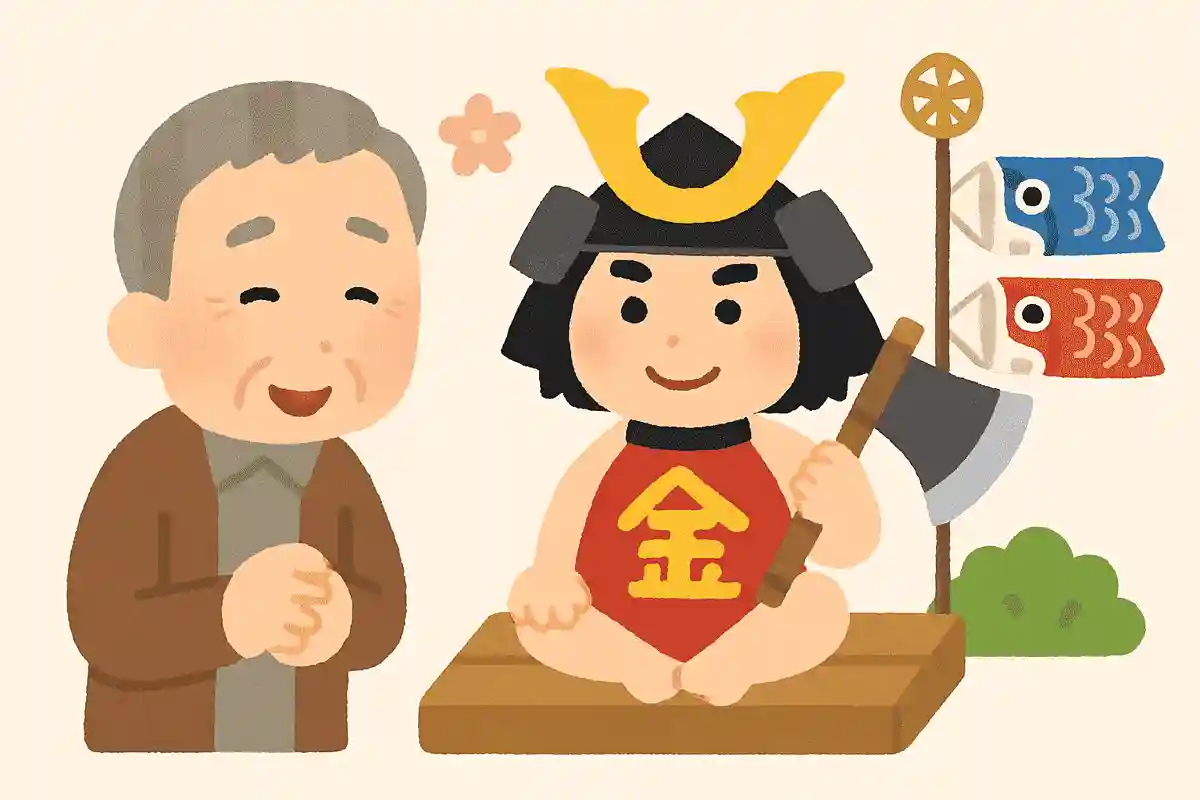
Sakata Kintoki, known as one of Minamoto no Yorimitsu’s Four Heavenly Kings, is said to be the model for Kintarō, whom everyone knows well.
Gentle yet robust from a young age, Sakata Kintoki is even said to have wrestled with a bear.
Come to think of it, in the fairy tales Kintarō rides a bear and is depicted wrestling, too.
Sakata Kintoki was a real historical figure… If he could wrestle a bear, just how strong was he? By the way, “Kintarō” was apparently Sakata Kintoki’s childhood name!
[For Seniors] Introducing Trivia Related to May! (21–30)
Strawberry Quiz

Strawberries are a familiar food, but there may be more you don’t know about them than you think.
For example—this often shows up in quiz questions—it’s said that people in Japan began eating them in the late Edo period; each of the tiny seeds on the surface is actually a fruit; and strawberries are, in fact, vegetables rather than fruit.
Surprising, isn’t it? Try this quiz and boost your strawberry trivia.
Absorbing all kinds of knowledge might just help you stay youthful.
