

![[For Seniors] Introducing trivia related to May!](https://media.ragnet.co.jp/img/1200__png__https://www.studiorag.com/files/2025/04/1c1b6512223e7125fdfe856367fb0b70.webp)


May is when the new routines have settled in, and the weather becomes comfortable, isn’t it? There are plenty of events too, like Children’s Day (Tango no Sekku) and Mother’s Day.
This time, we’ll introduce some trivia related to May.
You can also enjoy trivia as a quiz.
Gaining new knowledge helps stimulate brain activity.
In addition, knowing trivia topics can enliven conversation and facilitate smoother communication.
It can also help deepen bonds in conversations among older adults.
Please use this article as a reference!
- Surprisingly, there’s a lot we don’t know? A quiz to learn trivia about May!
- [For Seniors] May Calendar Craft: Motifs that color May, such as Children's Day (Tango no Sekku), Mother's Day, and seasonal flowers
- [For Seniors] Prevent Dementia with Brain Training! A May-Themed Quiz Collection
- [For Seniors] Never Run Out of Conversation Starters! A Collection of Fun Facts About April and Spring
- [For Seniors] Trivia Quiz & Fun Facts for Everyday Life
- [May Health Topic] Introducing recreational activities for seniors!
- [For Seniors] February Trivia: Useful Knowledge
- For Seniors: Lively! Trivia and Fun Facts Quiz for August
- [Koinobori] Trivia Quiz & Fun Facts! For Seniors
- [For Seniors] Recommended Events for May: A Roundup of Ideas That Get Everyone Engaged
- [For Seniors] Enjoy May! Recommended Recreational Activities and Games
- [For Seniors] Enjoy May: A Collection of Seasonal Craft and Wall Decoration Ideas
- [For Seniors] Introducing May-themed Origami!
[For Seniors] Introducing Trivia Related to May! (1–10)
May is when the first tea of the season is harvested. What is the highest-grade Japanese tea called?
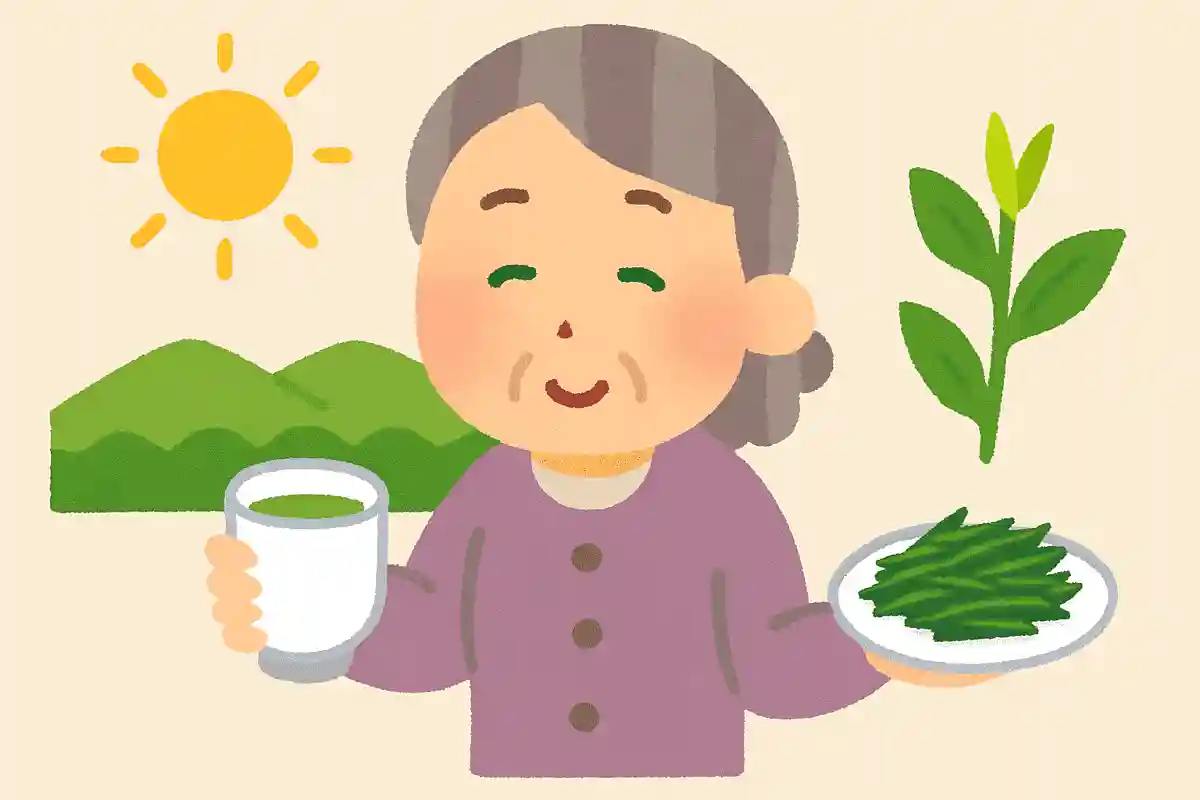
It is said that the period when shincha (new tea) is harvested is around eighty-eight days after Risshun (the first day of spring), and this is even mentioned in a children’s song.
In keeping with the season when shincha is picked, how about creating a quiz to deepen your knowledge about tea? Tea has ranks, and among them there is a highest grade—let’s think about what it’s called.
The term itself is well-known, so even people who haven’t tried it may have heard of it.
Among the many types of tea, “gyokuro” is particularly famous, known for its rich, intense umami flavor.

Because it is said that taking a shobu (iris) bath on the Boys’ Festival (Tango no Sekku) wards off evil spirits.

Did you know there is a tradition of taking a shobu-yu (iris bath) on Children’s Day? Some elder care facilities may also practice shobu-yu.
This custom originated in China, where May 5—the date of Children’s Day—fell around the beginning of the rainy season.
To ward off misfortune and epidemics that were believed to spread more easily during the rainy season, people held Dragon Boat Festival rituals.
It is said that the custom of the shobu-yu bath also began then, placing bundles of the leaves and roots of shobu, whose strong fragrance was believed to repel evil spirits, into the bath.

The meaning of rose flowers changes depending on their color and the number you give.

It seems that some roses are at their best from May to June.
Among older adults who enjoy gardening, some may even have rose bushes in their gardens.
Roses come in vivid colors like red, yellow, and white.
Interestingly, the meaning of roses in the language of flowers changes depending on their color and the number you give.
People often give roses on special occasions such as birthdays, anniversaries, or proposals.
When you give them, be sure to check both the color and the number.
By the way, 108 roses are said to be suitable for a proposal, conveying a message of an eternal vow to your beloved.
A bamboo shoot can grow about 30 centimeters in a single day.

Bamboo shoots are in season in spring.
Some older people may even have experience digging them up.
Did you know how fast bamboo shoots grow? In fact, they can grow as much as 30 centimeters in a single day.
Of course, it depends on the season and temperature, but it’s surprising, isn’t it? By the way, because they mature in as little as ten days, they’re said to become inedible after that.
How about enjoying some springtime bamboo shoot dishes and feeling the arrival of spring?

The old lunar month name for May, “Satsuki,” originates from rice planting.
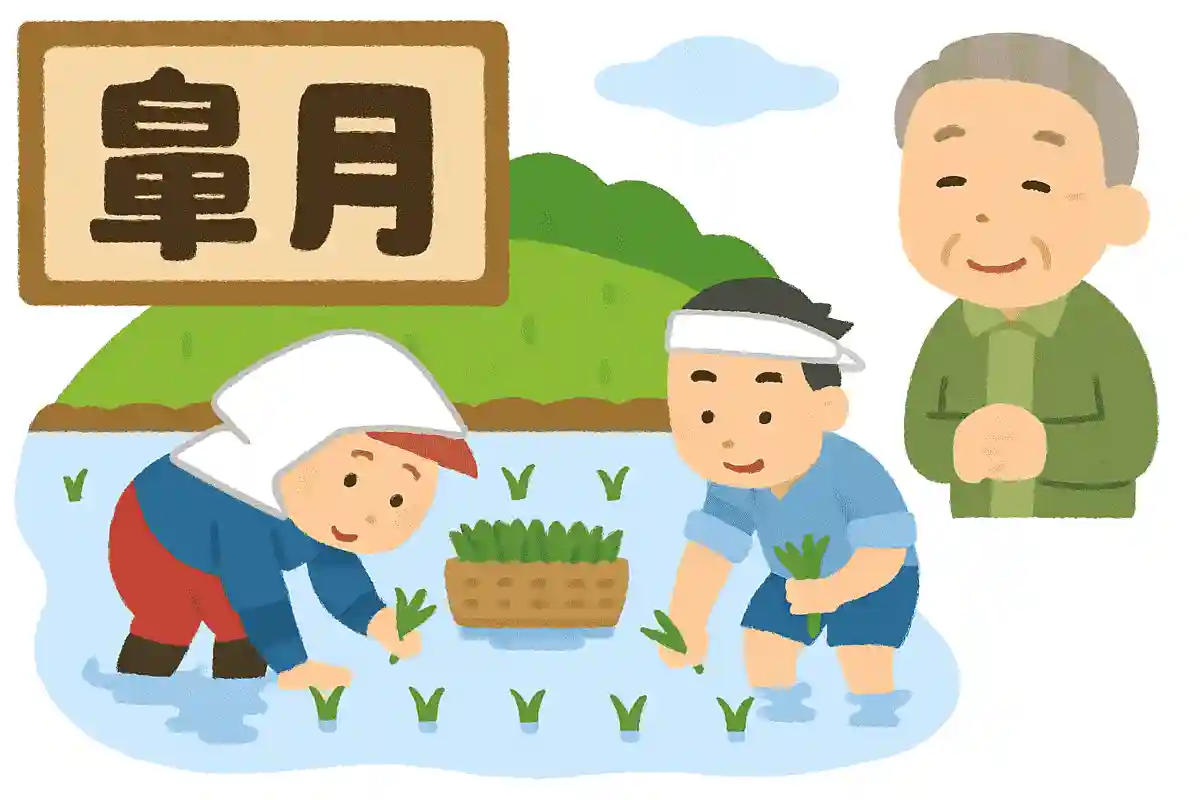
In the old lunar calendar, May is called Satsuki, right? There are various theories about the origin, but it’s said that the “sa” in Satsuki refers either to the rice field deity or to the rice offered to that deity.
There’s also a theory that it comes from “Sanaezuki,” the month of planting young rice seedlings (sanae), which was shortened to Satsuki.
It seems Satsuki is indeed related to rice planting.
Other names for May include Samidarezuki (Month of Early Summer Rains), Tsukimizukizuki (Month When the Moon Is Not Seen), and Umeno Irozuki (Month of Plum Colors), among others.
It could be fun to look up the various names for May together with older adults.
Turban shells (sazae) are in season in May.
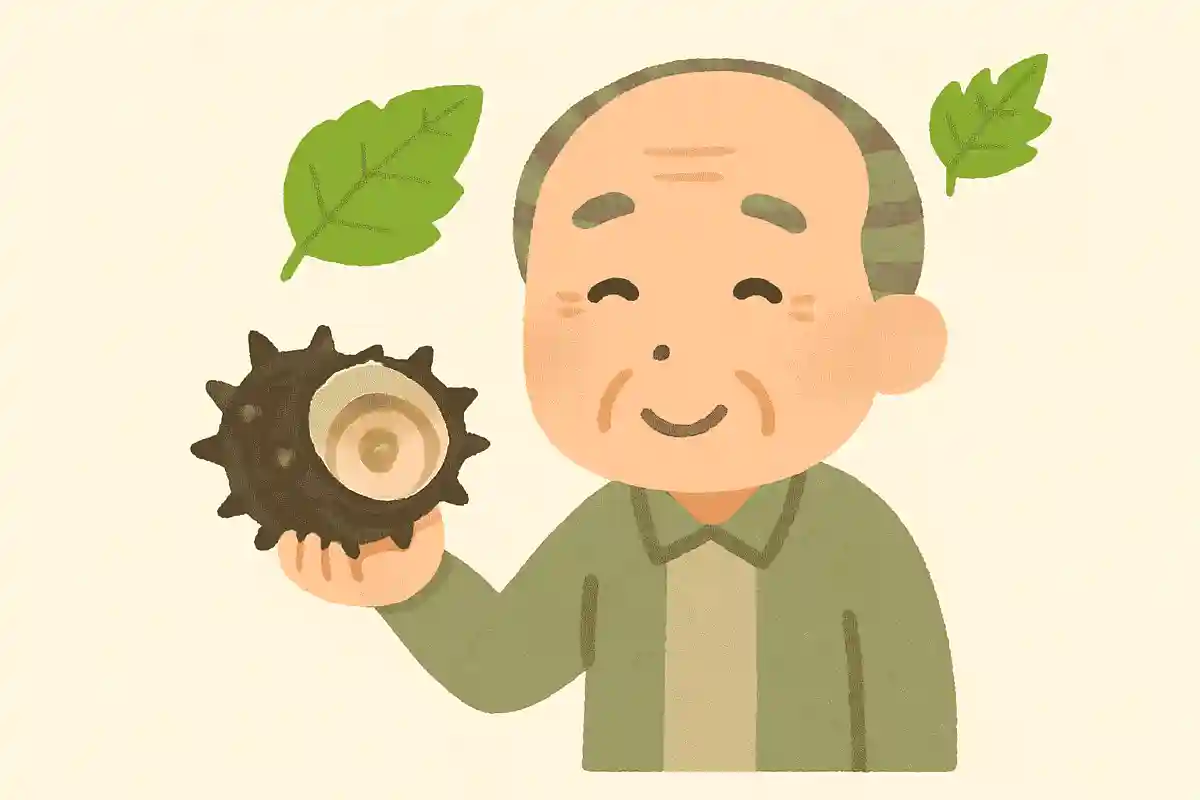
By learning about foods that are in season in May, let’s deepen our understanding of what this time of year means for each living creature.
Focusing on seafood could also reveal the ecology of marine life we don’t normally encounter.
When something is at its best for eating, it means it has stored the most nutrients, which tells us how that organism lives.
Turban shells (sazae), which are said to enter their prime in May, are considered to be well-nourished as they approach their spawning period from early summer into summer.
When displaying May dolls, one thing you must not do is put them out the day before.
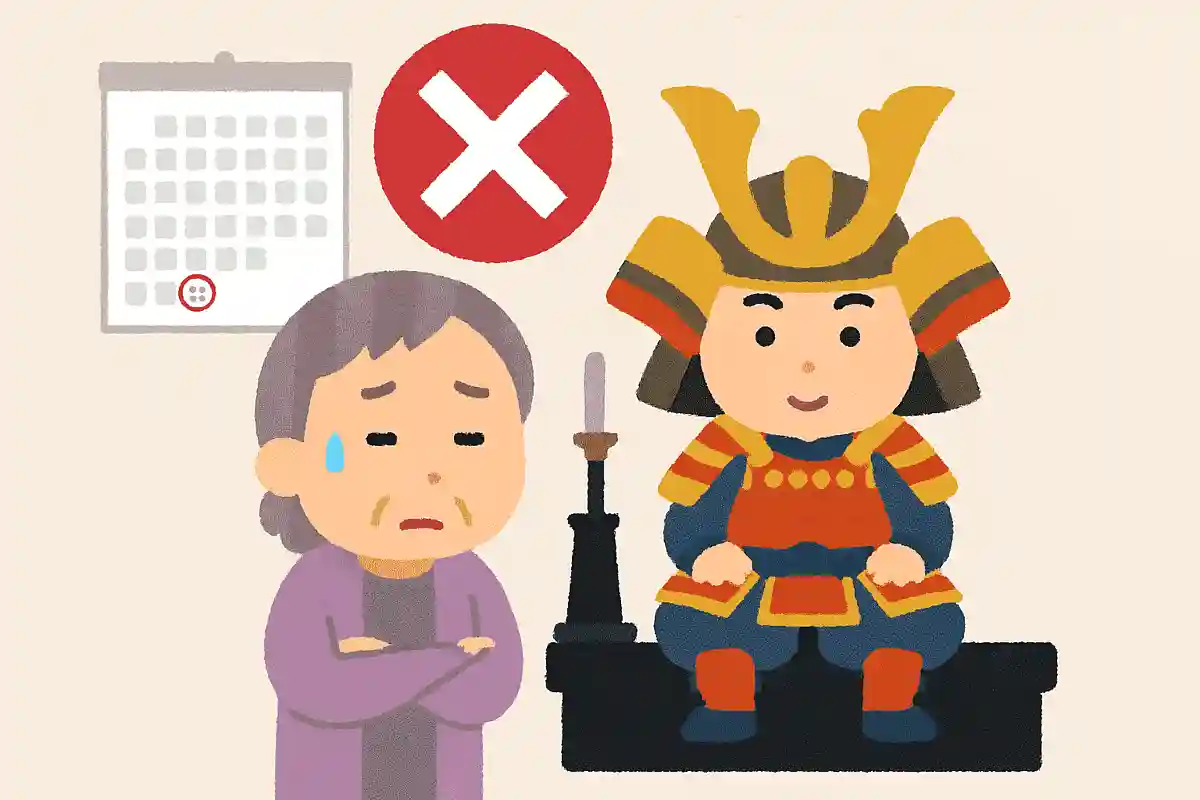
On Children’s Day in May, some households display May dolls (Gogatsu Ningyo).
Older people may have displayed them in the past, or perhaps still do so for their grandchildren.
These dolls are often put up in April.
In fact, it’s best to avoid displaying them the day before Children’s Day.
Putting them up the day before is called “ichiya kazari” (one-night display), and it’s considered bad luck.
The reason is that hurriedly setting out the dolls the night before can evoke associations with funerals.
Let’s take our time and display these wonderful May dolls with care.