

![[For seniors] Turn negatives into positives: Ways to interact that inspire motivation](https://media.ragnet.co.jp/img/1200__png__https://www.ragnet.co.jp/files/2025/05/950c5b9cf819f3fd0ab7f53754f63d41.webp)

For staff members working at senior care facilities and for family members, we all want older adults to enjoy lively, fulfilling days.
However, it’s not uncommon to see people who refuse recreational activities or outings, and even avoid communicating with others.
Some may also make negative remarks such as, “I don’t want to,” “Someone like me… what’s the point,” or “I’ll just be a burden to others, so I’d rather not.”
This article looks at why motivation may have declined in the first place, the risks of leaving it unaddressed, and ideas to try for drawing out motivation.
Let’s think together about how older adults can lead better lives!
- [For Seniors] Uplifting Words That Comfort the Heart
- [For Seniors] Add Enjoyment to Everyday Life: A Compilation of Activity Care Plans
- Fun, engaging topics for conversations with older adults!
- For Seniors: Enjoy Every Day! A Collection of Senior Recreation Ideas
- Conversations Made Easy! A Collection of Topics That Elderly People Enjoy
- For Seniors: Effective Recreation for Preventing Care Needs—Have Fun While Staying Healthy
- [For Seniors] Exercises to Walk Again. Fall Prevention
- [For seniors] Dice talk: engaging prompts
- For seniors: Words of gratitude and uplifting magic phrases. Tips for saying things that resonate with the heart.
- Inspiring quotes for seniors: words to cherish like a protective amulet
- Introducing words that will delight elderly people
- [For Seniors] Conversation starters that help you chat: engaging questions and topics to spark lively talks
- Explaining interesting initiatives at nursing care facilities! We also introduce seasonal recreational activities.
Why I can’t get motivated (1–10)
Three possible factors
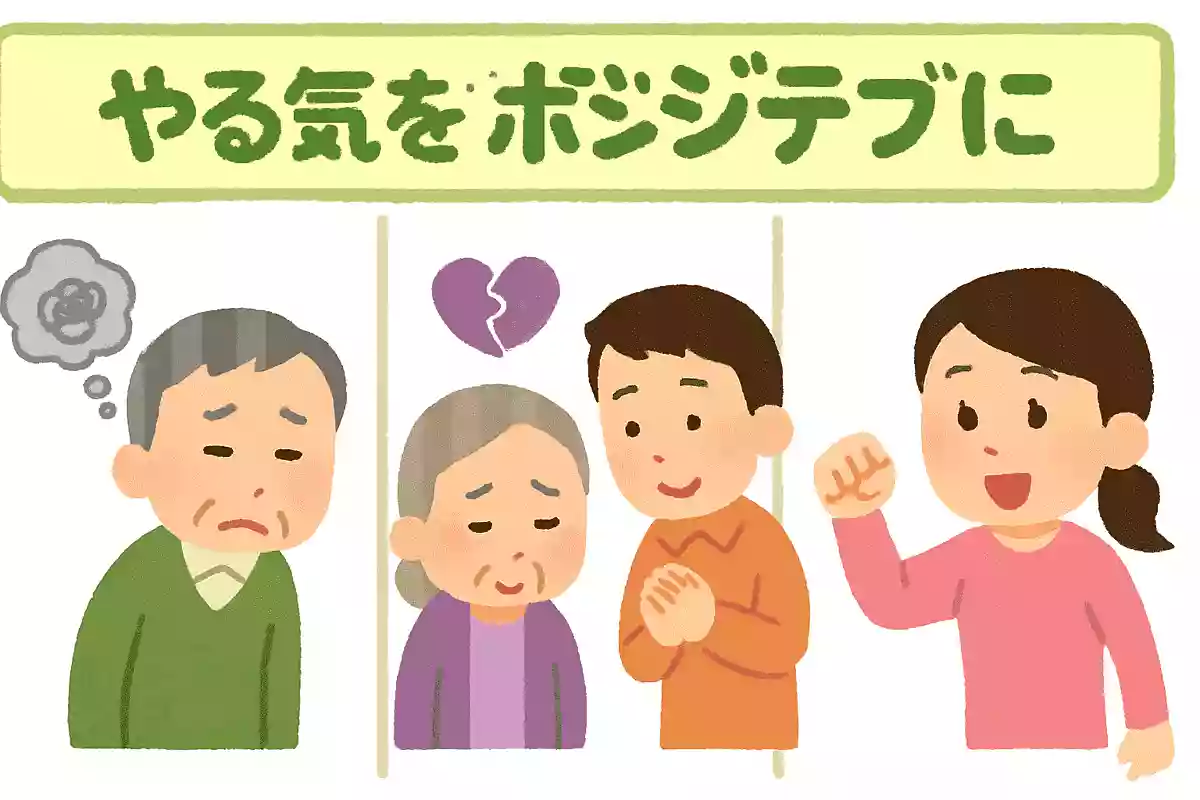
There are three factors that can be considered as reasons why older adults may experience a decline in motivation: physical factors, psychological factors, and environmental factors.
It is dangerous to overlook the issue because you don’t know why the motivation is lacking, or to assume it will naturally return over time.
What may start as a vague lack of motivation—such as “I don’t want to join recreational activities” or “Housework like cooking feels bothersome”—can worsen if left unaddressed, leading to tendencies like “I don’t want to go out” or “I don’t want to interact with people,” resulting in social withdrawal.
Of course, there may not be a clear single reason; various factors can be intricately intertwined.
Let’s first look at the three factors and consider ways to address them.
Physical factors
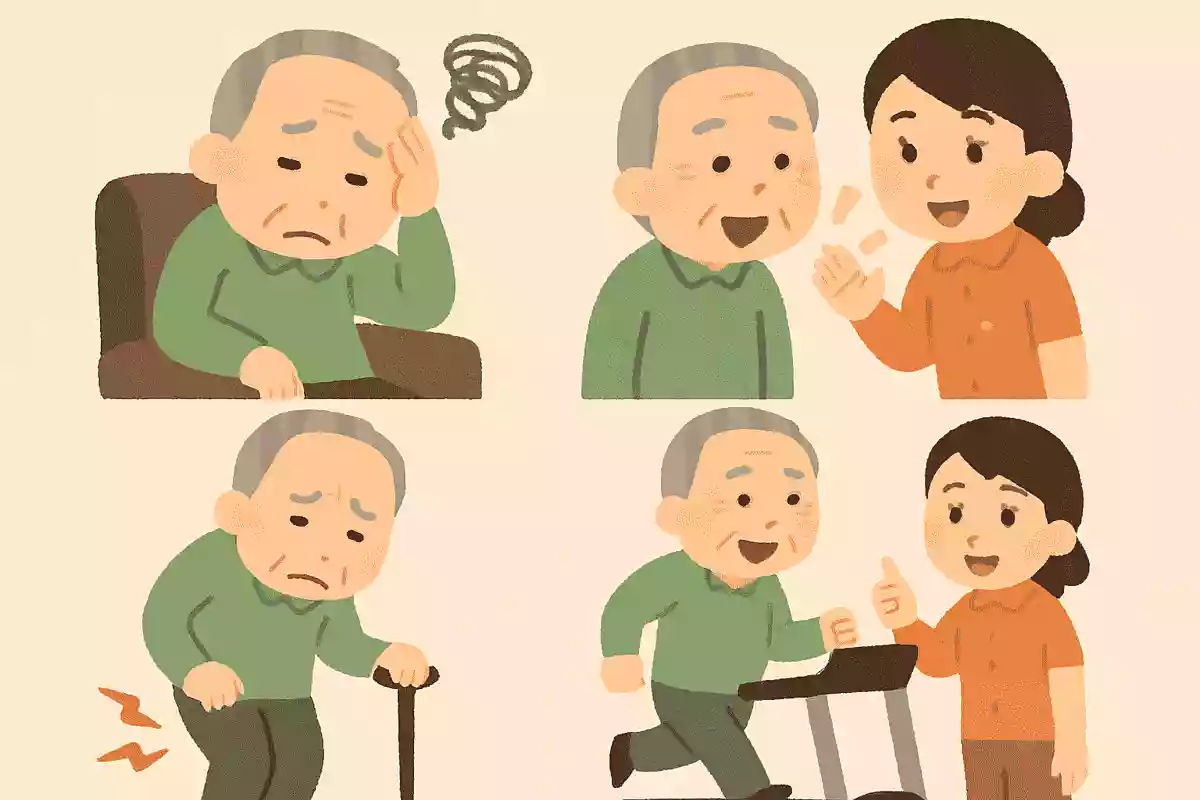
As people age, many experience declines in hearing and vision, as well as reduced muscle strength that makes movement more difficult.
Some also suffer from bodily pain, and others may fall due to decreased flexibility and reflexes in the legs, which can force them into a wheelchair.
Another common concern among older adults is urinary incontinence; weakened pelvic floor muscles can lead to leaks during sneezing or coughing.
These declines in physical function can damage self-esteem and often result in a loss of motivation to be active or to engage with others.
psychological factors

A representative illness that can be cited as a psychological factor is dementia.
As we age, brain cells degenerate and atrophy.
When brain cells atrophy, cognitive functions such as memory and judgment decline.
Have you been forgetting things more often lately, suddenly become unable to do things you used to do, or found it harder to recall people’s names or the names of things? Other symptoms that may appear in dementia include hallucinations, delusions, agitation, wandering, depression, and disorientation.
If someone who used to be calm has recently become quick-tempered, started raising their hand to strike, or begun making a fuss about a missing wallet, these are warning signs.
It is also not uncommon for experiences of loss, such as the death of a spouse or a close friend, to lead to decreased motivation.
Environmental factors
Environmental factors refer to changes in the environment surrounding a person.
For example, becoming distant from or having a worsening relationship with a spouse or child.
Beyond family, it can also include conflicts with close friends or, for those using eldercare facilities, poor relationships with staff or other residents.
Another factor is the loss of roles associated with retirement.
Someone who was highly active during their working years may retire, and the sudden shift from a busy daily routine can lead to feelings of inadequacy or loss, which may result in decreased motivation.
If you leave decreased motivation unaddressed (1–10)
Newly emerging adverse effects
For facility staff and family members who spend their days living alongside older adults, figuring out how to engage with seniors whose motivation has declined is a difficult issue.
However, if a drop in motivation is left unaddressed, it leads to two major drawbacks.
Let’s take a closer look below.
Further muscle weakness

Do you know how quickly muscle strength declines? Many people may vaguely feel that if you don’t exercise, your strength will decrease and that regaining it is difficult.
As we get older, opportunities to be active tend to decrease, and it’s also common for illness or injury to trigger a drop in muscle strength.
Surprisingly, though, it’s said that if you don’t move your body for even a single day, your muscle strength can drop by 3–5%.
If this continues for a week, strength may decline by 10–15%, and if it continues for two weeks, there are astonishing study results suggesting a loss of about 250 grams of muscle mass.
progression of dementia and depression

The progression of dementia begins with forgetfulness that does not interfere with daily life.
As the mild forgetfulness stage advances, disorientation appears, such as forgetting events that just happened or losing track of dates and time.
In moderate dementia, people may forget whether they have eaten and develop delusions such as believing things have been stolen, making independent living difficult.
Wandering can also occur, potentially affecting family members who live together.
Once the condition progresses to a severe stage, communication becomes impossible.
Although the speed of progression varies depending on the type of dementia, early detection and implementing preventive measures and interventions are considered crucial.
If there are behaviors or statements that raise concerns about possible dementia, seek medical evaluation as soon as possible and begin appropriate treatment.