

[For Seniors] Recommended Songs for Music Therapy Tailored to Physical and Mental Conditions
Music is something we can’t live without, isn’t it?
Many people find that listening to upbeat songs mysteriously lifts their mood.
In particular, in senior care facilities, music therapy is used to support physical and mental rehabilitation.
Try choosing songs that match the physical and mental condition of older adults and use them in recreational activities.
In this article, we’ve gathered many songs that are familiar to seniors.
If you’re unsure which songs to use in music therapy, please use this as a reference.
- [For Seniors] Let’s Have Fun Together! Introducing Uplifting, Energizing Songs
- [Sing for your health!] Popular songs among seniors. Also recommended for recreational activities.
- Great songs recommended for people in their 80s: a collection of tracks with lyrics that touch the heart
- [For Seniors] Simple Rhythm Exercises: Recommended Songs and Routines
- With upbeat rhythm routines! Music therapy for seniors
- [For older adults] Music recreation that helps boost mood and improve health
- Also great for dementia care! Recommended dance songs for people in their 70s: Let’s dance to those classic hits
- [For Seniors] Recommended Karaoke Songs for Women in Their 80s
- Recommended Songs for Nursing Home Recreation [Fun Exercise, Soothing Songs]
- [Celebration] A compilation of Japanese songs that elderly people will enjoy
- [Recommended for people in their 70s] Songs that really move you. Beloved classic Japanese hits of the past.
- [For women in their 70s] A collection of songs that are easy to sing even for people who are tone-deaf
- [For Seniors] Recommended for Recreation! A Collection of Fun and Lively Parody Songs
[For Older Adults] Recommended Songs for Music Therapy Tailored to Physical and Mental Conditions (21–30)
Tokyo RhapsodyFujiyama Ichirō

Tokyo Rhapsody is a song with a familiar, comforting melody even for older listeners.
Its lyrics, rich with the atmosphere of the Showa era, beautifully depict scenes of Tokyo in the past.
The song has an up-tempo beat, making it perfect for exercises and other recreational activities.
You can enjoy it either standing or seated, as needed.
Move your arms and legs boldly, and enjoy a cheerful time where many people can join in with smiles.
Come on, let’s move to the music and feel energized!
The two are young.dikku mine

A duet released in August 1935 whose playful call-and-response is truly delightful.
Sung by Dick Mine and Reiko Hoshi, the song was included on the theme record for the Nikkatsu film “The Peeped-at Bride.” The music is by Masao Koga, and the lyrics were written by Hachiro Sato under the pen name Eiji Tamagawa.
Its charm lies in lyrics that evoke bright scenes like blue skies and gentle breezes, paired with an easy-to-remember melody.
With its conversational back-and-forth, singing it as a duo is sure to bring smiles.
It’s also great for recreation time—try pairing up and giving it a go.
Why not enjoy it with some handclaps to the lively rhythm? A heartwarming song that can spark fond memories and lively reminiscences.
I’m happy it’s spring.Sakushi: Yamazaki Iwao / Sakkyoku: Komiyaji Satoshi

“Spring Is Here, I’m So Happy” captures the feeling of longing for the arrival of warmer days.
The lyrics are by Iwao Yamazaki, and the music was composed by Satoshi Komiyaji, who taught at Tamagawa Academy’s elementary division for 32 years.
It features language that evokes spring’s pleasant warmth and a bright melody that naturally makes your heart dance.
Start by singing together in unison, and once you’re comfortable, split into groups and turn it into a round, chasing each other’s lines.
Its simple structure makes it easy to enjoy natural harmony while keeping to the rhythm—highly recommended.
This children’s song conjures springtime scenes of grasses, flowers, and little birds rejoicing.
In recreational gatherings for seniors, try sharing a pleasant moment as everyone’s voices blend together.
What a nice bath.Za Dorifutāzu

A humorous song that portrays hot springs and the Japanese spirit, the kind everyone wants to sing along to.
Originally a local tune from Gunma Prefecture, it was reinvented by The Drifters into an arrangement that tours famous hot springs across Japan and was released as the B-side of their 1968 single “Zukkoke-chan.” Its distinctive calls and lively rhythm lift your spirits just by listening.
It became the theme song for the 1969 film “Ii Yu da na Zen’in Shugo!!” and was later beloved for many years as the ending theme of “Hachiji da yo! Zen’in Shugo” and “Dorifu Daibakushō.” It’s perfect for a cold winter’s day, adding playful interjections while picturing scenes of a hot spring.
Ochara-ka-hoi

By moving your body to the lyrics of the traditional hand-clapping song “Ocharaka Hoi,” it quickly turns into a game that stimulates the brain.
For example, during “Ses-ses-se,” place your hands on your back, and during the “Yoi-yoi-yoi” part, have your right hand represent 4 and your left hand represent 1, alternating the gestures.
Adding these actions engages memory, attention, and decision-making at the same time.
Performing multiple movements simultaneously like this is effective in preventing cognitive decline.
It can be done while seated and doesn’t depend on the number of participants.
It’s easy to introduce in care settings and is a type of brain training that people can continue without getting bored.

Momotaro
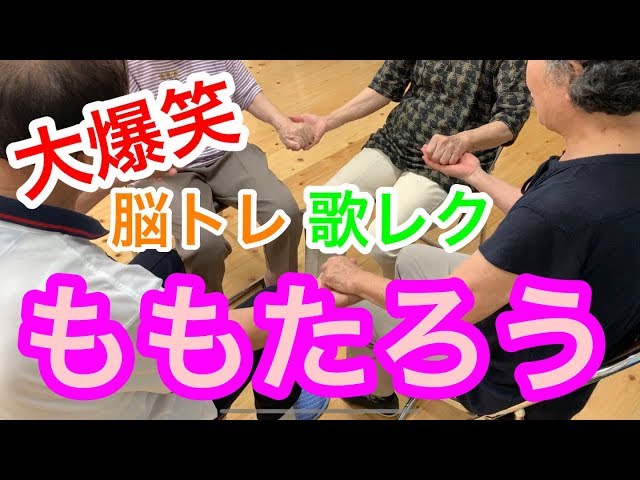
We’d like to introduce a hand-play activity idea called “Momotaro” that uses time for singing, moving your body, and sharing joyful laughter.
All you do is move your hands to a nostalgic melody, so it’s easy to join in even while seated and is popular with older adults.
For those who find it hard to speak, the song can help soften their expressions naturally and become a starting point for conversation.
Alternating open-and-close motions of the left and right hands while singing stimulates the brain and is expected to help prevent cognitive decline.
It can be enjoyed by small groups or entire groups together and is used as a place for social interaction.
It’s a simple yet profound idea that lets you rediscover the power of hand-play activities.
Plover on the BeachSakushi: Kashima Naruaki / Sakkyoku: Hirota Ryūtarō

The work that richly portrays a plover crying as it searches for its parents on a blue moonlit beach was first introduced to the world by Meishū Kashima and Ryūtarō Hirota in the New Year’s issue of the magazine Shōjo-gō in 1919.
It poetically depicts a bird born from the realm of waves, with wet wings of silver, crossing the sea in search of its parents and vanishing into the land of moonlight.
It is said that behind this piece lies Meishū Kashima’s feelings for the parents from whom he was separated early in life, giving the song a profound content that symbolizes the bond between parent and child and the sorrow of parting.
Although classified as a children’s song, it is also appreciated as a lyric song, and its calm, gentle melody beautifully colors the seaside scenery.
It’s perfect for those who wish to sing while reminiscing about the past, or for moments when you want to feel the changing of the seasons.