

[For Older Adults] Games to Enhance Oral Function: Enjoyable and Easy to Do

Oral functions play an important role in daily life, such as eating and speaking.
We all want to keep enjoying meals and conversations as we get older.
In this article, we’ll introduce fun and easy activities that help improve oral function.
For example, are you familiar with vowel articulation practice like “a-i-u-e-o”?
It’s a simple and enjoyable articulation exercise, and in fact, it not only enhances oral function but also helps strengthen your abdominal muscles.
We also introduce exercises that are essential for health management, so please try to find some that you feel you can do!
- [For Seniors] Spice Up Your Usual Oral Exercises! Patakara Exercises and Tongue Twisters
- [For Seniors] Boost Oral Function with Tongue Twisters! Recommended Picks to Try
- For seniors: Fun shiritori—enjoyable and easy to play
- [For Seniors] Stay Healthy Through Your Mouth with the A-I-U-BE Exercises!
- [For Seniors] Recommended Easy Strength Training
- [For Seniors] Oral Exercises to Keep Eating Deliciously and Enjoyably
- [For Seniors] Lively Wordplay Game: Fun Recreation for Elderly Care
- [For Seniors] Hand and finger play roundup: Finger exercises that lead to brain training
- [For Seniors] Core Training: Recommended Simple Rehabilitation
- For Seniors: Effective Recreation for Preventing Care Needs—Have Fun While Staying Healthy
- [For Seniors] Fun! Games and Ideas to Boost Memory
- [For Seniors] Extremely Effective Brain Training! A Fun Collection of Hand Games
- [Recommended for Seniors] Simple and Fun Gesture Game Prompts
[For Seniors] Games to Enhance Oral Function: Enjoyable Activities (31–40)
Upward Patakara Exercise

When your swallowing ability declines, you’re more likely to choke, and food or saliva can more easily enter the airway by mistake.
If this leads to pneumonia, it can have a major impact on your health.
To help prevent such aspiration, we’d like to introduce the “Upward Patakara Exercise,” which strengthens your swallowing ability.
It’s very simple: just pronounce “pa-ta-ka-ra” while looking up.
Doing only this can strengthen the muscles around the mouth and help maintain and improve your swallowing function.
Doing it before meals helps prepare your mouth, and continuing daily can make it even more effective.

This kid had a hard time writing katakana, didn’t they? I wonder if they didn’t cry?
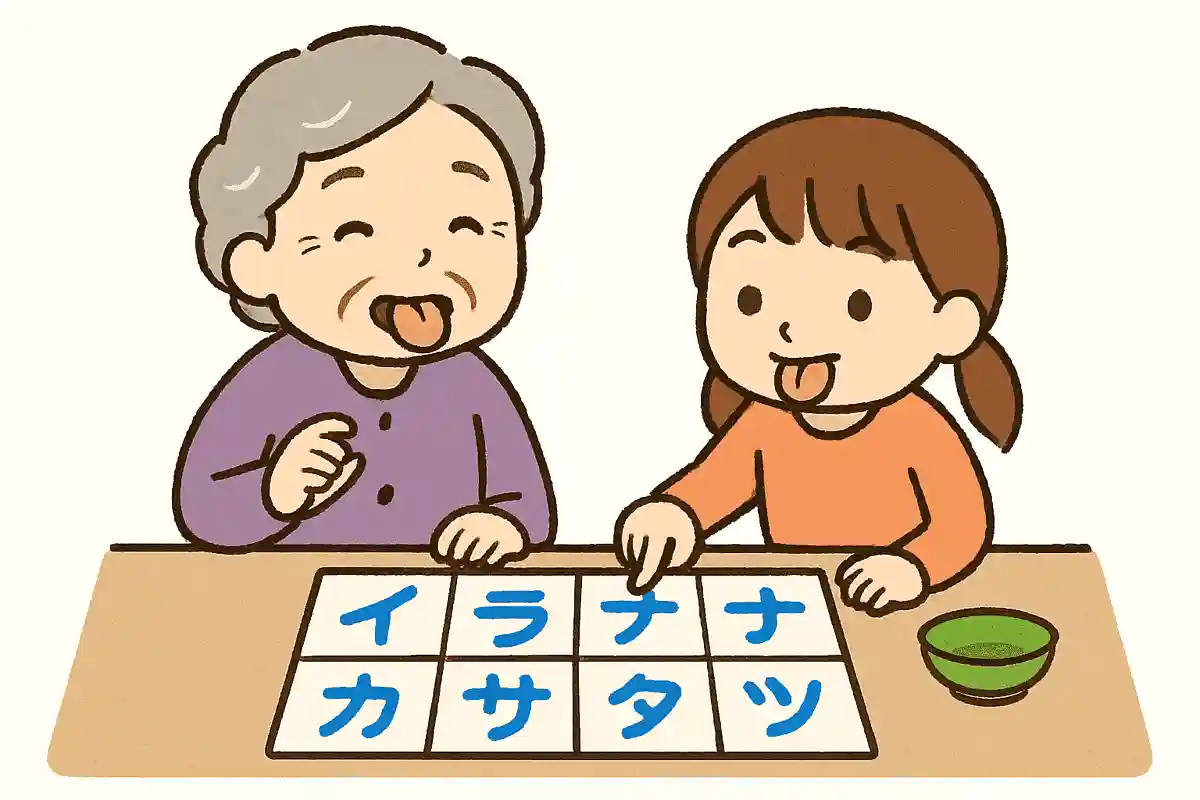
“Kono ko nakanaka katakana kakenakatta na, nakakanakatta kana?” is quite a long tongue twister.
Are they worried that the child who couldn’t write katakana didn’t end up crying? Words with similar sounds like nakanaka and katakana run together almost like a reverse reading.
Plus, the repeated ka sounds create a string of identical syllables, which adds to the difficulty of reading.
Tongue twisters can make you rush, but the key is to stay calm and read through without hurrying.

Both the Japanese plum and the peach are kinds of peaches; the peach and the Japanese plum are both kinds of peaches.
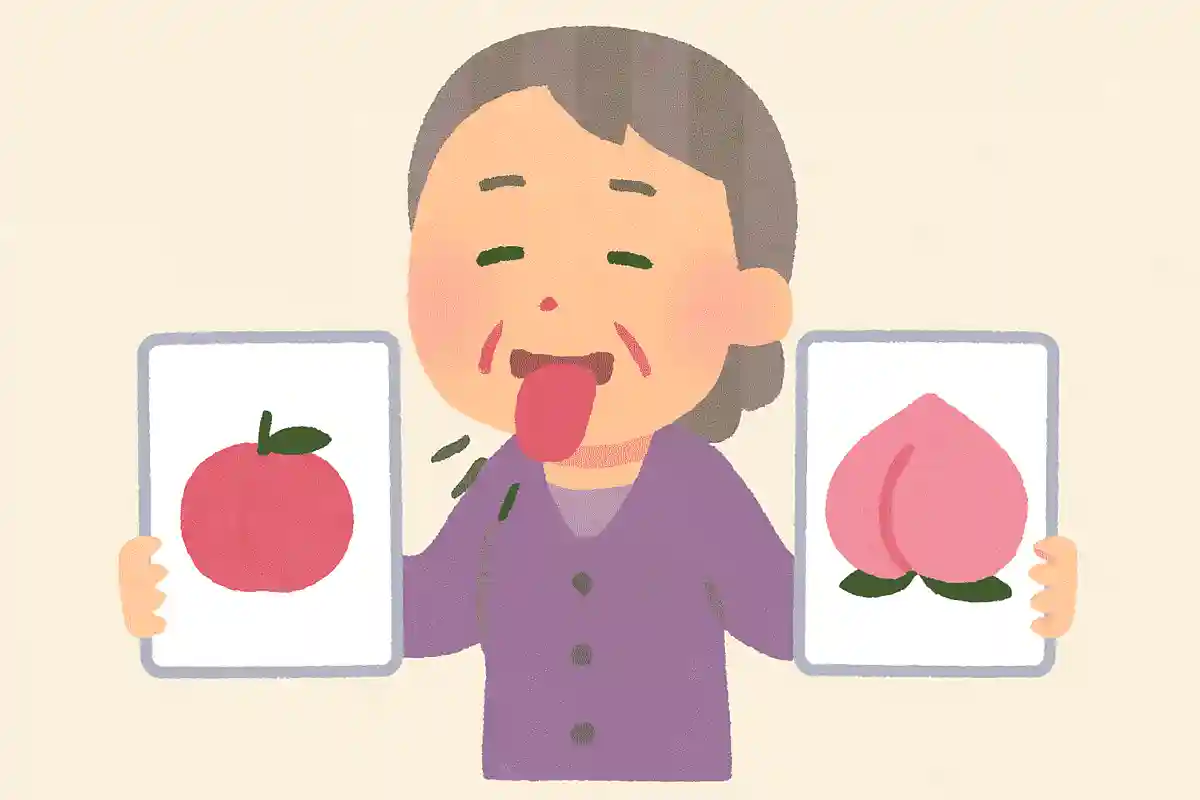
Plums come into season around mid-June.
Plums are a size smaller than peaches and are known for their sweet-and-tart flavor.
Although they’re said to be smaller than peaches, their shapes are similar, which is why there’s a tongue twister: “Sumomo mo momo mo momo no uchi; momo mo sumomo mo momo no uchi,” roughly meaning “Both plums and peaches are kinds of ‘momo.’” Because of this tongue twister, some older adults may have the impression that plums and peaches are the same variety.
However, plums belong to the genus Prunus in the rose family, while peaches belong to the genus Amygdalus (also within the rose family), so they are different.
Indeed, while their shapes are similar, plums have smooth skin, whereas peaches have a fine fuzz.
In fact, plums are said to be more closely related to apricots than to peaches.
Make vine, hang dayflower
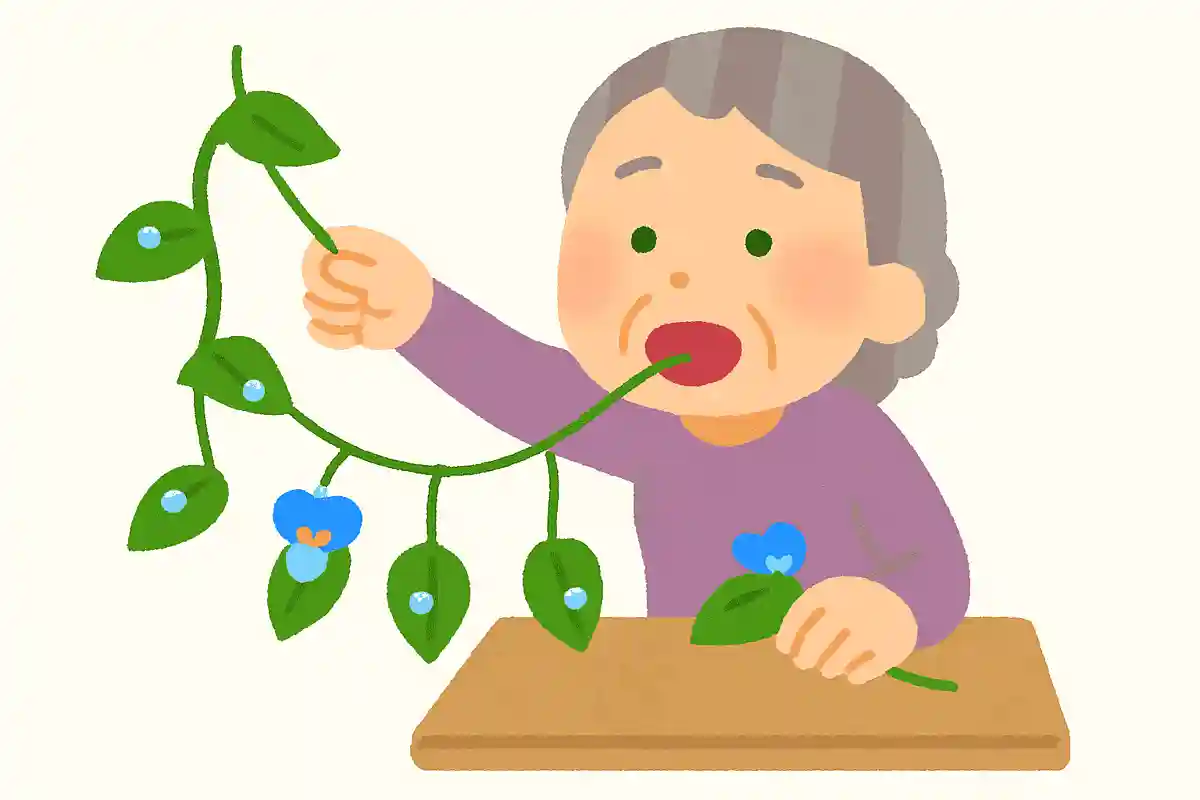
One tongue twister used as a brain-training recreation.
You train your brain by reading awkward sentences that rarely appear in everyday life.
“Tsukuru tsurukusa tsurusu tsuyukusa” is also one of the tongue twisters for older adults.
Various images come to mind from the tongue twister.
You might imagine weaving baskets with climbing vines, and hanging spiderwort as decoration.
In hiragana, it’s “tsukuru,” “tsurukusa,” “tsurusu,” and “tsuyukusa.” They all start with “tsu.” In fact, it’s said that many people—not just older adults—find the ta-row sounds that include “tsu” difficult to pronounce.
Hard-to-pull nails, nails that are difficult to remove, nails pulled out with a nail puller
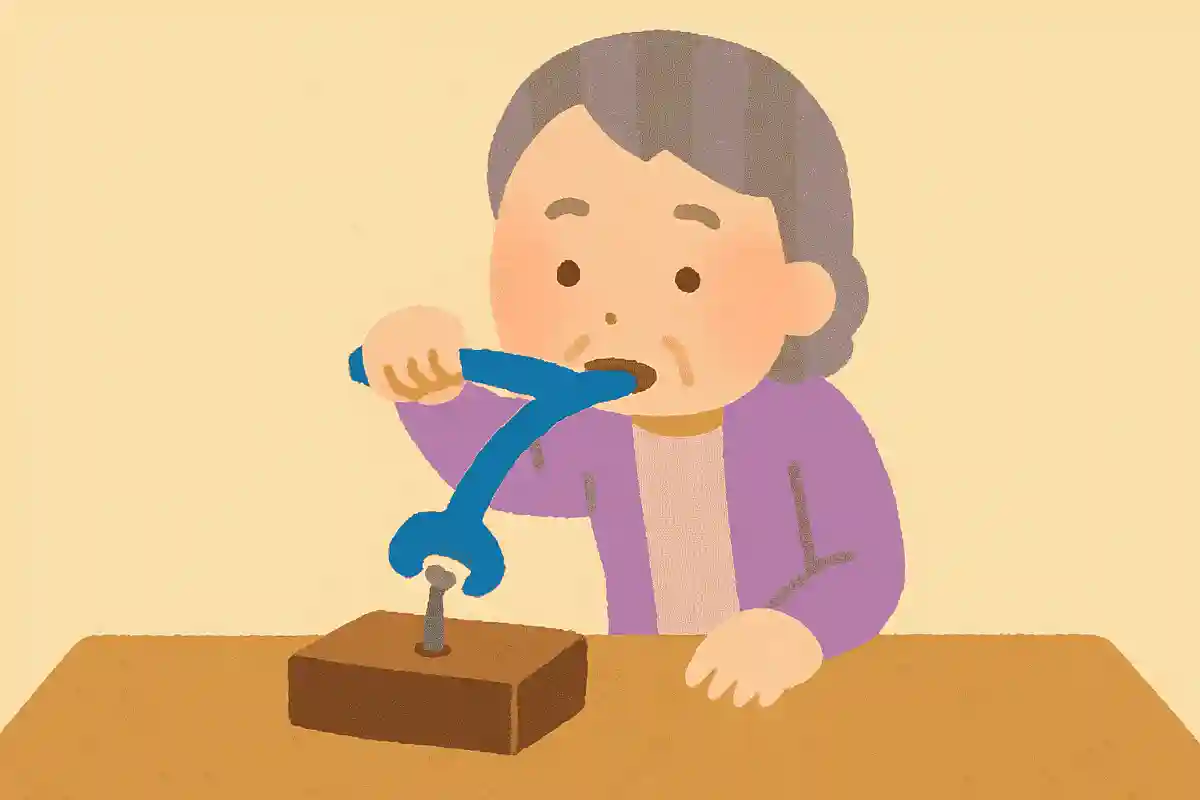
“A nail that’s hard to pull out, a nail that’s difficult to draw out, a nail pulled with a nail puller”—this tongue-twister also brings to mind scenes of carpenters or families doing DIY at home.
You can really picture someone struggling to pull out a stubborn nail.
Because of that, it repeats the same or similar words quite a lot.
It might be easier to say if you consciously break it into words like: hard-to-pull, nail; hard-to-draw-out, nail.
It’s a tongue-twister that may even help older adults recall their own DIY experiences.
[For Older Adults] Games to Improve Oral Function: Enjoyable Activities (41–50)
New Singer New Year Chanson Show
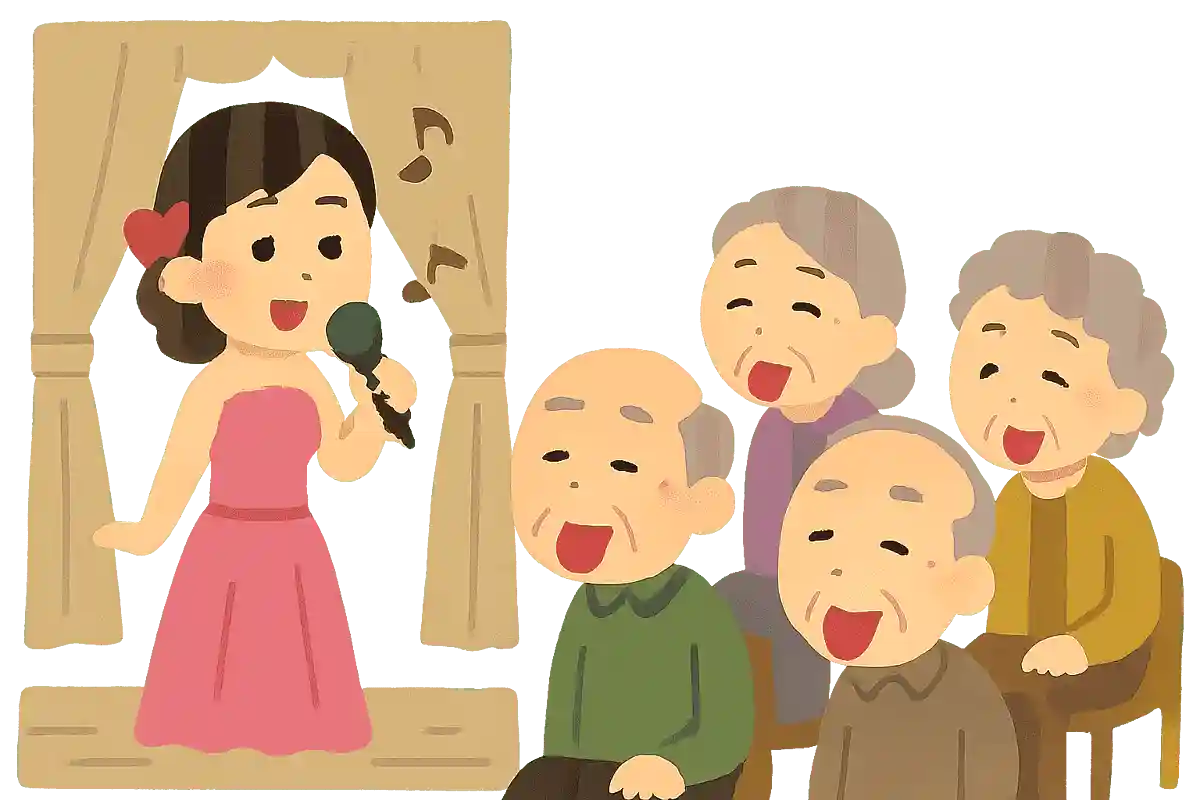
Chanson is a French word that means “song.” In Japan, the chanson “Meke Meke,” which Akihiro Miwa covered and sang in Japanese, is also well-known.
Some older people may have heard it at least once.
The tongue twister “shinjin kashu shinshun chanson show” (Newcomer Singer New Year Chanson Show) can be taken to mean a chanson show held at New Year featuring new singers.
The tongue twister evokes an image of listening to a beautiful singing voice in a refreshing atmosphere.
However, it’s hard to say when you actually try it, especially since the “so” in “chanson” tends to turn into “sho.”
Tokyo Patent Approval Bureau
“Tokyo Patent Approval Bureau” is a classic tongue twister.
Some older adults may have heard it or even tried the tongue twister at least once.
However, the Tokyo Patent Approval Bureau doesn’t actually exist.
It never existed in the past either; what does exist is the Japan Patent Office in Chiyoda City, Tokyo.
So where did the TV announcer tongue twister “Tokyo Patent Approval Bureau” come from? As it turns out, it’s said to have been created for use in recruitment exams.