

[For Seniors] Lively Wordplay Game: Fun Recreation for Elderly Care


Among word games, the one that continues to be loved by people of all ages is shiritori.
In shiritori, you take the last letter of a word and use it to link to a new word, right? How about enjoying this long-popular game with a variety of fun twists? Lively word games like these also serve as brain training and are appealing because everyone can dive in together and have a great time.
This time, we’re introducing shiritori word games that older adults can truly enjoy.
They range from easy to a bit more challenging, so give them a try!
- [For Seniors] Fun and Lively! Recommended Quiz Questions
- [Brain Training] Lively Word Quiz for Seniors
- [For Seniors] Fun Brain Training! Lively Whiteboard Activities
- For seniors: Fun shiritori—enjoyable and easy to play
- [For Seniors] Guaranteed to Liven Things Up! A Collection of Brain Training Activities That Will Spark Laughter
- [For Seniors] A Brain-Training, Crowd-Pleasing Word Search Game
- For seniors: Fun, crowd-pleasing word association game ideas
- Hand games that liven things up for seniors—also great brain training
- [For Seniors] Today’s Recommended Activity: Fun and Engaging
- [For Seniors] Refresh Your Mood! Lively, Get-Moving Games
- [For Seniors] Challenging but Exciting! Kanji Quiz
- [For Seniors] Recreational Activities Enjoyable in Large Groups
- [For Older Adults] Games to Enhance Oral Function: Enjoyable and Easy to Do
Brain Training Kanji Quiz (11–20)
Kanji quiz: Things found in the house

Let’s try writing items found at home or commonly used and seen in daily life in kanji.
Even older adults may find that, when turned into a quiz, they can’t recall kanji they actually know.
That could make it lively, and you can also give hints and have people arrive at the answers.
Even kanji of higher difficulty can be enjoyed as an opportunity to learn something new.
With ideas like multiple-choice questions where you select from a few options, you can create a variety of engaging problems.
By all means, make use of quizzes based on things around the house and enjoy a fun time.

Kanji that are easy to misread quiz

You might use these often but actually be reading them wrong! Here are some ideas for a quiz on commonly misread kanji.
There are countless idioms used in everyday life, right? It could turn into a quiz full of new discoveries like, “Oh, I’ve been remembering that wrong!” or “I didn’t know that!” Give the commonly misread kanji quiz a try! For example, the word “肉汁” is shown and you’re asked, “How do you read this kanji?” There are 20 such questions.
Each has a 10-second time limit, so just answer as you normally would.
Auspicious Words Kanji Quiz

Will your luck improve!? Here are some ideas for a kanji quiz featuring auspicious words.
When you hear “lucky” or “auspicious” words, what comes to mind? If you form an image first and then tackle the quiz, your accuracy might even go up.
For example, a question might show the phrase “家内安全” and ask you to consider how it is read and what it means.
There are 15 such questions.
There are also hints, so feel free to give the quiz a try!
Kanji quiz with the fish radical
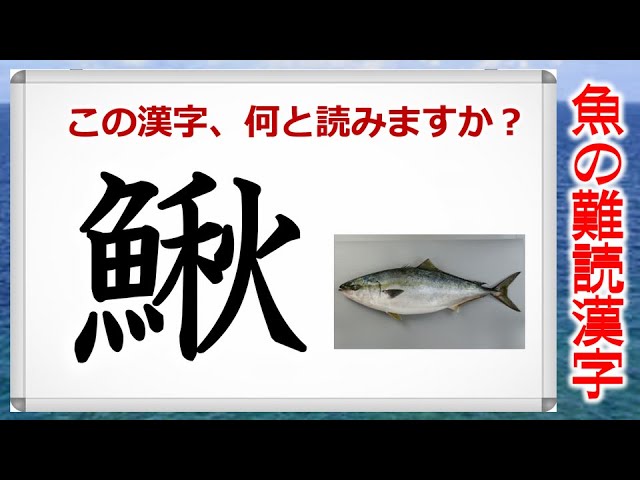
Here are some ideas for a tricky quiz on kanji with the “fish” radical.
The exact count varies depending on the dictionary and what you include, but it seems there are actually more than 200 such characters.
We might think we know the kanji for fish that commonly appear on the dining table, but if you don’t fish or work with fish, many of them can be quite difficult.
For example, there’s a quiz with 25 questions where a fish-radical kanji is shown and you’re asked, “How do you read this kanji?” The questions get more difficult in the latter half, but it really piques your curiosity.
Four-character idiom fill-in-the-blank quiz

Four-character idioms are hard to write in kanji, but wouldn’t a fill-in-the-blank quiz make them more fun? Of course, there are people who can write them perfectly in kanji, but to keep things clear for everyone, let’s enjoy a fill-in-the-blank quiz where one character is left blank for people to answer.
Once you get used to it, you can customize it by choosing more difficult idioms or leaving two blanks, which makes it even more engaging.
If it seems too hard, it might also be good to have people read them and then answer.

Kanji Quiz: Fruits

Many people may find writing difficult but are good at reading kanji.
Let’s try a quiz where you read slightly challenging, hard-to-read kanji! There are lots of quiz questions—like fish names—that are difficult or similar to each other.
If that’s a bit too hard, enjoy reading quizzes limited to vegetables or fruits, or other food-related kanji.
If the answer doesn’t come easily, try giving hints like, “It’s a red food,” and so on!
Kanji addition

The “kanji addition” game, where you combine radicals to figure out what character they form, has been popping up a lot on quiz shows in recent years.
Even kanji everyone should know become unrecognizable once they’re broken apart, so just thinking through them helps stimulate the brain.
Once you get used to it, it could be even more fun to take all the kanji from two- or three-character compounds, break them down into their radicals, and turn them into quizzes.
In today’s world, where the spread of computers and smartphones has reduced opportunities to handwrite kanji, this is a quiz that’s surprisingly tough not only for seniors but also for younger generations—so give it a try!
