

[For Seniors] Lively Wordplay Game: Fun Recreation for Elderly Care


Among word games, the one that continues to be loved by people of all ages is shiritori.
In shiritori, you take the last letter of a word and use it to link to a new word, right? How about enjoying this long-popular game with a variety of fun twists? Lively word games like these also serve as brain training and are appealing because everyone can dive in together and have a great time.
This time, we’re introducing shiritori word games that older adults can truly enjoy.
They range from easy to a bit more challenging, so give them a try!
- [For Seniors] Fun and Lively! Recommended Quiz Questions
- [Brain Training] Lively Word Quiz for Seniors
- [For Seniors] Fun Brain Training! Lively Whiteboard Activities
- For seniors: Fun shiritori—enjoyable and easy to play
- [For Seniors] Guaranteed to Liven Things Up! A Collection of Brain Training Activities That Will Spark Laughter
- [For Seniors] A Brain-Training, Crowd-Pleasing Word Search Game
- For seniors: Fun, crowd-pleasing word association game ideas
- Hand games that liven things up for seniors—also great brain training
- [For Seniors] Today’s Recommended Activity: Fun and Engaging
- [For Seniors] Refresh Your Mood! Lively, Get-Moving Games
- [For Seniors] Challenging but Exciting! Kanji Quiz
- [For Seniors] Recreational Activities Enjoyable in Large Groups
- [For Older Adults] Games to Enhance Oral Function: Enjoyable and Easy to Do
Word chain (Shiritori) word game (21–30)
Restricted Shiritori

Shiritori is a simple word game you can enjoy anytime, anywhere—a classic recreational game for all ages.
But playing plain shiritori can get dull, and people often lose interest halfway through.
How about trying a variant with a small twist—shiritori with restrictions? It’s still shiritori, but adding light rules like “only three-letter words” or “food items only” makes it much more thought-provoking and exciting.

Shiritori Cards

We’ll play a shiritori game using cards with various words written on them, connecting words one after another.
It’s easier to read the words in hiragana, but writing them in kanji also adds the element of recalling their readings.
Start with a simple shiritori to get going, and once everyone gets used to it, it’s recommended to add conditions to the words.
By adding variations—such as searching for words with a specified number of characters—the game becomes more complex and really trains thinking skills.
If you proceed as a team and cooperate, you can also incorporate a communication element, which is highly recommended.

Tongue Twister Vocal Exercise (1–10)
Hard-to-pull nails, nails that are difficult to remove, nails pulled out with a nail puller
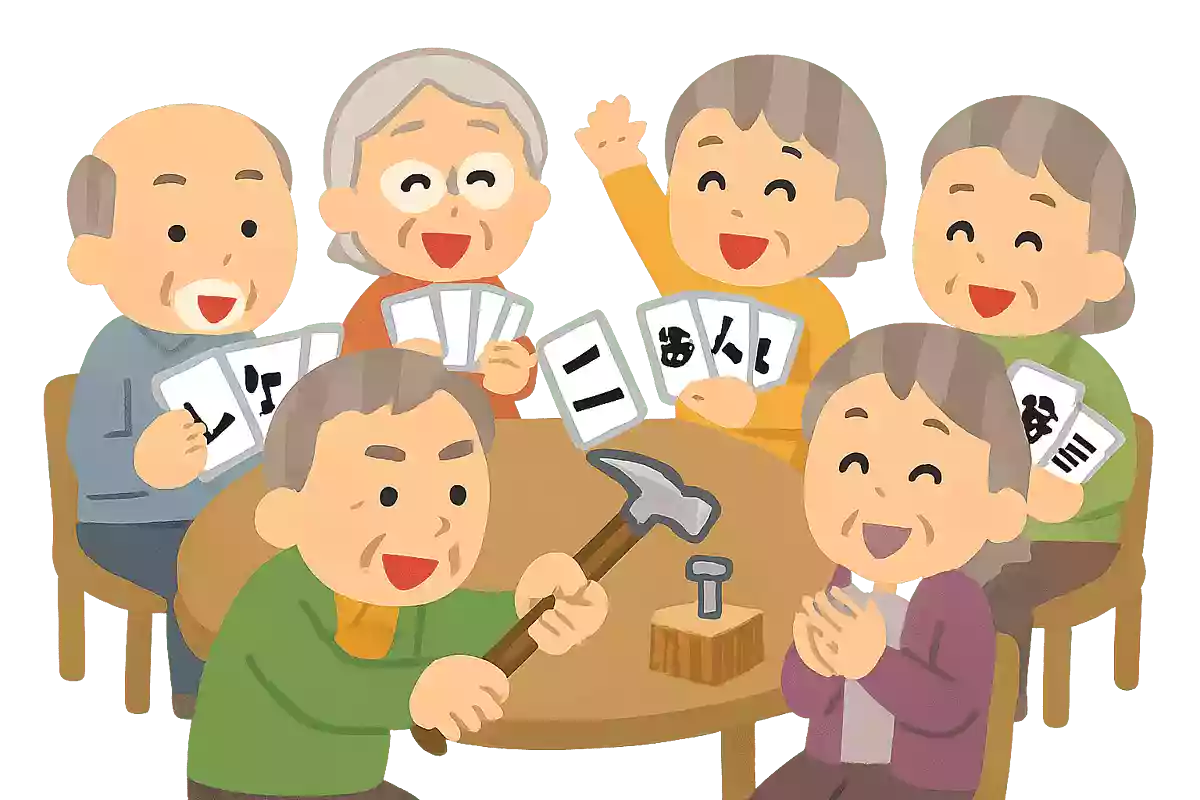
“A nail that’s hard to pull out, a nail that’s difficult to draw out, a nail pulled with a nail puller”—this tongue-twister also brings to mind scenes of carpenters or families doing DIY at home.
You can really picture someone struggling to pull out a stubborn nail.
Because of that, it repeats the same or similar words quite a lot.
It might be easier to say if you consciously break it into words like: hard-to-pull, nail; hard-to-draw-out, nail.
It’s a tongue-twister that may even help older adults recall their own DIY experiences.

red paper roll, blue paper roll, yellow paper roll
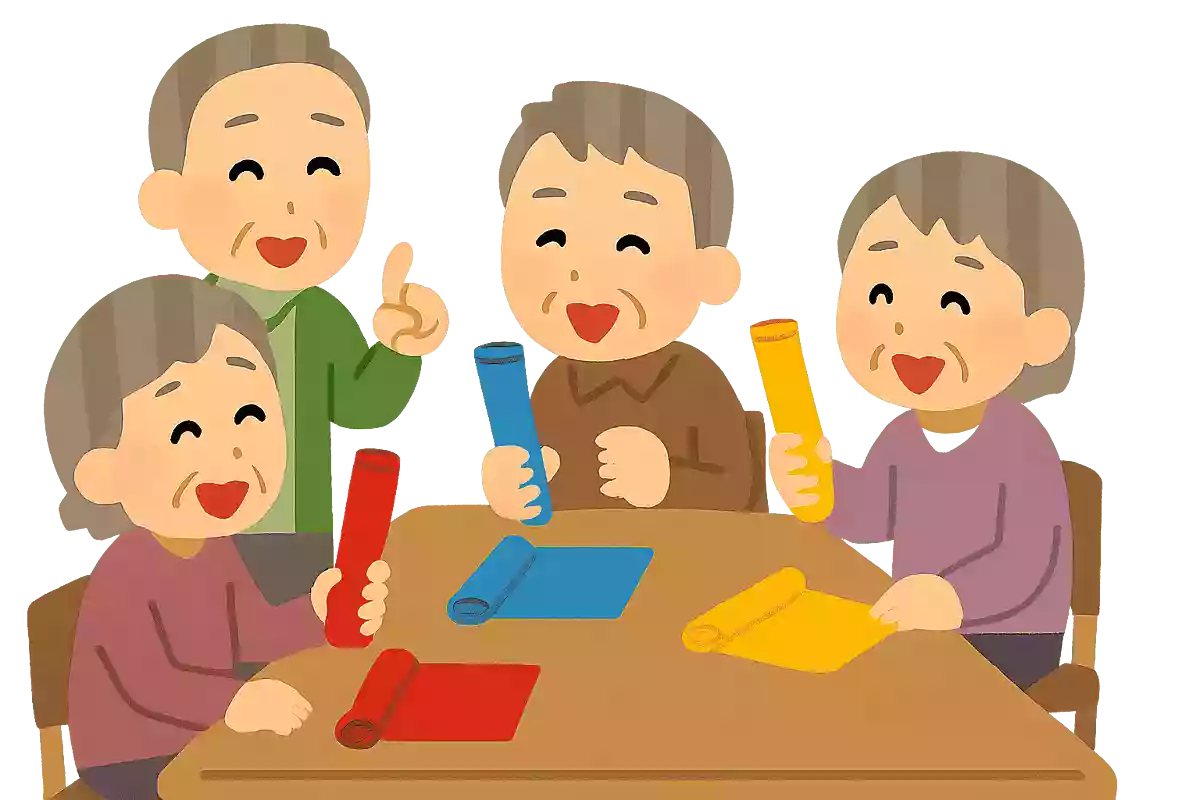
Tongue twisters often consist of strings of hard-to-pronounce words.
“Aka-makigami ao-makigami ki-makigami” (red scroll paper, blue scroll paper, yellow scroll paper) is also a sequence of tricky words.
By the way, makigami refers to paper made by joining together sheets of hansetsu paper (a tall, narrow paper) side by side to make a long roll.
It’s sold in scroll form.
This tongue twister lines up red, blue, and yellow scroll paper.
It looks easy at first glance, but when you try to say it repeatedly, it becomes hard to pronounce.
As a tip, if you pause slightly between the color names—like red or blue—and the word “makigami,” it should be a bit easier to say.
Try it together with older adults.
Ultimate luxury aircraft at a deserted Kyushu airport
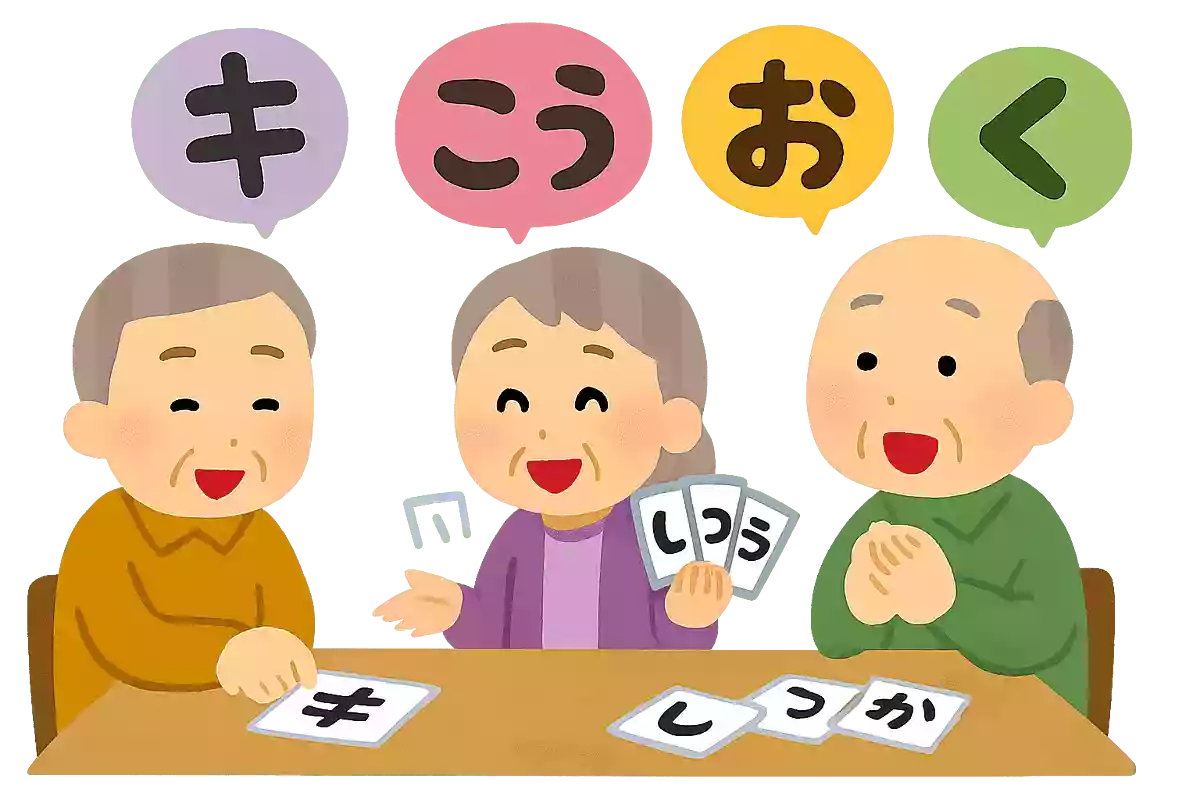
The tongue twister “kuukyo na Kyushu kuukou no kyuukyoku koukyuu koukuuki” (empty Kyushu airport’s ultimate luxury aircraft) feels difficult just by looking at it written down.
The sentence is also on the longer side for a tongue twister, and it’s characterized by a mix of hard k sounds and kya-kyu-kyo clusters.
Because of that, it’s said to be hard to say without tripping up.
To be able to say tongue twisters, the key is to be conscious of each word and pronounce every one clearly and distinctly.
By the way, there is no actual airport called “Kyushu Airport.” If you were to use a real airport in a tongue twister, it would be one of the airports in the Kyushu region, such as Kitakyushu Airport.
Frogs hop hop, three hop hop; together hop hop, six hop hop.
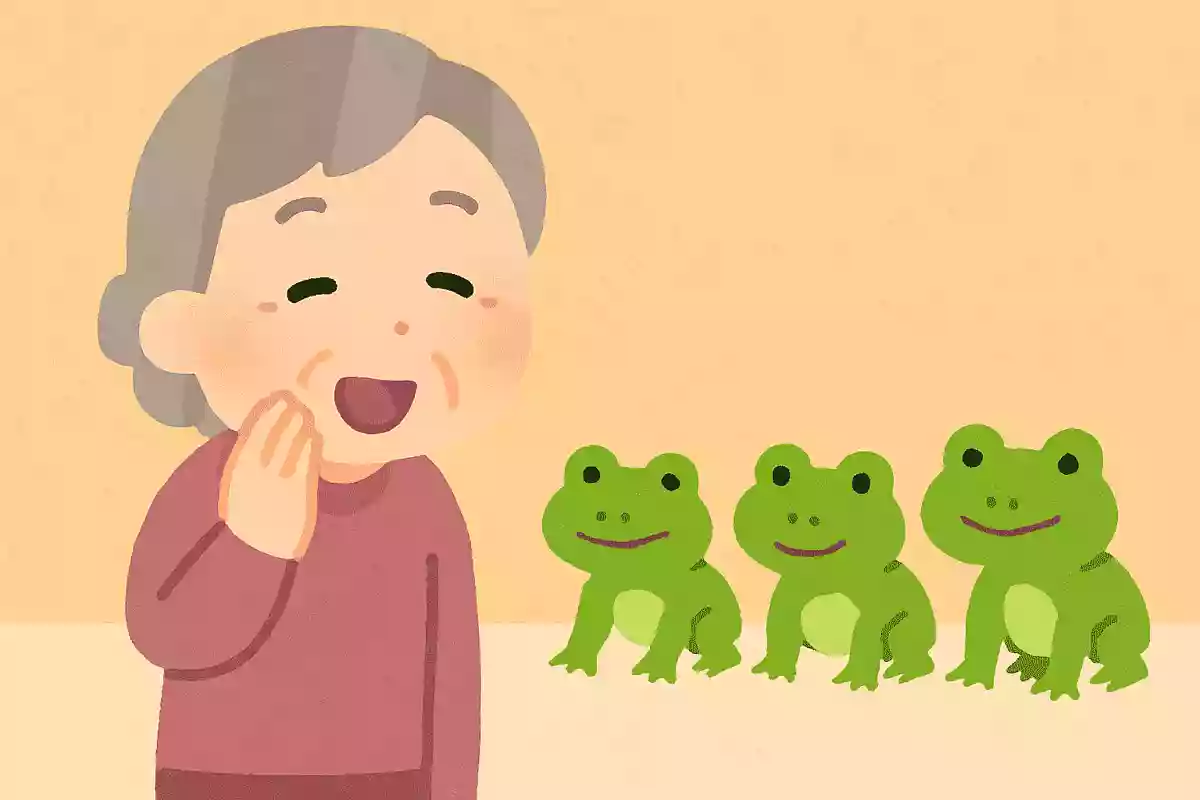
A classic tongue twister that depicts frogs gathering—such a cute-sounding phrase.
The key is the lip movement and breath control for “pyoko.” You close your lips once to pronounce “pyo,” then release breath to produce “ko.” Be mindful of the combination and articulate it clearly.
Think of using your breath consciously to train not only your mouth but also the muscles in your throat.
Also, placing a different mouth shape right before the lip-focused “pyo” makes it harder to say, which in turn helps you focus more deliberately on shaping your lips.
Both the Japanese plum and the peach are kinds of peaches; the peach and the Japanese plum are both kinds of peaches.
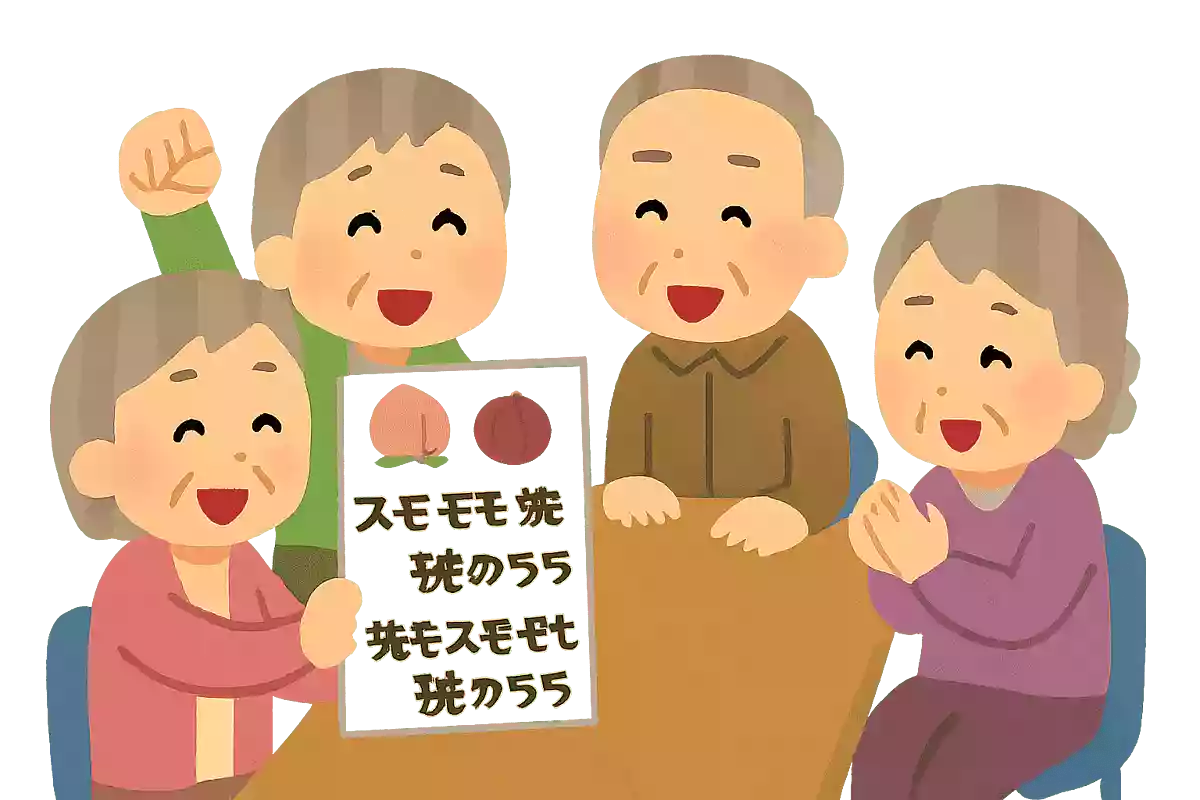
Plums come into season around mid-June.
Plums are a size smaller than peaches and are known for their sweet-and-tart flavor.
Although they’re said to be smaller than peaches, their shapes are similar, which is why there’s a tongue twister: “Sumomo mo momo mo momo no uchi; momo mo sumomo mo momo no uchi,” roughly meaning “Both plums and peaches are kinds of ‘momo.’” Because of this tongue twister, some older adults may have the impression that plums and peaches are the same variety.
However, plums belong to the genus Prunus in the rose family, while peaches belong to the genus Amygdalus (also within the rose family), so they are different.
Indeed, while their shapes are similar, plums have smooth skin, whereas peaches have a fine fuzz.
In fact, plums are said to be more closely related to apricots than to peaches.