

Nostalgic enka. A collection of classic enka hits from the Showa era.

When it comes to classic enka songs, there are so many that even today’s younger generations know them—truly music that’s loved across eras.
That said, the golden age of enka was likely the Showa period.
It was a time when countless enka singers released many songs into the world, and many listeners were captivated by enka.
In this article, we’ll introduce a comprehensive selection of nostalgic enka masterpieces that colored the Showa era.
We’ve picked not only timeless classics loved across generations, but also hidden gems known to the connoisseurs.
Take this opportunity to revisit and listen to the masterpieces that defined an era.
- [Showa Era] A Collection of Enka Hits: Timeless Classics Loved Across Generations
- Great enka masterpieces and hit songs of the 1970s
- A roundup of male enka singers in their 70s: legendary vocalists who support the enka world
- Great enka masterpieces and hit songs of the 1980s
- A roundup of female enka singers in their 70s: voices that evoke nostalgia
- [Songs from the Showa Era] Introducing classic tracks that are easy to sing at karaoke.
- Classic enka songs you’ll want to sing at karaoke: recommended popular tracks
- [2026] A Collection of Masterpieces of Enka and Mood Kayō
- [Enka] A feature on male singers in their 60s: enka vocalists whose rugged charm shines
- A roundup of leading female enka singers representing the Showa era
- [2026] Representative Famous Enka Songs: A Compilation of Classic Favorites [Beginner-Friendly]
- [For Beginners] Recommended Enka Masterpieces for Karaoke — Male Singers Edition
- Women’s Enka: A collection of classic enka songs expressing women’s emotions
Nostalgic Enka: A Collection of Classic Showa-Era Enka Songs (71–80)
12th graderFunaki Kazuo

Kazuo Funaki’s debut single “Koko San Nen Sei” (Senior in High School), released in June 1963, is a landmark of Showa-era youth pop.
It deftly portrays the complex feelings of a third-year high school student facing impending farewells, and the record became a massive hit, surpassing one million copies sold.
Through depictions of classmates and school life, it exquisitely captures the bittersweet end of youth alongside the anticipation of new beginnings.
The melody, blending gentleness with vigor, still feels fresh today—a song I’d recommend to anyone looking back on their youth, across all generations!
Heart SakeFuji Ayako

Fujii Ayako’s signature song “Kokoro-zake” was released on September 1, 1992, and became a major hit in her career.
The song portrays the feelings of a woman who entrusts her life’s anguish and inner conflict to sake as she strives to overcome them, resonating with many listeners.
While the yearning she feels for the man she loves is moving, Fujii Ayako’s rich emotional expression further enhances the song’s appeal.
With lyrics and a melody that convey both the beauty and sorrow of life, it leaves a lasting impression not only on enka fans but also on those outside the genre.
This piece is especially recommended for those with a wealth of life experience and for people who carry hidden worries in their hearts.
Keiko’s Dream Opens at NightFuji Keiko
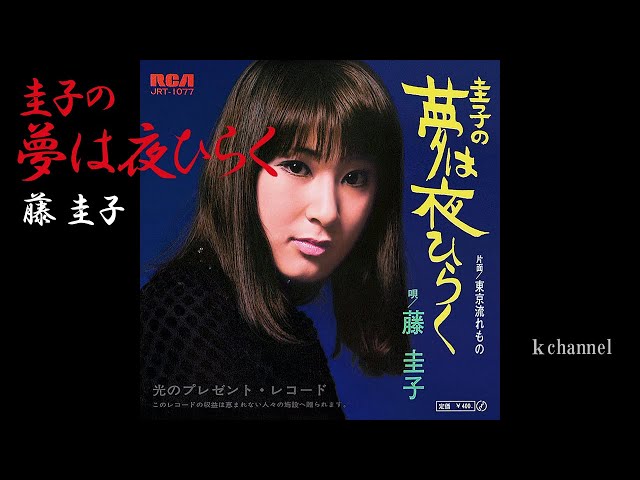
Keiko Fuji, a singer who was also known as the mother of Hikaru Utada and who passed away suddenly in 2013.
Her third single, “Keiko no Yume wa Yoru Hiraku,” based on the kayōkyoku song “Yume wa Yoru Hiraku,” was a massive hit, winning the first Japan Song Grand Prize.
Although its vocal range is narrow and the tempo is relaxed, it features many distinctive delays (ma), so be careful in karaoke as it’s easy to lose the rhythm.
It’s a classic with a moody feel rarely found in modern popular music, making it a refreshing song to sing at karaoke even today.

Women live for love.Fuji Keiko

This song, which sings of the spirited resolve of a Showa-era woman who gives her all to the man she loves, is themed around unconditional love that needs neither games nor instruction manuals.
With Keiko Fuji’s husky, forceful voice, it vividly conveys not only the fragility that comes from such straightforwardness, but also the depths of a woman’s passionate emotions.
Woman of ShinjukuFuji Keiko

Released in 1969 as Keiko Fuji’s debut single, this song brought a fresh breeze to the world of enka.
Her vocals, which sing of heartbreak, loneliness, and a woman’s struggles, draw listeners in with an emotional blend of sorrow and strength.
It’s a memorable track distinguished by Fuji’s uniquely husky voice and a richly expressive melody steeped in enka elements.
After its release, the single entered the top 10 on the Oricon charts, and her first album set a remarkable record by holding the No.
1 spot for 20 consecutive weeks.
A film with the same title was also produced, and a monument inscribed with the song’s lyrics was erected at Nishimukiten Shrine in Shinjuku.
This is a recommended listen not only for enka fans but also for younger music enthusiasts interested in Showa-era pop.
From the northern innMiyako Harumi

Harumi Miyako’s “Kita no Yado Kara” is a smash hit released in 1975.
Composed by Asei Kobayashi with lyrics by Yū Aku, this song is a classic enka masterpiece loved across generations.
The image of knitting a sweater despite having no one to give it to conveys the heroine’s deep lingering attachment and loneliness.
The depiction of being unable to shake off one’s regrets after a breakup, with feelings only growing stronger, is a universal theme that resonates in any era.
It’s a song I’d love for today’s young people to hear as well.
Osaka ShigureMiyako Harumi

Released in 1980, this song is beloved throughout Japan as one of Harumi Miyako’s signature works.
Known for her distinctive vocal style, Miyako’s powerful voice perfectly matches the lyrics that evoke the atmosphere of Osaka.
The pain of heartbreak and the rain-soaked streets of Osaka are depicted with rich emotion, resonating deeply with listeners.
Miyako won the Japan Record Award for Best Vocal Performance for this song, a testament to her exceptional singing ability.
Packed with the charm of Osaka, this piece is recommended not only for enka fans but also for anyone with a special connection to the city.