

Nostalgic enka. A collection of classic enka hits from the Showa era.

When it comes to classic enka songs, there are so many that even today’s younger generations know them—truly music that’s loved across eras.
That said, the golden age of enka was likely the Showa period.
It was a time when countless enka singers released many songs into the world, and many listeners were captivated by enka.
In this article, we’ll introduce a comprehensive selection of nostalgic enka masterpieces that colored the Showa era.
We’ve picked not only timeless classics loved across generations, but also hidden gems known to the connoisseurs.
Take this opportunity to revisit and listen to the masterpieces that defined an era.
- [Showa Era] A Collection of Enka Hits: Timeless Classics Loved Across Generations
- Great enka masterpieces and hit songs of the 1970s
- A roundup of male enka singers in their 70s: legendary vocalists who support the enka world
- Great enka masterpieces and hit songs of the 1980s
- A roundup of female enka singers in their 70s: voices that evoke nostalgia
- [Songs from the Showa Era] Introducing classic tracks that are easy to sing at karaoke.
- Classic enka songs you’ll want to sing at karaoke: recommended popular tracks
- [2026] A Collection of Masterpieces of Enka and Mood Kayō
- [Enka] A feature on male singers in their 60s: enka vocalists whose rugged charm shines
- A roundup of leading female enka singers representing the Showa era
- [2026] Representative Famous Enka Songs: A Compilation of Classic Favorites [Beginner-Friendly]
- [For Beginners] Recommended Enka Masterpieces for Karaoke — Male Singers Edition
- Women’s Enka: A collection of classic enka songs expressing women’s emotions
Nostalgic enka. A collection of classic Showa-era enka masterpieces (41–50)
Aizen Katsura Once MoreShimazu Aya

Enka singer Aya Shimazu’s signature song “Aizen Katsura wo Mou Ichido” is an especially moving piece.
Since her debut in 1986, Shimazu has been known for her wide-ranging musicality, and her vocal prowess, which extends beyond enka alone, has captivated many.
“Aizen Katsura wo Mou Ichido” showcases Shimazu’s powerful voice and expressive performance, singing of deep gratitude and memories of her father.
The song celebrates love for family—especially respect and appreciation for one’s father—life’s challenges, and the beautiful moments found within them.
Lyrics set against a Tokyo dusk evoke a strong sense of empathy in listeners.
Its blend of poignancy and warmth makes it especially recommended for those who cherish family or stand at a crossroads in life.
Nostalgic enka: A collection of classic Showa-era enka songs (51–60)
Anemone flaccida (nirinsō; literally “two-flowered anemone”)kawanaka miyuki
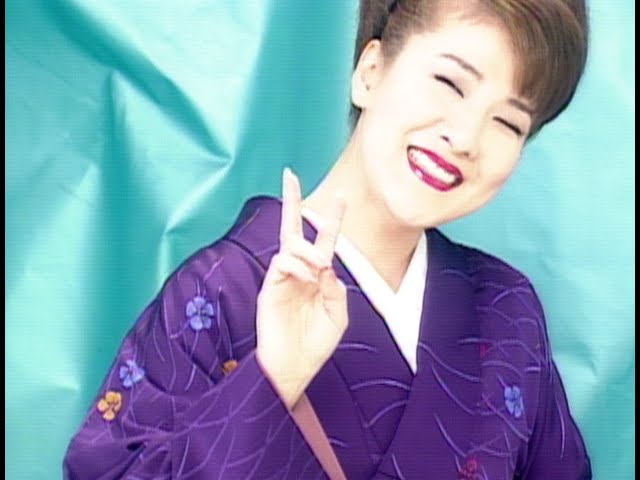
Since her debut in 1973, Miyuki Kawanaka has been active on the front lines of the enka world.
In particular, her single “Nirinsō,” released on January 1, 1998, is one of her signature works.
The song sold over one million copies and became such a smash hit that it won the Most Requested Award on that year’s cable request rankings.
The appeal of “Nirinsō” lies in its lyrics, which center on the deep bond between a married couple.
Depicting a couple who, even after a quarrel, fall asleep back-to-back, the song warms the listener’s heart.
Its relaxed tempo and Kawanaka’s clear, pure vocals further highlight its charm.
For those who have a special someone with whom they are growing through the years—or those who aspire to such a relationship—this is a track that resonates and offers encouragement.
Enka chanchaka-chanHirano Masaaki

It’s a song that feels both playfully cheeky and like a well-understood dictionary of enka.
Mr.
Hirano, who ran a pub, got the idea from his customers’ performances; when he tried it out, it caught the eye of the one and only Dick Mine, who scouted him, and the song was released in 1978.
It’s strictly in a medley format, so it doesn’t have an original feel, but it was amusing and became a hit.
A Doll’s HouseHirota Mieko

A timeless classic representing the Showa era and one of Mieko Hirota’s signature songs.
Its poignant lyrics and beautiful melody strike a deep chord.
The lyrics, which depict the sorrow of a woman who lived for love by likening her to a doll covered in dust, are particularly memorable.
Released in October 1969, it reached No.
1 on the Oricon charts and was also included on an album of the same name.
It has been covered by many artists and even featured in popular anime such as Sazae-san.
Perfect for times when you want to soothe the pain of heartbreak or savor the nostalgic atmosphere of the Showa period.
Why not immerse yourself in the heartfelt lyrics along with Hirota’s vocals?
Will you marry me?Niinuma Kenji

Kenji Niinuma’s “Yome ni Konai ka” is a wholehearted song that captures the romantic landscape of Japan at the time.
Its melodic line is smooth and approachable, with a pastoral beauty that is deeply appealing.
Both the musical character and the lyrics highlight the Japanese music scene of the 1970s, resulting in a work that encapsulates all the charms of the era’s kayōkyoku.
Niinuma’s distinctive emotional expression shines throughout, creating phrases whose poignancy lingers long after you first hear them.
While the lyrics may feel out of step with the times today, it’s a song that evokes the Japan of the Shōwa era.

draft (cold air seeping through gaps)Sugi Ryōtarō

This song, with its nihilistic vocals tinged with mature allure and melancholy, is filled with a gentle kindness that softly teaches warmth to those who’ve been betrayed and can no longer trust, so they can live humanly again.
It’s a Showa-era classic that will surely bring solace to modern people who are easily hurt by human relationships.
king (shogi piece)Murata Hideo

The classic song “Osho” by Hideo Murata, a shining star of the Showa-era enka scene, has continued to be loved by many since its 1961 release, transcending time.
The lyrics, written by Yaso Saijo, depict the intensity of life and a man’s decisive choices through shogi pieces, symbolizing the courage and resolve to live.
Its grand, powerful melody harmonizes perfectly with Murata’s commanding vocals, leaving a deep impression on listeners.
Imbued with an unwavering determination never to lose, this song is highly recommended for anyone taking on challenges or facing adversity.