

![[Read Aloud] A Fun List of Onomatopoeia: Enjoy the World of Sounds](https://media.ragnet.co.jp/img/1200__png__https://www.studiorag.com/files/2025/07/357fec2231988807c676c28369e1a17d.webp)
[Read Aloud] A Fun List of Onomatopoeia: Enjoy the World of Sounds
Have you ever felt your heart dance at onomatopoeic expressions like “pon-pon,” “gata-gata,” “mogu-mogu,” or “suya-suya”? The charm of onomatopoeia is how just sprinkling it into your words makes your expressions feel much more vivid.
This time, we’ll introduce a list of fun onomatopoeia you can use to add accents to everyday language and enrich your writing.
You’re sure to discover plenty of expressions you use without thinking that will make you smile when you see them anew!
[For Reading Aloud] A Fun List of Onomatopoeia! Enjoying the World of Sound (1–10)
boing
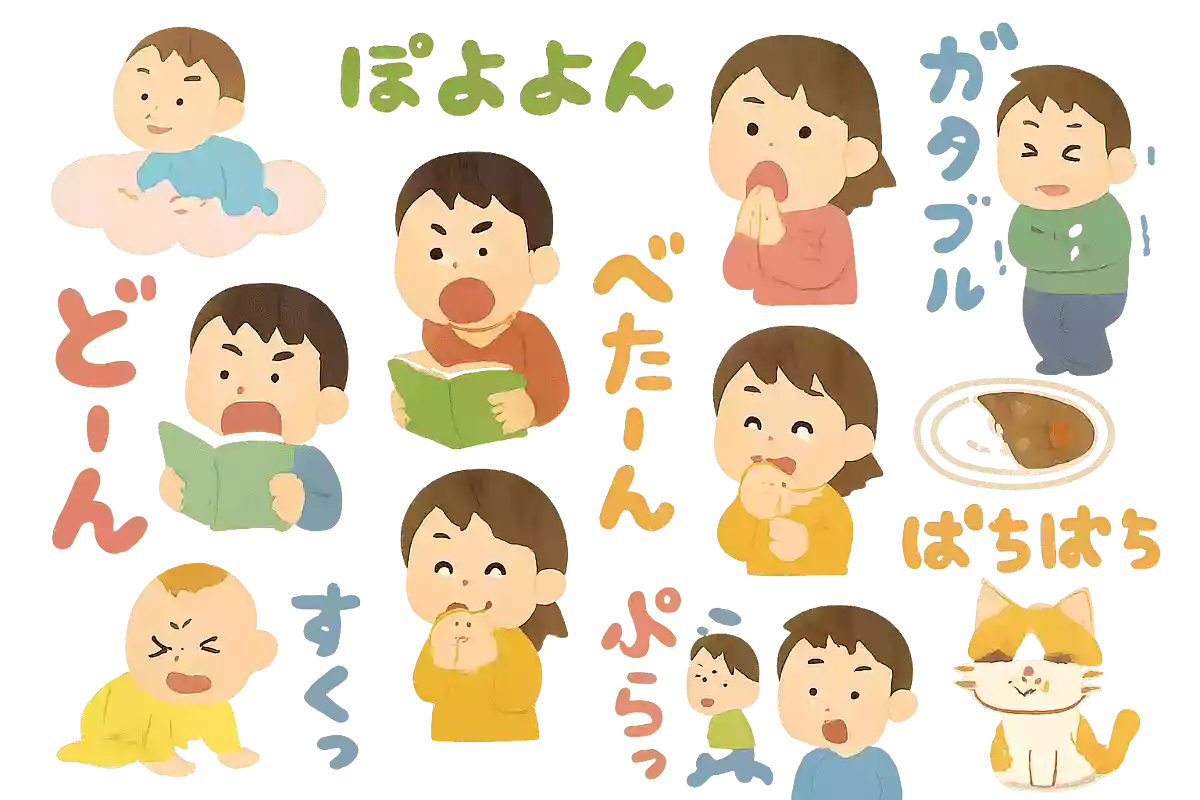
When something bumps into something or wobbles from an impact, people sometimes say “poyoyon” out loud.
Saying it gives a humorous feel and creates a soft, cheerful atmosphere.
You might say things like “My belly is poyoyon and jiggling,” or “A big balloon is bouncing poyoyon,” often to describe soft things wobbling or bouncing when they hit something.
If you say “poyoyon” while adding the motions and bounce around as you play, it can really liven things up and be a lot of fun.

Ping!
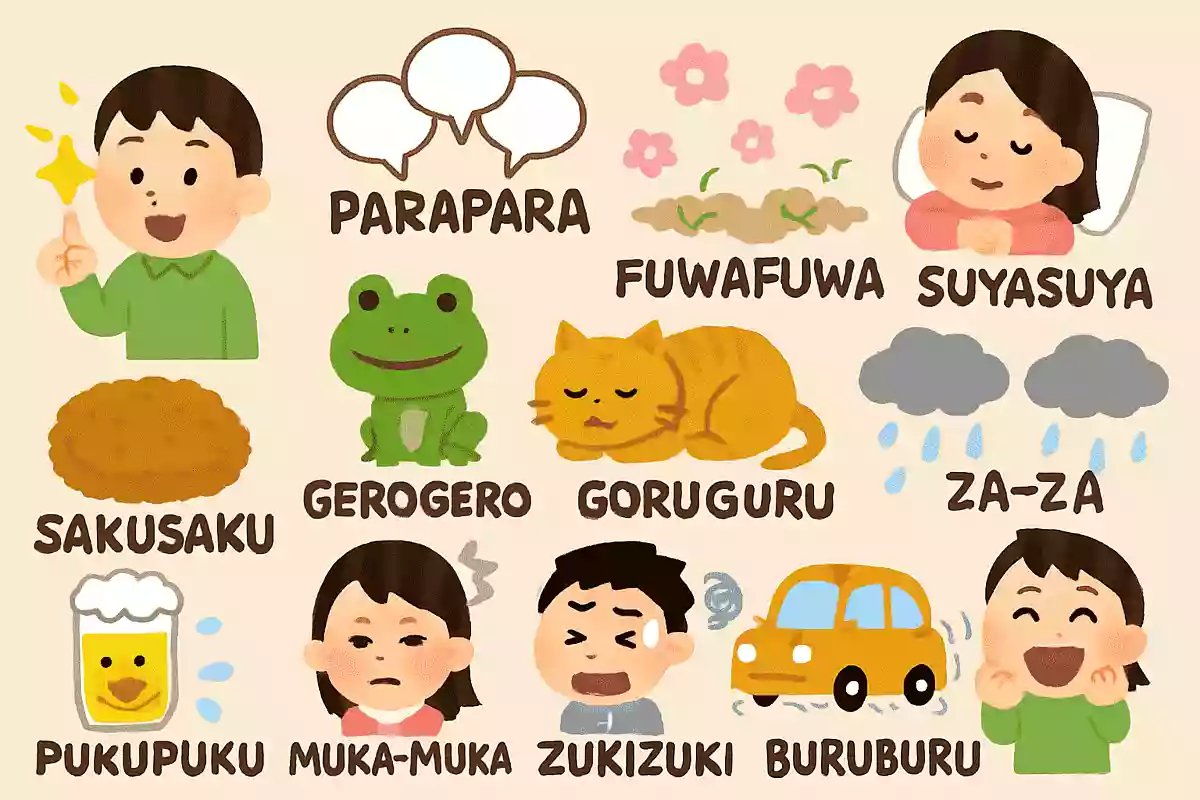
Using the onomatopoeia “pikon” when you’ve had a good idea or as a game sound effect can make it easier to get your point across, right? Have you ever seen kids go “pikon” when they come up with a great idea for an experiment or a craft? You also hear a “pikon” when charging is complete.
“Pikon” is an onomatopoeia often used for moments of new discovery or completion.
Using it might even put you in a brighter mood.
Ta-da!
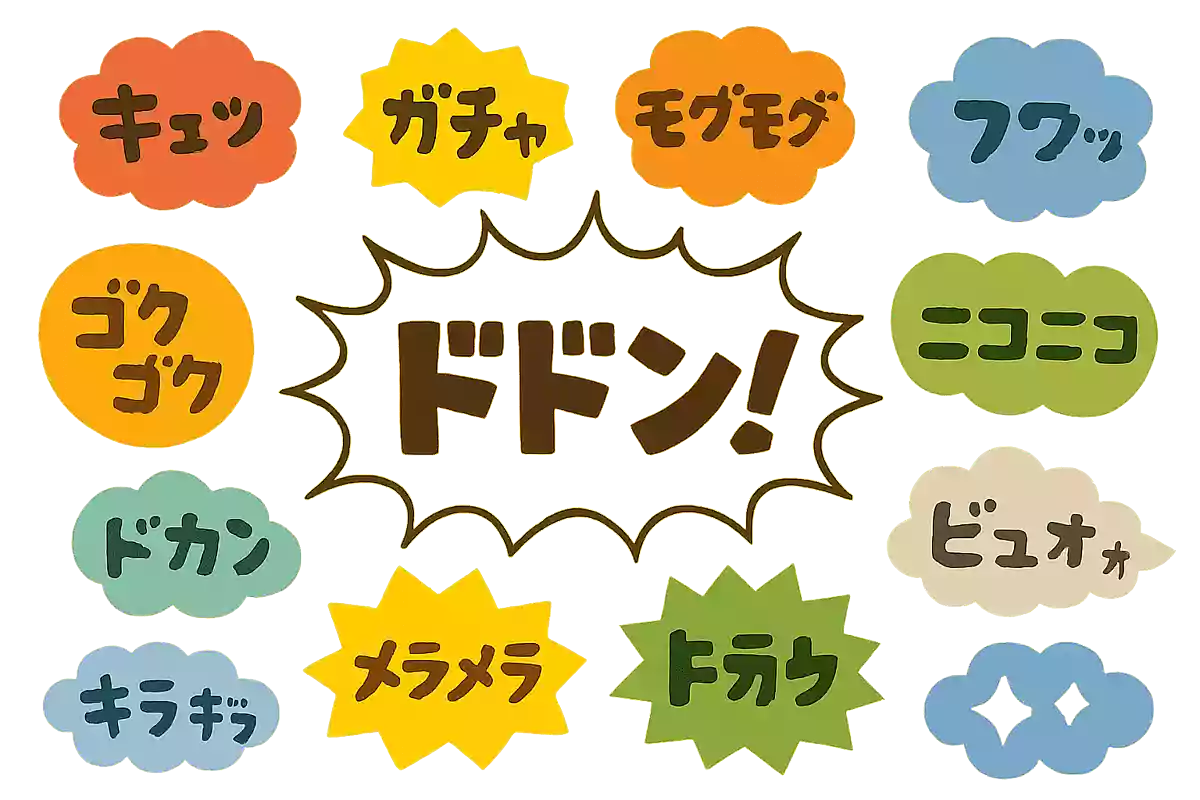
We often say or use the onomatopoeia “dodon!” to represent a loud, booming impact or a powerful sound effect.
In manga, for example, adding “dodon!” alongside a character sprinting at full speed conveys a sense of momentum.
It can also be used to describe something like the booming sound of drums echoing through a gymnasium—“the drums went dodon!” It’s a great choice when you want to make a strong impact or emphasize a dramatic moment.
It’s especially effective for highlighting a beginning or a punchy emphasis, so why not try saying “DODON!” with a straight face right before a presentation? You might even get a laugh!
Ta-da!
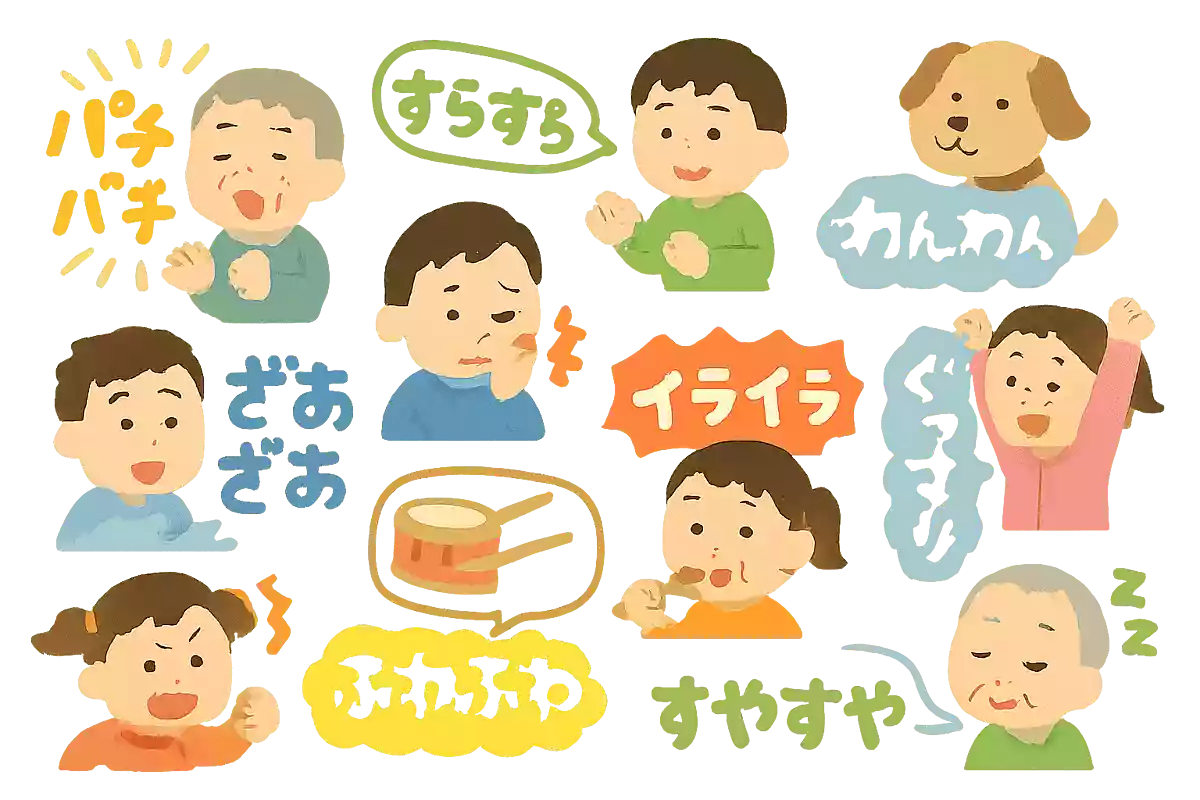
There’s an onomatopoeic expression, “baban!”, that’s often used for big announcements or when something suddenly makes an appearance.
When you hear or see “baban!”, doesn’t it spark a sense of excitement and wonder—What is it?—or even surprise? For example: “A large animal suddenly went baban! and appeared, and it startled me,” or “They unveiled the new clothing line with a surprise—baban!—announcement.” Using it instantly grabs the audience’s attention.
It’s the perfect onomatopoeia for adding a touch of fun to a serious situation.
Rumble rumble…
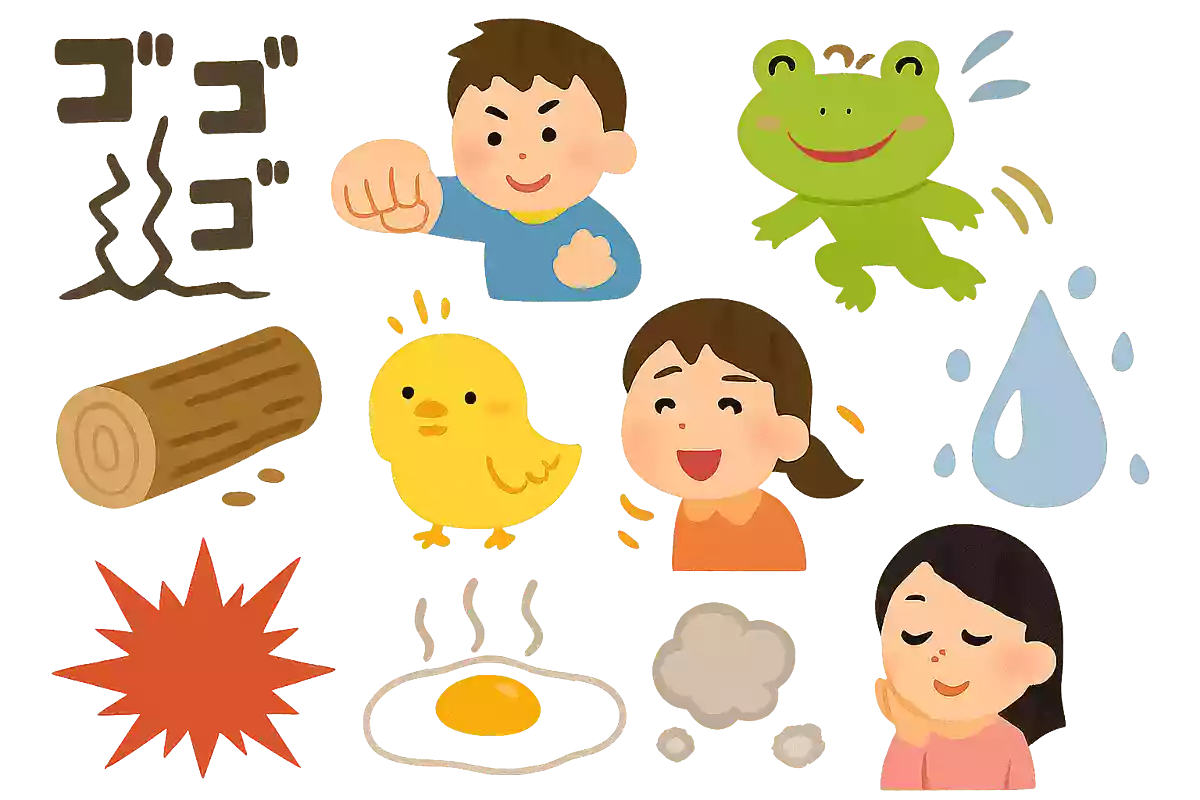
Mysterious words like “gogogogo…,” “dodododo…,” and “uriririri…” have existed in the manga world for a long time, but it was probably Hirohiko Araki’s smash-hit series JoJo’s Bizarre Adventure—aka “JoJo”—that really made those sound-symbolic words (onomatopoeia and mimetic words) widely known.
The “gogogogo…” is an onomatopoeia used when an incredibly powerful enemy makes their presence known, and it’s often used in gag manga as a parody, too.
Drawing it out with a dramatic “gogogogo…” only for something trivial to happen—it’s a classic, right? That’s the technique of tension and release!
Shing!
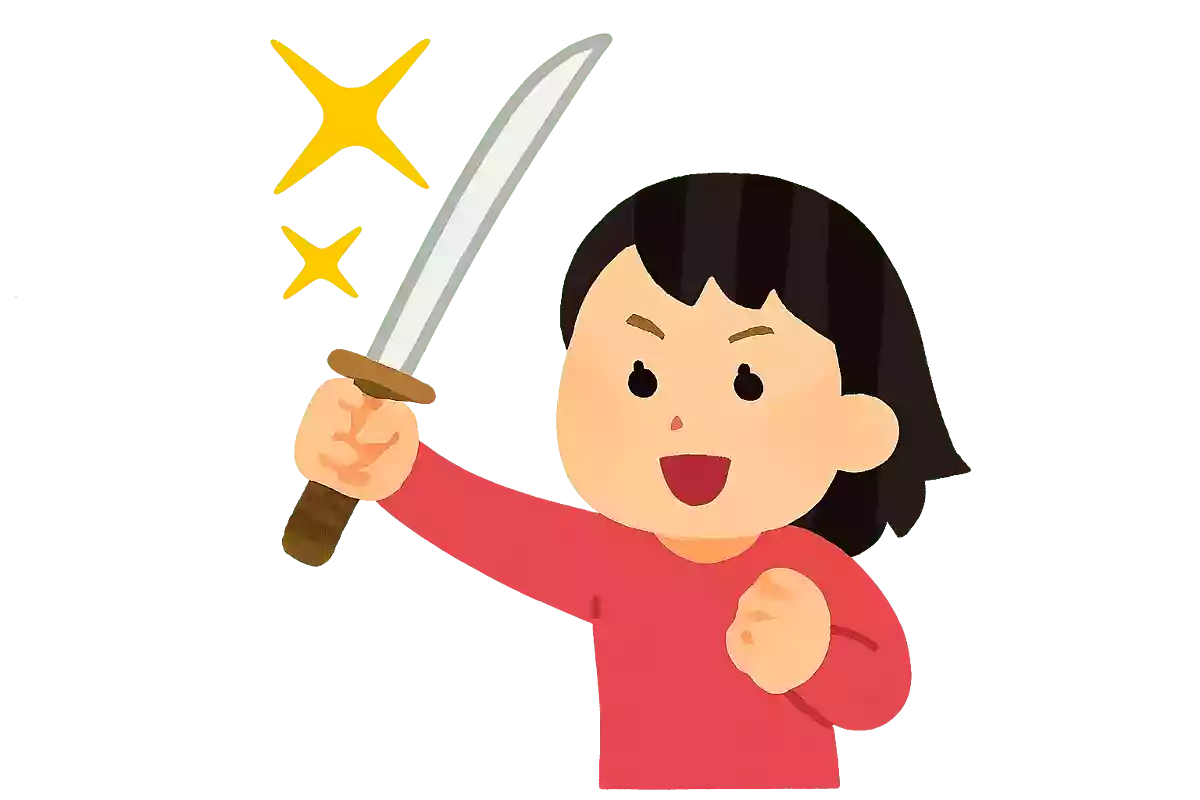
The expression “shakiin” is often used when someone strikes a cool pose, comes up with a perfect solution, or when swords touch.
You might see someone say their catchphrase, then go “shakiin!” and strike a cool pose, or kids holding toy swords say “shakiin!” right at the moment the blades meet, making a sound effect for fun.
You also see it frequently in manga and anime.
It’s a perfect onomatopoeia for creating a strong, impressive moment.
Try using the onomatope ‘shakiin’ and have fun with it!
Boom!
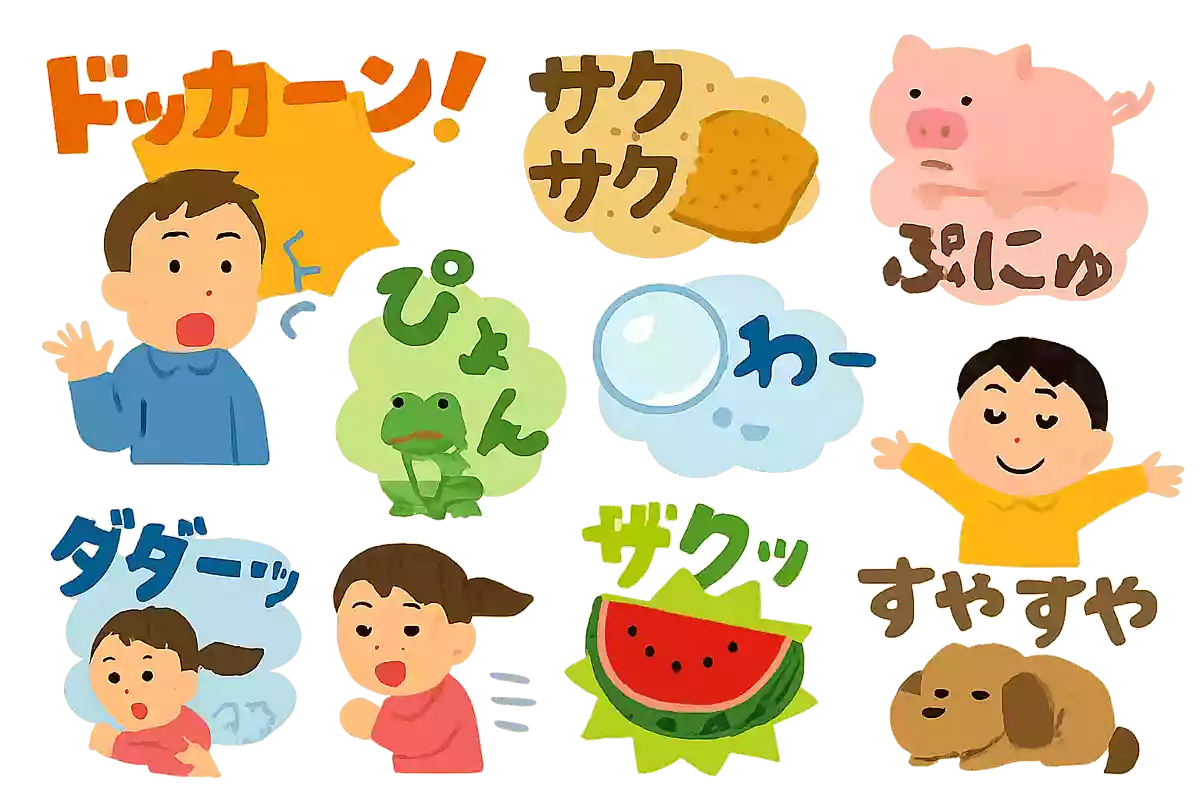
The onomatopoeia “DOKKAAN!” that you often see in manga like CoroCoro Comic and Comic BomBom usually shows a bomb going off in a huge explosion.
You also see it a lot in scenes where a mom or a teacher gets mad.
The background will often show a volcano erupting, perfectly capturing that “explosive anger!” vibe.
The shorter “DOKAN!” also carries a sense of “extra-large scale,” and you often hear lines like, “Let’s launch a massive firework with a big dokan!” It’s a fun, manga-like word—one we should treasure!