

[Read Aloud] A Fun List of Onomatopoeia: Enjoy the World of Sounds

Have you ever felt your heart dance at onomatopoeic expressions like “pon-pon,” “gata-gata,” “mogu-mogu,” or “suya-suya”? The charm of onomatopoeia is how just sprinkling it into your words makes your expressions feel much more vivid.
This time, we’ll introduce a list of fun onomatopoeia you can use to add accents to everyday language and enrich your writing.
You’re sure to discover plenty of expressions you use without thinking that will make you smile when you see them anew!
- A list of cute onomatopoeia! A collection of sound-symbolic words and expressions you'll want to use
- Amusing four-character idioms you’ll want to use right away! A collection of expressions to remember as general knowledge.
- Tongue Twisters So Fun and Cute You’ll Want to Say Them Out Loud!
- Easy to remember and fun! A collection of number pun/mnemonic ideas
- Funny palindromes. A masterpiece collection that makes you burst out laughing when you imagine them.
- Bursting into laughter! A roundup of Hakata dialect tongue twisters
- Get hyped! Tongue twisters that sound cool if you can say them—wordplay that makes you want to take on the challenge
- Collection of gesture game ideas and prompts
- Nagoya dialect tongue twisters are exquisite! A fun collection where your tongue gets tied in knots with regional dialects
- [For General Readers] List of Summer Kigo: Evocative Everyday Words of Summer
- Interesting four-character idioms for elementary schoolers! Words you'll want to use once you understand their meanings
- Let’s have fun making them! Kid-friendly palindromes. Great as a reference for creating your own.
- [Rec] Interesting! A roundup of wordplay games
[For Reading Aloud] A Fun List of Onomatopoeia! Enjoying the World of Sound (1–10)
smitten
People sometimes use the expression “mero-mero” to describe their feelings toward someone they love or even an animal.
From “mero-mero,” you can sense a strong affection, and it can even suggest being drunk on love.
The feeling of thinking about someone so much that you lose yourself is wonderful.
However, this onomatopoeic word also describes a state where love goes overboard and you become unlike your usual self.
When you’re in a “mero-mero” state, you should be careful.
The term has been used in Japan since long ago, reportedly as far back as the Kamakura period.
Back then, it meant the act of peeling off thin layers of something.

kyun

Songs that use the words “kyun” or “kyuun,” like Hirame’s “Pockets Kara Kyun Desu!” and the idol group prink’s “Kyun Kyun,” are going massively viral on social media.
You’ve probably heard them at least once.
It’s amazing how Japanese works: a word that originally described a symptom—like “my chest tightens with a pang (kyun)”—has somehow come to express the ache of bittersweet love.
Even that tiny pause in “kyun,” written with the small っ, feels cute and gives it a strong impact, doesn’t it? I hope this word keeps flourishing as one that makes everyone’s hearts flutter!
Paah!
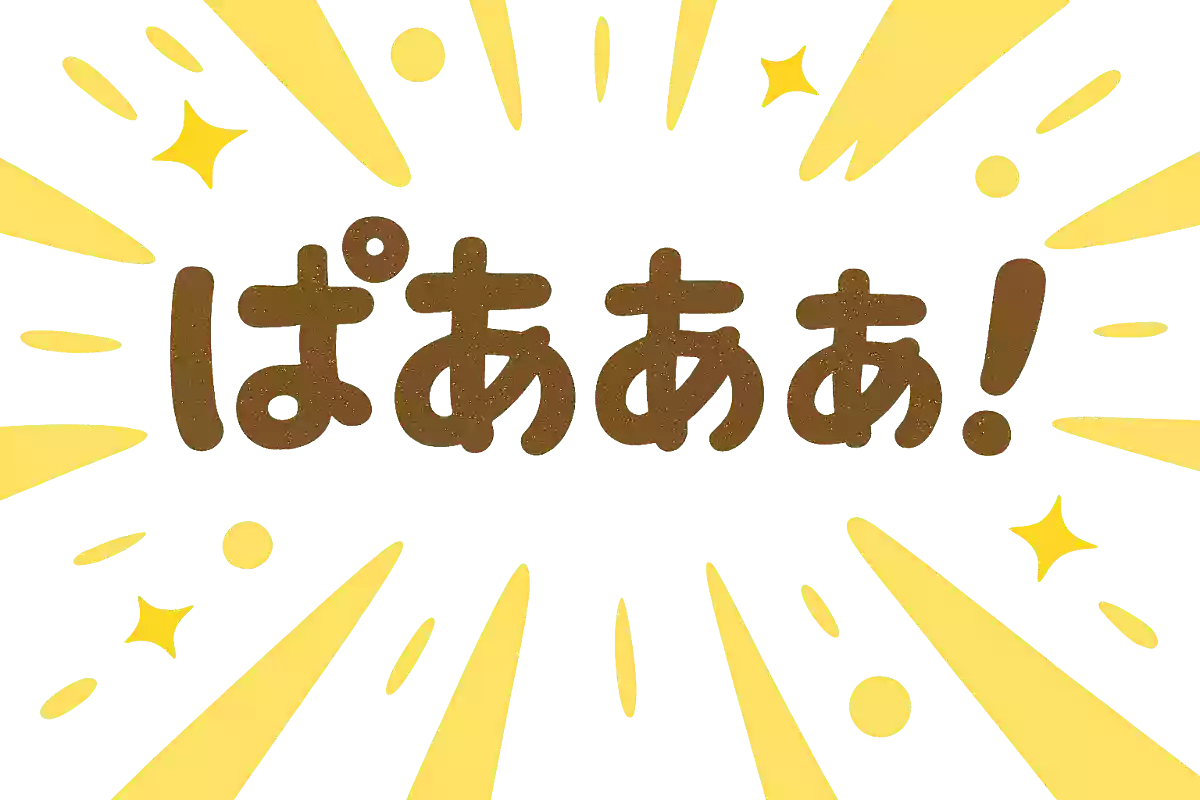
You sometimes see it written in katakana as “Paaaa!” too, right? In manga, I think of it as an onomatopoeia drawn in a bold, energetic handwritten style along with the protagonist’s radiant face when they get a good result or have an eye-opening realization.
If you play games, you might hear it when you level up or clear a mission.
In any case, it doesn’t have a negative meaning—it’s used when “joyful feelings burst out.” For everyday use, how about something like, “In a flash, the future looked brighter” to capture that sense of paaatto?
[Read Aloud] A Fun List of Onomatopoeia! Enjoy the World of Sounds (11–20)
Thump…
The word “tokuun…” probably originates from the image of a heartbeat going thump-thump, and I think it’s something unique to manga and anime.
It’s often used when a character falls in love or feels a flutter of excitement.
It could be funny to work it into everyday conversation along with the facial expression.
Why not try it when a friend or partner does something kind for you? They might be surprised but laugh and tease you, saying something like, “What are you, a manga heroine?!”
Uho uho

From “uho-uho,” you can sense someone is so happy that they’re in high spirits.
For example: The kids were thrilled, going uho-uho after getting a new toy.
There’s also an animal at the zoo that’s described with “uho-uho.” That animal is the gorilla—it can refer to the sound they make or to gorillas themselves.
You might say: The gorilla went uho-uho with joy when it was given food.
By the way, it seems gorillas don’t actually make a sound like “uho-uho.” The onomatopoeia may have been matched to the gorilla’s demeanor.
squirm squirm
How do you all describe the way eels and snakes move? Both eels and snakes, with their slick bodies, seem to wriggle as they go.
The onomatopoeia “nyoro-nyoro” fits that kind of motion perfectly.
It can also describe the movement of other long, thin creatures like earthworms.
Even for non-living things, you can use “nyoro-nyoro” when you wiggle a jump rope like a snake.
There’s also the expression “water comes out nyoro-nyoro.” It’s fascinating how such a small number of syllables can convey both a state and a motion.
chirpy; bubbly; peppy (a cutesy, lively vibe)
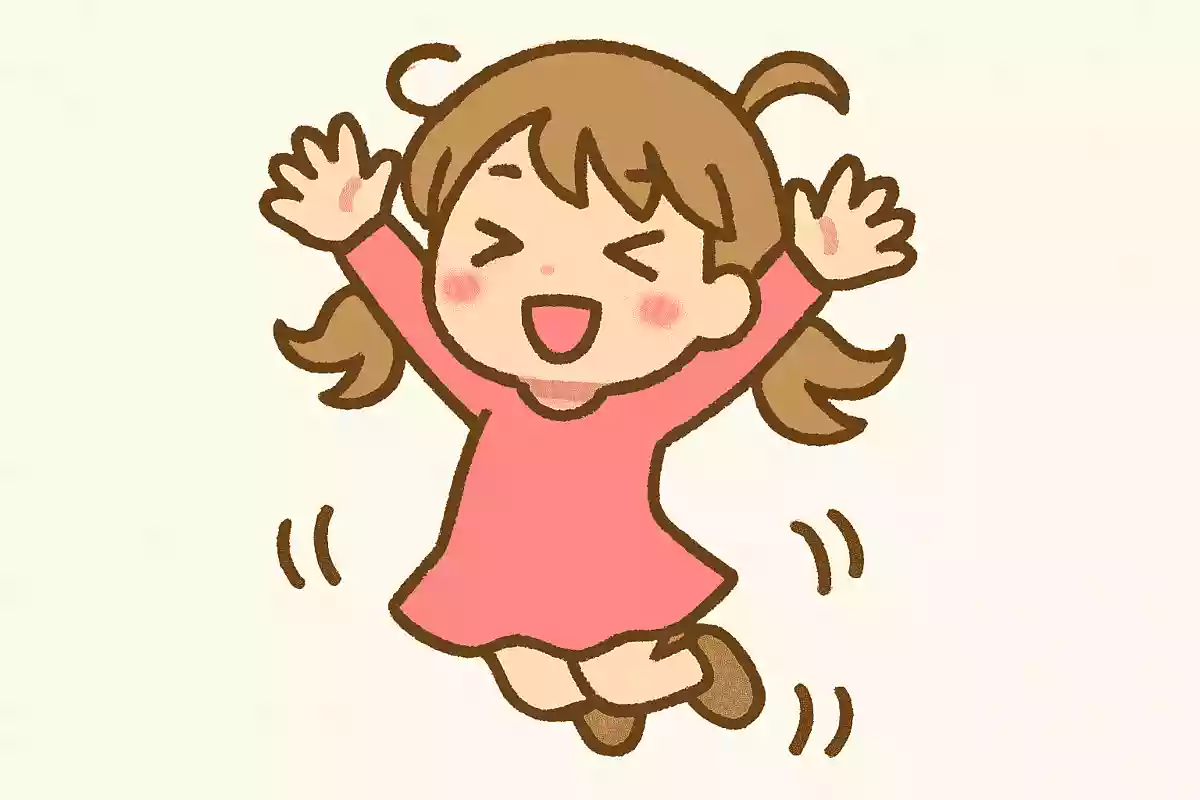
Those who remember the term “kyapi-kyapi gyaru,” which was popular in the 1980s, might find it nostalgically familiar.
It was often used when young people were being lively or chatting happily.
Some people might say, “They’re so kyapi-kyapi,” to convey a sense of youthfulness, energy, and cheerfulness.
We don’t really know what the “kya” and “pi” literally stand for, but it’s kind of amusing that so many people recognize it as a word that evokes a fun, lively vibe nonetheless.