

[I don't want to be like everyone else!] Recommended independent research topics for high school students


When it comes to summer break independent research projects, many high school students struggle to choose a topic.
Independent research can be especially time-consuming and challenging.
But don’t worry! Here, we introduce interesting independent research ideas recommended for high school students.
Some involve using fire or slightly more complex methods, so you’re sure to find something that interests you.
From experiments using familiar materials to hands-on crafts, there’s a wide range—from simple projects to those that take more time.
Dive in and turn your project into a fulfilling experience.
Have fun and learn a lot along the way!
- Recommended for high school students! A collection of easy one-day science project ideas
- Stand out with your junior high school independent research! A collection of fun experiment and craft ideas
- [Middle School Students] Easy One-Day Science Projects and Crafts Ideas
- For upper-grade boys! Simple yet awesome craft project [Don’t call it lazy]
- [For Adults] Simple yet Impressive Crafts: A Stylish, Eye-Catching Collection
- Simple and cute summer project crafts! A collection of ideas for girls that will make you want to create
- Recommended for middle school students! A collection of quick science project ideas you can do in a short time.
- [I don't want to be like everyone else!] Recommended independent research topics for high school students
- DIY science projects that elementary school boys will love: ideas you can make with everyday materials
- Simple yet amazing crafts: craft ideas that elementary school students will want to make
- Simple but awesome! Craft ideas for upper-grade girls
- Elementary School Students: Simple One-Day Science Project and Craft Ideas
- [5th Grade Elementary School] Independent Research Themes & Crafts | A Collection of Ideas That Lead to Learning
[Don't Want to Be Like Everyone Else!] Recommended Independent Research Topics for High School Students (81–90)
Build a Geiger counter

You can actually make your own radiation detector, also known as a Geiger counter! Most of what you need is probably already at home, so you can put it together quickly.
The materials are aluminum foil, two plastic cups, two film canisters, hookup wire, an AM radio, and either a glow lamp or an educational radiation source.
In this experiment, you connect a cup charged with static electricity to a film canister, then bring the radiation source close to the canister, and you’ll hear crackling sounds from the nearby radio.
Use this for your independent research project and get ahead of your friends!

Young’s experiment

You might not immediately recognize the term “Young’s experiment,” but put simply, it’s an experiment that shows how light travels.
Instead of moving strictly in a straight line, light spreads out as it propagates, and due to differences in wavelength, you can observe changes in brightness where the waves overlap.
Since it can be hard to picture from a description alone, please refer to the video for a clearer understanding.

space debris

Space debris…
Even if you’ve heard the term, it may not be very familiar.
Simply put, it’s space garbage.
For example, satellites that are no longer usable can’t be retrieved and end up remaining in space.
This can become an obstacle when launching new satellites.
That’s what space debris is.
Why not investigate, with your own hands, the challenges we’ll face in future space development?
Study of the settings in literary works

For high school students interested in literary and performing arts like novels and theater, I recommend researching the settings of literary works.
Pilgrimages to real-life locations featured in anime, which depict various settings as motifs, are also popular.
Using a work as a starting point, you can learn about local culture and gain a deeper understanding of the story.
By actually visiting places the characters go to, you can gain new perspectives.
These days, it’s easy to look up history through web searches and social media, so if you “don’t have time to go out,” try conducting thorough research instead.
It’s a project that both deepens your understanding of literature and leads to new discoveries.

Clothes making
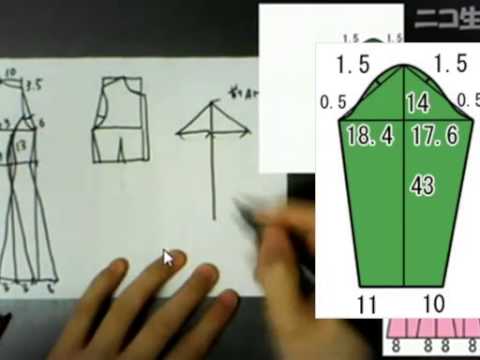
If you like fashion and design, making clothes is also recommended.
First decide on a design and gather fabric that suits it.
Then create a pattern based on the design.
If it’s your first time, even this step alone can be quite challenging.
If your time is limited, you can try using patterns that are available online.
Also, making clothes for people requires large pieces of fabric and can be costly.
In that case, try making clothes for stuffed animals instead.

homemade game

I highly recommend making your own games to anyone who wants to become a game creator in the future.
If you have a computer at home, you can make them.
People often think it’s difficult because they imagine console-quality games, but truly simple games don’t take that much time.
[Don’t Be Like Everyone Else!] Recommended Independent Research Topics for High School Students (91–100)
molecular cuisine

How about trying your hand at molecular gastronomy, a theme that often appears in manga and movies? The name alone might make it sound a bit difficult, but molecular gastronomy kits are available for purchase, so using one of those could be a good option.