

[I don't want to be like everyone else!] Recommended independent research topics for high school students


When it comes to summer break independent research projects, many high school students struggle to choose a topic.
Independent research can be especially time-consuming and challenging.
But don’t worry! Here, we introduce interesting independent research ideas recommended for high school students.
Some involve using fire or slightly more complex methods, so you’re sure to find something that interests you.
From experiments using familiar materials to hands-on crafts, there’s a wide range—from simple projects to those that take more time.
Dive in and turn your project into a fulfilling experience.
Have fun and learn a lot along the way!
- Recommended for high school students! A collection of easy one-day science project ideas
- Stand out with your junior high school independent research! A collection of fun experiment and craft ideas
- [Middle School Students] Easy One-Day Science Projects and Crafts Ideas
- For upper-grade boys! Simple yet awesome craft project [Don’t call it lazy]
- [For Adults] Simple yet Impressive Crafts: A Stylish, Eye-Catching Collection
- Simple and cute summer project crafts! A collection of ideas for girls that will make you want to create
- Recommended for middle school students! A collection of quick science project ideas you can do in a short time.
- [I don't want to be like everyone else!] Recommended independent research topics for high school students
- DIY science projects that elementary school boys will love: ideas you can make with everyday materials
- Simple yet amazing crafts: craft ideas that elementary school students will want to make
- Simple but awesome! Craft ideas for upper-grade girls
- Elementary School Students: Simple One-Day Science Project and Craft Ideas
- [5th Grade Elementary School] Independent Research Themes & Crafts | A Collection of Ideas That Lead to Learning
[Don’t Want to Be Like Everyone Else!] Recommended Independent Research Topics for High School Students (21–30)
Observation experiment of the liquefaction phenomenon

Liquefaction is the phenomenon where the ground turns liquid due to earthquake shaking.
Many people may know about it or have seen footage of it, as it makes the news every time there’s a major earthquake.
Even ground that appears firm and solid can cause buildings to sink due to the vibrations.
Let’s run various tests, since the results change depending on whether we use soil or sand, the amount of moisture, and the weight of the building.
Make plastic from milk

If you heat milk and add vinegar, curds will form.
Strain these and shape them, and remarkably, the proteins in the milk solidify into a type of plastic.
By experimenting with various conditions—such as trying different kinds of milk like low-fat milk or changing the heating time—predicting and verifying the results can make for an excellent independent research project.
Let’s make a speaker

A speaker is an acoustic device that converts electrical signals into physical vibrations, producing sound.
Some people use speakers to improve the audio when listening to music or watching movies.
In fact, you can make a simple speaker yourself.
Try making one with just three items: a paper cup, a tightly wound coil, and a magnet.
Attach the coil to the bottom of the paper cup.
Connect the ends of the coil to a CD player, and bring the magnet close to the coil.
Then you’ll hear the CD’s music coming from the speaker.
The volume will also change depending on the distance between the magnet and the coil.
It’s an easy device to make, so give it a try!

Making a storm glass

Do you know about storm glasses? In Japanese they’re called “tenkikan,” and they are devices in which multiple chemicals are dissolved in alcohol inside a glass tube; the weather is said to be predictable based on the state of the solution and precipitates, and they apparently were actually used in the 19th century.
In addition to verifying the accuracy of their weather predictions over the long summer vacation, it might be a good idea to look into their history in detail as well.
Water purifier
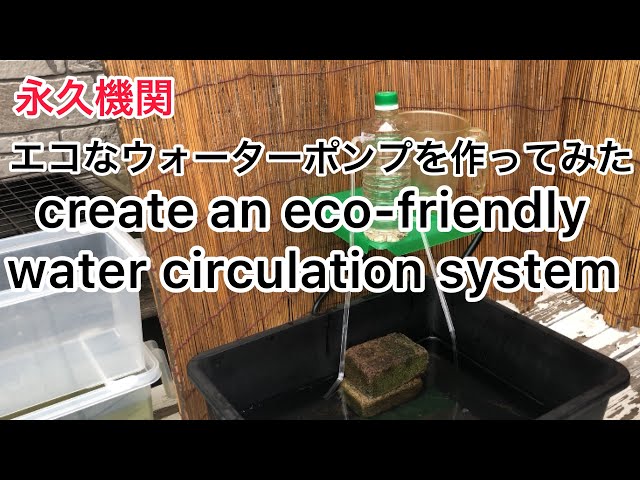
Water is something we use every day without much thought.
In fact, there may be a lot we don’t really know about it.
That’s why I recommend doing research on water.
For example, you could build a system that keeps water circulating, or make a filtration device.
Both have simple structures, but they can give you a chance to learn about the properties of water.
You could also study municipal water and sewage systems while referring to these mechanisms.
By the way, kits for making water filters for independent research projects are available for purchase.

radiant liquid

This is a study that creates a liquid that glows when exposed to a black light.
Did you know that everyday drinks like energy tonics emit light like this under a black light? The cause seems to be a component of vitamin B2, and it looks like you can experience a rather intriguing phenomenon.
Original SDGs Sweets

Why not research the specialties and challenges of the area you live in and try creating SDGs-friendly sweets? Even a little investigation will lead to various discoveries, and if you can turn them into products that attract corporate attention, you might gain a valuable experience of changing the world through your own initiative.
For example, you could deliberately pair local specialties that don’t seem suited for sweets, or come up with ideas to reduce waste materials.
It may be a bit of hard work, but it will make for a rewarding independent research project.
